

Magnesium is an essential mineral involved in normal muscle and nerve function, energy metabolism, and other physiological processes. During and after menopause, questions about magnesium often arise because sleep, muscle comfort, nutrition, medicines, and bone health may all change. Symptoms such as fatigue, cramps, anxiety, or poor sleep have many possible causes and do not confirm magnesium deficiency on their own. For the wider context, see our guide to life beyond menopause.
This guide focuses on food sources, supplement forms, safety, and medication considerations. It is not a diagnosis, a substitute for medical care, or a recommendation that every woman take a magnesium supplement.
What We Know—and Do Not Know—About Magnesium During Menopause
Menopause is associated with changes in hormones, sleep, diet, activity, and medication use, but that does not establish a simple rule that declining estrogen causes magnesium deficiency in every woman. Magnesium status can be influenced by dietary intake, gastrointestinal absorption, kidney function, and medicines. A qualified healthcare professional can interpret these factors in context.
Serum magnesium is one piece of an assessment and may not answer every clinical question. That limitation does not make symptoms a substitute for evaluation: cramps, fatigue, sleep disruption, weakness, and palpitations can have many causes and should not be used to diagnose magnesium deficiency at home.
Magnesium participates in many normal body processes, including muscle and nerve function. A general description of these roles should not be interpreted as proof that a magnesium supplement will correct sleep, cortisol, mood, weight, or bone concerns.
7 Symptoms That Can Have Many Causes, Including Low Magnesium
The symptoms below are nonspecific. They may have several explanations, so they should be treated as reasons to consider a broader health discussion not as proof that the body needs a magnesium supplement.
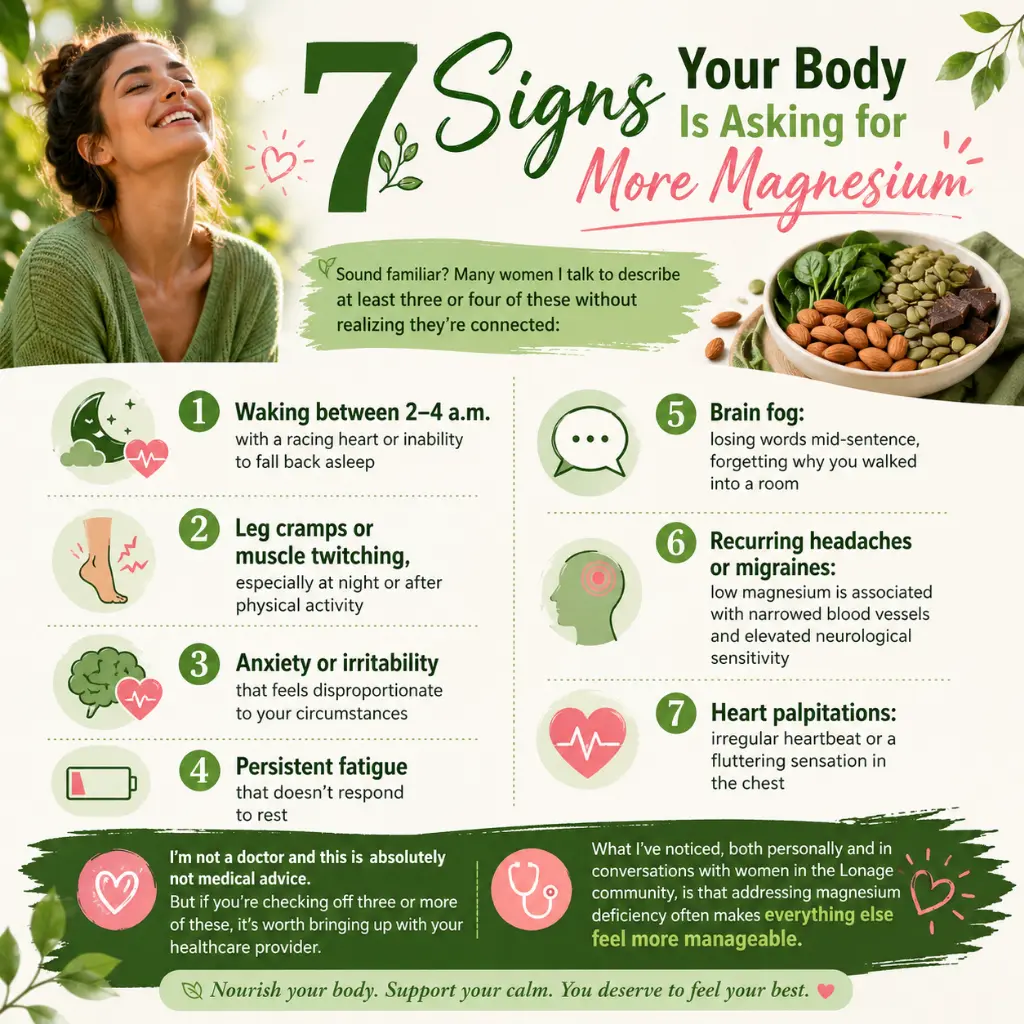
- Nighttime waking or a racing heartbeat. Sleep disruption and palpitations can have many causes, especially during midlife. Persistent or concerning palpitations deserve medical attention rather than being assumed to reflect low magnesium.
- Leg cramps or muscle twitching. Magnesium plays a role in normal muscle function, but cramps are common and can have many causes, from activity and hydration to medications and underlying health conditions.
- Anxiety or irritability. These symptoms can overlap with menopause, poor sleep, stress, and many other factors. They do not establish magnesium deficiency.
- Persistent fatigue or weakness. These can occur with magnesium deficiency, but persistent fatigue deserves a broader look because anemia, thyroid problems, sleep disorders, medications, and other conditions may also be involved.
- Brain fog. Trouble concentrating or finding words has many possible explanations during midlife. Symptoms alone cannot tell you whether magnesium status is playing a role.
- Recurring headaches or migraines. Magnesium has been studied in relation to migraine and neurological function, but recurring headaches should not automatically be interpreted as a sign of magnesium deficiency.
- Heart palpitations. Significant magnesium deficiency can affect normal heart rhythm, but palpitations have many possible causes. New, persistent, severe, or otherwise concerning symptoms should be medically evaluated.
If several of these symptoms are persistent or unexplained, it is worth discussing them with your healthcare provider rather than counting symptoms and assuming you need a supplement. Correcting a confirmed deficiency matters, but whether magnesium will improve a particular symptom depends on what is causing it.
Magnesium and Bone Health: What the Calcium Conversation Is Missing
Most conversations about bone health after menopause understandably focus on calcium and vitamin D. Magnesium belongs in the broader nutrition conversation too because it participates in normal bone physiology and vitamin D metabolism. Observational research has found associations between magnesium intake and some measures of bone mineral density, but that does not prove that taking a magnesium supplement prevents osteoporosis or fractures.
Magnesium participates in processes involved in vitamin D metabolism and normal bone remodeling. That makes adequate magnesium intake relevant to overall nutrition, alongside calcium, vitamin D, protein, physical activity, and other factors that influence bone health.
Some observational studies have linked higher magnesium intake with bone mineral density, but association is not the same as proof of benefit from supplementation. The Lonage guide on calcium for women over 50 explains where calcium fits into the broader bone-health picture.
Magnesium, Stress, and Cortisol: What We Know
Stress and magnesium have an interesting relationship, but it is more complicated than the idea of a simple cortisol-magnesium cycle. Research has explored relationships among stress, magnesium status, and the body’s stress-response pathways, but the clinical relationship is complex.
Stress, sleep disruption, mood changes, diet, medications, and other factors can overlap during menopause. Current evidence does not justify assuming that low magnesium is driving high cortisol, or that taking magnesium will correct cortisol-related symptoms.
A magnesium supplement should not be presented as a direct treatment for stress, cortisol, anxiety, insomnia, or abdominal weight changes. Foods such as salmon, flaxseeds, avocado, whole grains, legumes, nuts, and vegetables can contribute useful nutrients within an overall balanced eating pattern. The Lonage article on superfoods that balance hormones naturally after 50 looks at that broader food-first approach.
The Cardiovascular Angle Most Women Aren’t Told About
Cardiovascular health becomes increasingly important with age, and magnesium contributes to several normal physiological processes related to cardiovascular function. Observational studies have found associations between magnesium intake or status and cardiovascular outcomes, but they cannot prove that increasing magnesium intake or taking a supplement produces the same reduction in risk.
Magnesium is involved in normal blood pressure regulation and heart rhythm, and researchers have also studied its relationship with inflammatory markers and cardiovascular health. The effects of supplementation can vary depending on baseline magnesium status, health conditions, diet, and other factors.
The practical takeaway is simpler: getting enough magnesium is part of good nutrition, but magnesium supplements should not be treated as a stand-alone strategy for preventing cardiovascular disease.
The best forms of magnesium for menopause
Magnesium supplements come in several forms, and they can differ in characteristics, bioavailability, gastrointestinal effects, and cost. Current evidence does not establish that each form reliably targets a particular menopause symptom.
Magnesium glycinate is commonly used in supplements and may be well tolerated by some people. It is often marketed for sleep and relaxation, but it should not be described as a proven treatment for menopause-related insomnia or anxiety. Product choice should be discussed with a pharmacist or clinician when appropriate.
Magnesium citrate is another commonly available form. It can also have a laxative effect, particularly at higher supplemental doses, which may matter when choosing a product.
Magnesium malate is available in many supplements, but evidence is not strong enough to recommend it specifically for menopause-related fatigue.
Magnesium L-threonate has attracted interest in research on cognitive outcomes. Evidence remains limited, however, and it should not be presented as an established treatment for menopause-related brain fog.
Magnesium oxide generally has lower bioavailability than some other forms and is also used for its laxative effects. The appropriate form depends on why magnesium is being used and individual circumstances.
For women age 31 and older, the recommended dietary allowance for magnesium is 320 mg per day from all sources. This should not be confused with the adult upper limit of 350 mg per day specifically from supplemental magnesium and medications. Your healthcare provider or pharmacist can help determine whether supplementation is appropriate for you.
Best Food Sources of Magnesium After 50

For many women, magnesium-rich foods are a practical place to start because they provide magnesium alongside other useful nutrients. These are useful food sources for adults, including women after 50:
- Pumpkin seeds — 156 mg per ounce, one of the most concentrated sources available
- Dark leafy greens (spinach, Swiss chard) — 78–157 mg per cooked cup, with additional iron and folate
- Dark chocolate (70%+) — 64 mg per ounce, plus flavonoids that support cardiovascular health
- Almonds and cashews — 70–82 mg per ounce, with added protein to support muscle maintenance
- Legumes (black beans, lentils) — 60–120 mg per cup, with prebiotic fiber that supports gut health
- Avocado — 58 mg per fruit, plus the healthy fats needed to absorb fat-soluble vitamins
Digestive health and certain gastrointestinal conditions can affect nutrient absorption, including magnesium. If you have a gastrointestinal condition or persistent digestive symptoms, individualized medical or nutritional guidance may be appropriate. The Lonage article on probiotics for menopause explores the broader gut-health context.
For a comprehensive look at building a full plate that supports your body after 50, the guide on what to eat after 50 provides the broader nutritional framework that makes targeted supplementation far more effective.
What Can Affect Magnesium Status?
Several factors can influence magnesium intake, absorption, or losses. It is important to distinguish established risk factors from everyday habits that are sometimes blamed too broadly:
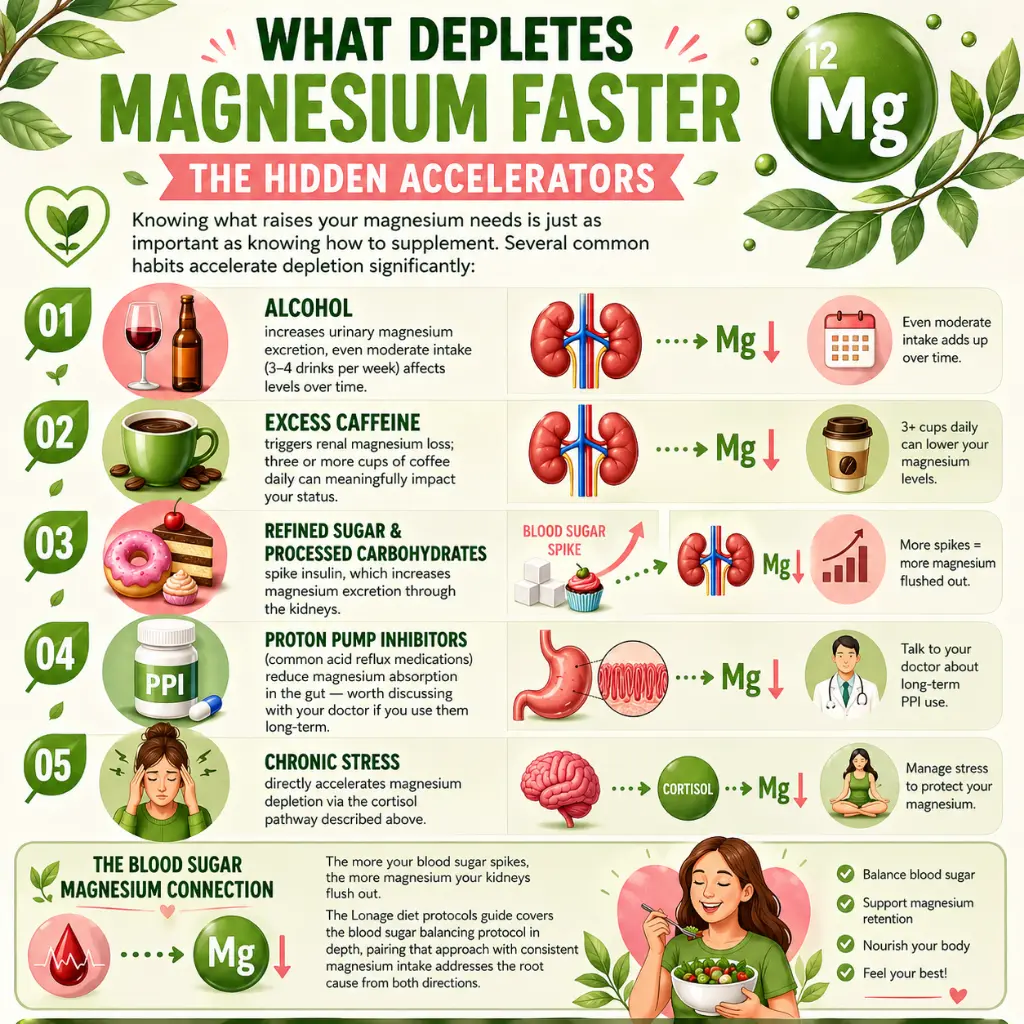
- Alcohol: Heavy or chronic alcohol use is a recognized risk factor for inadequate magnesium status. A specific number of drinks should not be treated as an automatic depletion threshold.
- Caffeine: Coffee and other caffeinated drinks should not be portrayed as major causes of magnesium deficiency at an arbitrary number of cups per day.
- Overall diet quality: Diets low in magnesium-rich foods may make it harder to meet daily needs. Ordinary sugar or carbohydrate intake should not be described as automatically flushing magnesium from the body.
- Proton pump inhibitors: Long-term use of some proton pump inhibitors can lead to low blood magnesium in some people. If you use these medicines long term, discuss this with your healthcare provider rather than stopping them yourself.
- Health conditions and medications: Gastrointestinal disorders, kidney-related factors, diabetes, and some medicines can affect magnesium status in different ways.
Poorly controlled diabetes can be associated with increased urinary magnesium losses, but an individual glucose spike should not be portrayed as automatically flushing out magnesium. The Lonage diet protocols guide covers broader approaches to eating patterns after 50.
Safety, Medicines, and Frequently Asked Questions
If there’s one thing I want you to take away, it’s this: magnesium is an essential nutrient, and getting enough is one part of a balanced approach to health after 50. Sleeplessness, mood changes, muscle tension, fatigue, or brain fog should not automatically be blamed on low magnesium because each can have several possible causes.
You don’t have to overhaul everything at once. Adding one magnesium-rich food is a simple place to begin. If you are considering a supplement, review your diet, medications, kidney health, digestive conditions, and individual needs with a clinician or pharmacist first. Small, consistent choices are often more useful than dramatic transformations.
Please always consult your healthcare provider before starting any new supplement, especially if you take medications or have an existing health condition.
What’s one small step you’ll try this week? Share in the comments below.
For broader guidance on this topic, explore our nutrition and supplements after 50 hub.
Key Data: Exclusive Insights for Lonage Readers
- Magnesium status after menopause: Magnesium status can be influenced by diet, gastrointestinal absorption, kidney function, medicines, and health conditions. Serum magnesium is only one part of assessment, but symptoms alone should not be treated as a more reliable diagnostic test.
- Magnesium and sleep: Magnesium has been studied for sleep outcomes, but current evidence is mixed and does not establish supplementation as a reliable treatment for menopause-related insomnia.
- Bone health: Observational research has linked magnesium intake with some measures of bone mineral density, but this does not establish that magnesium supplements prevent osteoporosis or fractures.
- Stress and magnesium: Research has explored relationships among stress, magnesium status, and stress-response pathways, but evidence does not support reducing this relationship to a simple self-reinforcing cycle or claiming that supplementation breaks such a loop.
- Cardiovascular health: Observational studies have reported associations between magnesium intake or status and cardiovascular outcomes, but these findings do not prove that increasing magnesium intake or taking a supplement directly reduces cardiovascular risk.