
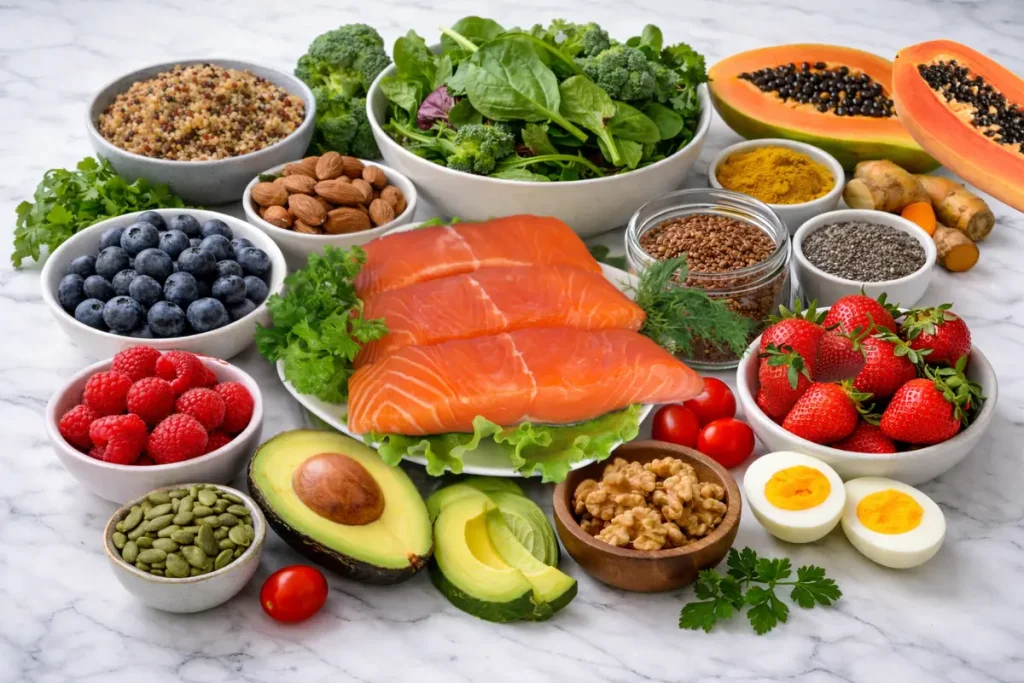
You know that feeling when your body suddenly seems less predictable than it used to be? One week your sleep feels steady, the next you are more tired, warmer at night, or wondering why your appetite and energy feel different. I have been there. Learning more about superfoods to balance hormones naturally after 50 helped me separate useful nutrition habits from the exaggerated “hormone reset” promises that are everywhere online.
The important distinction is this: food does not restore estrogen or progesterone to premenopausal levels, and no single ingredient can “fix” a hormonal imbalance. What food can do is support the parts of health that become especially important around menopause, including muscle, bone, heart health, digestion, blood-sugar regulation, and overall nutrient intake. For the broader nutrition framework, start with our what to eat after 50 guide.
Why food matters after 50 without being a hormone treatment
During perimenopause and menopause, estrogen and progesterone levels change, while aging itself can affect muscle mass, bone density, insulin sensitivity, sleep, and body composition. Nutrition cannot stop those biological changes, but a nutrient-dense eating pattern can make it easier to support the systems that are under more pressure during this stage of life.
I now think about “hormone-supportive” foods in a more practical way. Instead of asking whether a food balances hormones, I ask whether it gives me protein, fiber, calcium, vitamin D where appropriate, omega-3 fats, unsaturated fats, or other nutrients that support healthy aging. If you want a broader food framework, see our guide to healthy foods to eat during menopause.
10 foods worth including after 50
These are not magic foods, and you do not need to eat all ten every day. I keep them in rotation because they make it easier to build satisfying meals with a useful mix of protein, fiber, healthy fats, and micronutrients.
1. Salmon and other oily fish
Salmon, sardines, trout, and other oily fish are useful sources of protein and omega-3 fatty acids. Depending on the fish and preparation, they may also contribute vitamin D. I like them because one food can support several priorities at once: protein intake, cardiovascular health, and a nutrient-dense overall eating pattern.
I usually keep the preparation simple with lemon, herbs, vegetables, and a whole grain or potato. There is no need to claim that omega-3s “stabilize cortisol” or directly rebalance hormones for fish to be a valuable part of the diet.
2. Avocados
Avocados provide mostly unsaturated fats along with fiber, potassium, folate, and several other nutrients. They can make meals more satisfying and can fit naturally into a heart-conscious eating pattern.
I use avocado on whole-grain toast, in salads, or alongside eggs and vegetables. I do not rely on it to boost progesterone or control cortisol. Its value is simpler and better supported: it is a nutrient-dense source of unsaturated fat that works well in balanced meals.
3. Ground flaxseed
Flaxseed provides fiber, alpha-linolenic acid, and lignans, a type of plant compound with weak estrogen-like activity. Research on lignans and menopausal health is interesting, but the effects are not strong or predictable enough to describe flaxseed as an estrogen regulator.
I prefer ground flaxseed because it is easier to incorporate into yogurt, oatmeal, or smoothies. The bigger advantage for me is that it adds fiber and healthy fats without turning breakfast into a complicated supplement routine.
4. Leafy greens

Spinach, kale, arugula, collard greens, and Swiss chard can contribute folate, vitamin K, magnesium, carotenoids, and other nutrients. Their exact nutrient profile varies, but adding more leafy vegetables is an easy way to increase dietary variety.
Magnesium is involved in many normal body processes, but eating greens should not be sold as a treatment for anxiety, insomnia, or hormonal imbalance. I simply use them often because they add nutrients and volume to meals with very little effort.
5. Quinoa and other intact whole grains
Quinoa provides carbohydrate, fiber, minerals, and more protein than many grains. It is also naturally gluten-free. I like it as one option among oats, barley, brown rice, farro, and other minimally processed grains.
Whole grains do not automatically “balance insulin,” but replacing some refined carbohydrates with higher-fiber choices can be a practical part of an eating pattern that supports satiety and blood-sugar management.
6. Nuts
Almonds, walnuts, pistachios, and other nuts provide unsaturated fats, plant protein, fiber, and minerals. Brazil nuts are especially high in selenium, which means more is not necessarily better.
I keep a small portion of mixed nuts nearby because they are convenient and filling. I would not use them to raise growth hormone or treat thyroid problems. Their strength is that they are a simple, portable way to add nutrient density to the day.
7. Cruciferous vegetables
Broccoli, cauliflower, cabbage, Brussels sprouts, and kale contain fiber, vitamins, minerals, and compounds such as glucosinolates. These compounds are studied for their roles in normal cellular and metabolic pathways, including pathways involved in estrogen metabolism.
That does not mean cruciferous vegetables “flush excess estrogen” or correct a hormonal imbalance. I include them because they are nutritious, versatile vegetables that support a varied plant-rich diet.
8. Pomegranate and other colorful fruit
Pomegranate provides fiber when eaten as whole arils, along with polyphenols and other plant compounds. Berries, citrus fruit, cherries, apples, pears, and grapes can contribute their own mix of fiber and micronutrients.
I treat pomegranate as one colorful fruit option rather than a menopause remedy. Variety matters more than finding one fruit that promises to regulate estrogen.
9. Greek yogurt and other calcium-rich foods
Greek yogurt can provide protein and calcium, and some products contain live cultures. Fortified plant alternatives can also be useful, depending on the product. Bone health deserves particular attention around menopause, which is why calcium-rich foods are worth planning for intentionally.
Probiotics and the gut microbiome are active areas of research, but yogurt should not be described as a food that directly balances hormones. I value it because it can make a high-protein breakfast or snack simple and convenient.
10. Berries
Blueberries, strawberries, raspberries, and blackberries provide fiber, vitamin C, and a range of plant compounds. Their sweetness makes them an easy substitute when I want something naturally sweet without turning dessert into a nutrition project.
Fiber can support digestive health and help make meals more satisfying, but berries do not remove “excess hormones” from the body in a predictable way. They are simply a very useful fruit to keep in regular rotation.
How I build a practical plate with these foods
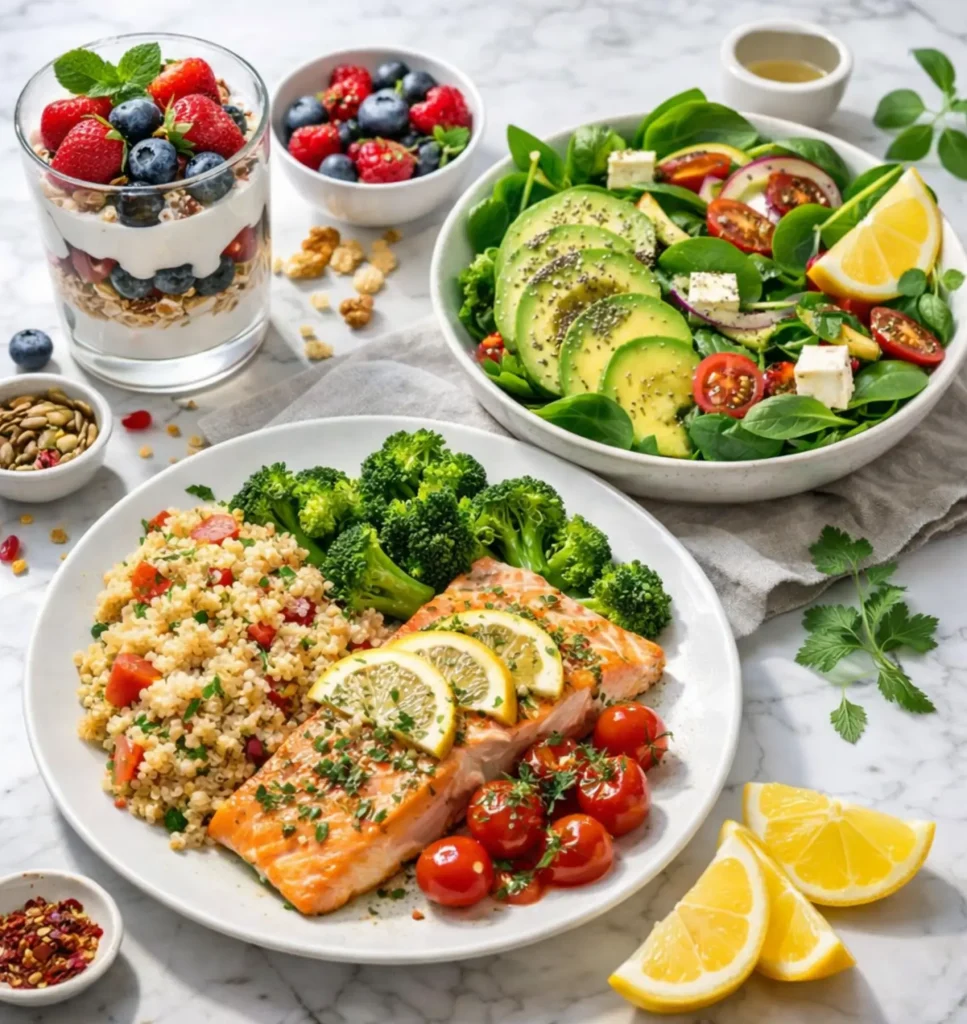
The goal is not to squeeze all ten foods into one day. I usually start with a protein source, add vegetables, include a fiber-rich carbohydrate when it suits the meal, and finish with a source of unsaturated fat. A day might include Greek yogurt with berries and ground flaxseed, a leafy salad with avocado and beans, and salmon with quinoa and roasted broccoli.
This kind of meal structure supports nutrition without pretending food can reset hormone levels. Your individual needs may vary with appetite, activity, medications, kidney health, diabetes, digestive conditions, food allergies, and other factors.
What about “hormone reset” diets?
I am cautious with any plan that promises to rebalance estrogen, cortisol, insulin, or thyroid hormones in a fixed number of days. Short elimination plans can sometimes change how a person eats, but they are not validated hormone treatments, and unnecessary restriction can make eating harder rather than healthier.
If a particular food consistently worsens digestive symptoms or another symptom, that is worth discussing with a qualified professional. But I would not remove gluten, dairy, caffeine, or entire food groups solely because a social-media “reset” labels them hormone disruptors.
Food is only one part of the picture after 50
Nutrition matters, but so do movement, muscle-strengthening activity, sleep, medications, stress, health conditions, and the natural hormonal changes of menopause. I have found that improving sleep after 50 is often just as important as fine-tuning what is on my plate.
Supplements are another area where marketing can run ahead of evidence. If you are considering vitamins, minerals, herbs, or other products, our guide to supplements for perimenopause and beyond explains what deserves a closer look and when professional guidance matters.
Frequently Asked Questions
How long does it take to balance hormones naturally at 50?
There is no reliable food-based timeline for balancing hormones after 50. Menopause-related hormone changes are biological and are not reversed by a specific diet. Nutrition can still support energy, muscle, bone, heart health, digestion, and overall wellbeing, but symptom changes vary widely between women.
What is the 14-day hormone reset?
A 14-day hormone reset is usually a commercial or wellness-style eating plan rather than a medically established treatment. These plans often restrict sugar, alcohol, caffeine, processed foods, dairy, or gluten. Some women may eat more whole foods while following one, but there is no standard 14-day diet proven to reset menopause hormones.
What foods fix hormonal imbalance?
No food can reliably fix a hormonal imbalance. Foods such as fish, vegetables, fruit, whole grains, legumes, nuts, seeds, and calcium-rich foods can support overall nutrition and healthy aging, but diagnosed hormonal disorders require appropriate medical evaluation and treatment when necessary.
How can I include these foods in my diet after 50?
You do not need to eat all ten foods every day. A practical approach is to rotate them through meals you already enjoy: add berries and ground flaxseed to Greek yogurt or oatmeal, use avocado or nuts with salads and snacks, include leafy or cruciferous vegetables with meals, and choose salmon or another oily fish when it suits your diet. Variety and consistency matter more than trying to fit every food into one day.
Can diet alone balance hormones after menopause?
Diet cannot restore postmenopausal hormone levels to their premenopausal state. A balanced diet can support health during menopause, while persistent or severe symptoms may require medical evaluation and, for some women, treatments such as menopausal hormone therapy or other evidence-based options.
The bottom line
I still like the phrase superfoods to balance hormones naturally after 50 because it reflects what many women are searching for. But the useful version of that idea is less dramatic than the marketing. These foods do not reset estrogen, progesterone, insulin, cortisol, or thyroid hormones. They help build a nutrient-dense eating pattern that supports the body through menopause and healthy aging.
Start with two or three foods you genuinely enjoy and use them consistently. Add variety over time. If you have severe or persistent symptoms, unexplained weight changes, thyroid concerns, diabetes, kidney disease, osteoporosis, digestive problems, or take medications that affect nutrition, personalized advice from a qualified healthcare professional or registered dietitian is the safer next step.