
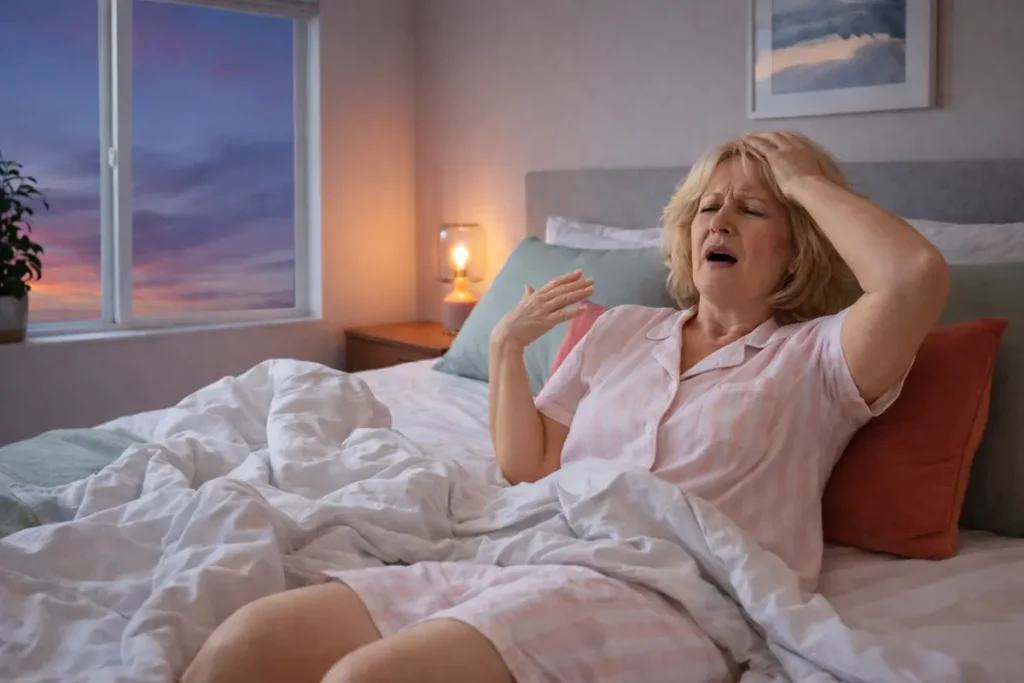
For a long time, nighttime overheating felt like a problem I should be able to solve by simply throwing off a blanket. But when I started paying closer attention, I realized that sleep temperature regulation for women over 50 is less about finding one “perfect” temperature and more about creating a bedroom that can adapt when comfort changes during the night.
Warm rooms, heavy bedding, sleepwear, hot flashes, night sweats, medications, illness, and individual temperature preferences can all affect nighttime comfort. This guide focuses specifically on the practical environment: room temperature, airflow, bedding, clothing, and what to do when overheating keeps interrupting sleep.
If temperature is only one part of a broader sleep problem, use Lonage’s practical ways to improve sleep naturally after 50 for the complete sleep plan.
Quick Answer: How Should You Manage Sleep Temperature After 50?
Start with comfort rather than a rigid thermostat number. Keep the bedroom comfortably cool, reduce heat-trapping layers, use breathable sleepwear and bedding, and make it easy to add or remove a layer without fully waking. If overheating is new, severe, drenching, persistent, or accompanied by other symptoms, do not assume the bedroom is the only cause.
Why Temperature Can Disrupt Sleep
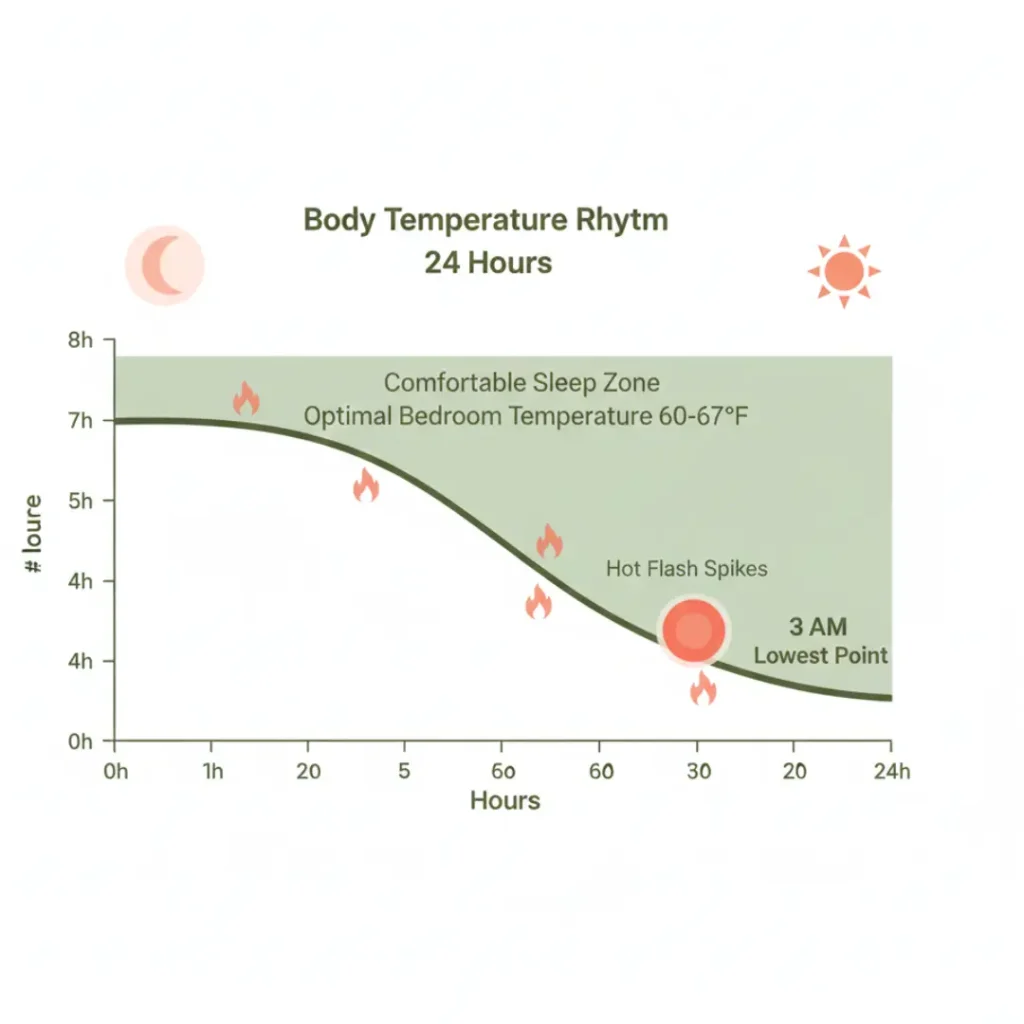
Body temperature normally changes across the day and night, and thermal comfort can influence how easily you settle and stay asleep. A room that feels too warm, heavy bedding, or sleepwear that traps heat can make an already restless night more uncomfortable.
For some women, menopause-related hot flashes or night sweats add another layer. But not every warm night is hormonal, and not every episode of sweating should be attributed to menopause. The practical goal here is to make your sleep environment easier to adjust while paying attention to symptoms that may deserve medical assessment.
There Is No Single Ideal Bedroom Temperature for Every Woman
You may see narrow temperature ranges presented as universal sleep rules. In real life, comfort varies with climate, humidity, bedding, sleepwear, health, medications, whether you share a bed, and personal preference. A cooler room may feel better for many people, but the right setting is the one that keeps you comfortable without making you shiver or overheat.
Think of your comfortable temperature as a range, not a magic number. The useful question is whether you can fall asleep without feeling chilled and stay asleep without repeatedly throwing off covers. If you share a bedroom with someone who prefers a different temperature, separate bedding layers are often more practical than overcooling the entire room.
Build an Adjustable Bedding System
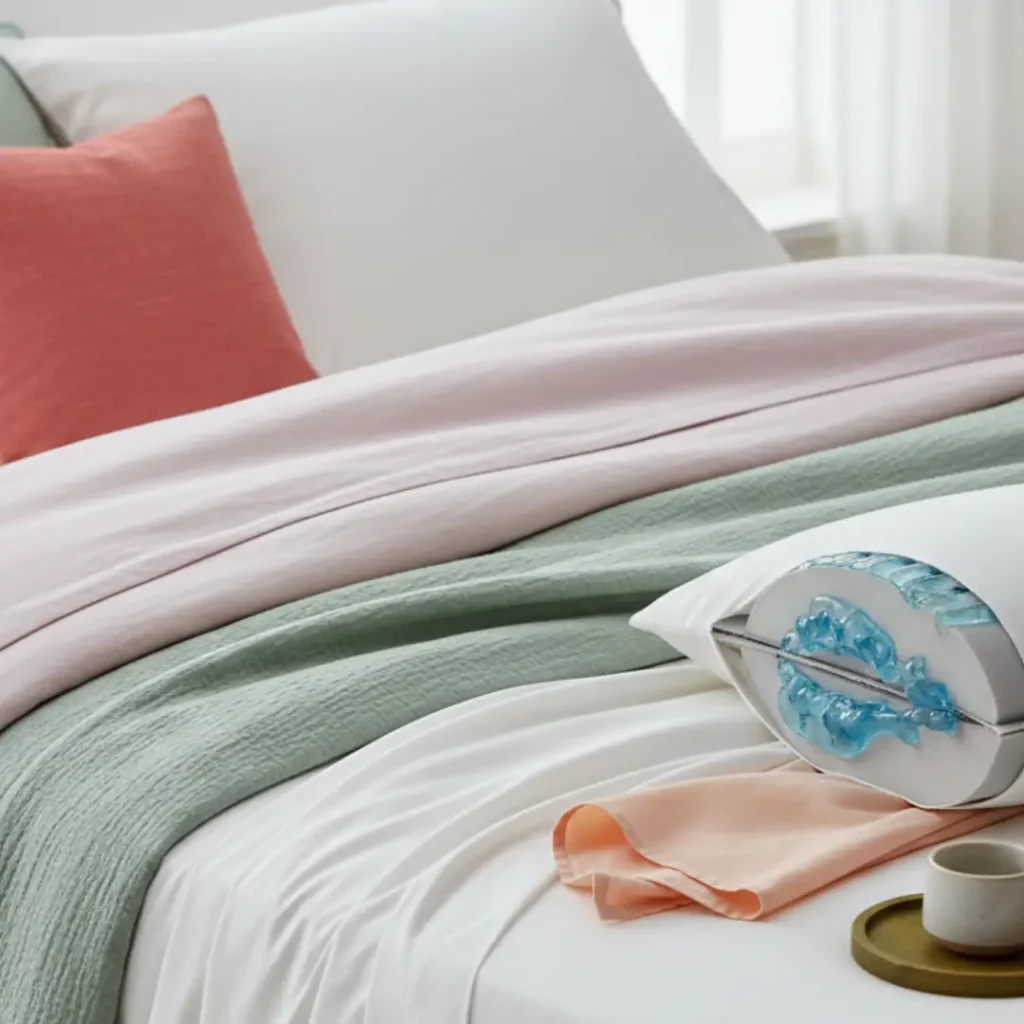
One heavy comforter gives you only two choices: covered or uncovered. Several lighter layers give you more control. A simple setup can include a sheet, a light blanket, and an additional layer within easy reach.
Breathable fabrics may feel more comfortable if you tend to overheat, but marketing terms such as “cooling” do not guarantee that a product will solve night sweats. Choose bedding based on comfort, washability, moisture management, and how easily you can adjust it during the night.
Choose Sleepwear That Does Not Trap Excess Heat
If you regularly wake feeling overheated, compare lighter, looser sleepwear with heavier or less breathable options. The goal is not a particular fabric label but clothing that feels comfortable, allows movement, and does not leave you excessively warm or damp.
Use Airflow Without Making the Room Uncomfortably Cold
A fan or safe ventilation can make a warm room feel more comfortable without requiring a dramatic thermostat change. Position airflow so it feels gentle rather than irritating or excessively cold. Keep cords and portable equipment away from walking paths, and follow manufacturer safety instructions for any electrical device used near the bed.
Create a Simple Night-Sweat Backup Plan
If you sometimes wake sweaty, preparing in advance can reduce the disruption. Keep a dry layer of sleepwear or a small towel within easy reach, use bedding that can be changed without stripping the entire bed, and keep the path to the bathroom clear and safely lit.
Avoid making major temperature changes while half asleep. If you need to get out of bed, use enough light to move safely, especially if you have balance, vision, dizziness, or mobility concerns.
Track Comfort Instead of Guessing
Before you turn the thermostat down again, notice when the heat appears. If you feel too warm as soon as you get into bed, start with the layers closest to your body. Heavy sleepwear, a heat-trapping mattress topper, or too many blankets may matter more than changing the temperature of the entire room.
If you fall asleep comfortably but wake hot later, look at what changed. Did you pull on another layer while asleep? Does the mattress hold warmth around you? Has airflow stopped because the door or window was closed? If the bedroom still feels comfortably cool but you repeatedly wake drenched in sweat, the room may not be the main explanation.
Try a simple three-night experiment instead of changing everything at once. On the first night, keep your usual setup and notice when heat actually wakes you. On the second, change only one bedding or sleepwear layer. On the third, keep those layers stable and adjust only airflow or room comfort. The point is not to “prove” a cause in three nights. It is to learn which environmental change, if any, consistently makes you more comfortable.
I find this more useful than buying several cooling products at once. When you change one variable at a time, you can tell whether the improvement came from the lighter blanket, the fan, the room itself, or simply a night when your body felt different.
When Night Sweats Need More Than a Cooler Bedroom
Occasional overheating can have an obvious environmental explanation. Persistent or drenching night sweats are different. Seek medical advice when sweating is new, severe, unexplained, repeatedly soaks clothing or bedding, or occurs with symptoms such as fever, unexplained weight loss, persistent cough, marked weakness, new pain, or other concerning changes.
Also discuss the pattern with a clinician or pharmacist if it began after starting or changing a medication. Do not stop prescribed treatment on your own because of nighttime sweating.
Frequently Asked Questions
What is the best bedroom temperature for sleep after 50?
There is no single temperature that is ideal for every woman. A comfortably cool room can help, but the best setting depends on climate, humidity, bedding, sleepwear, health, medications, and personal preference. Adjust gradually and use your nighttime comfort as the guide.
Can breathable bedding help if I overheat at night?
It may improve comfort by reducing heat trapping and making moisture easier to manage, but no bedding material can guarantee that night sweats will stop. Layering is useful because you can adjust warmth without fully waking.
Are cooling mattress pads necessary?
No. Some people find cooling products comfortable, while others do well with lighter bedding, airflow, or a modest room-temperature adjustment. Product claims vary, so treat cooling accessories as optional comfort tools rather than treatments for night sweats.
Why do I feel hot and then cold during the same night?
Your comfort can change after sweating, removing bedding, changes in room temperature, or hot flashes. The timing alone does not identify the cause. Adjustable layers can help, while persistent or unexplained temperature swings deserve medical attention.
When should night sweats be medically evaluated?
Seek medical advice when night sweats are new, severe, unexplained, persistent, repeatedly drench clothing or bedding, or occur with other concerning symptoms such as fever, unexplained weight loss, persistent cough, marked weakness, or new pain.
The Bottom Line
Better sleep temperature regulation after 50 is not about forcing your bedroom to one magic number. Make the environment adjustable: comfortably cool air, manageable layers, breathable sleepwear, safe airflow, and a simple backup plan for sweaty nights. If the sweating itself is persistent or unexplained, treat it as a symptom worth assessing rather than a thermostat problem.
This article is for general education and does not replace individualized medical advice, diagnosis, or treatment.