Somewhere between my fiftieth birthday and now, food became my ally in ways I never expected. Not in a restrictive, diet-culture way, but as a practical way to build meals that feel satisfying and nourishing. When menopause symptoms started showing up uninvited, I began paying closer attention to which healthy foods to eat during menopause could help me meet changing nutritional priorities without chasing perfection, rigid rules, or miracle foods.
Menopause is a natural transition, and food cannot “balance” hormones back to premenopausal levels or guarantee relief from symptoms. What a balanced eating pattern can do is help support bone health, muscle, cardiovascular health, digestion, and overall wellbeing. For the wider menopause picture, start with our complete menopause guide. For the broader nutrition framework beyond menopause-specific choices, see what to eat after 50.
What Should You Eat During Menopause?
There is no single menopause food list that works for everyone. A useful starting point is to build most meals from vegetables and fruit, protein-rich foods, whole grains or other fiber-rich carbohydrates, and sources of unsaturated fat. Calcium-rich foods also deserve attention around and after menopause, while individual needs can vary with health history, medications, activity, appetite, and other factors.
I find a Mediterranean-style pattern useful as a flexible framework because it emphasizes vegetables, fruit, whole grains, legumes, nuts, seeds, olive oil, fish, and other minimally processed foods. It is a pattern rather than a prescription, so it can be adapted to culture, budget, preferences, and foods you genuinely enjoy.
Food Priorities During Menopause
Menopause-related hormonal changes occur alongside the effects of aging, lifestyle, activity, and individual health conditions. Instead of attributing every change after 50 to estrogen alone, I focus on a few practical food priorities that can make everyday meals more nutritionally complete.
Protein-Rich Foods
Eggs, fish, poultry, Greek yogurt, cottage cheese, tofu, beans, and lentils are practical ways to include protein across the day. Protein is especially relevant when preserving muscle becomes a priority with age, but the amount that is appropriate is individual. If you want the detailed numbers rather than another generic target, our guide to protein intake for muscle mass after 50 covers that question separately.
Calcium- and Vitamin D-Rich Foods
Bone health deserves particular attention around and after menopause. Dairy foods, calcium-set tofu, some leafy greens, and calcium-fortified foods can contribute calcium. Vitamin D is naturally present in relatively few foods, with oily fish and some fortified foods among the dietary sources. Needs and supplement decisions depend on more than food alone, so this article does not prescribe a dose. Our guide to vitamin D during menopause covers those considerations in more detail.
Fiber-Rich Plants
Vegetables, fruit, beans, lentils, oats, and whole grains provide fiber and can help make meals more satisfying. Variety matters more than finding one “best” menopause fruit or vegetable. If you are increasing fiber, doing it gradually and drinking enough fluid may be more comfortable than making a dramatic overnight change.
Can Fruit Help Balance Hormones During Menopause?
It is tempting to describe certain fruits as “hormone-balancing,” especially during menopause, but the evidence does not allow us to say that eating a particular fruit will balance hormones or restore estrogen to premenopausal levels. Menopause involves complex hormonal changes, and no single fruit can be expected to correct them.
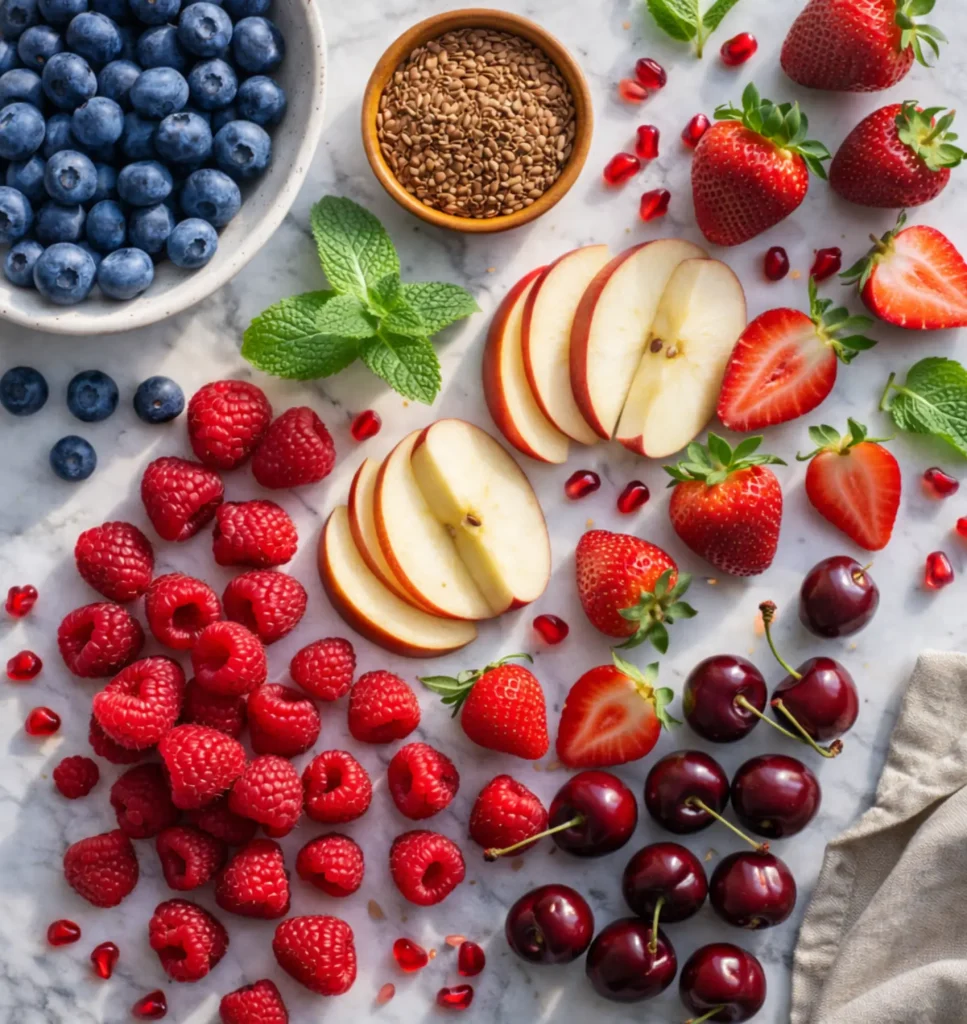
That does not make fruit unimportant. Berries, apples, citrus fruits, cherries, pears, and pomegranate can contribute fiber, vitamins, minerals, and a variety of plant compounds to a nutrient-rich eating pattern. These foods can support overall nutrition during menopause without needing to be presented as hormone treatments.
Instead of searching for one “best fruit for hormone balance,” I prefer to include different fruits throughout the week and combine them with other nutrient-rich foods. Berries with Greek yogurt, an apple with nuts, or pomegranate added to a salad are simple ways to make fruit part of a balanced menopause-friendly diet.
Unsaturated Fats
Olive oil, nuts, seeds, avocado, and oily fish can be useful parts of a heart-conscious eating pattern. They are not hormone treatments. I think of them simply as nutrient-rich foods that can add flavor, texture, and staying power to meals.
Soy Foods During Menopause: What the Evidence Can and Cannot Say
Soy foods such as tofu, tempeh, edamame, and soy milk contain isoflavones, plant compounds that can interact with estrogen receptors but are not the same as the estrogen produced by the body. Research on soy isoflavones and menopausal symptoms has produced variable results, so I would not describe soy as a guaranteed symptom treatment or a way to “rebalance” hormones.
Whole soy foods can still be useful because they provide protein and other nutrients regardless of whether someone notices a change in symptoms. Flaxseed, legumes, and sesame seeds can also fit naturally into a varied diet without needing to label any one of them a hormone balancer. That distinction matters: a nutritious food does not need a dramatic hormonal claim to earn a place on the plate.
A Simple Menopause-Friendly Plate
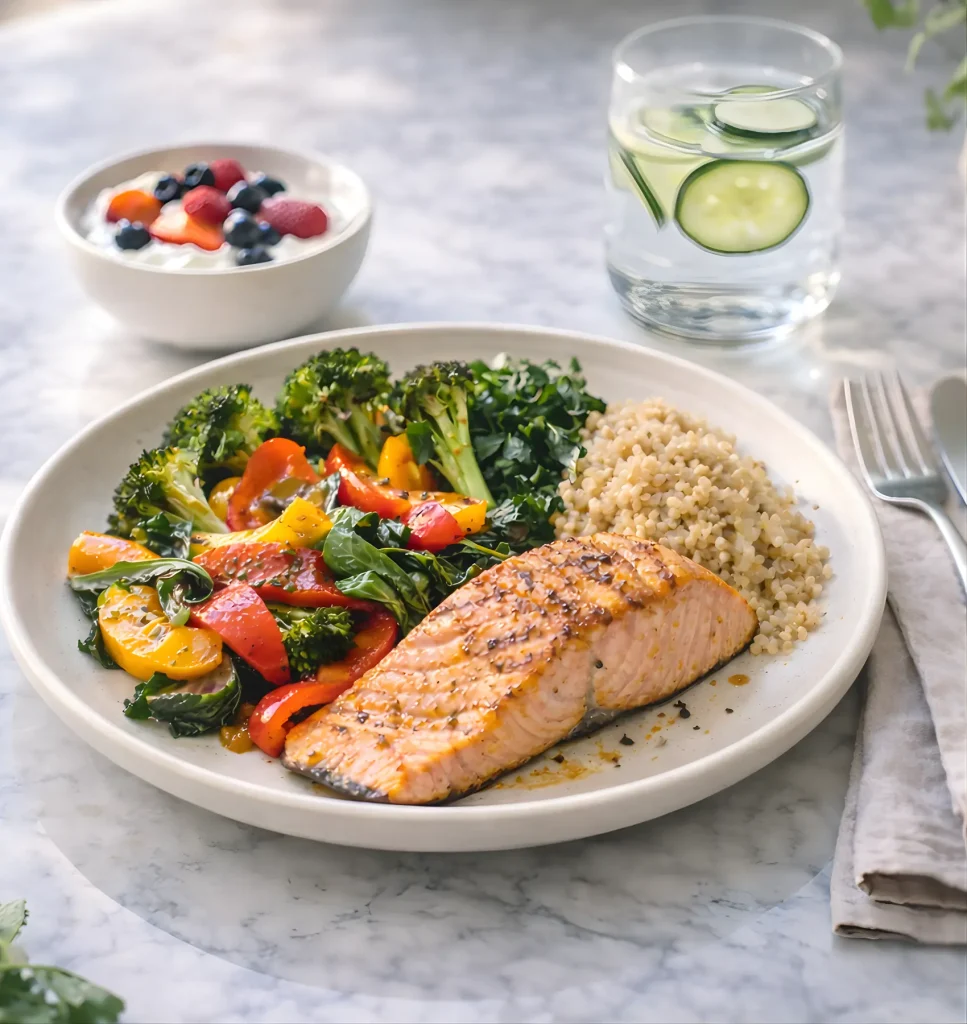
I keep the formula simple: start with vegetables or another fiber-rich plant food, add a useful source of protein, include a whole grain or other fiber-rich carbohydrate when it suits the meal, and add an unsaturated fat for flavor and satisfaction. That might look like salmon with roasted vegetables and brown rice, lentil soup with whole-grain bread and a side salad, or tofu with mixed vegetables and quinoa.
This is deliberately a flexible framework, not a menopause meal plan or a prescription. Appetite, activity, medications, digestive conditions, diabetes, kidney disease, food allergies, and other health factors can all change what is appropriate for an individual.
Foods and Drinks You May Want to Limit, Not Fear
I prefer “limit” over “ban.” Frequently choosing foods high in added sugars, sodium, or heavily refined carbohydrates can crowd out more nutrient-dense choices, but an occasional dessert or convenience meal does not undo an otherwise balanced eating pattern. There is no universal list of foods every woman must eliminate during menopause.
Water is a simple foundation for hydration. Caffeine, alcohol, and spicy foods deserve an individual approach because some women notice that they affect sleep or symptoms such as hot flashes, while others do not notice the same pattern. Rather than assuming a universal trigger, pay attention to your own response. For a dedicated look at beverages, see our guide to drinks to consider during menopause.
Practical Ways to Make These Foods Easier to Eat Regularly
The most useful eating pattern is one you can repeat. I would rather make a few reliable choices easier than build an elaborate menu that lasts three days. Keeping frozen vegetables, canned beans or lentils, eggs, plain yogurt or a fortified alternative, whole grains, nuts, seeds, and a few favorite protein foods on hand can make balanced meals much easier to assemble.
Breakfast can become more substantial by adding eggs, Greek yogurt, tofu, or another protein source. A snack can be fruit with yogurt or nuts instead of fruit alone. At dinner, adding an extra vegetable or swapping a refined grain for a whole-grain option more often can improve the overall pattern without requiring a complete dietary overhaul.
I also use convenience strategically. Frozen vegetables, no-added-salt canned beans, pre-cooked whole grains, and simple tinned fish can reduce preparation time. “Healthy” does not have to mean cooking every ingredient from scratch.
Frequently Asked Questions
What are the best foods to eat during menopause?
There is no single best menopause food. A practical pattern includes vegetables, fruit, legumes, whole grains, protein-rich foods, calcium-rich foods, nuts, seeds, and sources of unsaturated fat. Variety and overall dietary pattern matter more than one superfood.
Which nutrients should I prioritize during menopause?
Protein, calcium, vitamin D, fiber, and unsaturated fats are useful nutrients to consider, but needs vary. Food sources can include fish, eggs, yogurt or fortified alternatives, tofu, beans, lentils, vegetables, fruit, whole grains, nuts, seeds, and olive oil.
Are soy foods good to eat during menopause?
Whole soy foods such as tofu, tempeh, edamame, and soy milk can provide protein and other nutrients. Soy isoflavones are not the same as human estrogen, and research on menopausal symptom relief is variable, so soy should not be treated as a guaranteed hormone-balancing remedy.
What foods should I limit during menopause?
Most women do not need a universal forbidden-food list. It can be reasonable to limit frequent high intakes of foods rich in added sugars, sodium, and heavily refined carbohydrates, while paying attention to whether alcohol, caffeine, or spicy foods affect symptoms for you personally.
What are easy food swaps during menopause?
Simple swaps can include choosing whole grains more often, adding beans or lentils to soups and salads, pairing fruit with yogurt or nuts, adding a protein source to breakfast, and keeping frozen vegetables available for quick meals. The goal is a more nutrient-dense overall pattern, not dietary perfection.
Bottom Line
The biggest shift for me was letting go of the idea that menopause requires a special “hormone-balancing” menu. A useful eating pattern is much less dramatic: vegetables and fruit I enjoy, enough protein, fiber-rich carbohydrates, calcium-rich foods, unsaturated fats, and room for flexibility. The goal is not to eat perfectly or use food as a hormone treatment. It is to make everyday meals nutritionally stronger and easier to sustain.
If you have osteoporosis, diabetes, kidney disease, digestive disorders, food allergies, a history of disordered eating, or take medications that affect nutrition, personalized advice from your healthcare professional or a registered dietitian is especially important.