
When my doctor told me that my vitamin D level was low, several symptoms I had been brushing off—tiredness, body aches, and changes in my mood—suddenly felt worth discussing more carefully. Those symptoms can have many possible causes, including menopause and other health conditions, so a vitamin D result cannot explain everything on its own. Still, it helped me understand why this nutrient is worth paying attention to, especially during the years when bone health becomes a more important part of the conversation.
If you are asking, “How much vitamin D should a menopausal woman take?”, there is no single dose that is right for every woman. The appropriate amount depends on total intake, diet, medical history, medicines, risk factors, and whether a clinician has identified a deficiency. This guide focuses specifically on vitamin D intake, testing, deficiency-related decisions, and safety during menopause rather than trying to turn one number into a prescription for everyone.
For the broader menopause-supplement context, start with our supplements for perimenopause and beyond guide. This page stays focused on vitamin D dosage and testing.
What Vitamin D Does and What It Cannot Tell You About Menopause Symptoms
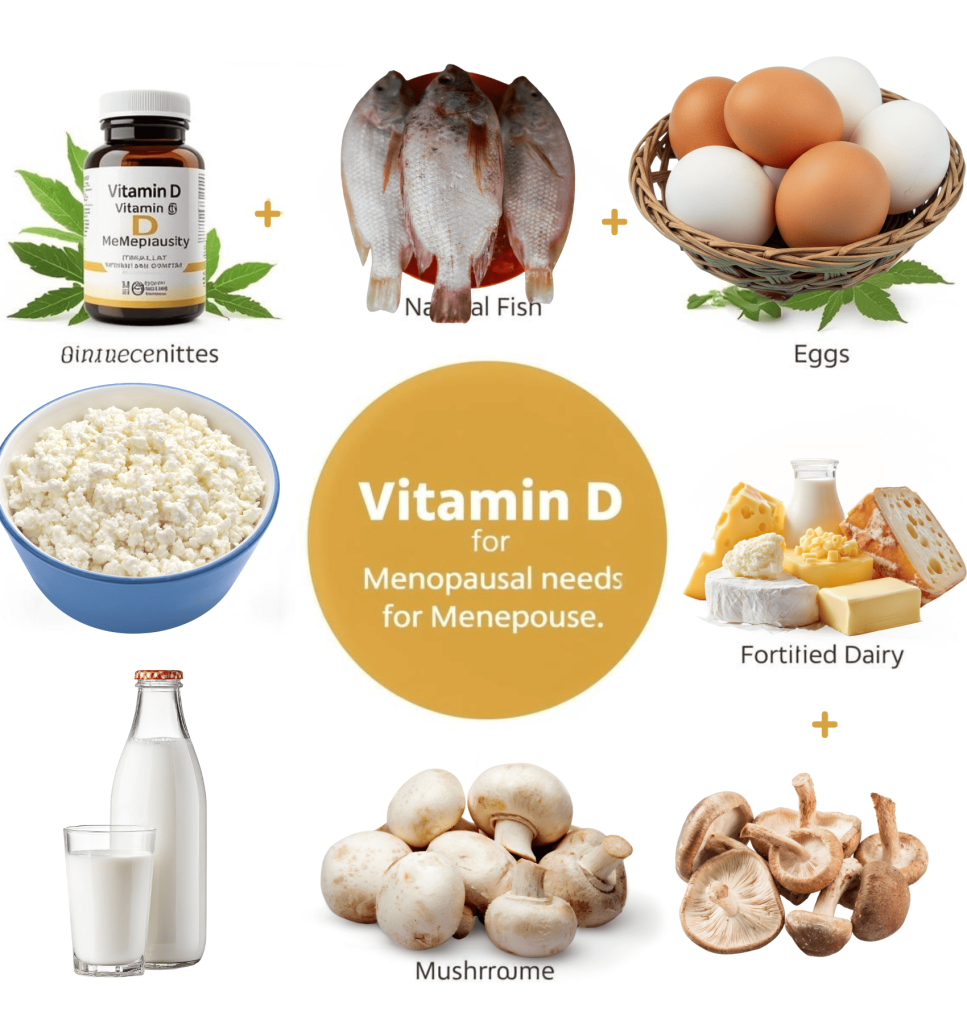
Menopause can make bone health a more important part of the conversation because declining estrogen is associated with changes in bone loss. That does not mean every menopausal woman needs a high-dose vitamin D supplement, or that vitamin D explains fatigue, mood changes, aches, or other menopause symptoms. Vitamin D is one part of a broader picture that can also include food, physical activity, fall prevention, bone-density assessment when clinically appropriate, and professional advice.
Vitamin D helps the body absorb calcium and supports normal bone and muscle function. If your question is how vitamin D and calcium fit together rather than how much vitamin D to take, our vitamin D and calcium after 50 overview owns that broader bone-nutrition question.
How Much Vitamin D Do Adults Need?
Recommended vitamin D intake is not the same as an individualized treatment dose. Reference intakes describe general population needs, while treatment for a confirmed deficiency may use a different plan under professional supervision. The adult tolerable upper intake level is a safety boundary, not a target dose and not a reason to self-treat up to that amount.
A general article cannot determine the right dose for an individual woman. If deficiency is suspected or confirmed, a qualified healthcare professional can consider total intake, diet, existing supplements, medical history, medicines, risk factors, and relevant laboratory results before deciding whether supplementation is appropriate and at what amount.
The practical distinction is important: a woman trying to meet routine nutritional needs is not necessarily in the same situation as someone being treated for a documented deficiency, malabsorption, or another medical condition.
25(OH)D Blood Tests: What the Result Can and Cannot Show
The blood marker commonly used to assess vitamin D status is 25-hydroxyvitamin D, usually written as 25(OH)D. A result can be useful in the right clinical context, but it does not by itself explain every symptom or automatically determine one personal dose.
Routine testing is not automatically necessary for every asymptomatic adult. Testing may deserve discussion when symptoms, risk factors, a medical condition, medicines, malabsorption, previous bariatric surgery, bone-health concerns, or another clinical reason make the result useful for decision-making.
Tiredness, muscle or bone aches, weakness, and mood changes can occur in people with low vitamin D, but they are nonspecific. They can also occur with sleep problems, thyroid conditions, anemia, medication effects, menopause-related changes, and many other health issues. If your concern is a cluster of possible deficiency symptoms rather than vitamin D dosage itself, our guide to possible signs of vitamin deficiency after 50 explains why symptoms need context rather than self-diagnosis.
Vitamin D2 vs. D3: What Matters Most
Vitamin D supplements commonly contain vitamin D2 (ergocalciferol) or vitamin D3 (cholecalciferol). Both can contribute to vitamin D status. Product choice should not be reduced to a blanket claim that one form is always the right option for every person; amount, reason for use, medical context, and professional guidance all matter.
Vitamin D is fat-soluble, so taking it with a normal meal that contains some dietary fat may support absorption. That food-versus-fasting question is different from choosing a dose. Our vitamin D on an empty stomach guide covers that issue without mixing it with dosage decisions.
The exact clock time is another separate question. If you are deciding between morning, lunch, or evening, or wondering whether K2 belongs in the same routine, use our vitamin D3 and K2 timing guide.
Food, Supplements and Sun Exposure: A Balanced Approach
Vitamin D can come from foods such as fatty fish, egg yolks, fortified dairy or plant beverages, and other fortified products. Food can contribute to total intake, although how much it contributes depends on the foods and portions you actually eat.
Sunlight also contributes to vitamin D production, but the amount varies with season, latitude, skin pigmentation, age, clothing, sunscreen use, and other factors. A fixed number of minutes in the sun should not be treated as a personal dosing prescription, and skin-cancer prevention should not be abandoned to obtain vitamin D.
If you use a supplement, look at your total intake from all products rather than the vitamin D bottle in isolation. Multivitamins, calcium formulas, and other combination products may already contain vitamin D. Do not increase the amount simply because you previously took it at a different time of day or without food.
When a Clinician May Recommend a Different Plan
Limited sun exposure, skin pigmentation, season, diet, body composition, gastrointestinal disease, bariatric surgery, kidney or liver conditions, and selected medicines can all affect vitamin D status or supplement decisions. None of those factors alone tells you exactly how much to take.
If a deficiency has been diagnosed, treatment should be based on the reason for the deficiency, its severity, your medical history, medicines, and follow-up plan. Avoid borrowing someone else’s regimen or treating an upper safety limit as a personal target.
Frequently Asked Questions
Is there one vitamin D dose for every woman after menopause?
No. Needs vary according to total intake, diet, existing supplement use, medical history, medicines, risk factors and clinical findings. A general article cannot determine an individual treatment dose.
Should I test my vitamin D level before taking a supplement?
Not everyone needs routine testing. Testing may be useful when symptoms, risk factors, medical conditions, medicines, malabsorption, bone-health concerns or a clinician’s assessment make the result relevant to a decision.
What does a 25(OH)D blood test measure?
25-hydroxyvitamin D, written as 25(OH)D, is the blood marker commonly used to assess vitamin D status. A result needs clinical context and does not by itself determine one personal supplement dose.
Is the adult vitamin D upper limit the same as a recommended dose?
No. An upper limit is a safety boundary for total daily intake, not a target dose for everyone. Treatment for a confirmed deficiency may follow a different clinician-directed plan.
Does vitamin D treat fatigue or mood changes by itself?
No. Fatigue, low mood, aches and other symptoms have many possible causes. Vitamin D status may be relevant in some situations, but supplementation should not be presented as a stand-alone treatment for these symptoms.
Can vitamin D supplements interact with medicines or other supplements?
They can be relevant to medication and health conditions, and several products may duplicate vitamin D or other nutrients. Review your complete medicine and supplement list with a pharmacist or clinician when the regimen is complex or medically significant.
Next Steps: Discussing Vitamin D With Your Healthcare Professional
Understanding how much vitamin D should a menopausal woman take is less about finding one perfect number and more about knowing which information belongs in the decision. Total intake, diet, medicines, health conditions, risk factors, and relevant laboratory findings all matter.
If you are considering a vitamin D blood test or supplement, discuss whether it is appropriate for your circumstances and what the result would change. Vitamin D matters for normal bone and muscle function, but it should not become a catch-all explanation for every symptom of menopause.