
Somewhere around my early fifties, I remember standing in my California kitchen, staring at my coffee and thinking, “Why am I this tired when I haven’t even done anything yet?” My bones felt a little creaky, my brain misplaced words it never used to lose, and by 3 p.m., my energy had already said goodnight. That was when I started paying closer attention to the vitamins for women over 50, not because one supplement could explain everything I was feeling, but because nutrition starts to deserve a more thoughtful look in this stage of life.
What I’ve learned, both from my own experience and from talking with other women, is that it is easy to blame every change on “getting older.” Fatigue, forgetfulness, poor sleep, aches and mood changes can have many causes. Nutrition is one part of the picture, and sometimes an important one. Symptoms are clues, not proof of a vitamin deficiency.
In this guide, we’ll walk through the nutrients that often deserve attention after 50, why they matter, where food fits in, and when a supplement or a conversation with your healthcare professional may be worth considering. The goal is not to turn your day into a full-time wellness project. It is to make the choices on your plate feel simpler, more informed and more useful.
Why nutrition deserves a second look after 50
Let’s be honest. Most of us hit our fifties expecting a few wrinkles and maybe a hot flash or two. What can be more surprising is how much our daily context changes: menopause affects bone health, appetite can shift, some medicines influence nutrient absorption, and digestive conditions become more relevant for some women.
That does not mean every woman suddenly needs a cabinet full of supplements. It means this is a good time to look at the whole picture: what you eat regularly, whether you avoid certain food groups, what medications you take, whether you have conditions that affect absorption, and whether a clinician has identified a specific deficiency.
Vitamin D, calcium, vitamin B12, magnesium and zinc are often part of that conversation. Omega-3 fats matter too, although they are fats rather than vitamins. Think of this article as your map: we will touch each area without turning one page into a detailed dosing guide for every nutrient.
Vitamin D and calcium: the pair your bones depend on
I don’t know about you, but at some point, stairs started to feel more “real.” Maybe it was watching a friend deal with a fracture. Maybe it was hearing the word “osteopenia” in a doctor’s office. Suddenly, bones are not theoretical anymore.
Calcium gives bone much of its mineral structure, while vitamin D helps the body absorb calcium and supports normal bone and muscle function. After menopause, declining estrogen is associated with faster bone loss, which is why these nutrients become part of a broader bone-health conversation that also includes strength training, balance, fall prevention, smoking, alcohol use, medical history and medications.
In everyday terms, a food-first approach might include yogurt or other dairy foods, calcium-fortified plant beverages, calcium-set tofu, selected leafy greens, and canned fish with edible bones. Vitamin D can come from fatty fish, fortified foods and supplements when appropriate. Sunlight contributes to vitamin D production, but it is not a precise dosing method and should never replace sun-safety practices.
If you want to see how calcium and vitamin D fit together in bone-health nutrition, our Vitamin D and Calcium After 50 guide walks through that relationship without turning the page into a dosing prescription.
If calcium itself is the question, our calcium guide for women over 50 covers food sources, supplement forms, intake context and calcium-specific safety in more detail.
And if your question is practical vitamin D use rather than dose, the vitamin D with food or on an empty stomach guide handles the food-versus-fasting question, while the vitamin D3 and K2 timing guide focuses on clock time, consistency and K2-specific considerations.
Vitamin B12 after 50: when it deserves a closer look
Have you ever walked into a room and thought, “Why did I come in here?” Or sat down at 2 p.m. and felt like someone unplugged your energy? I have. The tempting conclusion is to reach for a B vitamin, but fatigue and brain fog are not specific enough to tell us whether B12 is the problem.
Vitamin B12 is essential for normal red blood cell formation, DNA synthesis and neurological function. Some adults absorb food-bound B12 less efficiently as they get older, and risk can also be influenced by a plant-based diet, certain gastrointestinal conditions, bariatric surgery, and long-term use of some medicines that reduce stomach acid.
That is why I prefer a simple rule: start with the diet and the risk factors, then investigate when there is a reason. Eggs, fish, dairy foods and fortified products can all contribute B12. If you want the food side in practical detail, see our natural sources of B12 for women over 50.
If tiredness, tingling, weakness or other symptoms persist, that deserves a broader clinical conversation rather than self-diagnosing a deficiency from symptoms alone. Our guide to signs of vitamin deficiency after 50 explains when it makes sense to look more closely.
Omega-3, magnesium and zinc: what they actually do
Some nutrients get a lot of attention online, and that can make them sound almost magical. This is where I find it helpful to stop thinking in terms of miracle supplements and start thinking about the specific jobs each nutrient performs.
Omega-3 fats are found in foods such as salmon, sardines, mackerel, walnuts, chia and flax. They are part of cell membranes and play roles in normal cardiovascular and neurological function. A supplement is not automatically necessary just because you are over 50.
Magnesium is involved in hundreds of biochemical reactions, including normal muscle and nerve function, blood glucose regulation and bone processes. Nuts, seeds, beans, whole grains and leafy greens are useful food sources. Low magnesium can occur, but poor sleep, anxiety or muscle tension alone cannot tell you whether your magnesium level is low.
Zinc supports normal immune function, wound healing and many enzyme reactions. Seafood, meat, dairy foods, beans, nuts, seeds and fortified foods can contribute meaningful amounts.
The pattern here is simple: know the nutrient’s job, look first at food, and use supplements to fill a demonstrated or likely gap rather than to treat a vague symptom.
What a vitamin-rich day can actually look like after 50
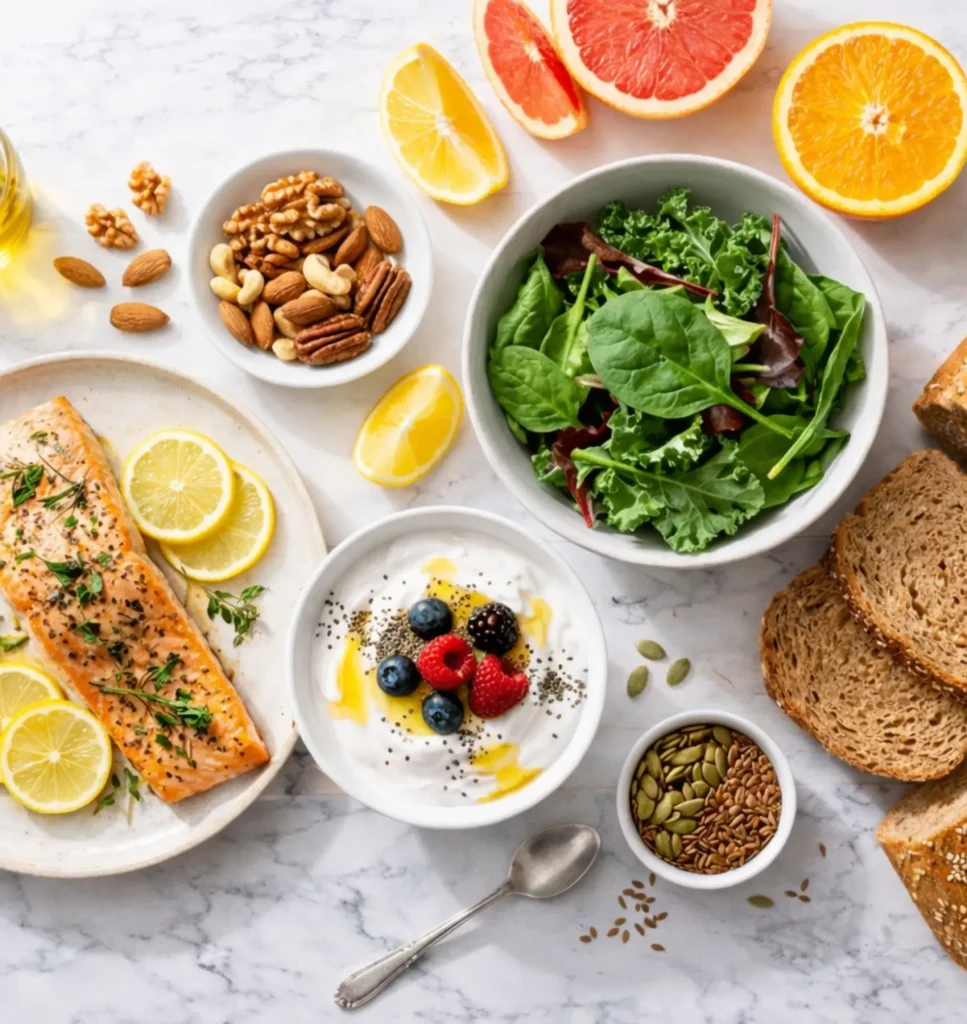
Lists are useful, but what does all this look like in real life? Let’s walk through a simple California-style day that brings several nutrients together without making food feel like a prescription.
Morning:
You start with Greek yogurt or a fortified plant yogurt topped with fresh berries, chopped walnuts and chia seeds. Depending on the product, that can contribute calcium, protein, B vitamins, magnesium and healthy fats, with vitamin D if the yogurt is fortified.
Lunch:
You build a big salad with mixed leafy greens, half an avocado, grilled salmon or chickpeas, pumpkin seeds and a slice of whole-grain bread. That combination adds protein, fiber, magnesium, zinc and healthy fats, with omega-3s if you choose the salmon.
Afternoon snack:
An apple with almond butter or a small handful of nuts and dark chocolate is simple, satisfying and adds magnesium, fiber and unsaturated fats.
Dinner:
You roast chicken or tofu with broccoli, kale and sweet potatoes, then add lentils or beans on the side. The point is not to “hit” every nutrient perfectly. It is to build variety across the day so that several needs are covered naturally through meals.
Food first or supplements? A realistic approach after 50
Now for the practical question many women whisper: “Do I really need supplements, or can I just eat better?”
Food first, supplements second. I like that approach because food brings more than isolated nutrients. It brings protein, fiber, fats, carbohydrates, pleasure, culture and routine. But food is not always enough in every situation. A restrictive diet, low appetite, certain medicines, malabsorption, a diagnosed deficiency or a specific medical condition can change the equation.
A balanced approach after 50 can look like this:
- Start with food. Build most meals around varied, nutrient-rich foods rather than individual “super” nutrients.
- Look for patterns in your diet. Notice whether you routinely exclude major nutrient sources, such as animal foods or dairy.
- Treat symptoms as questions, not diagnoses. Use them as a reason to ask questions, not as proof that a specific vitamin is low.
- Test when the result would change what you do. Consider testing when your clinician believes it would help guide the next step.
- Review supplements if you take medications. Go through your full supplement list with a doctor or pharmacist if you use prescription medicines or combine several products.
If you are specifically wondering whether a daily multi makes sense, our multivitamin guide for women over 50 is the better place to compare the decision, label and safety questions in depth.
Which nutrients deserve the most attention after 50?
This is the big question, so let’s answer it clearly: there is no single supplement list that every woman over 50 needs. The priorities depend on diet, health, medications and life stage. Still, several nutrients are worth knowing about:
- Vitamin D for normal calcium absorption and bone and muscle function.
- Calcium for bone structure, muscle contraction and nerve signaling.
- Vitamin B12 for red blood cell formation, DNA synthesis and neurological function.
- Magnesium for normal muscle, nerve and metabolic function.
- Zinc for immune function, wound healing and enzyme activity.
- Omega-3 fats as essential fatty acids that contribute to normal cell and cardiovascular function.
The goal is not to collect bottles. It is to identify what your regular diet already provides, recognize where a genuine gap may exist, and use a supplement only when there is a sensible reason to do so.
FAQ: honest answers for women 50+
What are the most important vitamins for a woman over 50?
There is no universal supplement list for every woman over 50. Vitamin D, calcium, vitamin B12, magnesium and zinc are commonly discussed because they support normal bone, nerve, blood-cell, muscle and immune functions. What matters most depends on your diet, health history, medications and whether a true deficiency or increased need has been identified.
Can I get enough vitamins from food after 50?
Many nutrient needs can be met through a varied diet, but not every woman has the same circumstances. Restrictive diets, low appetite, malabsorption, certain medications and a diagnosed deficiency can make supplementation appropriate. Food should usually be the starting point, with supplements used to address a real gap rather than as a substitute for a balanced diet.
When should a woman over 50 consider checking for a nutrient deficiency?
Testing may be worth discussing when symptoms persist, your diet excludes major nutrient sources, you have a condition or surgery that affects absorption, you use medicines linked with nutrient problems, or your clinician believes a result would change treatment. Symptoms alone cannot identify which nutrient, if any, is low.
Do I need a multivitamin made specifically for women over 50?
Not automatically. A 50+ formula may be convenient for some women, but the label still needs to fit your actual diet, medications and health needs. Avoid assuming that age alone means you need every nutrient in a multivitamin or that higher doses are better.
Can vitamins and minerals interact with medications?
Yes. Some supplements can affect how prescription medicines are absorbed or work, and combining several products can also lead to unnecessarily high total intakes. If you take prescription medicines, bring your complete supplement list to your doctor or pharmacist for review.

The vital vitamins for women over 50 are not about fighting age or pretending we are still 25. They are about understanding what our bodies use, noticing where our everyday diet is strong, and knowing when a gap deserves more attention.
I still like the idea of starting small. Maybe that means adding a fortified yogurt at breakfast, putting salmon or beans on the menu more often, checking the label on a supplement you already take, or asking your doctor whether a symptom or risk factor deserves testing. Those are practical steps. They respect both the science and real life.
If you want to zoom out and see how all of these nutrients fit into the way you eat every day, our guide to what to eat after 50 brings the full picture together, from everyday meals to the broader nutrition priorities that matter after 50.