
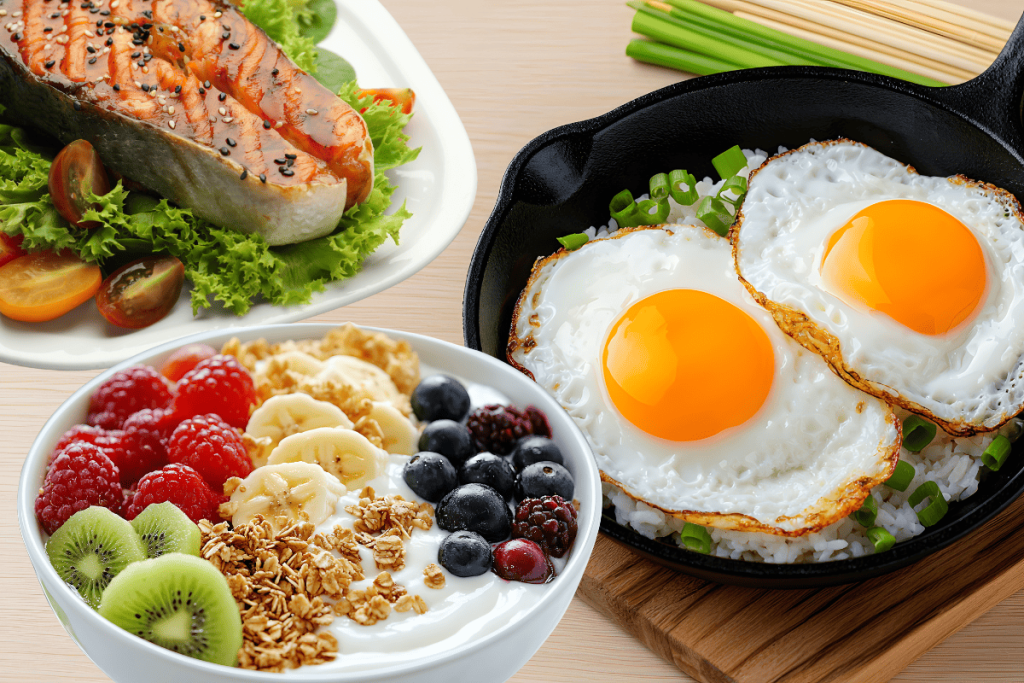
One morning, I stood in my kitchen, staring at my perfectly organized vitamin cabinet, and realized I’d been overlooking something fundamental. Despite eating what I thought was a healthy diet, I was exhausted and foggy-brained. When my doctor told me my B12 was low, it changed the way I looked at food, but it also taught me something important: symptoms alone could never have told me that B12 was the cause.
This guide has one clear purpose: helping women over 50 identify practical food and fortified-food sources of vitamin B12. It is not a diagnostic guide and it is not a B12 supplement dosing guide. For the wider micronutrient picture, start with our guide to vitamins and nutrients for women over 50.
Why B12 From Food Deserves Attention After 50
Vitamin B12 supports normal red blood cell formation, DNA synthesis and neurological function. B12 in food is bound to protein and must be released during digestion before it can be absorbed. Some older adults, as well as people with certain gastrointestinal conditions, previous surgery or particular medicines, may have more difficulty absorbing food-bound B12.
That does not mean every woman over 50 is deficient or that eating more B12-rich food will correct every case. If absorption is impaired or deficiency is confirmed, food alone may not be the appropriate treatment. This article stays with the food question and hands supplement decisions to our B12 and B-complex guide for women 50+.
Natural Sources of B12 for Women Over 50

Fish and shellfish
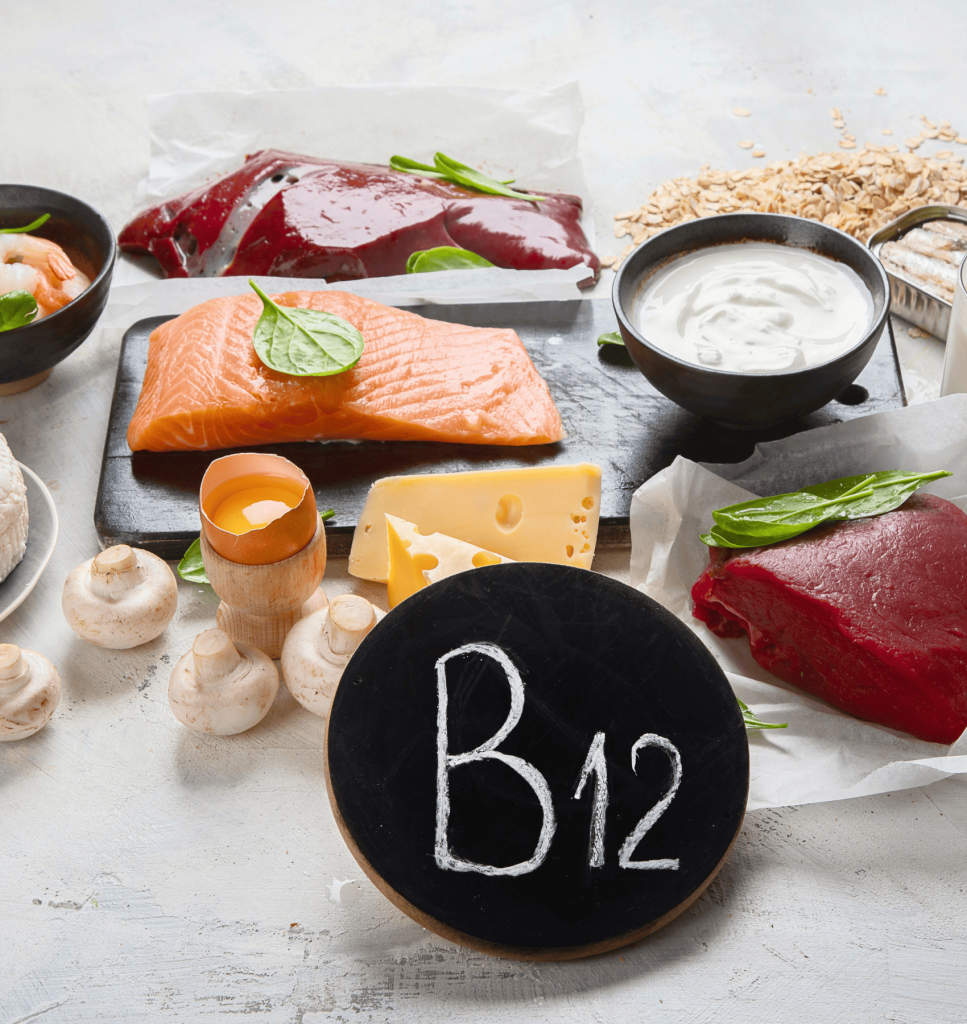
Fish and shellfish are among the richest natural dietary sources of B12. Salmon, tuna, sardines, trout and shellfish can all contribute meaningful amounts. Exact B12 content varies by species, serving size and preparation, so use a reliable nutrition database or food label when you need a precise number.
Eggs
Whole eggs provide B12 and can be an easy part of breakfast or another meal. The yolk contains much of the egg’s B12. Rather than treating two eggs as a fixed percentage of everyone’s needs, think of eggs as one contributor within a varied diet.
Dairy foods
Milk, yogurt and cheese can contribute B12 for women who include dairy. Lactose-free dairy products may also contain B12, but amounts vary, so labels remain useful.
Meat
Beef and other animal foods can provide B12. You do not need to build your entire diet around one source; variety can make it easier to balance B12 with protein, fiber, fats and other nutrients that matter after 50.
Fortified foods for plant-based eating
Unfortified plant foods are not reliable sources of vitamin B12. For women following vegan or largely plant-based diets, fortified foods such as selected breakfast cereals, plant beverages or nutritional yeast can be important sources. Fortification varies widely, so check the label rather than assuming every product contains B12.
Food Sources vs. B12 Deficiency
This distinction matters. Eating B12-rich foods can help meet dietary needs, but a confirmed deficiency may have causes that food alone does not solve. Restricted diets, gastrointestinal disease, previous surgery and some medicines can affect B12 status or absorption.
Fatigue, brain fog, weakness or tingling can occur with B12 deficiency, but they are nonspecific and can have many other causes. If you are concerned about symptoms rather than food choices, our guide to possible signs of vitamin deficiency after 50 explains why symptoms should prompt appropriate evaluation rather than self-diagnosis.
A Practical Food-First B12 Routine
I find it easier to think in patterns than perfect numbers. If you eat animal foods, rotate options such as eggs, fish, dairy and meat according to your preferences. If you eat plant-based, make fortified B12 foods a deliberate part of your routine and check the label because products differ.
If you are unsure whether your diet provides enough B12, or you have risk factors for poor absorption, a dietitian, pharmacist or clinician can help you decide whether food is enough or whether another approach deserves consideration.
Frequently Asked Questions
How can I get more B12 naturally from food?
Include reliable B12 sources that fit your eating pattern, such as fish, shellfish, eggs, dairy and meat. If you eat plant-based, choose foods specifically fortified with B12 and check the label because fortification varies by product.
Are plant foods natural sources of vitamin B12?
Unfortified plant foods are not considered reliable sources of vitamin B12. People following vegan or largely plant-based diets generally need deliberate sources such as B12-fortified foods and may need professional guidance about supplementation.
Can B12-rich foods treat a confirmed B12 deficiency?
Not always. A confirmed deficiency can result from inadequate intake, impaired absorption, gastrointestinal conditions, surgery or other causes. Treatment depends on the cause and severity, so food should not automatically be used as a substitute for an individualized treatment plan.
Can fatigue or brain fog tell me that I need more B12?
No. Fatigue and brain fog are nonspecific symptoms with many possible causes. B12 deficiency is one possibility in the right context, but symptoms alone cannot diagnose it or determine whether food or a supplement is appropriate.
Natural sources of B12 for women over 50 do not need to become another complicated nutrition rule. Build meals around foods you enjoy, use fortified options deliberately when needed, and keep the boundary clear between improving dietary intake and treating a medical deficiency.