

As women move through their 50s and beyond, it is natural to wonder whether a daily multivitamin is necessary. The answer is not automatically yes. A multivitamin can be useful in some situations, but it should be chosen to address a real dietary or clinical need rather than treated as insurance against every symptom of aging.
For the wider micronutrient picture first, our guide to vitamins and nutrients for women over 50 explains which nutrients deserve attention and why. This article focuses specifically on deciding whether a multivitamin fits your routine and how to read the label safely.
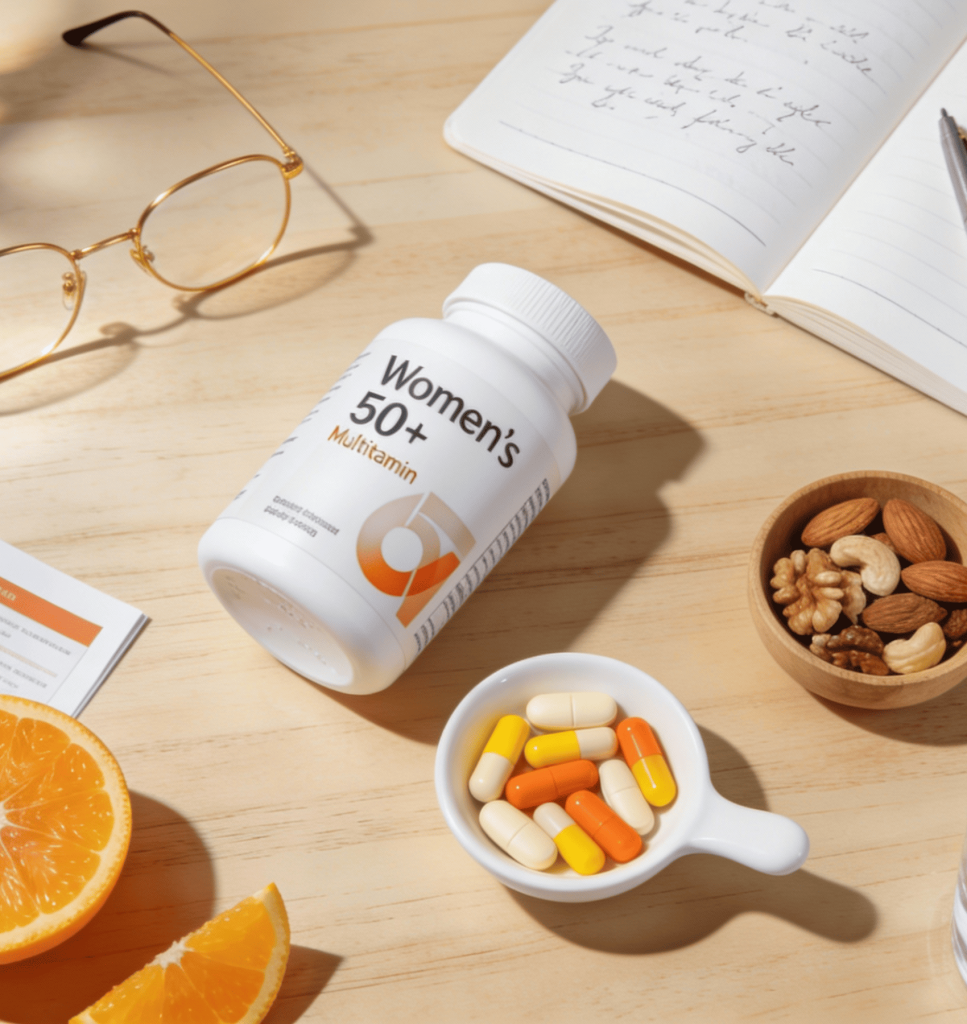
When a Multivitamin May Be Useful After 50
A varied diet remains the foundation. A multivitamin may deserve consideration when food intake is restricted, appetite is limited, a dietary pattern excludes important nutrient sources, a health condition or previous surgery affects absorption, or a clinician identifies a specific nutritional concern.
Symptoms such as fatigue or brain fog should not be used by themselves to decide that you need a multivitamin. They have many possible causes. If the concern is possible deficiency rather than general dietary coverage, our guide to possible signs of vitamin deficiency after 50 explains why symptoms need context and appropriate assessment.
What to Look for on a 50+ Multivitamin Label
Start with the Supplement Facts panel rather than the marketing on the front. Check which vitamins and minerals are included, how much each serving provides, and whether you are already getting the same nutrients from other supplements or fortified foods.
More is not automatically better. High-potency formulas can provide amounts far above daily needs, and a multivitamin can overlap with separate vitamin D, calcium, B-complex, zinc or other products. If you already use several supplements, compare all labels together before adding another bottle.
B12, B-Complex and Multivitamin Duplication
B vitamins are a common source of duplication because a multivitamin may already contain B12, B6, folate and niacin. Adding a separate B-complex or B12 product can raise the total further. Our B12 and B-complex guide for women 50+ explains how those products differ and what to check before combining them.
If your goal is simply to improve B12 intake from meals rather than choose a supplement, use our natural sources of B12 for women over 50 guide instead.
Calcium and Vitamin D Need Their Own Context
Do not choose a multivitamin simply because it promises “bone support.” Calcium and vitamin D decisions depend on total intake, diet, health history, medicines and bone-risk context. Our vitamin D and calcium after 50 overview explains how the two nutrients fit together without turning a multivitamin into a universal prescription.
Safety, Medicines and Personalization
Review a new multivitamin with a healthcare professional or pharmacist if you take prescription medicines, have kidney or liver disease, have had bariatric or gastrointestinal surgery, are being treated for a deficiency, or already use several supplements. Some ingredients can interact with medicines, while others can simply duplicate what you already take.
The useful question is not “What is the best multivitamin for every woman over 50?” It is “What, if anything, is missing from my current diet and supplement routine, and does this particular formula address that need without unnecessary duplication?”
Frequently Asked Questions
Do all women over 50 need a multivitamin?
No. A multivitamin may be useful when diet, absorption, medicines or another clinical factor makes it difficult to meet particular nutrient needs, but age alone does not mean every woman needs one.
What should I look for in a multivitamin after 50?
Read the full Supplement Facts panel, compare it with other supplements and fortified foods you use, and avoid assuming that higher percentages are automatically better. The right formula depends on your diet, medicines, health history and reason for taking it.
Can I take a multivitamin with a B-complex or separate B12?
Sometimes, but the products can overlap. Many multivitamins already contain B12, B6, folate, niacin and other B vitamins. Compare the labels and total intake before combining products, and seek professional advice when high-dose supplements or medical conditions are involved.
Can a 50+ multivitamin cause side effects?
Yes. Effects depend on the ingredients and amounts and may include digestive discomfort or other reactions. Stop and seek urgent medical care for signs of a serious allergic reaction, and discuss persistent symptoms or concerns with a healthcare professional.
A multivitamin can be useful, but it is a tool, not a requirement of turning 50. Start with food, identify the reason you are considering a supplement, read the entire label, and avoid building a stack of overlapping products without a clear purpose.