
Walking is one of the most practical ways to stay active after 60. It requires little equipment, can be adjusted to your current fitness level, and can support weight management when it is part of a broader routine that includes nutrition, strength work, sleep, and other daily movement. A walking for weight loss over 60 plan does not need to be punishing or built around a perfect step count. The goal is to make walking consistent, progressive, and realistic for your body.
If you already walk regularly and the scale has not changed much, that does not automatically mean walking is failing. Body weight is influenced by food intake, total activity, medications, sleep, health conditions, body composition, and other individual factors. Instead of chasing a single fat-burning formula, it is more useful to look at how often you move, how challenging the walk feels, and whether your routine can progress over time.
Why Weight Management Can Feel Different After 60
Aging and the years after menopause can bring changes in body composition, muscle mass, activity levels, and where body fat tends to be carried. Those changes do not mean that one specific type of exercise is required. They do mean that a sustainable plan should look beyond calories burned during a single workout.
Walking can increase daily movement and improve cardiovascular fitness, while resistance exercise can help maintain strength and muscle. Nutrition, sleep, recovery, medications, and medical conditions can also affect weight. For a broader explanation, see our guide to metabolism changes after 60.
How Hard Should You Walk?
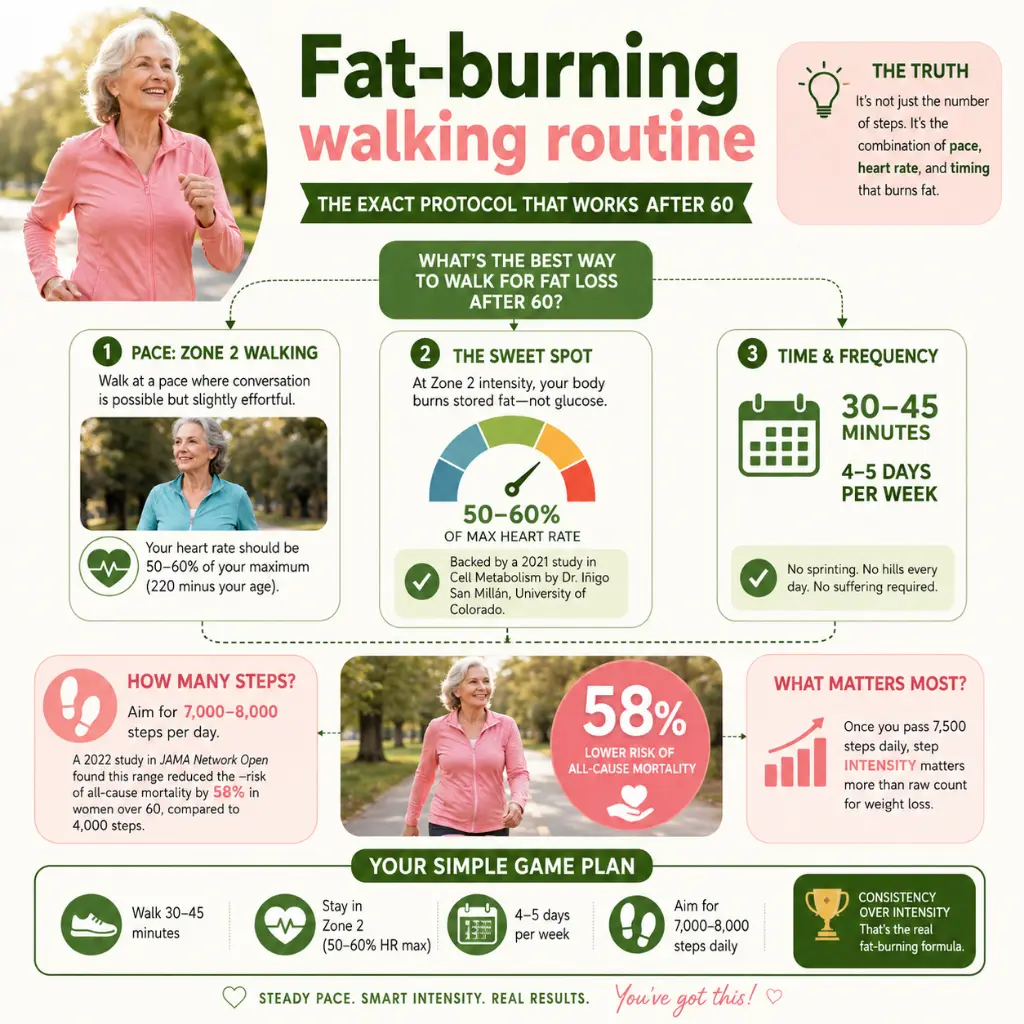
You do not need to hit one universal heart-rate number for a walk to be worthwhile. Heart-rate responses vary with fitness, medications, health conditions, temperature, terrain, and other factors. A simpler option for many people is the talk test: at a moderate effort, you can talk but would find singing difficult. You should not need to gasp through a sentence.
If you are starting from a low activity level, begin with a duration and pace you can tolerate comfortably. From there, progression might mean walking a little longer, adding another walk during the week, or gradually increasing pace. There is no single number of minutes or days per week that guarantees weight loss.
A Simple Starting Walk You Can Adapt
If you can already walk comfortably for a few minutes, try a short session on a flat, familiar route: begin with an easy pace, spend a few minutes walking a little more purposefully if comfortable, then finish easily. Around five to ten minutes in total is one possible example, not a requirement. A shorter walk or two separate short walks may fit your starting ability better.
Repeat a manageable session before adding challenge. Once it feels comfortable during the walk and afterward, choose one small change: a little more time, another walking day, or a brief quicker segment. Do not increase duration, speed, and hills together. If symptoms worsen or ordinary daily tasks become harder afterward, scale back and seek advice when symptoms persist.
For general health, adult activity guidance includes at least 150 minutes of moderate-intensity aerobic activity per week and muscle-strengthening activity on at least two days. Adults 65 and older also need balance activities. These are broad health goals, not a first-week prescription or a guarantee of weight loss. Build toward an appropriate amount gradually; if your health or mobility limits you, do what your abilities and conditions allow.
Do You Need 10,000 Steps a Day?
No. Ten thousand steps can be a useful personal target for some people, but it is not a magic threshold for weight loss. If your current average is much lower, increasing your usual movement gradually may be a more realistic starting point than trying to reach a large number immediately.
Step count also tells only part of the story. A person’s pace, terrain, total daily activity, physical capacity, and consistency all matter. Use your step count as a way to understand your own activity pattern rather than as a pass-or-fail score.
Can Walking After Meals Be Useful?
A short, comfortable walk after a meal can be an easy way to add movement to the day. Research also suggests that post-meal activity may help moderate the rise in blood glucose after eating in some people. That does not mean an after-dinner walk selectively burns belly fat or determines where your body stores calories.
If walking immediately after eating feels uncomfortable, choose another time. Consistency and tolerability matter more than trying to find a supposedly perfect fat-burning window.
Ways to Progress Your Walk Without Simply Adding More Time
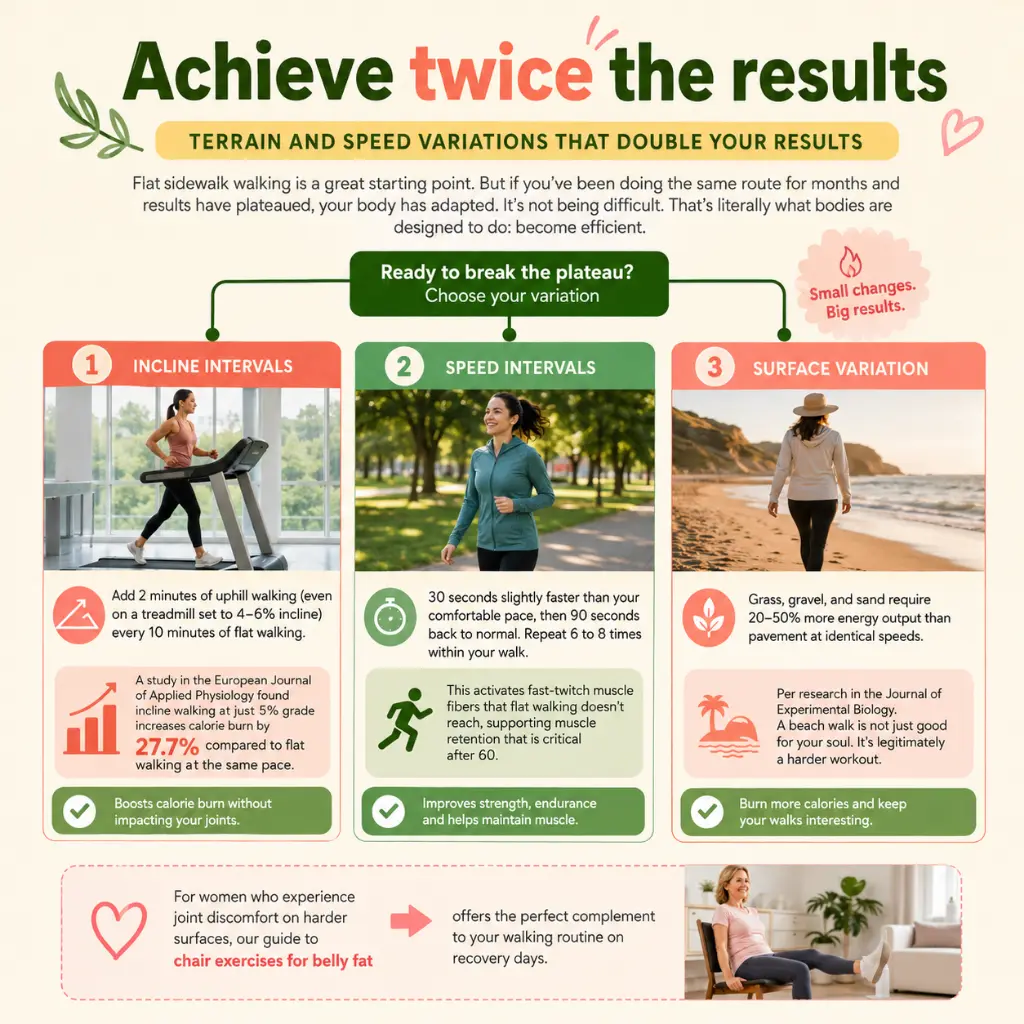
Doing the same walk at the same effort can become easier as your fitness improves. When you are ready for more challenge, progression does not have to mean dramatically longer workouts.
Change your pace: Add brief periods of slightly faster walking, then return to your comfortable pace. The faster segment should still feel controlled rather than all-out.
Add an incline: A gentle hill or treadmill incline can make a walk more demanding. Increase gradually, particularly if you have not been walking hills regularly.
Vary the surface carefully: Parks and trails can add variety, but uneven ground can also increase balance demands. If balance, joint discomfort, or fall risk is a concern, a predictable, stable surface may be the better choice.
On days when standing or walking is less comfortable, low-impact chair exercises may offer a more manageable way to stay active. They do not replace assessment of new or worsening walking difficulties, and they cannot selectively remove abdominal fat.
What If the Scale Does Not Move?
The scale is useful, but it is not the only way to evaluate whether an activity routine is helping you. Walking capacity, how a familiar route feels, daily energy, strength, waist measurements, and other health measures can provide additional information.
Walking also does not guarantee weight loss on its own. If your walking is consistent but weight loss has stalled, review the wider pattern rather than automatically making every walk harder. Our weight loss after 60 guide covers that broader framework.
How to Make Walking More Sustainable After 60
The most useful walking routine is one you can repeat and adapt. Start from your current ability rather than from someone else’s step count. Increase one variable at a time, such as duration, frequency, pace, or incline, and give yourself time to adjust.
Choose footwear and routes that feel stable and comfortable. If balance is a concern, flatter and more predictable surfaces may be preferable to sand, gravel, or steep hills. Walking does not train every aspect of fitness. For the broader resistance-training framework, see our strength training guide for women over 50. If you want an age-specific next step, you can also add strength work alongside your walks, choosing resistance exercises that fit your ability rather than expecting walking to replace them.
Stop walking and seek urgent medical help for chest pain, fainting, or severe unexplained shortness of breath. Stop rather than push through sharp or worsening joint or muscle pain; seek assessment if it persists, is severe, or affects your ability to walk. If you have significant balance problems, a recent fall, fracture or surgery, or a condition that affects exercise tolerance, get individualized guidance before substantially increasing your routine.
Frequently Asked Questions
Can walking help with weight loss after 60?
Walking can support weight management by adding physical activity, especially when it fits a sustainable overall routine. It does not guarantee weight loss or let you choose where fat is lost.
How much should I walk after 60?
If you can walk comfortably for a few minutes, a short five-to-ten-minute session is one possible starting example; shorter bouts may be better for you. Repeat a manageable amount, then increase one variable gradually. The general 150-minute weekly moderate-activity goal is for health, not a guaranteed weight-loss formula or an immediate target for every beginner.
Do I need 10,000 steps a day to lose weight?
No. Ten thousand steps is not a magic weight-loss threshold. If you are currently less active, gradually increasing your usual daily movement can be a more practical goal. Step count is best used to track your own activity rather than as a universal prescription.
Is walking after meals useful?
A comfortable walk after a meal can add activity to your day, and post-meal movement may help moderate the rise in blood glucose in some people. Choose another time if walking after eating feels uncomfortable. The timing does not make walking selectively burn belly fat.
Is faster walking always better for weight loss?
No. A faster pace increases exercise intensity, but the best pace depends on your fitness, health, balance, and ability to recover. A sustainable pace that you can progress safely is more useful than forcing an intensity you cannot maintain.
Is walking enough exercise after 60?
Walking is valuable aerobic activity, but a balanced routine can also include muscle-strengthening work and, depending on individual needs, mobility and balance activities. The right combination depends on your abilities and health status.
Your Next Step
Choose one familiar route and a walking slot you can realistically repeat this week. After each walk, note the minutes, whether the pace felt easy or moderate, and how you felt during the walk and the following day. Use that record to decide whether to repeat, ease back, or make one small progression. Look for a more comfortable walk and a steadier habit, not a promised change on the scale after every session.