
Some evenings, the urge for something sweet can feel much stronger than expected. You may have eaten dinner and still find yourself thinking about chocolate, cereal, cookies, or another sweet snack later at night.
Sugar cravings after menopause can have several contributors. Hormonal changes may affect appetite, mood, sleep, and body composition, while meal patterns, stress, habits, and long gaps between meals can also influence when cravings appear. That means there is rarely one single cause or one universal fix.
The useful question is not whether you have enough willpower. It is what tends to happen before the craving and which practical changes make eating feel steadier and more manageable.
Why sugar cravings can feel different after menopause
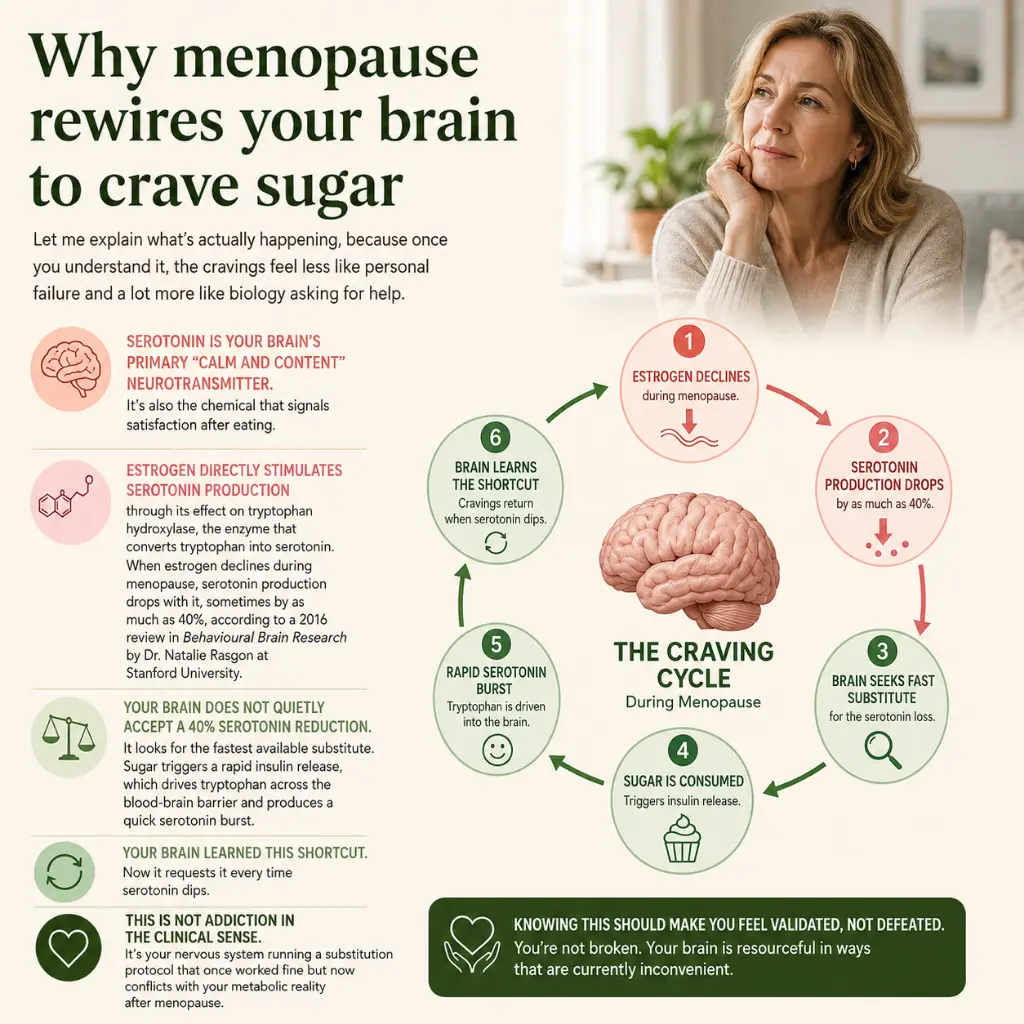
Menopause is accompanied by changes in estrogen and other physiological systems, but cravings are more complicated than a simple “low estrogen equals sugar cravings” equation. Appetite and food preferences can be influenced by sleep, mood, stress, learned routines, food availability, and how satisfying your meals are.
For example, a light breakfast followed by a rushed lunch can leave you unusually hungry later. A poor night of sleep may make highly palatable foods more appealing. And if dessert has become part of an evening routine, the cue itself can become powerful even when you are not physically hungry.
Instead of trying to identify one biochemical explanation for every craving, look for patterns. Notice when the craving occurs, what you ate earlier, how hungry you actually feel, how you slept, and whether stress or habit seems to be involved.
Blood sugar, meal patterns, and cravings
Blood glucose regulation can change with age, body composition, activity level, and menopause-related changes, but not every craving means your blood sugar has “crashed.” Unless glucose is actually measured, it is better not to assume that a late-night craving is proof of low blood sugar.
What is more practical is to build meals that are satisfying enough to carry you comfortably to the next meal. Protein, fiber-rich carbohydrates, vegetables or fruit, and an appropriate source of fat can make a meal more filling than refined carbohydrates eaten alone.
If concerns about glucose regulation extend beyond cravings, our guide to blood sugar changes during menopause explains the topic in more context.
6 practical ways to manage sugar cravings after menopause
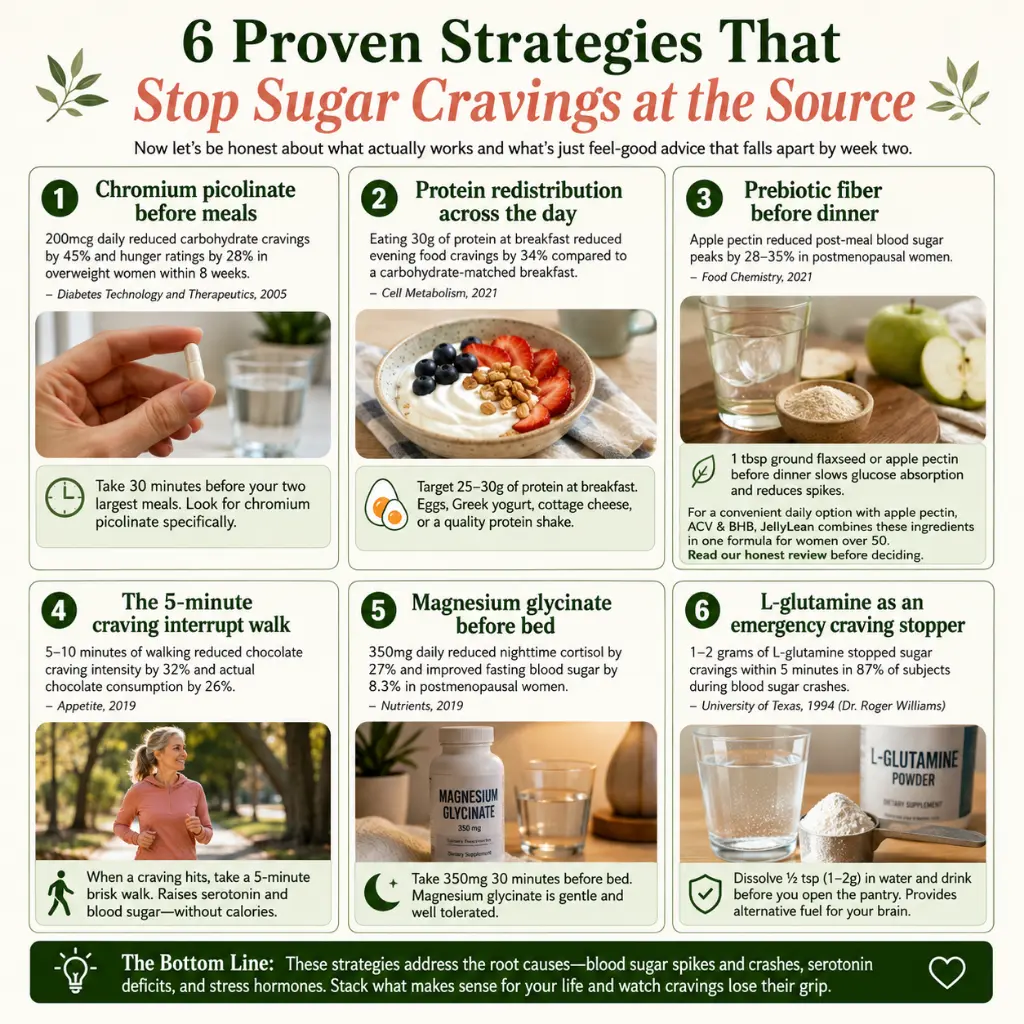
1. Make your meals more satisfying before adding supplements
Start with the basics that affect hunger directly. A meal built mostly around refined carbohydrates may be less satisfying than one that also contains protein and fiber. Eggs, yogurt, beans, lentils, fish, poultry, tofu, vegetables, fruit, whole grains, nuts, and seeds can all contribute depending on your preferences and dietary needs.
This is also why supplement-first approaches deserve caution. Chromium, magnesium, and other nutrients are important to health, but taking more of a nutrient does not automatically stop cravings, and supplements can interact with medications or be inappropriate in some medical situations.
2. Include protein throughout the day
Protein contributes to fullness and helps preserve muscle as we age. Instead of saving nearly all of it for dinner, include a useful protein source at breakfast and lunch as well. The amount that is appropriate for you depends on your overall diet, body size, activity, health conditions, and medical advice.
For meal ideas rather than rigid numbers, see our guide to healthy foods to eat during menopause.
3. Use fiber-rich foods to make meals more filling
Vegetables, fruit, beans, lentils, whole grains, nuts, seeds, and other fiber-rich foods can contribute to fullness and overall diet quality. If your current diet is low in fiber, increase it gradually and drink enough fluid for your needs.
You do not need a special prebiotic powder or a precisely timed fiber protocol to start. A more useful first step is improving the quality and balance of the foods you already eat.
4. Interrupt an automatic craving with a short change of activity
If the craving feels more habitual than hunger-driven, change the context for a few minutes. A short walk, tidying the kitchen, making tea, brushing your teeth, or moving to another room can create enough distance to decide whether you are hungry or simply responding to a familiar cue.
This is not a trick for “burning off” sugar or manipulating serotonin. It is a practical way to interrupt an automatic routine and give yourself time to make a deliberate choice.
5. Look at sleep and stress, not just food
Sleep disruption is common around menopause, and poor sleep can affect appetite, food choices, energy, and the ability to follow your usual eating routine. Stress can do the same. If cravings consistently follow difficult nights or stressful days, improving those triggers may be more useful than searching for another supplement.
6. Plan for sweets instead of creating an all-or-nothing rule
For many women, trying to eliminate every sweet food can make eating feel unnecessarily restrictive. A planned portion of a food you enjoy can fit into an overall nutritious eating pattern. The goal is not to prove that you can avoid sugar forever. It is to reach a point where sweets are a choice rather than something that feels uncontrollable.
What happens when you cut back on added sugar?
Reducing foods and drinks that are high in added sugar can improve the overall quality of your diet, especially when they are replaced with nutrient-dense foods. But there is no universal 3-day, 7-day, or 14-day biological reset that guarantees cravings will disappear.
Some people notice that their preference for very sweet foods changes over time when they eat them less often. Others continue to enjoy sweets but become better at managing portions and recognizing hunger. Both outcomes can be compatible with a healthy diet.
If you want to improve weight management at the same time, use the broader framework in our weight loss after 50 resource hub rather than relying on sugar restriction alone.
Do vitamins or supplements stop sugar cravings?
No vitamin or mineral has been shown to reliably switch off sugar cravings in everyone. A diagnosed nutrient deficiency should be treated appropriately, but that is different from taking a supplement specifically as a craving treatment.
Chromium supplements have been studied for glucose metabolism and eating behavior, but the evidence does not justify presenting a fixed dose as a proven menopause craving treatment. Magnesium is essential for health, but magnesium glycinate should not be described as a direct nighttime craving remedy. The same caution applies to vitamin B6 and L-glutamine.
If cravings are accompanied by symptoms such as unusual thirst, frequent urination, unexplained weight change, dizziness, shakiness, or known problems with glucose control, discuss them with a healthcare professional rather than trying to treat the symptoms with supplements.
Top questions women frequently ask:
Is there a cure for sugar addiction after menopause?
Sugar cravings after menopause are not addiction in the clinical sense, but they are a neurochemical pattern driven by serotonin deficit and insulin sensitivity changes. This pattern responds measurably to specific interventions: chromium picolinate, magnesium glycinate, protein redistribution, and prebiotic fiber. Most women experience 40 to 52% reduction in craving intensity within 4 to 8 weeks of consistent application of these strategies. There’s no overnight fix, but there is a clear, evidence-based path.
How to get rid of sugar cravings in menopause?
The most effective combined approach: 200mcg chromium picolinate before meals to prevent blood sugar crashes, 30 grams of protein at breakfast to stabilize the entire day’s glucose curve, one tablespoon of prebiotic fiber at dinner to slow post-meal spikes, and magnesium glycinate before bed to reduce nighttime cortisol. Address the 5-minute craving interrupt walk as your emergency strategy. Most women see meaningful improvement within 2 to 3 weeks of consistency.
What helps with sugar cravings specifically after 50?
After 50, the serotonin deficit from estrogen decline makes standard craving advice less effective. The most targeted strategies are those that address both the serotonin gap and the insulin sensitivity decline simultaneously. Protein front-loading, chromium, and a 5-minute walk when cravings hit address both mechanisms at once. Strategies that work only in younger women, such as fruit substitution alone, are less effective after menopause because the blood sugar stability issue remains unaddressed.
What vitamin helps stop sugar cravings?
Chromium picolinate has the strongest clinical evidence at 200mcg daily, reducing carbohydrate cravings by 45% in an 8-week trial (Diabetes Technology and Therapeutics, 2005). Magnesium glycinate addresses nighttime cortisol-driven cravings. Vitamin B6 in P5P form supports serotonin synthesis directly. None works optimally in isolation. Combining all three with dietary protein and fiber produces the most consistent results for women navigating hormonal changes after menopause.
What do 14 days without sugar do to a menopausal body?
Days 1 to 5 bring temporary headaches and heightened cravings as the brain adjusts. Days 7 to 10 show measurable improvements in insulin sensitivity and fasting blood sugar. By day 14, craving intensity drops by an average of 52% and sweetness sensitivity recalibrates, meaning things taste sweeter at lower sugar concentrations. The serotonin deficit from estrogen decline doesn’t fully resolve in 14 days, but the blood sugar crash cycle that amplifies cravings begins to normalize.
The bottom line
Sugar cravings after menopause can be influenced by more than one factor. Hormonal changes may be part of the picture, but so can hunger, sleep, stress, food habits, and the overall composition of your meals.
Start by looking at your pattern rather than blaming yourself or reaching immediately for a supplement. Build satisfying meals, include protein and fiber regularly, protect your sleep where possible, and distinguish physical hunger from an automatic evening routine.
If weight management is also a concern, our weight loss after 60 guide puts cravings in the broader context of nutrition, movement, sleep, and sustainable habits.
Persistent or unusually intense cravings deserve individualized attention, particularly when they occur alongside symptoms that could point to a medical or nutritional issue.