One afternoon, I found myself in my doctor’s office, gripping a stack of test results that finally gave voice to the quiet warnings my body had been sending for years.
At 47, I thought I was doing everything right: managing a full schedule, powering through fatigue, and squeezing in meals I considered healthy. That experience made me look more carefully at the way I was eating, not for a miracle cure, but for a pattern I could actually sustain.
During that period, a friend introduced me to the Blue Zones: communities associated with unusual longevity and lifestyle patterns that include plant-forward eating, regular movement, social connection, and other habits. What interested me most was how ordinary the food looked: beans, vegetables, whole grains, nuts, herbs, and meals shared with other people.
That became my starting point for the blueprint for Blue Zone nutrition. It is not a prescription for living to 100, and the observational research behind Blue Zones cannot prove that one food or habit causes longevity. But the eating pattern offers practical ideas that fit well with established nutrition guidance for healthy aging.
What Blue Zone Nutrition Really Means After 50
Blue Zone-style eating is best understood as a pattern rather than a rigid diet. It emphasizes minimally processed plant foods, especially beans and other legumes, vegetables, whole grains, nuts, and seeds, while animal foods and highly processed foods generally play a smaller role.
For women after 50, the useful lesson is not that Blue Zone foods can balance hormones or prevent disease on their own. It is that a varied, nutrient-dense dietary pattern can help provide fiber, protein, unsaturated fats, vitamins, minerals, and other nutrients that matter as we age. For the broader nutrition framework, see our guide to what to eat after 50.
Plant-Forward Does Not Have to Mean Vegan
One reason I was drawn to this approach is that it does not have to be all-or-nothing. You can make plants the foundation of more meals without giving up every animal food you enjoy.
Fiber-rich foods can support bowel regularity and provide fermentable substrates for gut microbes, while fruits, vegetables, legumes, nuts, and whole grains contribute a wide range of nutrients and phytochemicals. Soy foods and flax contain phytoestrogens, but describing them as foods that simply “balance hormones” goes beyond what the evidence can establish.
I started experimenting in my own kitchen. Instead of making chicken my default protein at every meal, I began building some meals around white beans, chickpeas, and lentils. I enjoyed the change and found those meals satisfying. That is my experience, not a guarantee that the same foods will change another person’s energy, digestion, or menopause symptoms.
Beans: A Practical Blue Zone Staple
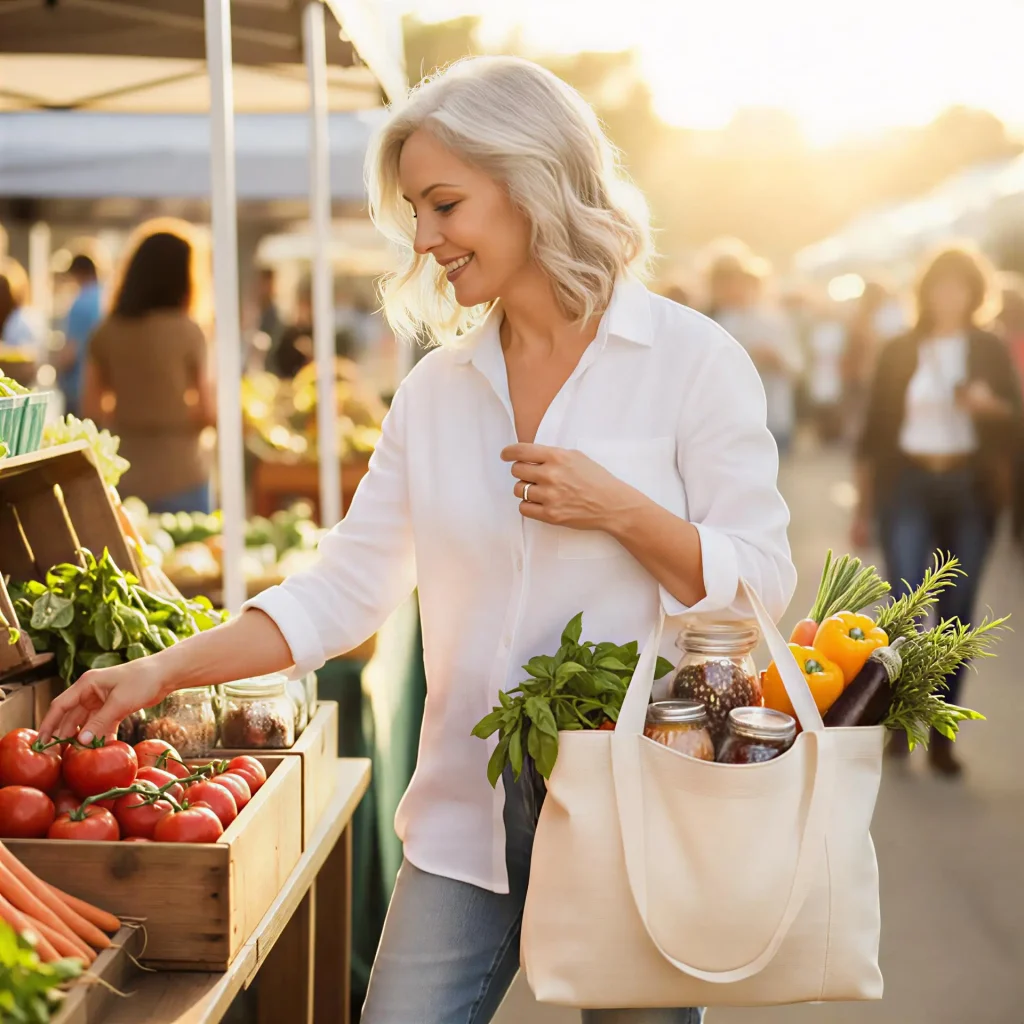
Beans appear prominently in many traditional eating patterns associated with Blue Zone communities. Black beans, lentils, soy foods, chickpeas, and white beans are inexpensive ways to add plant protein and fiber to meals.
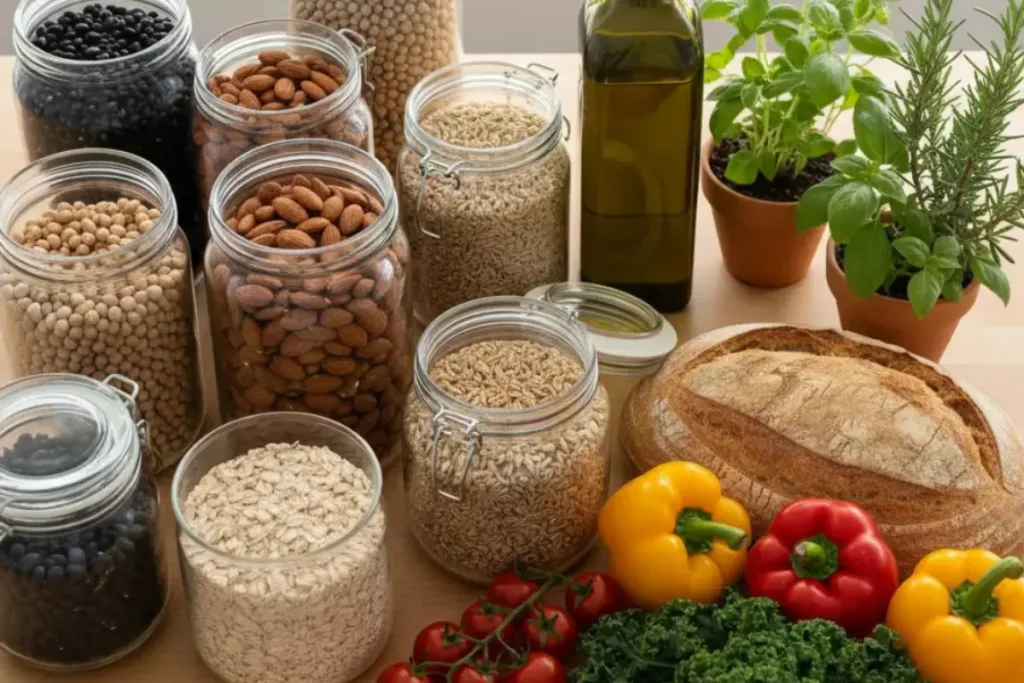
I still keep black beans, chickpeas, and white beans in my pantry. Monday might be white bean and kale soup. Wednesday could be chickpea curry over brown rice. Friday might be black bean tacos. Canned beans are useful too; rinsing them can reduce some of the sodium.
Plant-forward does not mean protein should become an afterthought, particularly after 50 when preserving muscle becomes increasingly important. If you are adjusting the balance of plant and animal foods, our guide to protein intake after 50 explains how to think about protein more deliberately.
Hara Hachi Bu: A Tradition of Eating With Awareness
In Okinawa, the phrase Hara Hachi Bu is traditionally associated with stopping before feeling completely full. I like the principle because it shifts attention away from calorie obsession and toward noticing hunger, comfort, and satisfaction.
It should not be presented as a proven formula that automatically reduces calories by a fixed percentage or extends lifespan. Appetite, nutritional needs, medications, health conditions, and body composition differ from person to person. The practical takeaway is simply to slow down enough to notice when a meal feels satisfying.
Whole Foods Without the Perfectionism
Blue Zone-inspired eating tends to favor foods that are relatively close to their original form: vegetables, fruit, beans, whole grains, nuts, seeds, olive oil, herbs, and other simple staples. That does not mean every packaged food is harmful or that an ingredient list has to be short to be healthy.
When I reorganized my own pantry, I focused less on labels like “diet” or “healthy” and more on building meals from useful staples: oats, brown rice, beans, nuts, dried fruit without added sugar, vegetables, olive oil, vinegar, herbs, and spices. It made everyday meals easier without turning food into another set of rules.
Nuts: A Small, Nutrient-Dense Habit
Nuts are another recurring feature of several longevity-associated dietary patterns. They provide unsaturated fats, plant protein, fiber, and minerals. Observational studies have linked regular nut consumption with favorable cardiovascular and mortality outcomes, but those associations do not mean a handful of nuts adds a guaranteed number of years to life or cuts an individual’s disease risk by a fixed percentage.
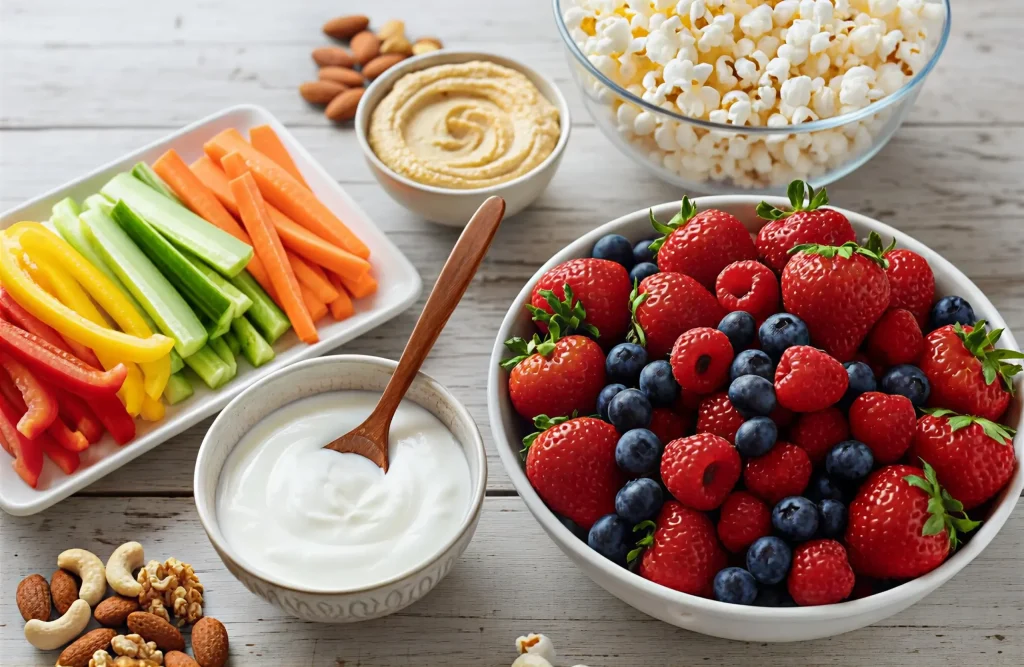
I keep mixed nuts nearby because they are convenient. A small handful with fruit can be an easy snack when I need something more substantial than crackers or sweets.
What a Blue Zone-Inspired Day Might Look Like
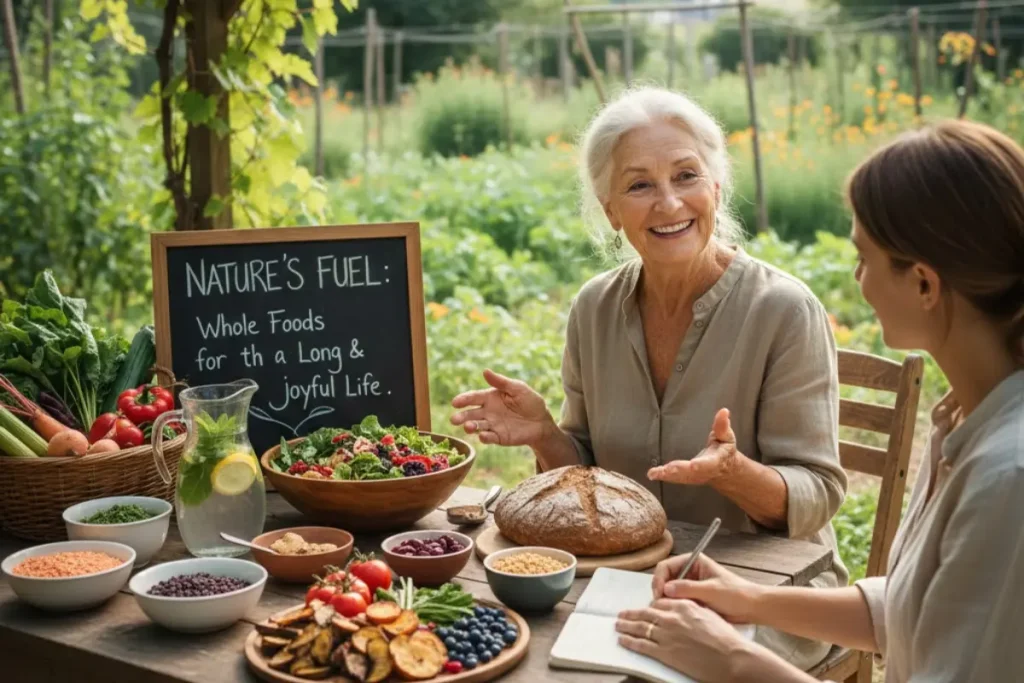
Breakfast: Steel-cut oats with walnuts, berries, and cinnamon.
Lunch: Mixed greens with chickpeas, cucumber, tomatoes, olives, and a tahini-lemon dressing, with whole-grain bread on the side.
Snack: A handful of almonds with an apple.
Dinner: Lentil and vegetable soup with whole-grain bread and roasted vegetables.
This is an example, not a prescription. Your protein needs, appetite, medical conditions, food preferences, and medications may require a different pattern. If breakfast is where you want to start, these Mediterranean diet breakfast ideas offer another practical plant-forward approach.
What Loma Linda Can and Cannot Tell Us
Loma Linda is well known for longevity research involving Seventh-day Adventists, many of whom follow plant-forward dietary patterns alongside other lifestyle practices. These populations are valuable to study, but their outcomes cannot be credited to food alone. Physical activity, smoking patterns, social connection, faith, healthcare, and other factors can also influence health and longevity.
That is an important distinction throughout the blueprint for Blue Zone nutrition: longevity communities can inspire useful habits, but they do not provide a guarantee that copying a particular menu will prevent disease or extend an individual’s lifespan.
Frequently Asked Questions
What foods are typically included in Blue Zone-style eating?
Blue Zone-inspired eating generally emphasizes beans and other legumes, vegetables, fruits, whole grains, nuts, seeds, and other minimally processed plant foods. The exact foods vary by culture and region, so it is better understood as a flexible pattern than a fixed menu.
Do I have to be vegan to follow Blue Zone nutrition?
No. A Blue Zone-inspired pattern can be plant-forward without being completely vegan. The practical goal is to make nutrient-dense plant foods a larger part of your meals while choosing an overall pattern that meets your nutritional needs and preferences.
Can women over 50 get enough protein with a plant-forward diet?
Yes, but protein deserves deliberate attention after 50. Beans, lentils, soy foods, nuts, seeds, and whole grains contribute protein, and some women may also include dairy, eggs, fish, or other animal foods. Total intake and meal distribution matter more than simply labeling a diet plant-based.
What is Hara Hachi Bu?
Hara Hachi Bu is an Okinawan phrase associated with eating until you feel satisfied rather than completely full. It can be used as a mindful-eating cue, but it should not be treated as a guaranteed calorie-reduction or longevity formula.
How can I start Blue Zone-inspired eating after 50?
Start with one or two realistic changes: add beans to a few meals, choose a whole grain more often, keep nuts or fruit available for snacks, and increase the variety of vegetables you eat. Build gradually rather than trying to copy an entire longevity diet overnight.
Your Blue Zone-Inspired Blueprint Starts With Small Steps
I still love the simplicity that first drew me to this way of eating. Add beans to a meal. Try a new vegetable. Build breakfast around oats, fruit, and nuts. Share meals when you can. None of those choices promises a longer life, but together they can form a practical, nourishing pattern.
The blueprint for Blue Zone nutrition works best as inspiration rather than a longevity formula. Take the parts that fit your nutritional needs, culture, budget, and daily life, and build from there.