Every day around 3 PM, I know the feeling: lunch is a distant memory, dinner is still hours away, and I want something substantial enough to quiet the hunger without turning a snack into another full meal.
That is where high volume low calorie snacks can be genuinely useful. The idea is simple: choose foods that give you a satisfying portion for relatively fewer calories, often because they contain plenty of water, air, or fiber. This is not about eating the biggest possible plate or chasing the lowest calorie number. After 50, a good snack still needs to contribute something useful, especially protein, fiber, calcium, healthy fats, or produce.
If you are building the rest of your meals too, our broader guide to what to eat after 50 puts snacks into the bigger nutrition picture.
Why Food Volume Can Help With Satisfaction
Researchers often describe this idea in terms of energy density, or the number of calories in a given weight of food. Water-rich foods such as fruit, vegetables, yogurt, and broth-based soups can provide more food volume for fewer calories than foods with very little water. Air can also increase volume, which is one reason air-popped popcorn looks surprisingly generous for its calorie content.
Studies of lower-energy-density eating patterns suggest they can help people eat satisfying portions while moderating overall energy intake. But fullness is more complicated than water and fiber alone. Protein, texture, taste, eating speed, portion size, previous meals, sleep, activity, medications, and individual appetite all matter. Research on fiber and appetite is particularly mixed, so I would not promise that every high-fiber snack will keep every woman full for hours.
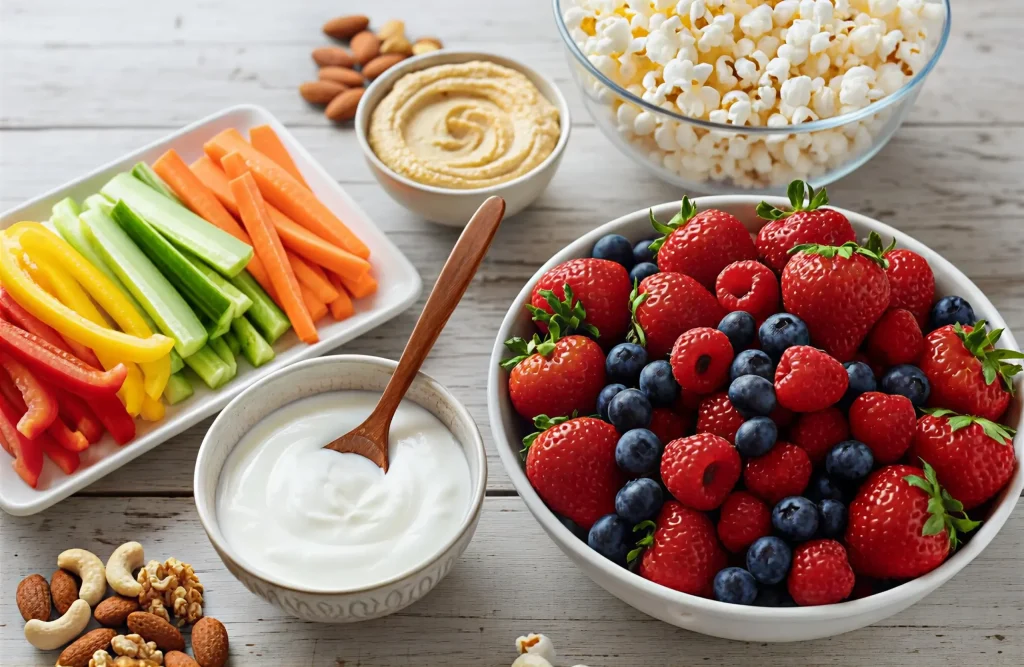
In my own routine, the best snacks combine volume with staying power. A bowl of berries alone may be refreshing, but berries with Greek yogurt feel more like a real snack to me. Vegetables become more satisfying when I add hummus. Popcorn can work when I want something crunchy, while cottage cheese and fruit make sense when I am genuinely hungry.
12 High Volume Low Calorie Snacks After 50
1. Berries With Greek Yogurt
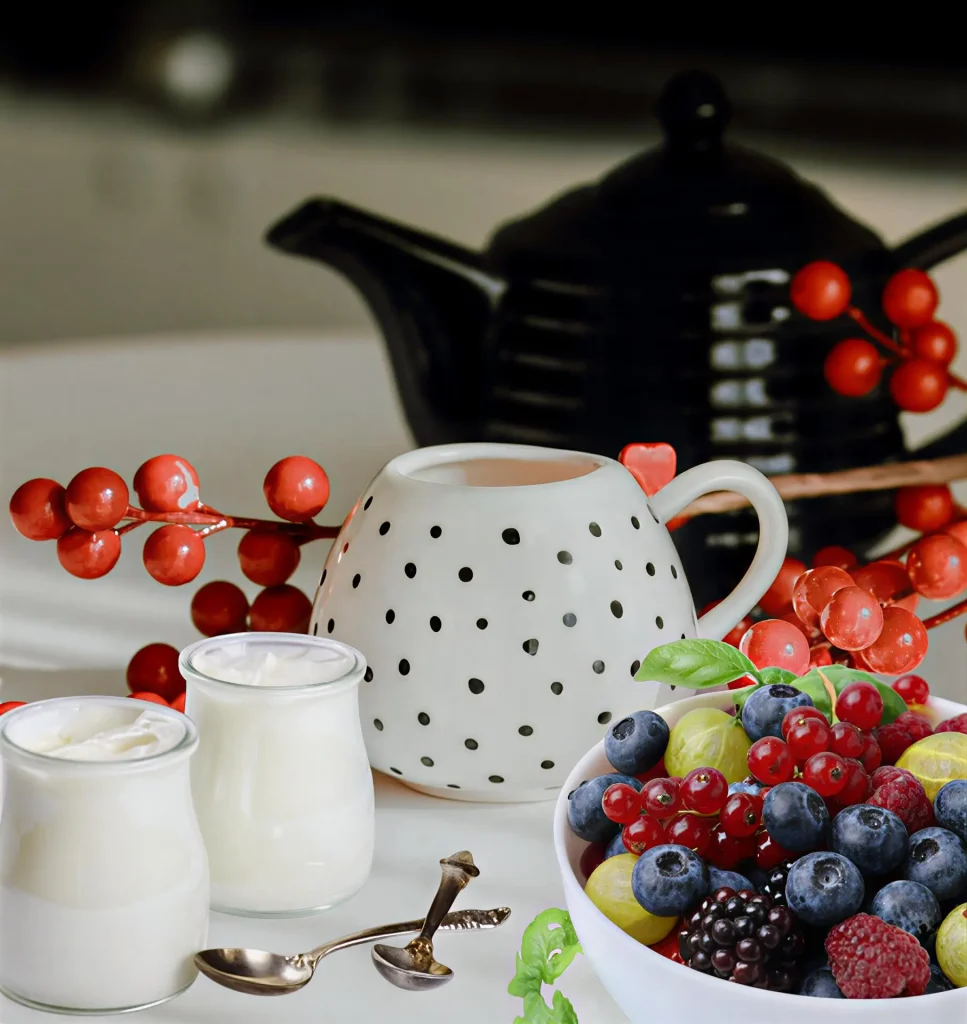
Berries bring water, fiber, vitamin C, and a naturally sweet flavor; Greek yogurt adds protein and calcium. Choose plain yogurt when you want more control over added sugar, and choose the fat level that fits your preferences and overall eating pattern. Reduced-fat does not automatically mean high in added sugar, and full-fat is not automatically the better choice, so the nutrition label is more useful than the front-of-package claim.
2. Crunchy Vegetables With Hummus
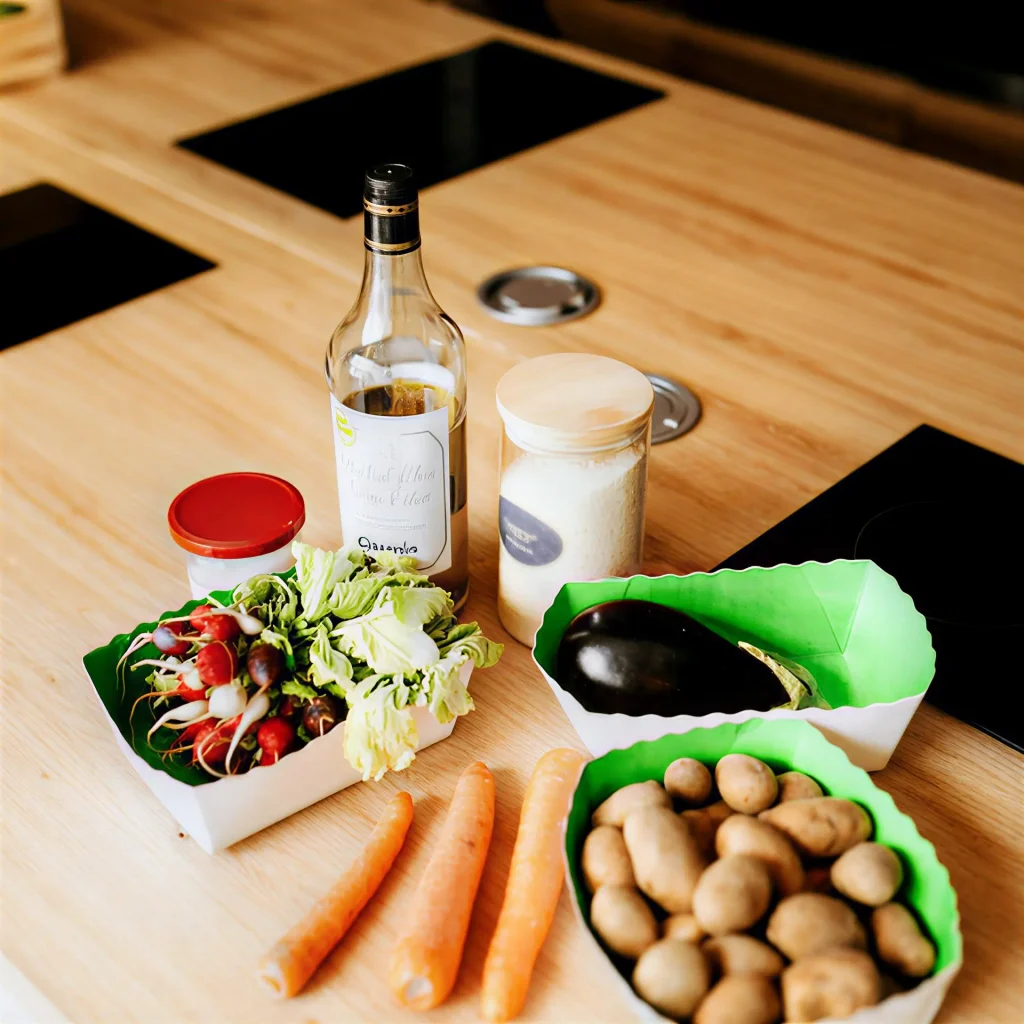
Cucumber, bell pepper, celery, radishes, snap peas, and carrots give you crunch and volume. Hummus adds chickpeas, tahini, and a creamier texture. I like this pairing because it feels much more complete than raw vegetables by themselves. Chickpeas contain plant compounds including phytoestrogens, but that does not mean hummus has been shown to “balance hormones.”
3. Air-Popped Popcorn
Popcorn is a whole grain, and the air incorporated during popping creates a large portion by volume. Start with plain air-popped popcorn and season it to taste with herbs, spices, cinnamon, or nutritional yeast. Added oil, butter, cheese, caramel, and large portions can change the calorie and sodium profile quickly, so “popcorn” can describe very different snacks.
4. Cottage Cheese With Pineapple
Cottage cheese provides protein, while pineapple adds sweetness, water, and fruit volume. If you want crunch, add a small amount of chopped walnuts. Portions and nutrition vary substantially by cottage-cheese brand and fat level, so I prefer not to attach one universal calorie or protein number to this combination.
5. Apple Slices With a Measured Spoonful of Nut Butter
An apple gives you crispness, water, and fiber; nut butter adds richness and some protein. Nut butter is energy-dense, so this is a good example of why “high volume” does not mean every ingredient needs to be low calorie. A modest amount can make a large portion of fruit more satisfying.
6. Watermelon With Plain Yogurt
Watermelon is mostly water, making it an easy way to create a generous-looking fruit portion. Pair it with plain yogurt if fruit alone does not keep you satisfied. A little mint or cinnamon can add flavor without turning the snack into dessert.
7. Tomato and Cucumber Bowl With Cottage Cheese
For a savory option, combine chopped tomatoes and cucumber with cottage cheese, pepper, herbs, and a squeeze of lemon. It is cool, crunchy, and easy to scale up in volume without relying on crackers for most of the portion.
8. Broth-Based Vegetable Soup
A cup or small bowl of vegetable soup can work as a snack when you want something warm rather than sweet. Broth and vegetables provide volume, and beans or lentils can make the soup more substantial. If you use canned or packaged soup, check sodium if that is something you have been advised to monitor.
9. Strawberries With Cottage Cheese or Ricotta
Strawberries give you a large fruit portion for relatively few calories, while cottage cheese or ricotta adds creaminess and protein. This is one of my favorite ways to make fruit feel like a planned snack rather than something I grab and forget five minutes later.
10. Roasted Zucchini or Bell Pepper With a Yogurt Dip
High-volume snacks do not have to be raw. Leftover roasted zucchini, peppers, or cauliflower can be served cold or warm with a simple yogurt-and-herb dip. This is especially useful if a large amount of raw vegetables does not feel comfortable for your digestion.
11. Frozen Grapes With a Few Nuts
Frozen grapes are sweet, cold, and slower to eat than a handful of candy. A few nuts add texture and staying power. I think of this as an alternative experience, not a nutritional equivalent to ice cream and certainly not a rule that you can never choose dessert.
12. A Big Bowl of Fruit With a Protein Side
Combine melon, berries, orange segments, or whatever fruit is in season, then add a protein food that fits your diet: yogurt, cottage cheese, a boiled egg, or another option you enjoy. This simple formula is often more useful than memorizing a list of “perfect” snacks.
Quick Comparison: 12 Snack Ideas at a Glance
The numbers below are approximate examples for the portions shown, not fixed nutrition facts for every recipe or brand. Yogurt, cottage cheese, hummus, soup, nut butter, fruit size, and preparation method can all change the totals. The satiety column is a practical comparison rather than a medical measurement.
How the Satiety Estimate Was Assigned
I used three simple, non-clinical cues: food volume, protein, and fiber and/or fat. A snack is marked Moderate when it offers useful volume but relatively little protein or fat. Moderate–High means it combines volume with a stronger protein, fiber, or fat component. High is reserved for examples that pair a generous portion with a more substantial protein contribution and/or multiple satiety-promoting components. This is only a practical comparison for these example portions; it does not predict how full you personally will feel or for how long.
| Snack and example portion | Approx. calories | Approx. protein | Approx. fiber | Likely satiety* | Portion note |
|---|---|---|---|---|---|
| Berries + plain Greek yogurt (1 cup berries + 3/4 cup yogurt) | 160–190 kcal | 16–19 g | 4–6 g | High | Use plain yogurt and adjust the yogurt amount to your hunger level; larger flavored servings can raise calories and added sugar. |
| Crunchy vegetables + hummus (2 cups vegetables + 2 Tbsp hummus) | 120–160 kcal | 4–6 g | 5–7 g | Moderate | Keep the vegetable portion generous; increase hummus modestly if you need more staying power rather than doubling it automatically. |
| Air-popped popcorn (3 cups) | 90–100 kcal | 3 g | 3–4 g | Moderate | Three cups works as a light snack; if it does not hold you, pair it with a protein food instead of adding lots of butter or oil. |
| Cottage cheese + pineapple (1/2 cup cottage cheese + 1/2 cup pineapple) | 140–180 kcal | 12–15 g | 1–2 g | High | Half a cup of cottage cheese is a practical starting point; choose brand and fat level based on preference, sodium needs, and the rest of the meal pattern. |
| Apple + nut butter (1 medium apple + 1 Tbsp nut butter) | 180–210 kcal | 3–5 g | 5–6 g | Moderate–High | Measure the nut butter if calorie awareness matters; one tablespoon adds richness without turning the snack into a much larger energy load. |
| Watermelon + plain yogurt (2 cups watermelon + 1/2 cup yogurt) | 140–180 kcal | 10–13 g | 1–2 g | Moderate | Watermelon is very high-volume; increase the yogurt rather than the fruit if you want a more substantial snack. |
| Tomato + cucumber + cottage cheese (2 cups vegetables + 1/2 cup cottage cheese) | 140–180 kcal | 13–15 g | 2–4 g | High | Keep vegetables as the volume base; add more cottage cheese only if the snack needs to bridge a longer gap to your next meal. |
| Broth-based vegetable soup (1 1/2 cups) | 100–180 kcal | 3–8 g | 3–6 g | Moderate | Choose a small bowl as a snack; soups with beans or lentils may need a smaller serving than very light vegetable broth. |
| Strawberries + cottage cheese (1 1/2 cups berries + 1/2 cup cottage cheese) | 150–190 kcal | 13–15 g | 4–5 g | High | If 1 1/2 cups of berries feels like too much volume, reduce the fruit rather than removing the protein component. |
| Roasted vegetables + yogurt dip (2 cups vegetables + 1/3 cup yogurt dip) | 120–180 kcal | 7–11 g | 4–6 g | Moderate–High | Calories depend heavily on roasting oil; use lightly roasted vegetables if you want the portion to stay relatively low in energy density. |
| Frozen grapes + a few nuts (1 cup grapes + about 10 almonds) | 160–190 kcal | 3–5 g | 2–3 g | Moderate | A small nut portion adds texture and fat; if you add a full handful, treat it as a more energy-dense snack. |
| Mixed fruit + protein side (2 cups mixed fruit + 1 boiled egg) | 190–230 kcal | 7–9 g | 4–6 g | Moderate–High | Two cups of fruit is an example, not a target. Use a smaller bowl if needed and keep the protein side when you want more staying power. |
How to choose your portion: start with the example serving as a reference, then adjust to your actual hunger, the time until your next meal, and what you have already eaten that day. If the snack is just taking the edge off before dinner, you may need less. If it needs to carry you for several hours, a little more protein or a slightly larger portion may make more sense. The goal is not to hit the lowest calorie number; it is to choose enough food to be useful without automatically turning every snack into a second meal.
Use the table as a starting point rather than a ranking system. If a 100-calorie snack leaves you hungry 20 minutes later, it may be less useful for you than a somewhat higher-calorie option that includes more protein or a combination of protein, fiber, and fat. Likewise, a snack rated “high” here will not feel equally filling to everyone.
The Better Formula: Volume + Protein + Satisfaction
Protein deserves attention as we age because adequate total dietary protein, together with physical activity, helps support the maintenance of muscle mass and function. But I would not prescribe a fixed protein target for every snack. Your daily protein needs depend on factors including body size, total diet, activity, health status, and medical conditions.
Instead, ask a practical question: Will this snack actually bridge me to my next meal? If fruit or vegetables alone leave you hungry, pair them with Greek yogurt, cottage cheese, hummus, eggs, or another protein-containing food. For a deeper look at this issue, see our guide to protein intake after 50.
High Volume Does Not Mean Unlimited
One weakness in the way high-volume eating is sometimes explained online is the idea that low-energy-density foods are somehow “free.” They are not. Appetite and energy needs still matter, and calorie content is not the only measure of food quality.
Some nutrient-dense foods, including nuts, seeds, avocado, olive oil, and nut butters, are relatively energy-dense. They can still belong in a healthy eating pattern. The useful strategy is often to combine a smaller amount of an energy-dense food with a larger amount of produce or another lower-energy-density food.
What About Snacking and Weight Management After Menopause?
There is no universal rule that women over 50 need snacks, and skipping a snack does not automatically slow your metabolism. Some people feel best with three meals. Others are more comfortable with a planned snack because the gap between meals is long, they exercise between meals, or they simply become very hungry in the afternoon.
If weight management is your goal, high-volume snacks can be one tool for managing energy density and portion satisfaction, but they do not override total dietary intake, activity, sleep, medications, health conditions, or the body-composition changes that can accompany aging and menopause. The goal is not to keep your metabolism “running” by eating every few hours. It is to build an eating pattern that meets your needs without leaving you chronically hungry.
If High-Fiber Snacks Make You Bloated
A sudden jump from a low-fiber diet to very large servings of raw vegetables, beans, bran, or fruit can be uncomfortable for some people. Fiber is not inherently a problem, but tolerance varies. Increasing fiber gradually, drinking enough fluid, varying cooked and raw produce, and noticing which foods bother you can be more useful than forcing yourself through a huge bowl of vegetables because it is “low calorie.”
If bloating is frequent, new, progressive, painful, or comes with other concerning symptoms, it deserves more than a snack swap. Our guide to bloating after 50 explains practical steps and when to seek medical assessment.
How I Make High Volume Snacks Easier During the Week
I do not prep seven identical snack boxes on Sunday. I just remove friction. I wash fruit, keep yogurt and cottage cheese where I can see them, cut a few vegetables, and make sure I have popcorn kernels, hummus, and a couple of easy protein options available.
Then I match the snack to the hunger. If I only want something crisp, fruit may be enough. If dinner is three hours away and I am truly hungry, I add protein. If I want something warm, I choose soup or leftovers instead of pretending raw celery is going to satisfy me.
Frequently Asked Questions
What are high volume low calorie snacks?
They are snacks that provide a relatively large or satisfying portion for fewer calories, often because they contain water, air, fruit, vegetables, or other lower-energy-density ingredients. Examples include berries with yogurt, vegetables with hummus, air-popped popcorn, fruit with cottage cheese, and broth-based vegetable soup.
What are some filling low calorie snacks after 50?
Useful options include Greek yogurt with berries, vegetables with hummus, cottage cheese with fruit, air-popped popcorn, vegetable soup with beans, or fruit paired with a protein food. The most filling choice varies by appetite, portion, protein content, fiber, and the rest of your diet.
Should a high volume snack include protein?
Not every snack has to contain a fixed amount of protein, but adding a protein food can make a snack more nutritionally useful and satisfying. Protein is particularly important to consider in the overall diet after 50 because adequate intake supports muscle maintenance as we age.
Are high volume snacks useful for weight management?
They can be one useful strategy. Lower-energy-density foods can allow satisfying portions for fewer calories, but weight management still depends on the overall dietary pattern and individual factors. High-volume eating is not a guarantee of weight loss.
Can high-fiber snacks cause bloating?
They can in some people, especially when fiber intake increases quickly or a large amount of fermentable food is eaten at once. Increase fiber gradually if needed and pay attention to your own tolerance. Persistent or worsening bloating should be discussed with a healthcare professional.
A Better Snack Is the One That Actually Works for You
The biggest change I made was stopping the search for a “perfect” snack. Some afternoons I want yogurt and berries. Some days popcorn is enough. Other days I need cottage cheese, fruit, and a few walnuts because I am genuinely hungry.
High-volume snacking works best as a flexible tool: use water-rich produce and lower-energy-density foods to create a satisfying portion, then add enough substance to make the snack useful. There is no need to fear calories, force yourself to snack on a schedule, or assume every craving is a hormone problem.
If you have diabetes, kidney disease, swallowing problems, food allergies, significant digestive symptoms, or another condition that affects your diet, individualized guidance may be more appropriate than a general snack list.