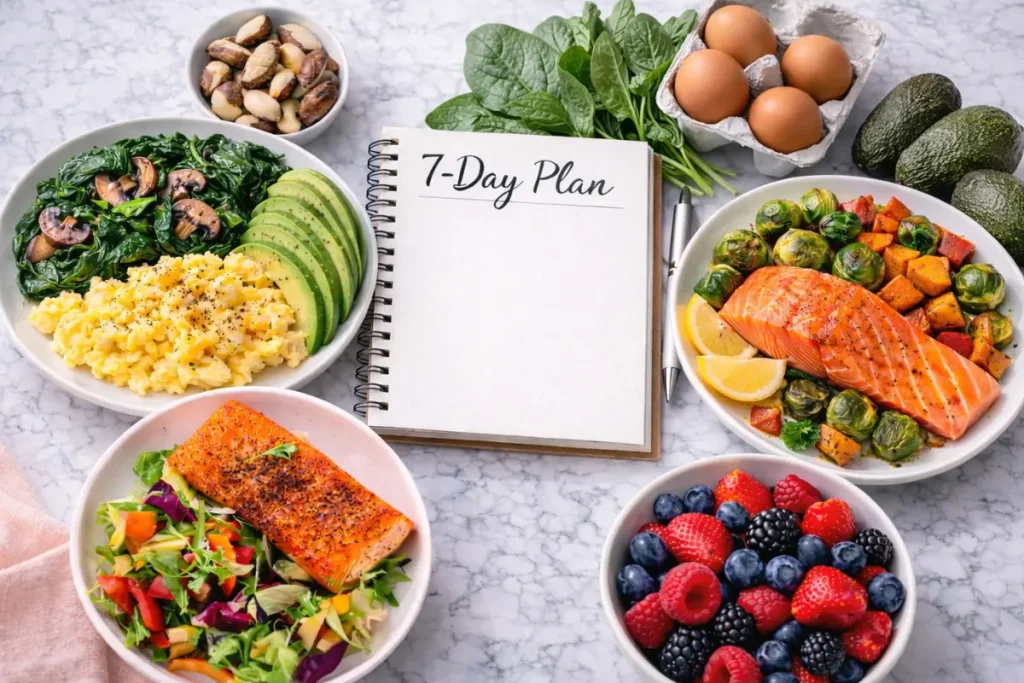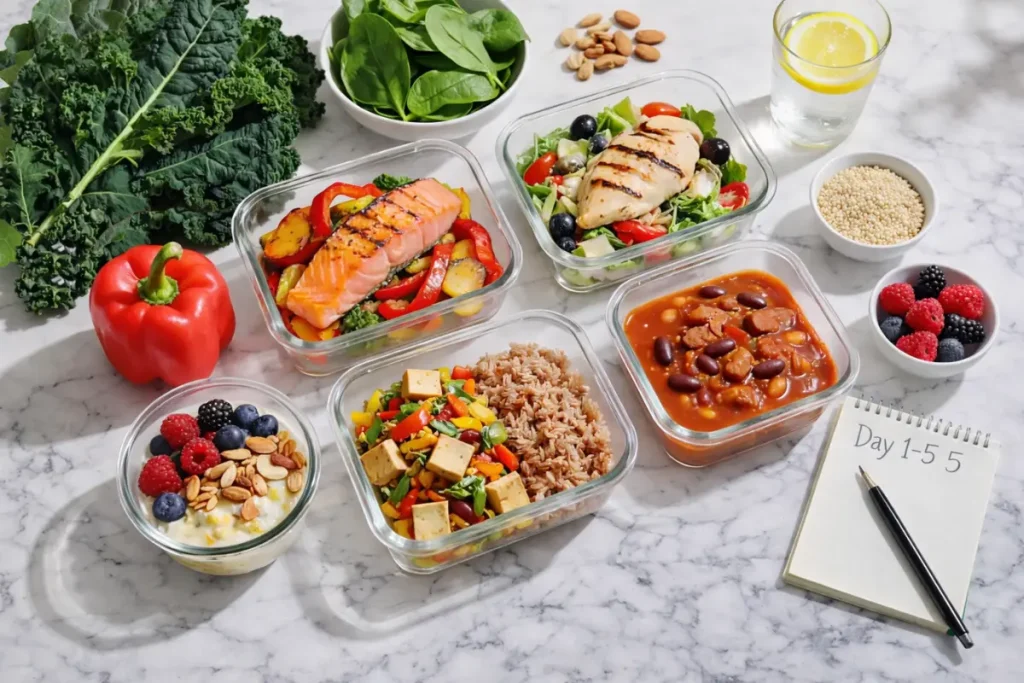
Menopause can change how your body stores fat, how easy it is to maintain muscle, and how hunger, sleep, and daily routines feel. But there is no single “menopause diet” that guarantees weight loss. This menopause diet 5 day plan to lose weight is a practical meal template built around protein-rich foods, fiber, vegetables, whole-food carbohydrates, and unsaturated fats.
The goal is not to promise a certain number on the scale in five days. Instead, use these five days to build meals that are satisfying, nutritionally balanced, and easier to repeat. For the broader strategy beyond the meal plan, see our weight loss guidance for women after 50.
Why eating patterns may need to change during menopause
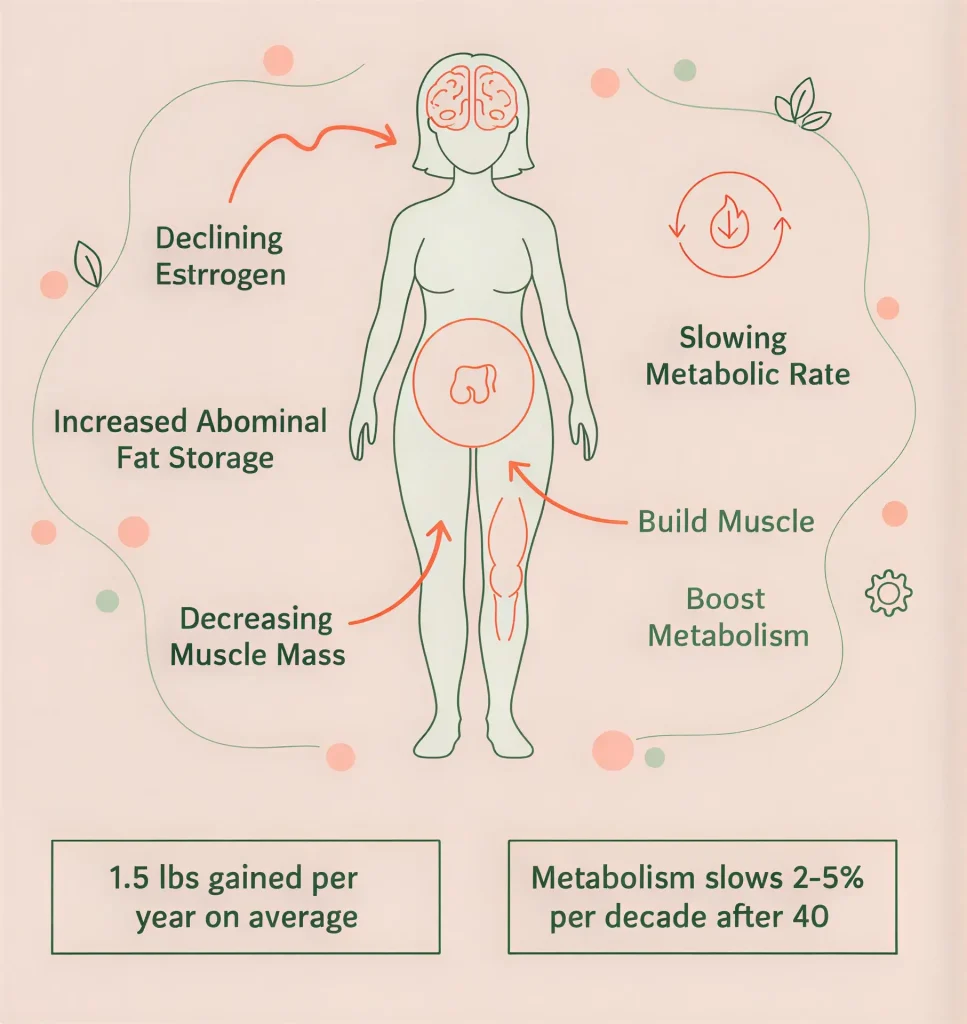
Menopause is associated with changes in body composition and a greater tendency for fat to accumulate around the abdomen. Aging also matters: muscle mass, activity, sleep, medications, health conditions, and overall food intake can all influence weight. Estrogen is part of this picture, but it is not accurate to blame every weight change on one hormone or assume that menopause automatically slows metabolism by itself.
That is why this plan focuses on everyday food choices rather than trying to “balance hormones” through specific foods. If you want a deeper look at weight management specifically during the menopause transition, our guide to losing weight during menopause covers the wider picture.
The core principles behind this 5-day menopause meal plan
Include a protein-rich food at each meal
Protein supports muscle maintenance and can help meals feel satisfying. Your ideal intake depends on factors such as body size, activity, health conditions, and overall diet, so this plan does not treat one gram target as appropriate for every woman. Eggs, Greek yogurt, fish, poultry, lean meat, legumes, tofu, tempeh, and other protein-rich foods can all fit.
For more detail on protein needs and food choices as you age, see our protein intake guide for women over 50.
Choose fiber-rich foods regularly
Vegetables, fruit, legumes, and whole grains provide fiber along with vitamins, minerals, and other nutrients. Fiber can support digestive health and satiety. Individual needs vary, particularly if you have digestive conditions or are increasing fiber after eating relatively little of it.
Use unsaturated fats in sensible portions
Olive oil, nuts, seeds, avocado, and fish can contribute unsaturated fats to a balanced eating pattern. These foods are nutritious but can also be energy-dense, so portions still matter when weight management is the goal.
Drink according to your needs
Regular fluid intake supports normal hydration and digestive function. Your needs can vary with climate, activity, medications, and health conditions. Water is a useful default, but there is no need to treat hydration as a weight-loss shortcut or a treatment for menopausal symptoms.
Your menopause diet 5 day plan to lose weight
Use this as a flexible five-day template rather than a prescription. Portions should reflect your appetite, nutritional needs, activity level, and health circumstances. If you have diabetes, kidney disease, food allergies, a history of disordered eating, or another condition affected by diet, individual guidance from a qualified healthcare professional or registered dietitian may be more appropriate.
Day 1: Protein, plants, and satisfying fats
Breakfast: Greek yogurt with mixed berries, ground flaxseed, chopped walnuts, and an optional drizzle of honey.
Lunch: Grilled chicken salad with mixed greens, cucumber, tomatoes, avocado, and an olive oil-lemon dressing.
Snack: Hummus with carrot and bell pepper sticks.
Dinner: Baked salmon with roasted Brussels sprouts and quinoa.
Why this combination works well: The meals combine protein-rich foods, vegetables, fiber-containing carbohydrates, and unsaturated fats to create a balanced day without eliminating major food groups.
Day 2: Mediterranean-inspired
Breakfast: Vegetable omelet with spinach, tomatoes, and feta, served with whole-grain toast.
Lunch: Lentil soup with a mixed green salad.
Snack: Apple slices with almond butter.
Dinner: Grilled chicken with roasted vegetables, olive oil, and a portion of whole-wheat pasta.
Why this combination works well: This day draws on a Mediterranean-style pattern with vegetables, legumes, whole grains, olive oil, and lean protein. It is designed around overall diet quality rather than a claim that one eating pattern can directly control menopausal hormones.
Day 3: Flexible protein choices
Breakfast: Smoothie with spinach, frozen berries, a suitable protein source, ground flaxseed, and unsweetened milk or a fortified plant-based alternative.
Lunch: Turkey and avocado wrap in a whole-grain tortilla with lettuce and tomato.
Snack: Greek yogurt with almonds.
Dinner: Stir-fried tofu with broccoli, bell peppers, snap peas, and brown rice.
Why this combination works well: Tofu and other soy foods provide plant protein and can be part of a varied diet during menopause. They do not need to be treated as a hormone treatment or a requirement for this plan.

Day 4: Familiar foods, balanced differently
Breakfast: Oatmeal topped with sliced banana, chia seeds, and peanut butter.
Lunch: Grilled vegetable and chicken salad with balsamic vinaigrette.
Snack: Steamed edamame.
Dinner: Turkey chili with beans, tomatoes, and peppers, served with a side salad.
Why this combination works well: Oats and beans contribute fiber, while chicken, turkey, beans, and edamame provide several protein options across the day.
Day 5: Simple whole-food meals
Breakfast: Scrambled eggs with sautéed spinach and mushrooms, plus berries.
Lunch: Tuna salad made with Greek yogurt, served over mixed greens.
Snack: A small handful of mixed nuts with fruit.
Dinner: Baked cod with roasted asparagus and sweet potato.
Why this combination works well: The final day keeps preparation straightforward while still combining protein-rich foods, produce, and fiber-containing carbohydrates.
What to limit without creating a forbidden-food list
A sustainable eating pattern does not require labeling individual foods as “good” or “bad.” It can, however, help to keep foods and drinks high in added sugars, heavily processed snacks, and large portions of energy-dense foods from crowding out more nutrient-dense choices.
Alcohol adds calories and can affect sleep, and some women find that it worsens hot flashes. Caffeine can also interfere with sleep in people who are sensitive to it. Your response matters more than a rigid universal rule.
Beyond the five-day meal plan
Food is only one part of weight management during and after menopause. Regular movement, resistance exercise, adequate sleep, and attention to health conditions and medications can all matter. The goal is not to use these habits to “fix” hormones but to support health, function, and a sustainable routine.
Sleep deserves particular attention when hot flashes, night sweats, stress, or other problems make rest difficult. Our guide to sleep and weight management after 60 explains that relationship without treating sleep as a guaranteed weight-loss tool.
How to use this plan after Day 5
You do not need to repeat these exact meals indefinitely. Keep the basic structure and swap foods according to your preferences, budget, culture, schedule, and nutritional needs. For example, change salmon for another fish or a plant protein, swap quinoa for another whole grain, or use seasonal vegetables.
Meal preparation can make the plan easier to maintain: cook a grain or legume in advance, wash and chop vegetables, and prepare a few protein options that can be combined into different meals. Flexibility is more useful than trying to follow an arbitrary “perfect” diet every day.
Also look beyond short-term scale changes. Energy, strength, meal satisfaction, digestive comfort, and whether the eating pattern is realistic for your life can all help you judge whether the approach is sustainable.
Frequently Asked Questions
Can a 5-day menopause diet make me lose weight?
Five days is too short to promise a specific amount of weight loss, and short-term scale changes can reflect several factors. Use this plan as a structured starting point for balanced meals rather than as a crash diet or guaranteed weight-loss program.
Can I repeat this menopause diet 5 day plan to lose weight?
You can use the meal structure as a template and vary the foods, but your long-term eating pattern should provide enough energy and nutrients for your individual needs. Repeating a rigid menu is less important than building a balanced approach you can sustain.
Can vegetarians or vegans follow this plan?
Yes, the structure can be adapted with legumes, tofu, tempeh, edamame, fortified plant-based foods, nuts, seeds, and other suitable options. Fully plant-based diets require particular attention to nutrients such as vitamin B12 and may benefit from individualized advice.
Do I need supplements with this menopause diet plan?
No supplement is automatically required because you are following this five-day plan. Supplement needs depend on your diet, health history, medications, laboratory results when appropriate, and clinician recommendations.
What if I have diabetes, kidney disease, or food allergies?
Dietary needs can change substantially with certain medical conditions, medications, allergies, or intolerances. A generic five-day plan may need modification, so discuss significant dietary changes with a qualified healthcare professional or registered dietitian when appropriate.
What should I do after the five days?
Keep the principles that fit your needs: include protein-rich foods, vegetables and fruit, fiber-rich carbohydrates, and suitable fats while adjusting portions and food choices to your circumstances. The aim is to build a repeatable eating pattern rather than chase a five-day result.
The bottom line
The menopause diet 5 day plan to lose weight is best treated as a practical meal template, not a hormonal reset or a promise of rapid weight loss. Menopause can influence body composition, but weight management remains multifactorial.
Start with the five-day structure, adjust it to your needs, and focus on habits you can maintain beyond Day 5. If weight changes are rapid or unexplained, or if menopausal symptoms are significantly affecting your health or quality of life, discuss them with a healthcare professional.