
Sleep and weight management often overlap after 60, but sleep is not a hidden weight-loss trick. A difficult night can affect energy, appetite, food choices, and motivation to move, while persistent sleep problems can make an already challenging weight-management routine harder to maintain.
If you are trying to manage your weight after 60, improving sleep is best viewed as one part of a broader health strategy rather than a way to “burn fat” while you rest. For the wider approach, see our weight loss guidance for women after 50.
Why sleep matters for weight management after 60
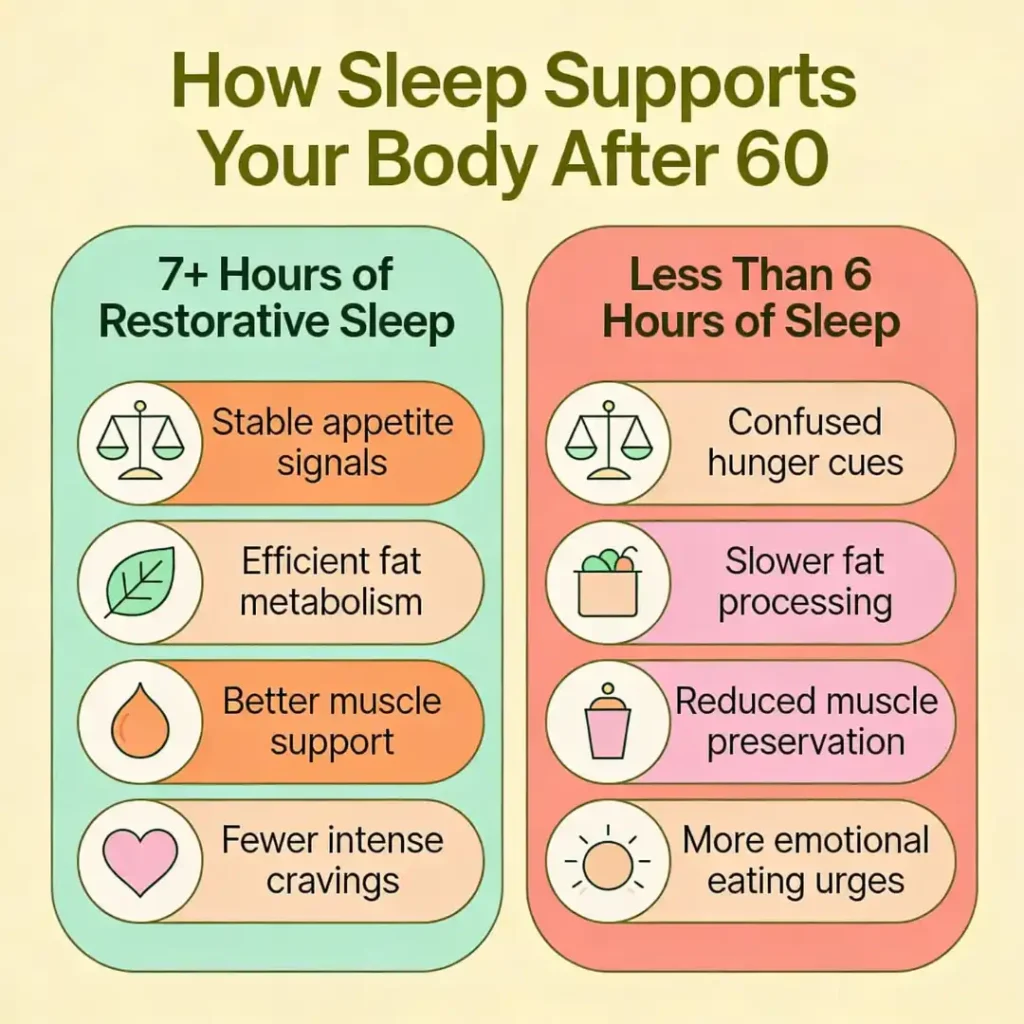
Sleep can influence several behaviors and biological processes that are relevant to weight management. Short or disrupted sleep may affect appetite regulation, food preferences, glucose regulation, mood, and daytime energy. It can also make exercise and meal planning feel more difficult simply because you are tired.
That does not mean one bad night causes fat gain or that better sleep guarantees weight loss. Body weight is influenced by many factors, including food intake, physical activity, muscle mass, medications, health conditions, genetics, menopause-related changes, and aging. Sleep belongs in that larger picture.
How poor sleep can make healthy habits harder
Appetite and food choices may change
Research has linked insufficient sleep with changes in appetite regulation and, in some studies, greater interest in energy-dense foods. The size of these effects varies, and individual responses are not identical. The practical point is simpler: when you are exhausted, planning balanced meals and responding to hunger cues can become more difficult.
Movement can feel more difficult
Fatigue can reduce the energy or motivation you have for walking, strength training, and other daily movement. Better sleep does not automatically make someone exercise, but addressing persistent sleep problems may make it easier to maintain an active routine.
Sleep may matter during intentional weight loss
Some controlled research suggests that sleep duration can influence changes in body composition during calorie restriction. Those findings are useful, but they should not be turned into a universal promise that a specific number of sleep hours will produce a specific amount of fat loss. Sleep is supportive, not a substitute for an appropriate nutrition and activity plan.
Menopause can complicate sleep after 60
Hot flashes and night sweats can interrupt sleep during and after the menopause transition. Mood changes, pain, urinary symptoms, medications, sleep disorders, and other health conditions can also contribute. Hormonal changes are part of the picture, but they are not the only possible explanation for persistent insomnia or nighttime waking.
If insomnia itself is the main problem, our menopause insomnia guide covers that topic in more depth. This article stays focused on how sleep fits into weight management.
Sleep habits that can support a healthier routine
Sleep habits cannot treat every cause of poor sleep, but they can create more favorable conditions for rest. Start with the changes that are realistic for you rather than trying to perfect your entire evening routine at once.
Keep your sleep and wake times reasonably consistent
A regular schedule can support your sleep-wake rhythm. Exact timing does not need to be identical every day, but large and frequent shifts can make a routine harder to maintain.
Create a wind-down period
Lowering stimulation before bed can help some people transition toward sleep. You might dim bright lights, choose a quiet activity, or set aside work and stressful tasks before bedtime. There is no single bedtime ritual that works for everyone.
Pay attention to caffeine and alcohol
Caffeine can remain active for hours, and sensitivity varies substantially between people. If sleep is difficult, consider whether afternoon or evening caffeine is contributing. Alcohol may initially feel sedating but can disrupt sleep later in the night and may worsen hot flashes for some women.
Make the bedroom comfortable
A dark, quiet, comfortably cool room may help, especially when night sweats are an issue. Breathable bedding, adjustable layers, or a fan can be practical options. The best temperature is the one that feels comfortable to you rather than a universal number.

What sleep cannot do for weight loss
It is important to separate a supportive health habit from a weight-loss treatment. Sleeping longer does not guarantee that you will lose weight, target abdominal fat, speed up your metabolism, or prevent muscle loss. Likewise, waking during the night does not mean your body has switched into “fat-storage mode.”
For sustainable weight management after 60, sleep works alongside nutrition, regular movement, resistance exercise, and appropriate medical care. If you want the broader strategy for this age group, our weight loss after 60 guide covers those factors together.
When sleep problems deserve medical attention
Persistent insomnia is not always a lifestyle problem. Sleep apnea, restless legs, chronic pain, mood disorders, medications, hot flashes, and other conditions can interfere with sleep. Sleep apnea becomes more common with age and after menopause, and it may be missed when symptoms are attributed only to stress or aging.
Talk with a healthcare professional if sleep problems persist, significantly affect daytime functioning, or are accompanied by symptoms such as loud snoring, gasping or choking during sleep, severe daytime sleepiness, or other concerning changes. For a broader explanation of age-related sleep changes, see why sleep problems increase after age 50.
Frequently Asked Questions
Is it true that exercise won’t help me lose much fat?
Exercise can contribute to fat loss, but its effect varies and is usually strongest when combined with an appropriate eating pattern. Resistance exercise is especially useful after 60 because it helps preserve muscle and physical function during weight management.
What burns fat when sleeping?
Your body continues to use energy while you sleep, drawing on a mix of stored fuels. There is no specific food, drink, supplement, or sleep trick that selectively burns body fat overnight. Long-term fat loss depends on overall energy balance and sustainable habits.
Is it healthy to lose 1 pound a week?
For some adults, losing about 1 pound per week can fall within a reasonable gradual pace, but the right rate depends on starting weight, health conditions, medications, nutrition, and muscle-preservation needs. Women over 60 should avoid aggressive dieting and discuss significant weight-loss goals with a qualified healthcare professional when appropriate.
What is the most effective way to lose weight?
There is no single method that works best for everyone. A sustainable approach usually combines an appropriate calorie intake, adequate protein, nutrient-dense foods, regular movement, resistance exercise, sufficient sleep, and attention to medical conditions or medications that may affect weight.
The bottom line
Sleep matters for health and can make a weight-management routine easier or harder to sustain after 60. But it should not be marketed as a way to “sleep your way” to fat loss. Better rest can support appetite, energy, activity, and overall wellbeing while nutrition, movement, muscle-preserving exercise, health conditions, and medications remain part of the larger picture.
If sleep is consistently poor, treat that as a health issue worth addressing rather than simply another obstacle to the number on the scale.