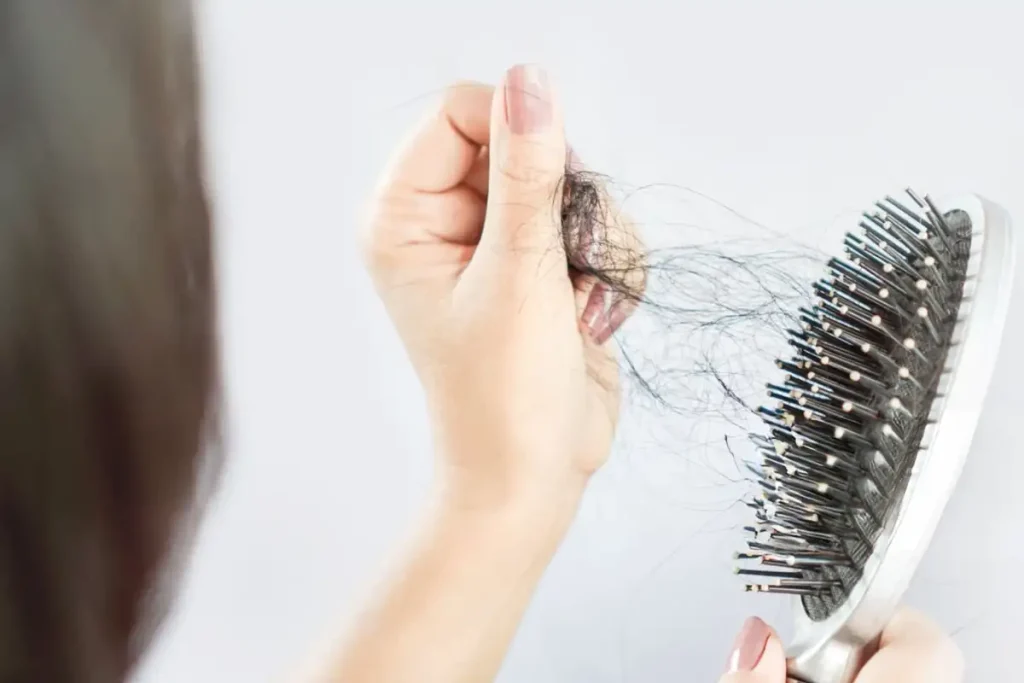

I remember standing in the shower, watching more hair than usual circle the drain, and feeling that quiet flash of panic. If you are searching for how to reverse thinning hair after menopause, start with this: improvement may be possible, but the right plan depends on why your hair is thinning.
Menopause can affect the growth cycle, yet hormones are not the only possible cause. Pattern hair loss, temporary shedding, thyroid problems, low iron, illness, rapid weight loss, medication changes, scalp disease, and breakage can look similar at first. This guide will help you recognize the pattern, know what to discuss with a clinician, and choose realistic next steps without wasting months on random supplements.
If you are also rebuilding your wider routine after 50, begin with our Skin Care Guide for Women Over 50. Here, we will stay focused on true loss of density and regrowth.
Can thinning hair after menopause be reversed?
Sometimes. Hair can often become fuller when shedding is triggered by a correctable problem, such as an identified deficiency, thyroid imbalance, severe stress, illness, or inadequate nutrition. Female pattern hair loss is usually managed rather than permanently “cured,” but early treatment may slow progression and improve density. Follicles affected by scarring conditions need prompt medical attention because delay can make loss permanent.
The honest goal is not a guaranteed return to the hair you had at 25. It is to identify the cause, protect functioning follicles, reduce avoidable shedding and breakage, and give an appropriate treatment enough time to work.
Why hair may thin after menopause
As estrogen and progesterone decline, some women notice a shorter growth phase and more visible shedding. Genetic sensitivity to androgens may also contribute to gradual miniaturization of follicles, often seen as a widening part or reduced density across the crown.
But “menopause” should not become a catch-all diagnosis. Hair loss may also follow fever, surgery, major emotional stress, restrictive dieting, substantial weight loss, or a new medication. Low iron or thyroid dysfunction may contribute in some women. Tight styles, frequent bleaching, high heat, and fragile dry strands can create breakage that makes the overall volume look worse without changing the number of follicles.
Texture and density are different. Naturally fine strands can make the scalp easier to see even when you are not actively losing hair. Use our Fine Hair vs Thinning Hair Over 60 guide if you are unsure which change you are seeing.
Read the pattern before choosing a treatment
| What you notice | What it may suggest | Sensible next step |
|---|---|---|
| Part slowly widening; crown less dense | Female pattern hair loss | Photograph the part monthly and arrange a clinician or dermatologist assessment |
| Handfuls of hair shedding from all over | Temporary shedding after stress, illness, weight loss, or another trigger | Review events and medication changes from the previous few months with your clinician |
| Short snapped hairs, rough ends, little white bulb absent | Breakage rather than shedding from the root | Reduce heat and chemical damage; focus on conditioning and gentle handling |
| Round patches or sudden bare areas | A condition needing diagnosis | Seek prompt medical evaluation |
| Redness, scale, pain, burning, or shiny scalp areas | Inflammatory or scarring scalp disorder | See a dermatologist promptly; do not rely on cosmetic products alone |
One simple habit makes your appointment more useful: take clear photographs in the same room, under the same light, with the part in the same position once a month. Daily mirror checks are too variable and can make normal fluctuations feel alarming.
Your diagnosis-first appointment checklist
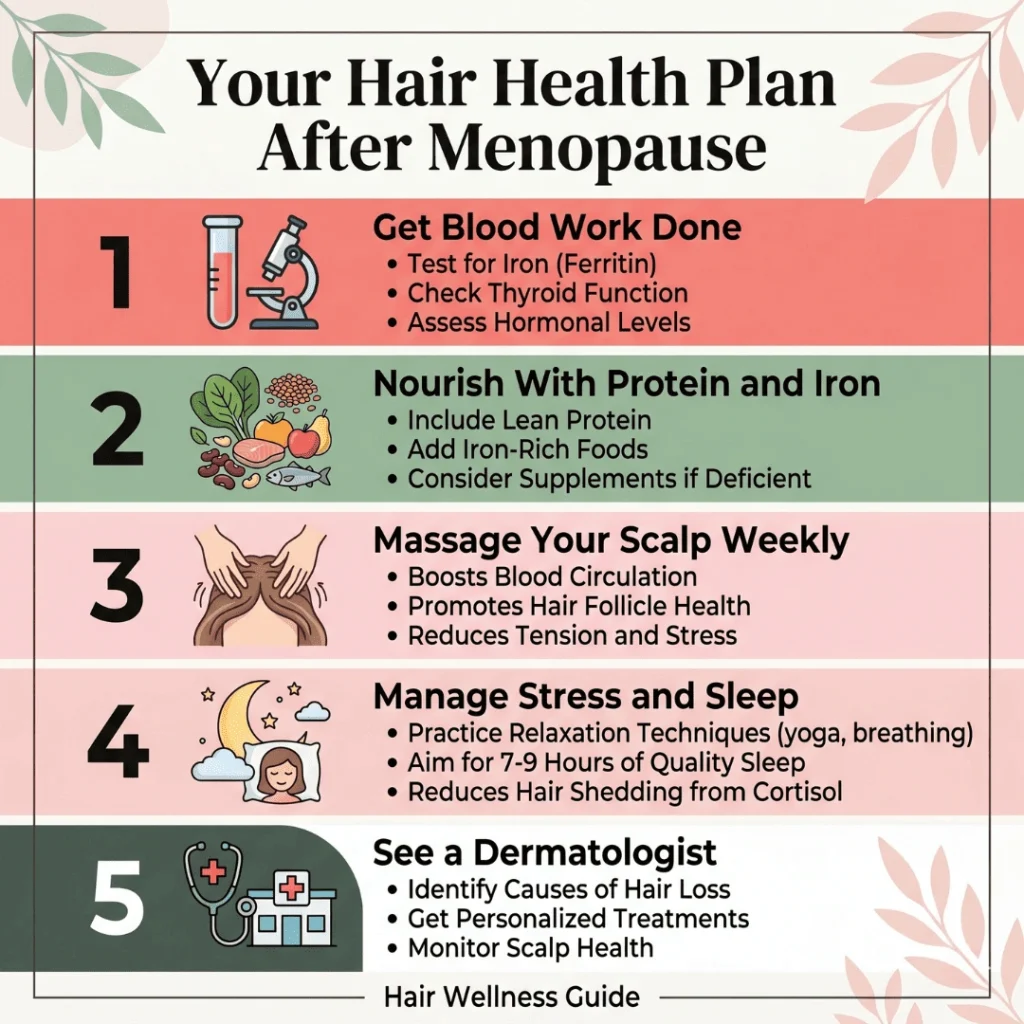
Bring a short timeline: when the change began, whether it was sudden or gradual, where density changed, recent illnesses or surgery, weight changes, stress, menstrual or menopause history, family history, scalp symptoms, and every prescription, supplement, and styling treatment you use.
A clinician may examine your scalp and hair shafts, review your history, and decide whether tests are appropriate. Testing is individualized, but iron status, thyroid function, and other nutritional or hormonal factors may be considered when symptoms or history point in that direction. A scalp biopsy is not routine, yet a dermatologist may use one when the diagnosis remains unclear or scarring is suspected.
Ask one direct question: “Does this look like shedding, breakage, female pattern loss, or a scalp condition?” That answer changes the plan far more than any product label promising thicker hair.
Treatments that may improve density
Topical minoxidil
Topical minoxidil is a commonly used option for female pattern hair loss. It can cause temporary increased shedding early on, and results require consistent use over months rather than days. Benefits generally fade after stopping. Irritation, unwanted facial hair, dizziness, heart symptoms, pregnancy considerations, and other personal factors should be discussed with a clinician or pharmacist before use.
Prescription options
Depending on the diagnosis and your health history, a dermatologist may discuss oral minoxidil, anti-androgen medicines, or other therapies. These are not interchangeable beauty supplements. They can affect blood pressure, fluid balance, potassium levels, pregnancy safety, or interact with other medicines, so they require individualized medical oversight.
Procedures and devices
Platelet-rich plasma, low-level light devices, and hair transplantation are sometimes offered. Cost, evidence, candidacy, maintenance, and results vary. Ask what diagnosis the treatment is intended for, how success will be measured, how many sessions are expected, and what happens if you stop. A procedure is not a substitute for identifying active inflammation, a deficiency, or medication-related shedding.
Nutrition: correct a gap, do not guess
Hair is not an essential organ, so inadequate energy or protein intake may show up as shedding. Build meals around sufficient protein and include iron-rich foods, legumes, eggs, fish or other suitable protein sources, whole grains, fruits, vegetables, nuts, and seeds according to your dietary needs.
More is not automatically better. Iron should not be taken blindly because excess can be harmful. High-dose biotin can interfere with certain laboratory tests and does not fix hair loss when no deficiency exists. “Hair, skin, and nails” blends may duplicate nutrients already present in your multivitamin. If a test confirms a deficiency, agree on the dose, duration, and retesting plan with your clinician.

Protect the hair you already have
- Wash often enough to keep your scalp comfortable; shampooing does not create root-level hair loss.
- Apply conditioner mainly through the lengths and detangle gently from the ends upward.
- Limit high heat, repeated bleaching, chemical overlap, tight extensions, and styles that pull at the hairline.
- Use lightweight products if heavy oils flatten fine strands or irritate the scalp.
- Treat persistent itching, scale, or inflammation as a scalp issue that deserves assessment—not something to scrub away.
If strands feel straw-like, snap easily, or frizz while your part remains stable, the problem may be dryness and breakage. Follow the focused steps in How to Treat Dry Hair During Menopause Naturally.
A realistic 12-month plan
- Weeks 1–4: document the pattern, book an assessment, review possible triggers, and simplify damaging hair practices.
- Months 2–3: follow the diagnosis-based plan consistently. Correct only confirmed gaps and track side effects.
- Months 4–6: compare standardized photographs, not day-to-day impressions. Review progress with the prescribing clinician if using treatment.
- Months 6–12: continue what is helping, reassess what is not, and discuss another diagnosis or referral if loss progresses.
Hair growth is slow. Switching products every two weeks makes it hard to know what helped and encourages expensive trial-and-error. Choose a plan you can follow, decide in advance how progress will be measured, and set a review date.
When not to wait
Arrange prompt medical evaluation for sudden or patchy loss; scalp pain, burning, pus, marked redness, or shiny scar-like areas; loss of eyebrows or eyelashes; rapid progression; or shedding accompanied by unexplained fatigue, weight change, weakness, or other new symptoms. Also seek advice when loss begins after a new medicine—do not stop a prescription on your own.
Frequently asked questions
How do you treat hair loss after menopause?
Treatment begins by identifying whether the change is female pattern loss, temporary shedding, breakage, a deficiency, or a scalp disorder. A clinician can then match the cause with nutrition correction, scalp treatment, minoxidil, a prescription option, or another appropriate plan.
Why is my hair so thin that I can see my scalp?
A visible scalp can reflect naturally fine strands, reduced density, a widening part, or both. Compare consistent photographs and arrange an assessment if the change is new, progressive, sudden, patchy, painful, or inflamed.
How can I make fine hair look thicker now?
A shape-conscious haircut, lightweight volumizing products, gentle root lift, and avoiding heavy oils can improve the appearance immediately. Cosmetic volume does not treat active hair loss, so investigate a changing part or increased shedding separately.
Can you really reverse thinning hair after menopause?
Some women regain density when a correctable trigger is treated. Female pattern hair loss is usually managed over time, and earlier diagnosis may protect more functioning follicles. No treatment can guarantee complete regrowth.
The bottom line
The most effective answer to how to reverse thinning hair after menopause is not one miracle ingredient. It is a sequence: identify the pattern, rule out important causes, choose a diagnosis-based treatment, protect fragile strands, and measure progress patiently. Start this week with one action—take baseline photographs or schedule the assessment you have been postponing.