
Memory changes after menopause can feel unsettling: a familiar name may take longer to come to mind, a conversation may be harder to follow, or a task may need more attention than before. These experiences are common during the menopause transition, but they can also be influenced by sleep, stress, mood, medicines, thyroid conditions, nutrition, and other health factors. This guide explains practical ways to support memory after menopause within the wider context of life beyond menopause, without treating every lapse as a hormone problem or a diagnosis.
Why Memory Can Feel Different After Menopause
Forgetting a word or losing your train of thought can understandably cause worry. Occasional lapses do not by themselves indicate dementia, but new, worsening, or functionally disruptive changes deserve an individual conversation with a qualified healthcare professional.
Hormonal changes during the menopause transition may coincide with changes in attention and verbal memory for some women. The experience is not identical for everyone, and research does not support treating every memory complaint as a direct result of estrogen alone. Sleep quality, stress, mood, medicines, and other medical factors also matter.
Sleep disruption, night sweats, stress, mood changes, and some medicines can make concentration and recall feel harder. Improving sleep and reviewing persistent symptoms may help, but a noticeable change after one lifestyle adjustment should not be treated as proof of a single cause.
Many women notice that cognitive complaints change over time, but there is no fixed timetable that applies to everyone. When memory changes affect daily life, work, safety, or relationships, professional assessment is more useful than assuming the symptoms are temporary.
The key is not to suffer in silence or assume this is just “how it is now.” It’s about understanding the whole picture and working with your body, not against it.
Lifestyle Habits That Can Support Memory
There is no reliable lifestyle method that “balances hormones” in a universal way. A steadier routine—regular meals, appropriate movement, sleep support, stress management, and medical review when needed—can support overall well-being and may make cognitive demands easier to manage.
Hormone therapy and supplements are individual medical decisions, not general memory treatments. Discuss benefits, risks, interactions, and alternatives with a qualified clinician rather than using a supplement or hormone product to self-treat cognitive symptoms.
Habits that can support overall health and day-to-day cognitive well-being include:
- Balanced, regular meals that include protein, healthy fats, fiber, and nutrient-dense carbohydrates
- Regular physical activity adapted to your health, mobility, and fitness level
- Stress-management practices such as meditation, yoga, time outdoors, or gentle daily movement
- Consistent sleep habits and professional support when sleep problems are persistent
I learned the hard way that skipping meals and living on coffee creates a blood sugar roller coaster that makes brain fog exponentially worse. When I started eating protein-rich breakfasts and stopped the mid-afternoon sugar crashes, my afternoon memory improved dramatically. You might find more detailed guidance in this piece about vitamins for women 50 and breakfast.
Some women explore supplements like black cohosh, evening primrose oil, or maca root, but the research on these is mixed at best. Before trying any supplement or hormone therapy, talk with your doctor. What works for your friend might not work for you, and some supplements can interact with medications or existing health conditions.
The truth? There’s no magic pill. Hormone balance is about consistent, gentle support through how you eat, move, sleep, and manage stress. And when you need medical help, asking for it isn’t weakness, it’s wisdom.
Hydration, Caffeine, and Memory
Regular fluid intake supports normal daily functioning, while too much caffeine or alcohol may affect sleep and concentration for some people. There is no fixed number of glasses or a specific drink that treats memory changes after menopause.
Plain water is a practical foundation for hydration. Not drinking enough fluid can affect how some people feel and function, but individual fluid needs vary. I notice that I feel less clear when I have not been drinking regularly, though that personal observation does not mean hydration is a treatment for memory changes.
Beyond water, some beverages can fit comfortably into a balanced routine:
- Green tea provides plant compounds and a moderate amount of caffeine; whether it suits you depends on your caffeine tolerance and sleep
- Herbal teas such as chamomile or peppermint can be enjoyable caffeine-free options, especially later in the day
- Broths can contribute fluid and nutrients, but they should not be treated as a memory or hormone therapy
What doesn’t help? Loading up on sugary drinks, excessive caffeine, or alcohol. I’m not saying never have wine or coffee; I certainly enjoy both, but moderation matters. When I was drinking three or four coffees daily plus wine most evenings, my sleep was terrible and my memory even worse.
One change that surprised me: switching my evening wine to herbal tea. It felt boring at first, but within two weeks, my sleep quality improved, and mornings felt clearer. Small shifts really do add up. There are more ideas on supportive beverages during this life stage, you can check out what drinks are good for menopause symptoms.
The bottom line? Hydration isn’t glamorous, but it’s foundational. Staying hydrated supports normal daily functioning, but fluid needs vary and hydration is not a treatment for memory changes.
Food Patterns That Support Brain Health
No single fruit or “hormone-balancing” food fixes memory. Berries, vegetables, legumes, whole grains, fish, nuts, and other nutrient-dense foods can fit within a balanced eating pattern. The goal is variety and adequacy, not treating food as medicine.
Berries provide fiber, vitamins, and plant compounds and can be an easy way to add variety to a balanced eating pattern. I keep frozen berries in my freezer year-round and add them to morning yogurt or afternoon smoothies. I enjoy the habit, but I do not treat one fruit as a memory remedy.
Other fruits worth eating regularly:
- Avocados provide unsaturated fats, fiber, and several micronutrients
- Citrus fruits provide vitamin C and other plant compounds
- Apples and pears provide fiber and can contribute to overall fruit variety
- Pomegranates provide polyphenols and can be included for variety rather than for a promised hormonal effect
Here’s what doesn’t work: treating fruit like medicine while the rest of your diet is junk. Fruit is most powerful as part of an overall whole-foods approach that emphasizes vegetables, whole grains, lean proteins, healthy fats, and yes, fruit.
I follow a loosely Mediterranean-style eating pattern, which research consistently links to better brain health and slower cognitive aging. If you’re curious about this approach, the article on Mediterranean diet breakfasts.
The truth is, there’s no single “hormone-balancing superfruit.” A varied diet that includes fruit can provide fiber, vitamins, minerals, and plant compounds without asking any one food to fix memory or menopause symptoms.
Train your brain: simple daily habits that sharpen memory
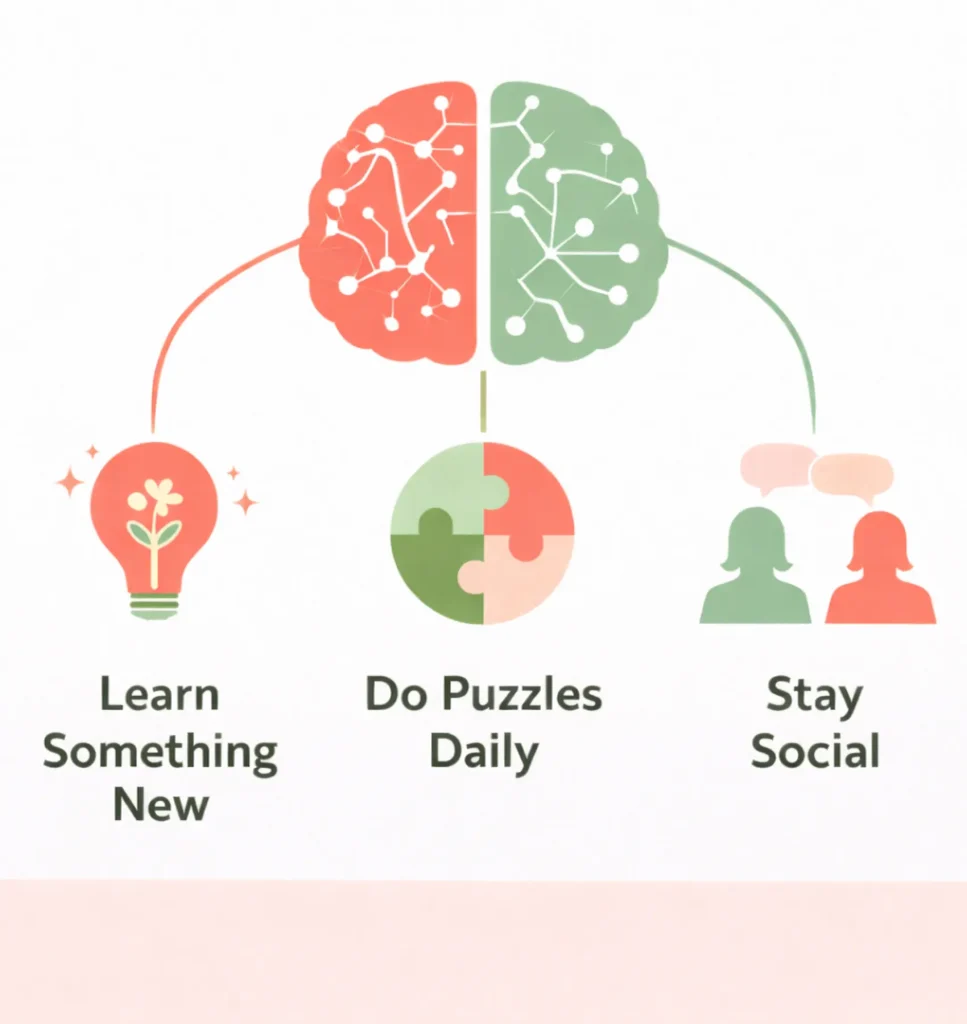
Engaging in meaningful mental activities can help keep daily life stimulating. Learning, reading, puzzles, creative work, and social connection are reasonable options, but no single brain game is guaranteed to prevent cognitive decline or reverse a medical condition.
I’m not talking about expensive programs (though some people enjoy those). I mean genuinely engaging your mind in ways that feel slightly difficult but doable. Here’s what works:
Learn something new. I started learning basic Spanish at 52, and while I’m far from fluent, the mental stretch of vocabulary and grammar rules definitely keeps my brain active. Other women I know have taken up painting, piano, knitting, or even. The specific skill matters less than the challenge.
Do puzzles regularly. Crosswords, Sudoku, word games, jigsaw puzzles, they all count. I do the daily crossword with my morning coffee. Some days I finish it, some days I don’t, but I’m consistently working my brain.
Stay socially active. Meaningful conversations and social activities can add connection and mental engagement to your routine. A book club, volunteering, a class, or regular time with friends are all practical options.
Use memory aids without shame. Lists, calendars, phone reminders, sticky notes, these aren’t signs of failure. They’re smart strategies that free up mental energy. I keep a small notebook in every room and my purse. It works.
What I’ve noticed is that when I’m mentally engaged and learning, I feel sharper. Researchers use the term “cognitive reserve” when studying how accumulated learning and mentally engaging experiences may relate to resilience in cognitive functioning, but no activity guarantees protection from age-related cognitive decline.
If you’re looking for a comprehensive approach to staying mentally sharp, the guide on mental clarity after 50 connects brain health with lifestyle habits.
The key is consistency without pressure. This isn’t about becoming perfect. It’s about staying curious, engaged, and connected.
Movement and Cognitive Well-Being

Here’s something that surprised me: regular movement can be a valuable part of a healthy routine after menopause. It supports many aspects of health, but it should not be presented as a stand-alone treatment for memory changes.
Aerobic activity is associated with benefits for cardiovascular health and overall well-being, and research continues to examine its relationship with cognitive health. When I began walking regularly, I felt clearer, but that personal change cannot establish that walking directly improved my memory.
What kind of movement helps?
- Aerobic activity such as walking, swimming, cycling, or dancing, adjusted to your fitness and health needs
- Strength training when appropriate for your ability and health, as part of a balanced movement routine
- Yoga or tai chi, which combine movement with stress reduction and balance training
You don’t need to become a gym rat. I’m definitely not one. The useful goal is to find movement you enjoy and can do consistently, without promising a specific cognitive result.
Movement and sleep can influence how we feel from day to day, and I find it easier to maintain both when they are part of a consistent routine. If sleep is your struggle, improving sleep naturally after 50 offers practical ideas to consider alongside your broader routine.
The practical takeaway is simple: movement is one part of supporting overall health. Choose activities that suit your ability, health conditions, and preferences, and seek professional guidance when you are unsure what is appropriate.
Start where you are; a 10-minute walk counts. So does dancing in your kitchen. Movement is movement, and your brain will thank you.
Frequently asked questions: your memory questions answered
Does menopausal brain fog ever go away?
Cognitive complaints can change over time, but there is no fixed course that applies to everyone. Sleep, stress, mood, medicines, thyroid conditions, nutrition, and other health factors can also affect attention and memory. New, worsening, or functionally disruptive changes deserve professional assessment.
What is the best natural estrogen substitute?
There is no universally best natural estrogen substitute. Foods containing phytoestrogens, such as soy, are not equivalent to prescribed estrogen therapy, and evidence for supplements and herbal products varies. Discuss supplements or hormone-related treatments with a qualified clinician, especially if you have medical conditions or take medicines.
What to take for brain fog in menopause?
There is no single supplement that reliably treats menopausal brain fog. Sleep, stress, physical activity, nutrition, medicines, and possible medical causes may all be relevant. A clinician can help assess persistent symptoms and determine whether testing or treatment is appropriate rather than relying on a supplement alone.
Does menopause cause forgetfulness?
Some women report changes in attention, word-finding, or memory during the menopause transition, but menopause is not the only possible explanation. Occasional lapses do not by themselves indicate dementia, while persistent, worsening, or daily-life-disrupting changes should be assessed by a qualified healthcare professional.
The simple Truth about memory after menopause
Learning how to improve memory after menopause isn’t about finding one miracle solution. It’s about understanding that your changing hormones, sleep quality, stress levels, nutrition, and movement all weave together to affect how your brain functions. The women I see thriving after 50 aren’t the ones chasing expensive supplements or complicated protocols. They’re the ones making small, consistent changes that honor where they are right now.
Your brain is resilient and adaptable, even after menopause. By moving your body regularly, feeding it nutrient-rich foods, challenging it with new learning, protecting your sleep, and managing stress with compassion, you give yourself the best possible foundation for a sharp, vibrant mind. And please, always partner with your doctor on any concerns or major changes, because your health deserves professional guidance.
If you’re ready to explore more about thriving in this chapter, healthy aging after 50 offers a comprehensive roadmap that connects all these pieces.
What’s one small step you’ll commit to this week? A daily walk, more water, a new puzzle, bedtime? Share in the comments below, and let’s support each other
For broader guidance on this topic, explore our menopause after 50 hub.
For related Lonage guidance, see menopause sleep, fatigue, brain & mood.