

I tried liquid apple cider vinegar for three weeks straight. Every morning. One tablespoon in a glass of water before breakfast.
The first week I was totally stoked. Week two I was tolerating it. By week three, I was standing at my kitchen counter making a face that my daughter described as “a cat eating a lemon.” So when ACV gummies showed up in my feed promising an easier way to get apple cider vinegar into my routine, I was genuinely curious. And a little suspicious.
The ACV gummies vs liquid question sounds simple, but the labels, formulations, research, and practical trade-offs make it more complicated than taste alone. Liquid vinegar has been studied far more directly than gummies. Gummies are convenient, but a milligram number on the front of a bottle does not automatically tell you how much acetic acid you are getting or whether the product will reproduce results from liquid-vinegar studies.
ACV gummies vs liquid: the quick answer
If you want the format that most closely resembles what has actually been tested in clinical research, liquid vinegar has the stronger evidence base. If taste, portability, or convenience is what determines whether you will use a product at all, gummies may be easier to live with, but their formulas vary and they should not be treated as clinically equivalent to liquid ACV.
That distinction matters even more when blood sugar or weight-loss claims enter the conversation. Reviews of clinical trials suggest vinegar may influence some glycemic measures in certain populations, but that is very different from saying an ACV gummy treats diabetes, guarantees weight loss, or works the same way as liquid vinegar.
What is actually different between ACV gummies and liquid?
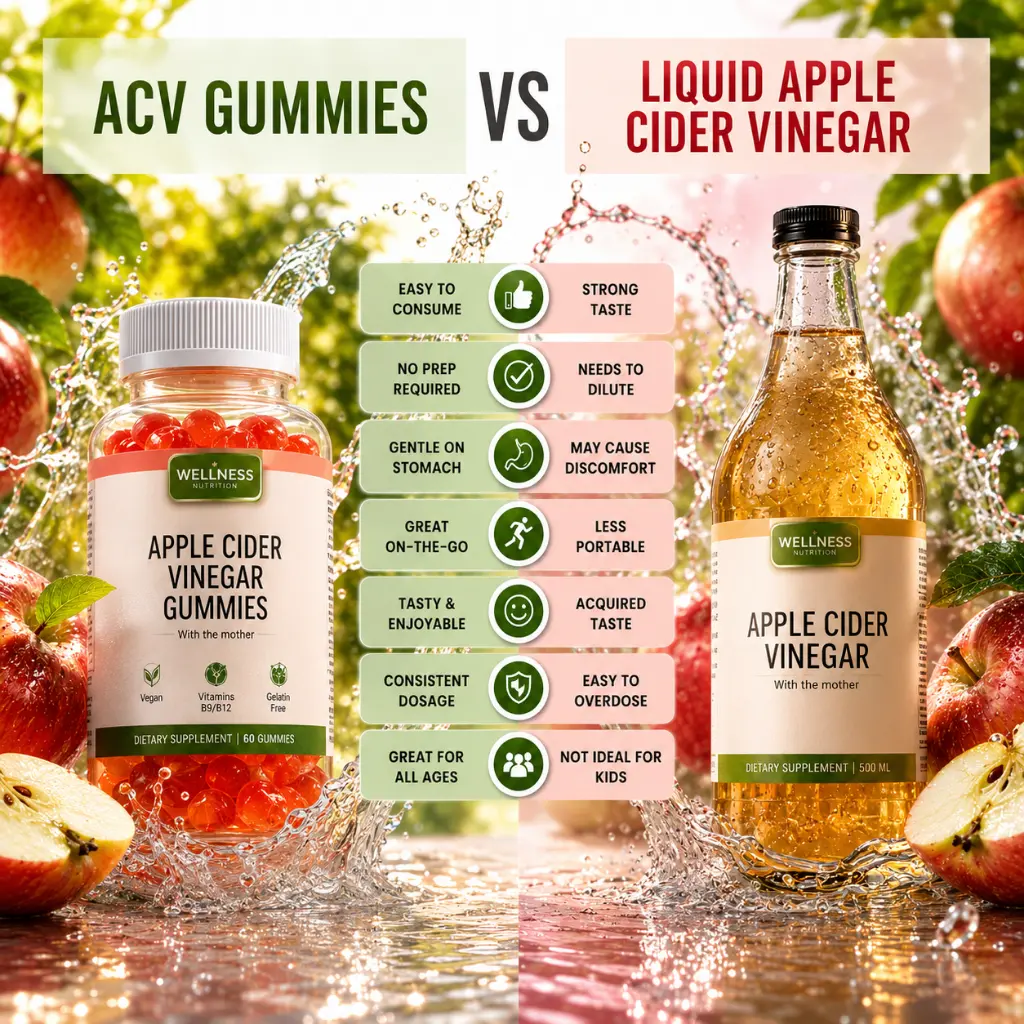
The part I check first is not the word “apple” or even the total milligrams printed in large type. I want to know what the product actually contains. Vinegar’s main acid is acetic acid, and liquid vinegar provides it in an acidic solution. A gummy is a manufactured supplement that may contain ACV powder or extract along with sweeteners, flavorings, pectin or gelatin, and sometimes added vitamins or other ingredients.
| What to compare | Liquid ACV | ACV gummies |
|---|---|---|
| Research base | Vinegar/liquid ACV has been used in clinical studies | Much less direct evidence for gummy formulations |
| Label clarity | Usually lists vinegar and acidity on the bottle | Formulas and ACV extract amounts can vary |
| Convenience | Needs dilution and is less portable | Easy to carry and take |
| Taste | Strong and acidic | Usually sweeter and easier to tolerate |
| Dental exposure | Acidic liquid can contact teeth | Different exposure pattern, but not automatically risk-free |
| Added ingredients | Often minimal | May include sugars, sweeteners, vitamins, or blends |
This is why I would not use a simple equation such as “500 mg of gummies equals X tablespoons of liquid.” Product testing of ACV supplements has found substantial variation in acid content and labeling, so fixed equivalence claims can be misleading.
What does the research actually tell us?
There is legitimate research on vinegar and cardiometabolic markers, but it needs context. A systematic review and meta-analysis of clinical trials found that vinegar consumption was associated with lower post-meal glucose and insulin responses. More recent analyses of ACV trials have also reported improvements in some measures such as fasting glucose and HbA1c, particularly in people with type 2 diabetes. These findings make vinegar interesting as an area of nutrition research, not a replacement for diabetes treatment or prescribed medication.
Just as important, the results are not universal across every metabolic outcome. Some reviews have found no significant improvement in measures such as BMI, insulin resistance, or several blood-lipid markers. Study populations, doses, meals, durations, and formulations also differ.
If blood sugar is the reason ACV caught your attention, our guide to menopause and blood sugar explains the bigger picture without turning one food or supplement into the entire strategy.
What I could not justify after looking closely at the evidence was the idea that gummies automatically deliver a predictable percentage of liquid ACV’s effect. I also would not assume that research conducted with vinegar can simply be transferred to every gummy on the shelf. That is a much bigger leap than the marketing makes it sound.
Are ACV gummies as effective as liquid?
We do not have strong evidence showing that ACV gummies as a category are equivalent to liquid vinegar for the outcomes people usually care about. That does not prove gummies have no effect. It means the evidence is not strong enough to promise the same effect simply because both products use the letters “ACV.”
When I compare gummies, I would look past the front-label claims and read the Supplement Facts panel. Check the serving size, added sugar, the actual form and amount of ACV ingredient, and whether the manufacturer clearly states acetic-acid content. Added B vitamins or trendy ingredients should not be interpreted as proof that the gummy improves ACV absorption or metabolism unless there is evidence for that specific claim.
The same caution applies to weight-loss promises. ACV should not become the centerpiece of a weight-management plan. For a broader strategy, see our guide to weight loss after 60.
If you choose liquid ACV, make safety part of the decision
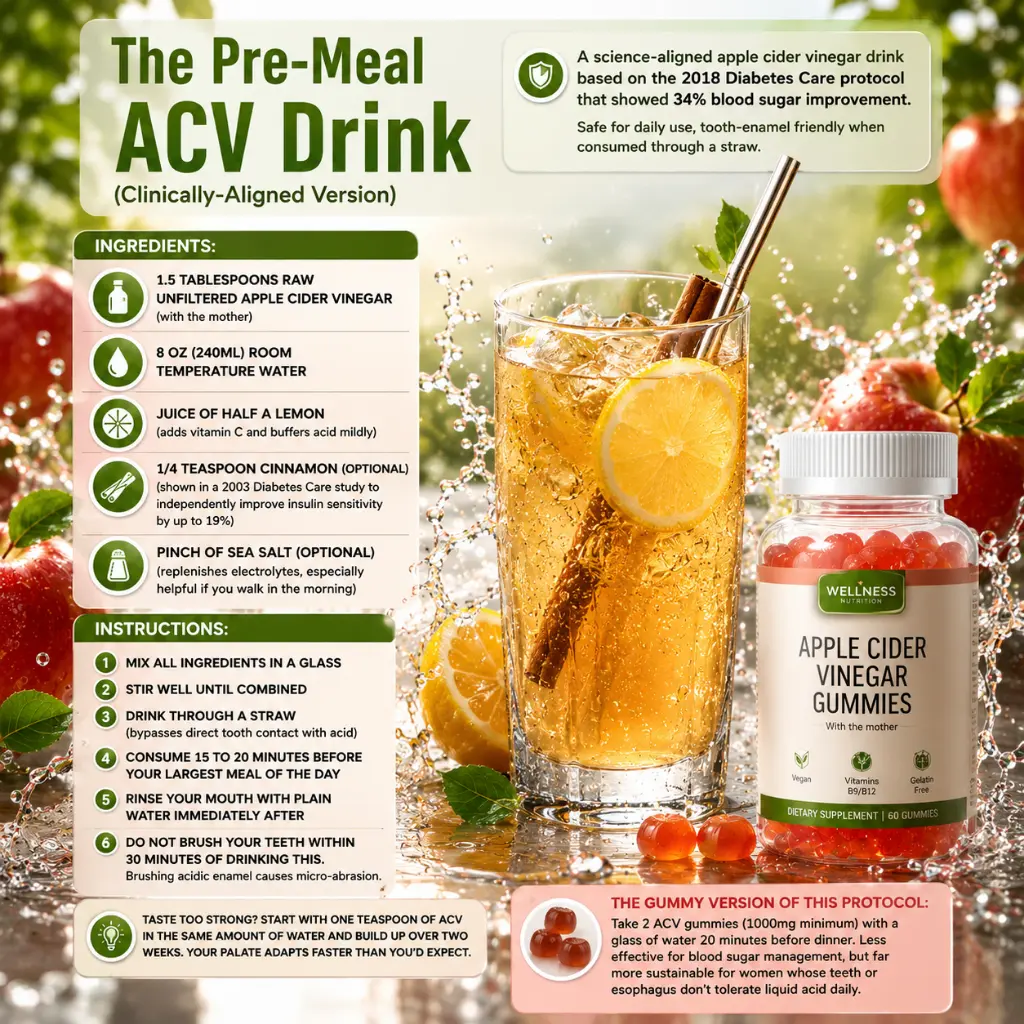
This is where my own kitchen experiment taught me something useful: stronger is not automatically better. ACV is acidic. Drinking it straight is not a smart shortcut, and repeated acid exposure can be hard on tooth enamel and can irritate the mouth, throat, or digestive tract in some people.
If someone chooses to drink ACV, dilution is the sensible approach rather than taking it undiluted. Avoid holding or swishing it around the teeth, and rinsing the mouth with plain water afterward can reduce lingering acid exposure. If you have reflux, swallowing problems, dental erosion, or another condition that makes acidic products difficult to tolerate, ACV may simply be a poor fit.
I would also be cautious about turning ACV into a rigid “morning ritual” with a promised glucose or weight-loss result. Research protocols differ, and there is no single magic timing rule that applies to every woman over 50.
When ACV gummies may make more practical sense
There is a perfectly reasonable reason to prefer gummies: convenience. If the smell and taste of liquid vinegar make you dread taking it, a gummy is obviously easier. But convenience is the advantage I would buy it for, not an assumption that the gummy has reproduced the clinical evidence for liquid vinegar.
And gummies are not automatically “zero risk.” They can contain sugar or other ingredients you may not want, and supplement formulations can vary. An older evaluation of ACV tablet products found substantial differences in acidity, ingredients, labeling, and recommended doses. Tablets are not identical to today’s gummies, but the finding is a useful reminder to judge the actual product rather than the category name.
What about ACV, the “mother,” and gut health?
I see this claim everywhere: raw ACV contains the “mother,” therefore it acts like a targeted probiotic for women after menopause. That conclusion goes beyond what we can confidently say. Fermentation is part of how vinegar is made, but that does not establish that raw ACV restores specific gut bacteria depleted by menopause or produces a predictable probiotic benefit.
If gut health is your real concern, it makes more sense to look at the broader dietary and lifestyle picture rather than rely on one vinegar product. We cover that separately in gut health and belly fat after menopause.
The honest verdict: which one is right for you after 50?
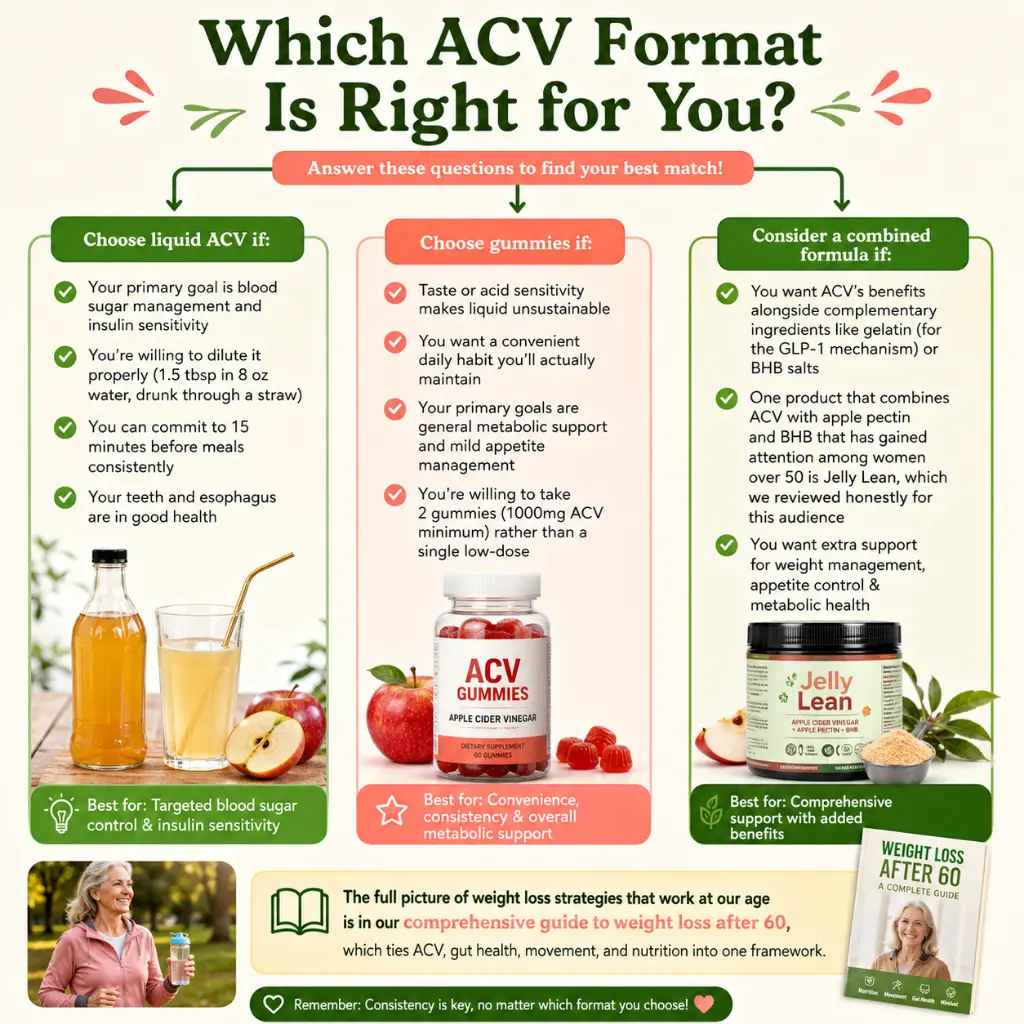
I would make the decision this way. Choose liquid if you specifically want the form that most closely matches the vinegar used in existing clinical research and you can tolerate an acidic drink safely. Choose gummies if convenience and taste matter more to you, but evaluate the label carefully and keep your expectations realistic.
I would not choose either format because a label promises fat burning, appetite control, detoxification, probiotic effects, or a precise blood-sugar reduction. Those are exactly the claims that deserve more scrutiny, not less.
Top questions women frequently ask
Which is better, apple cider vinegar gummies or liquid?
Liquid vinegar has the stronger direct clinical research base. Gummies are more convenient, but formulas vary and there is not enough evidence to assume that a given gummy is equivalent to liquid ACV.
Can apple cider vinegar help lower A1C?
Some systematic reviews and meta-analyses have reported improvements in fasting glucose and HbA1c with ACV or vinegar, particularly in people with type 2 diabetes. Results vary across studies, and ACV should be viewed as a possible dietary adjunct, not a substitute for diabetes care, monitoring, or medication.
Is liquid ACV better than gummies for weight loss?
There is more research on liquid vinegar than on gummies, but the overall evidence does not justify treating either form as a stand-alone weight-loss solution. Diet quality, activity, sleep, medical factors, and sustainable energy balance matter much more.
How much ACV should a woman over 50 take?
There is no special evidence-based dose that every woman over 50 should take, and gummy milligrams should not be treated as interchangeable with milliliters of liquid vinegar. If you use ACV, follow the product directions, avoid undiluted liquid vinegar, and discuss regular use with a healthcare professional if you take medication or have a relevant medical condition.
Can ACV affect tooth enamel?
Yes. Liquid vinegar is acidic, so repeated direct exposure can contribute to dental erosion. Dilution and minimizing contact with the teeth are sensible precautions. Gummies should not automatically be described as risk-free simply because they are not a drink.
The bottom line
The ACV gummies vs liquid debate does not need a dramatic winner. Liquid ACV has the stronger research history, especially in studies examining glycemic responses. Gummies win mainly on convenience and taste, while the evidence for gummy-specific health effects is much thinner.
For me, the most useful question is not “Which one has the biggest promise on the label?” It is “What does this exact product contain, what outcome am I expecting, and does the evidence actually support that expectation?” That question has saved me from more than one beautifully marketed bottle.
If you take medication for blood sugar, blood pressure, or another condition, or if you have reflux, swallowing problems, or dental concerns, talk with your healthcare professional before making ACV a regular part of your routine.
Exclusive Insights for Lonage readers
- 2025 systematic review and dose-response meta-analysis of ACV and glycemic control in type 2 diabetes
- Systematic review and meta-analysis of vinegar, postprandial glucose, and insulin responses
- Systematic review and meta-analysis of ACV and cardiometabolic risk factors
- Evaluation of ACV tablet products and reported esophageal injury