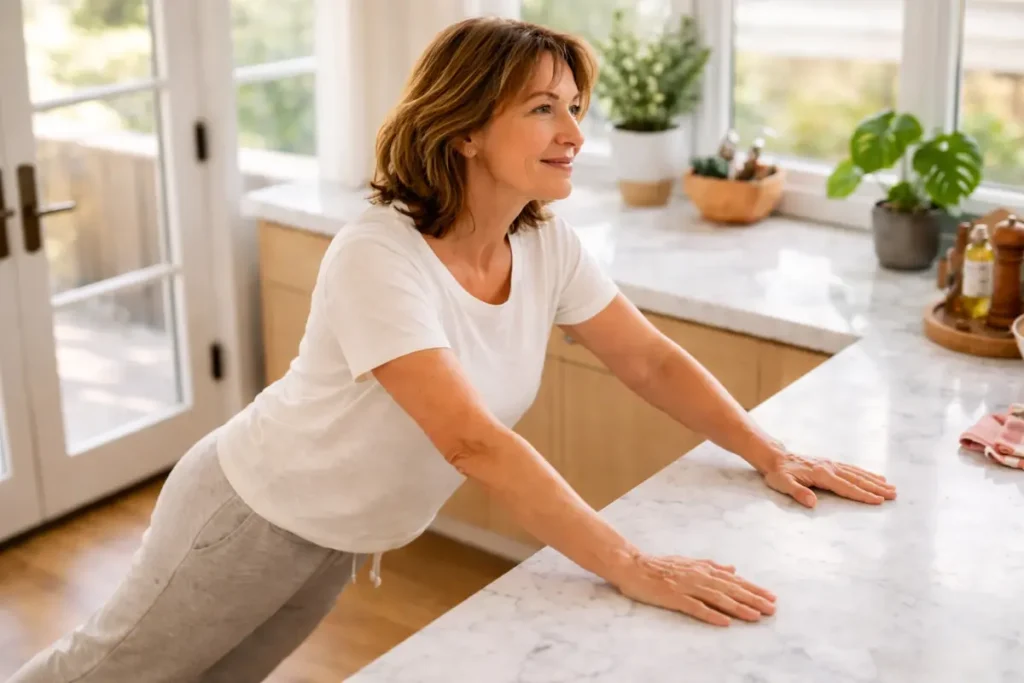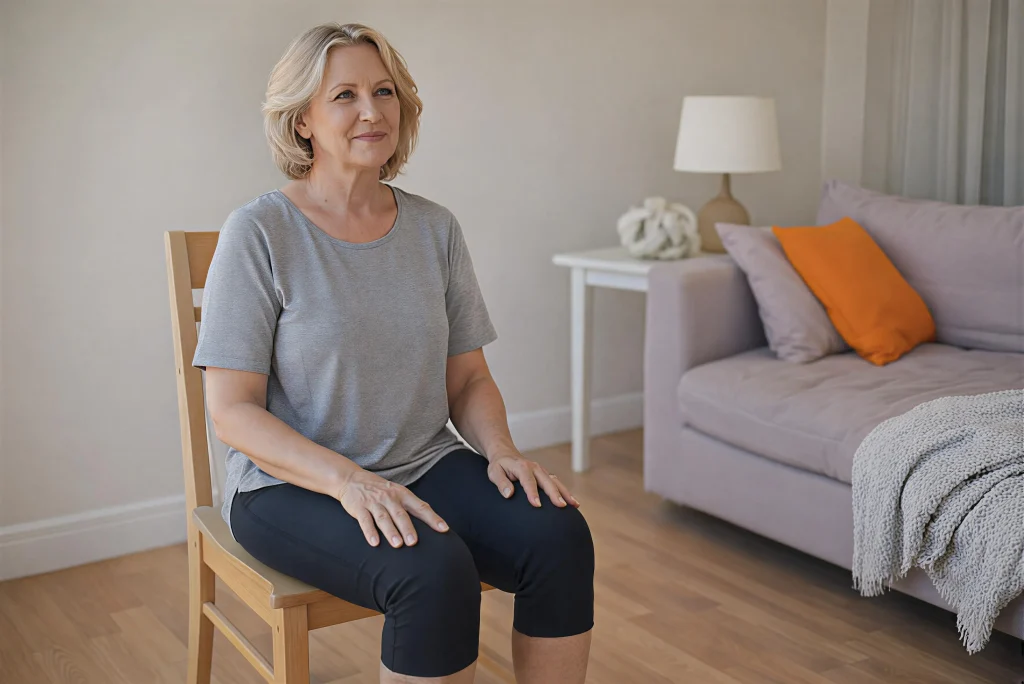
Last week, my lower back felt stiff enough that getting down on the floor for a workout did not sound appealing. I still wanted to move, so I pulled out a sturdy chair and tried a few seated exercises instead. That simple adjustment made movement feel much more approachable.
A chair sitting exercise for belly fat can be useful when what you really need is a low-impact, accessible way to stay active. But there is an important distinction: chair exercises cannot selectively burn fat from your abdomen. No exercise can choose where your body loses fat. Seated movement can train muscles, add activity to your day, and help you build a routine that fits your current ability.
What Chair Exercises Can and Cannot Do for Belly Fat
Working your abdominal muscles does not automatically remove the fat over them. Torso twists, marches, and other seated core movements train muscles, while abdominal fat changes as part of broader changes in body composition.
That does not make chair exercise pointless. If floor work feels inaccessible, you are returning to activity, or you prefer more support, a chair can make movement practical. For the broader exercise picture, see our guide to exercise and belly fat after 50, which explains the different roles of resistance, aerobic activity, and core work.
Menopause and aging can coincide with changes in body composition and fat distribution, but there is no single percentage by which every woman’s metabolism slows. Activity, muscle mass, sleep, nutrition, medications, health conditions, and individual biology all matter. A more useful goal here is to move comfortably, build control, and make regular activity easier to sustain.
Before You Start: Choose a Stable Chair
Use a sturdy chair without wheels on a surface where it will not slide. Sit where your feet can rest securely on the floor, and move within a comfortable range rather than forcing a twist, bend, or knee lift. A chair provides support, but it does not automatically make every exercise appropriate for every person.
If you have significant balance problems, a recent fall or fracture, recent surgery, severe osteoporosis, or a condition that changes what exercise is safe for you, ask a qualified clinician or physical therapist about suitable modifications. Stop and seek medical attention for chest pain, fainting, or severe or unusual shortness of breath. Sharp or worsening pain is also a reason to stop rather than push through it.
Four Low-Impact Chair Exercises to Try
1. Seated Torso Twists
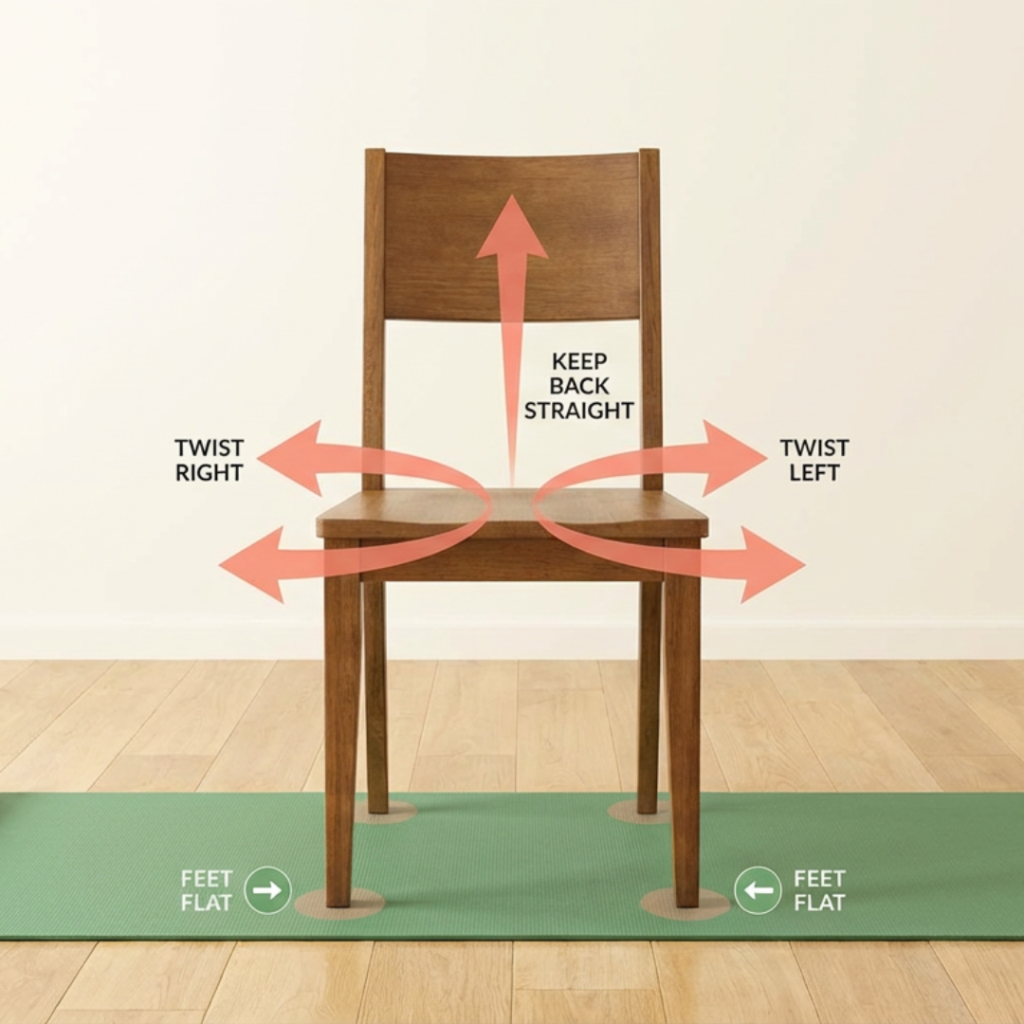
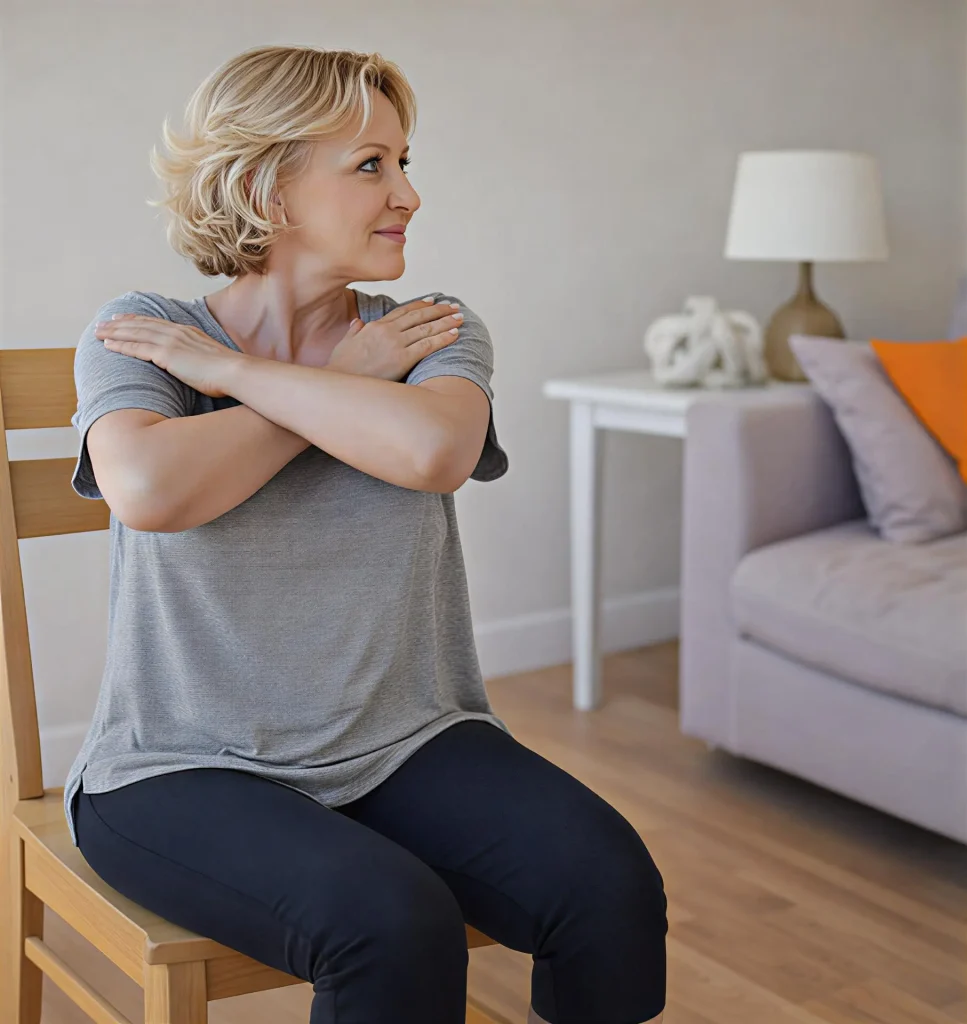
Sit tall with both feet planted. Cross your arms over your chest or keep your hands where they feel comfortable. Keeping your hips facing forward, rotate your upper body gently to one side, return to center, and then turn to the other side. Use a controlled, pain-free range. This is a trunk exercise, not a waist-slimming shortcut.
2. Seated Cross-Body Knee Lifts
Sit securely and lift one knee as far as comfortable while bringing the opposite hand or elbow toward it without pulling your neck forward. Return with control and alternate sides. You do not need to make the elbow and knee touch. If leaning back feels unstable or strains your back, stay upright or use simple seated marching instead.
3. Seated Marching
Sit upright with your feet on the floor. Lift one foot, lower it with control, and alternate sides as if marching. Keep the knee height comfortable. You can slow down, pause between repetitions, or lightly hold the chair if needed. Seated marching adds movement, but it does not specifically burn abdominal fat.
4. Gentle Seated Side Bends
Sit tall with your feet supported. Let one hand move toward the side of the chair as you gently bend your torso to that side, then return to center and repeat in the other direction. Keep both hips grounded. Side bends work muscles along the trunk, but they do not remove “love handles.”
How to Build a Chair Exercise Routine Without Overdoing It
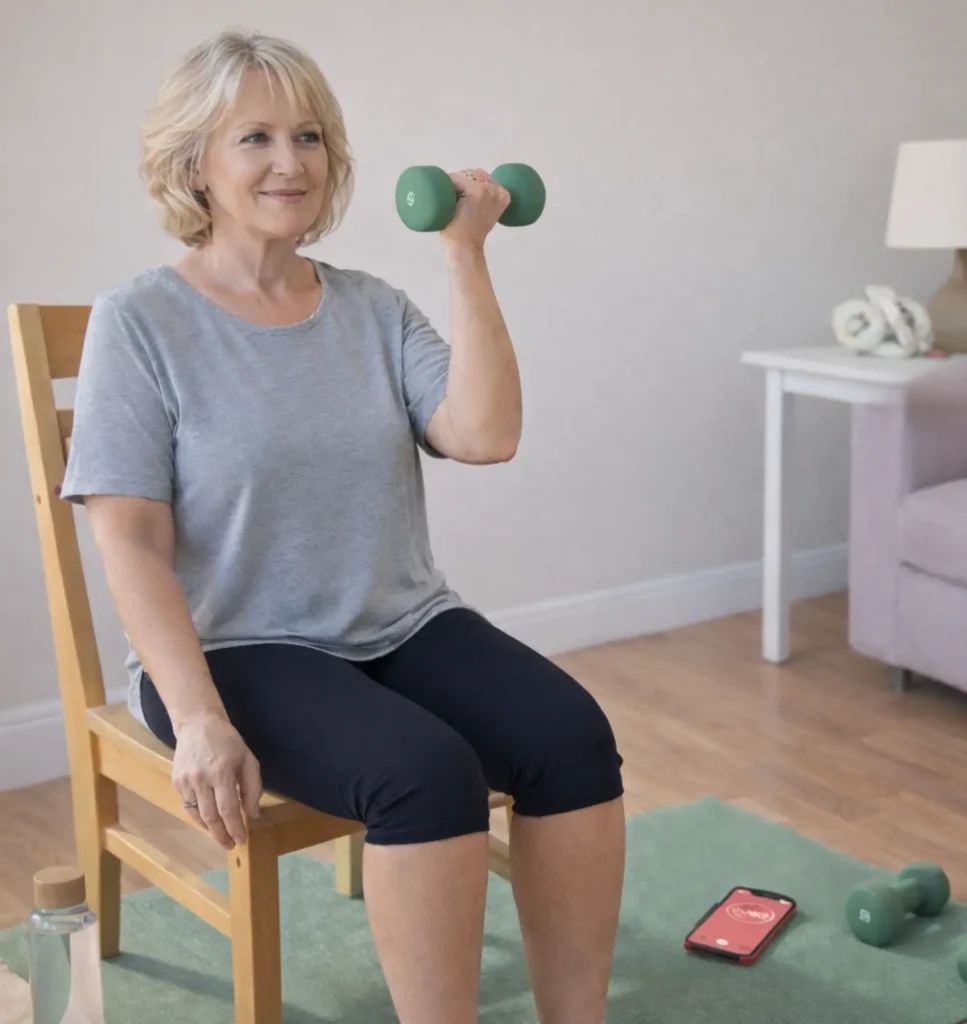
There is no universal number of repetitions, minutes, or weekly sessions that every woman over 50 should follow. Your starting point depends on your current activity level, health, mobility, and how you respond. Begin with a manageable amount that lets you maintain good control. Add repetitions, range, resistance, or another round only when the current version feels comfortable and stable.
Public-health guidance generally encourages adults to combine aerobic activity with muscle-strengthening activity, but every session does not need to be long or intense. Chair exercises can be one component of that larger pattern. If you have been inactive for a long time, a gradual return makes more sense than forcing a fixed schedule.
Breathe Normally and Progress Gradually
Try not to hold your breath while you move. Progress does not have to mean heavier weights: you might improve control, use a slightly larger comfortable range, add a few repetitions, or reduce how much support you need. Light resistance can be useful for suitable exercises, but form and comfort matter more than making a movement feel harder.
If you eventually want a broader program that includes standing and full-body strength work, this practical full-body workout for women over 50 shows how seated movement can fit into a wider routine.
Choose a seated movement you can control
Start with the position, not the repetition count: feet supported, chair stable, and enough space to move. If a cross-body knee lift makes you lean back or pull your neck forward, use the seated march already described instead. Record which movements felt manageable so you can repeat a familiar routine rather than change the whole session each day.
Where Chair Exercise Fits Into Weight Management
If belly fat or weight change is your main concern, separate muscle training from fat loss. Chair exercises can strengthen muscles and increase activity, but they do not guarantee a smaller waist. Weight and body composition are influenced by overall eating patterns, total activity, sleep, medications, health conditions, menopause-related changes, and other individual factors.
You do not need a special “fat-burning” food or rigid diet to make chair exercise worthwhile. A balanced eating pattern that provides adequate nutrition can support an active lifestyle. Keep weight management as a broader strategy rather than turning every chair movement into a belly-fat promise.
Benefits to Look for Beyond the Scale
Progress can be measured in ways that have nothing to do with waist size. A movement may become smoother, you may complete more controlled repetitions, or the routine may simply feel easier to fit into your day. Chair-based exercise can be a useful entry point when floor exercise feels inaccessible, but seated exercise alone should not be presented as a proven way to prevent falls, treat back pain, or build bone density.
If recovery limits your activity, adjust your routine and seek appropriate advice for persistent symptoms. For a separate personal perspective, explore this recovery story featuring a supplement. This is promotional content, not a treatment recommendation.
Frequently Asked Questions
Can chair exercises specifically burn belly fat?
No. Chair exercises can train muscles and add physical activity, but they cannot make your body lose fat from the abdomen specifically. Changes in abdominal fat occur as part of broader changes in body composition.
Are chair exercises useful if I cannot do floor exercises?
They can be. A sturdy chair can provide a more accessible starting position for some movements. The right exercises still depend on your mobility, balance, health conditions, and comfort.
How often should I do chair exercises?
There is no single schedule that suits everyone. Start with an amount you can perform comfortably and with good control, then progress gradually based on your ability and recovery.
Do I need special equipment?
A stable chair without wheels is enough for the basic movements in this article. Make sure it does not slide and that you can place your feet securely.
Can I do chair exercises if I have back or joint pain?
It depends on the cause and severity of the pain. Stop if a movement causes sharp or worsening pain, and seek individualized guidance if pain is persistent, severe, or associated with weakness, numbness, swelling, or instability.
Are chair exercises enough for a complete fitness routine?
Not necessarily. They can be a useful part of an activity plan, but a broader program may also include aerobic, strength, balance, and mobility work according to your needs and abilities.
A Chair Can Be a Starting Point, Not a Shortcut
The biggest advantage of a chair sitting exercise for belly fat routine is not that it melts fat from one area. It is that a chair can make movement feel possible when getting down on the floor, balancing through standing exercises, or starting a conventional workout feels like too much.
Choose movements you can control, progress gradually, and keep the goal realistic. If body-fat reduction is part of your goal, think beyond one exercise or one body part. If accessible movement is the goal, a sturdy chair can be a practical place to begin.