

For a long time, I thought my workouts were the problem. Every morning, I woke up with an unusual heaviness in my body, especially on the days following my workouts. The soreness lasted longer than it used to. Some days, I felt drained not just in my muscles, but all over my body. The fatigue was deeper than normal post-workout tiredness, and in some moments.
Why Recovery Can Feel Different After 50
Exercise challenges the body. That is part of what makes it beneficial. After activity, your body needs time and adequate resources to recover before the next challenge.
That recovery process can be influenced by several factors, including:
- Adequate protein and overall nutrition
- Consistent hydration
- Quality sleep
- Appropriate training intensity
- Recovery time between demanding sessions
- Regular movement without constantly pushing to exhaustion
I had been thinking almost exclusively about the workout itself.
Was I exercising enough?
Was I walking far enough?
Was I pushing myself hard enough?
I wasn’t asking the equally important question:
What was I doing to support my recovery afterward?
That distinction changed everything for me.
The Signs I Had Been Ignoring
Nothing happened overnight.
It was more subtle than that.
I would finish a workout and expect to feel relatively normal the next day, only to wake up feeling unusually heavy and sluggish.
Sometimes the soreness stayed around longer than I expected.
Other times, it wasn’t soreness at all. I simply felt as though the previous workout had taken more out of me than it should have.
And that created a frustrating cycle.
I wanted to stay active because movement mattered to me, but I also started approaching workouts wondering how I would feel afterward.
Eventually, I realized that simply pushing harder wasn’t the answer.
I needed to become as intentional about recovery as I was about exercise.
What I Changed First
Before adding anything new to my routine, I went back to the basics.
That mattered.
I started paying closer attention to how much protein I was eating throughout the day.
I became more consistent about hydration instead of waiting until I felt thirsty.
I stopped treating sleep as something I could compensate for later.
And perhaps most importantly, I stopped believing that every workout needed to leave me exhausted to be worthwhile.
Some days became walking days. Some became mobility days. And when my body clearly needed recovery, I stopped feeling guilty about giving it that time.
Those changes helped. But I also wanted a simple wellness routine I could maintain consistently alongside those fundamentals.
That’s when I started looking more closely at Life Pulse SS.
Where Life Pulse SS Entered My Routine
I wasn’t looking for something that promised to transform my body overnight. In fact, claims like that usually make me skeptical.
What interested me about Life Pulse SS was the idea of adding another layer of daily wellness support to the habits I was already working on.
Instead of thinking:
“What can I take to fix my recovery?”
“What can I take to fix my recovery?”
I started thinking:
“What can I realistically maintain as part of a recovery-focused lifestyle?”
That difference was important.
I began using Life Pulse SS consistently as part of that broader routine rather than treating it as a replacement for good nutrition, hydration, sleep, or sensible training.
Over time, my recovery routine simply felt more structured and manageable.
And that was exactly what I had been missing.
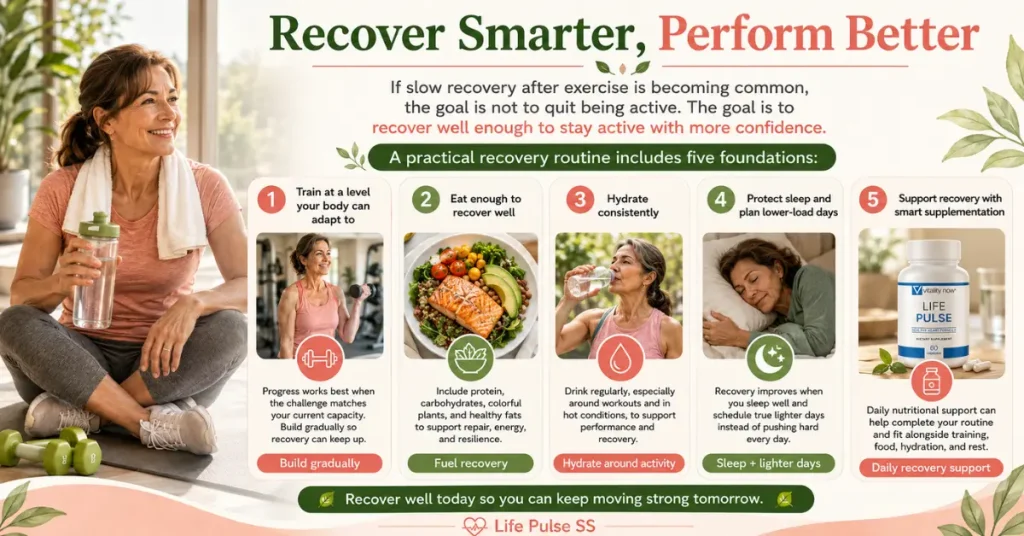
What My Recovery Routine Looks Like Now
My routine today is much simpler than the one I used to imagine I needed.
I don’t chase complicated recovery hacks.
Instead, I focus on a few things I can actually maintain.
1. Protein with my meals
After exercise, nutrition matters.
So rather than obsessing over supplements while neglecting food, I make protein a consistent part of my meals.
Depending on the day, that might include eggs, Greek yogurt, fish, chicken, beans, or another protein-rich option.
2. Water throughout the day
I used to think about hydration mostly during exercise.
Now I treat it as an all-day habit.
A glass of water in the morning, regular hydration throughout the day, and paying more attention on active days have become part of my normal routine.
3. Lower-intensity movement between workouts
Recovery doesn’t always mean doing absolutely nothing.
On lighter days, I may walk, stretch, or do gentle mobility work instead of another demanding workout.
It keeps me moving without turning every day into a test of endurance.
4. A more realistic training pace
This was one of the hardest lessons for me.
Doing more is not automatically better.
I would rather complete several weeks of consistent, manageable activity than push myself too hard for a few days and then feel completely depleted.
5. Life Pulse SS as part of the routine
Life Pulse SS became one piece of this larger structure.
I use it as a daily wellness supplement alongside the habits above, not instead of them.
That distinction is important because no supplement can compensate for chronically poor sleep, inadequate nutrition, dehydration, or constantly overdoing your workouts.
For me, the goal is not perfection.
It’s consistency.
The best way to think about Life Pulse SS is as a supportive part of a larger recovery plan. Supplements work best when the fundamentals are already being respected.
What Changed Most Was My Approach
The biggest change wasn’t waking up one morning feeling like a completely different person.
It was much less dramatic than that.
I stopped viewing recovery as the annoying period between workouts. Instead, I started treating it as part of the workout itself.
That meant paying attention to how I felt after activity, adjusting when necessary, and building habits I could realistically repeat.
As that mindset became more consistent, staying active felt more manageable for me.
I wasn’t constantly trying to “make up” for a difficult workout.
I wasn’t forcing myself through every session simply because it was on my schedule.
And I wasn’t expecting one product, one food, or one recovery trick to do everything.
If Your Workouts Are Leaving You Drained
If exercise regularly leaves you feeling more depleted than you expect, don’t automatically assume the solution is to push harder.
Look at the bigger picture.
Are you eating enough to support your activity?
Are you getting adequate protein?
Are you staying hydrated?
Are you sleeping consistently?
Are your workouts appropriate for your current fitness level?
Are you giving yourself enough recovery time?
Sometimes the most useful change is not adding more exercise. It’s supporting what happens between your workouts.
And if unusual or persistent fatigue, pain, dizziness, shortness of breath, palpitations, or other concerning symptoms are showing up, that’s something to discuss with a healthcare professional rather than assuming it’s simply part of getting older or trying to cover it with a supplement.

Who Life Pulse SS May Be Worth Exploring For
Life Pulse SS may be worth looking into if you’re already working on the fundamentals and want to explore an additional wellness supplement as part of your routine.
That’s how I approach it. Not as permission to sleep less. Not as a substitute for nutritious food. Not as a reason to train harder, and certainly not as a magic answer.
It’s simply one part of a broader routine built around staying active, recovering appropriately, and taking better care of myself between workouts.
My Bottom Line
For me, that means adequate food, protein, hydration, sleep, sensible movement, realistic training, and a routine I can actually maintain.
Life Pulse SS became one part of that routine. But the bigger change was learning to stop fighting my body and start paying attention to what it needed between workouts.
If you’re interested in Life Pulse SS, I recommend looking through the product information and deciding whether it makes sense within your own wellness routine.