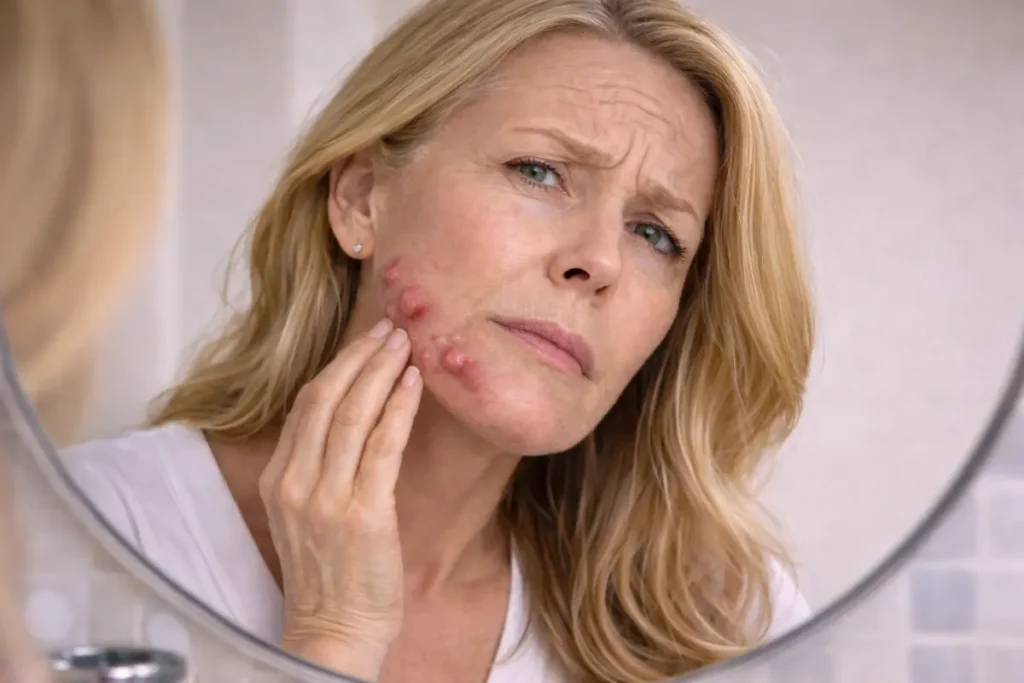
You reach for your usual moisturizer, and somehow your skin still feels tight an hour later. Sound familiar? For millions of women, dry skin after menopause isn’t just an inconvenience; it’s a daily frustration that nobody warned you about.
Here’s what’s actually happening: when estrogen levels drop during and after menopause, your skin loses its ability to retain moisture the way it once did, and collagen production slows; the skin barrier becomes thinner, and natural oils decrease, the result is skin that feels rough, itchy, dull, and sometimes even sensitive for the first time in your life.
You’re not alone, and more importantly, you’re not stuck. Knowing what to do for dry skin after menopause means understanding both the internal shifts happening in your body and the practical, daily habits that genuinely make a difference.
This guide covers everything: the real science behind menopausal skin changes, the ingredients that work, the lifestyle habits that support your skin from the inside out, and the simple routine adjustments that women over 50 swear by. Let’s get into it.
Why menopause changes your skin from the inside out
Before you can fix something, it helps to understand why it’s happening, and the answer starts with estrogen.
Estrogen is one of the most powerful hormones in your body. It stimulates the production of collagen (the protein that gives skin its structure and firmness), hyaluronic acid (the molecule that holds moisture in your skin), and sebum (your skin’s natural oil). When estrogen declines during perimenopause and menopause, all three of these decrease at the same time.
Studies show that skin loses approximately 30% of its collagen in the first five years after menopause. Hyaluronic acid content in the skin also drops significantly, which is why skin feels less plump and hydrated even when you are drinking enough water. The skin barrier, which is your skin’s protective outer layer, becomes thinner and more permeable, allowing moisture and irritants to enter more easily.
Many women also notice increased sensitivity, itching, or a “crepe-paper” texture on the arms, legs, and neck. This is all part of the same hormonal shift.
The good news is that your skin is still responsive. It still produces collagen, moisture, and repairs itself. It has more support than it used to. Understanding this is the first step toward building a routine that actually works for your skin. For a deeper look at how hormonal shifts affect your overall well-being, exploring how menopause affects your skin and daily energy levels can help you connect the dots between what you feel and what your body is doing.
What to do for dry skin after menopause: your skincare routine reset
If your current routine isn’t working, the problem usually isn’t effort; it’s ingredients. Formulas are formulated for younger, oilier skin; mature, post-menopausal skin requires a completely different approach.
Cleanse gently, never strip. Foaming cleansers and alcohol will worsen dryness immediately. Switch to a cream or oil-based cleanser that removes makeup and impurities without disrupting. You should never feel tight or dry after washing your face.
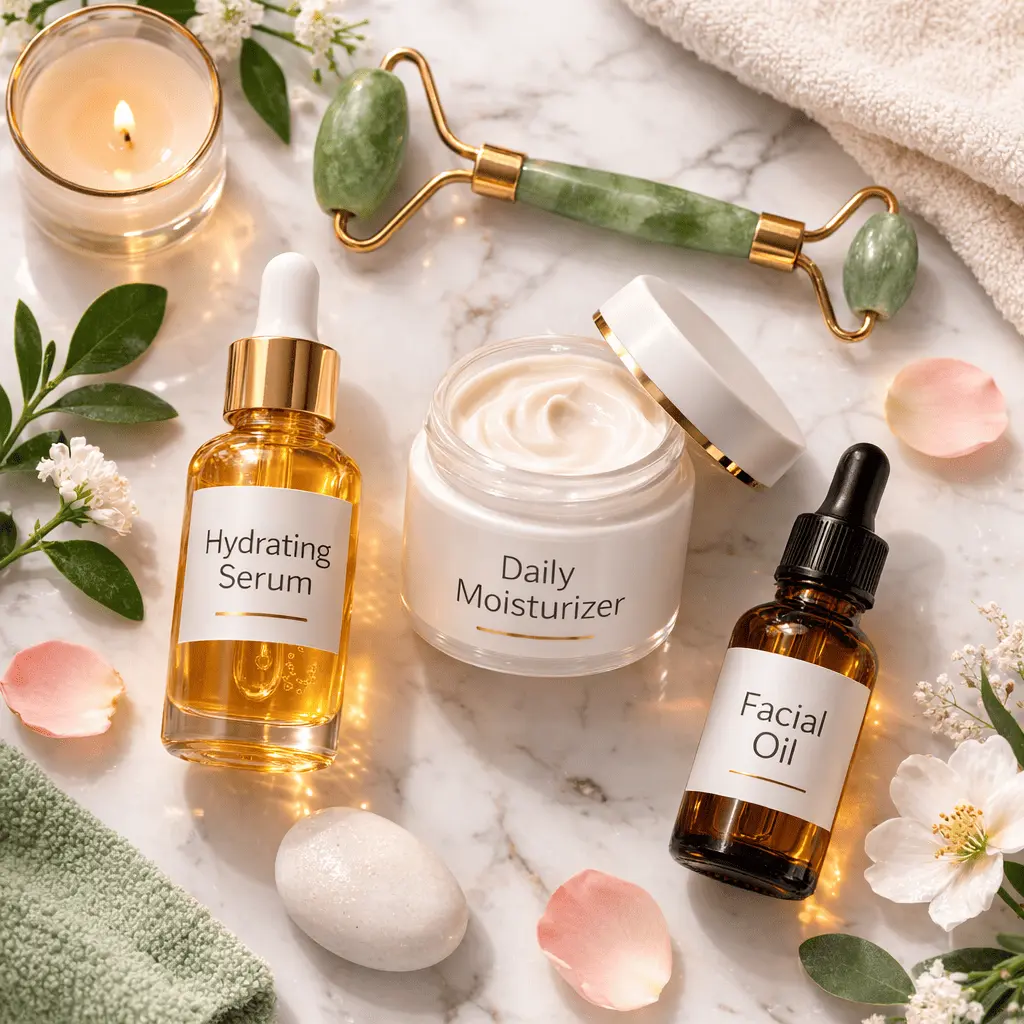
Immediately after cleansing, while your skin is still slightly damp, apply a hydrating serum. Look for these key ingredients:
- Hyaluronic acid draws moisture from the air into your skin. Choose a formula with multiple molecular weights for deeper penetration.
- Ceramides rebuild and reinforce your skin barrier, reducing moisture loss throughout the day.
- Peptides support collagen production and improve skin firmness over time.
- Niacinamide calms redness, strengthens the barrier, and visibly improves texture with consistent use.
Follow your serum immediately with a rich moisturizer to seal. At night, use an even heavier formula or a facial oil on top of your moisturizer. Your skin does most of its repair work overnight, and giving it a rich, occlusive layer helps it do that job more effectively.
Sunscreen every single morning. UV exposure is the external cause of collagen loss and the moisture barrier. A broad-spectrum SPF 30 or higher is non-negotiable, even on cloudy days.
Hydration from the inside: what you drink and eat really matters
Here’s something many women don’t realize: no topical product can fully compensate for dehydration from the inside. What you eat and drink every day, how your skin looks and feels.
Water is the foundation. Most women over 50 are mildly dehydrated without realizing it, partly because the sensation becomes less reliable with age. Aim for at least eight glasses of water daily, and more on days when you exercise or spend time in a heated or air-conditioned environment, to help anti-inflammatory compounds.
Omega-3 fatty acids are one of the most powerful nutritional tools for skin after menopause, found in foods such as salmon and sardines, flaxseeds, chia seeds, and walnuts. Omega-3s reduce inflammation in the skin and support the lipid barrier that keeps moisture locked in. Many women notice a visible difference in skin texture within four to six weeks of consistently increasing their omega-3 intake.
Vitamin C is essential for collagen synthesis. Your body cannot produce collagen without it. Eat plenty of citrus fruits, bell peppers, strawberries, and leafy greens. Vitamin E, found in nuts, seeds, and avocado, works alongside vitamin C to protect skin cells from oxidative damage.
Zinc, found in pumpkin seeds, legumes, and whole grains, supports skin repair and reduces inflammation. And don’t underestimate the power of healthy fats in general: avocado, olive oil, and coconut oil all contribute to supple, well-nourished skin from within. Building these habits is part of a broader approach to healthy nutrition for women over 50 that supports not just your skin but your energy and hormonal balance.
Lifestyle Habits That Support Skin Health After Menopause
Your daily habits have a surprisingly direct impact on how your skin feels and behaves. The connection between lifestyle and skin health is well established, and the changes that help your skin are often the same ones that support your overall vitality.
Sleep is when your skin rebuilds itself. Growth hormone, which drives cellular repair, including skin regeneration, is released primarily during deep sleep. Women who consistently sleep less than seven hours tend to show signs of skin aging, including dryness, dullness, and fine lines. Prioritizing quality sleep is one of the highest-impact things you can do for your skin.
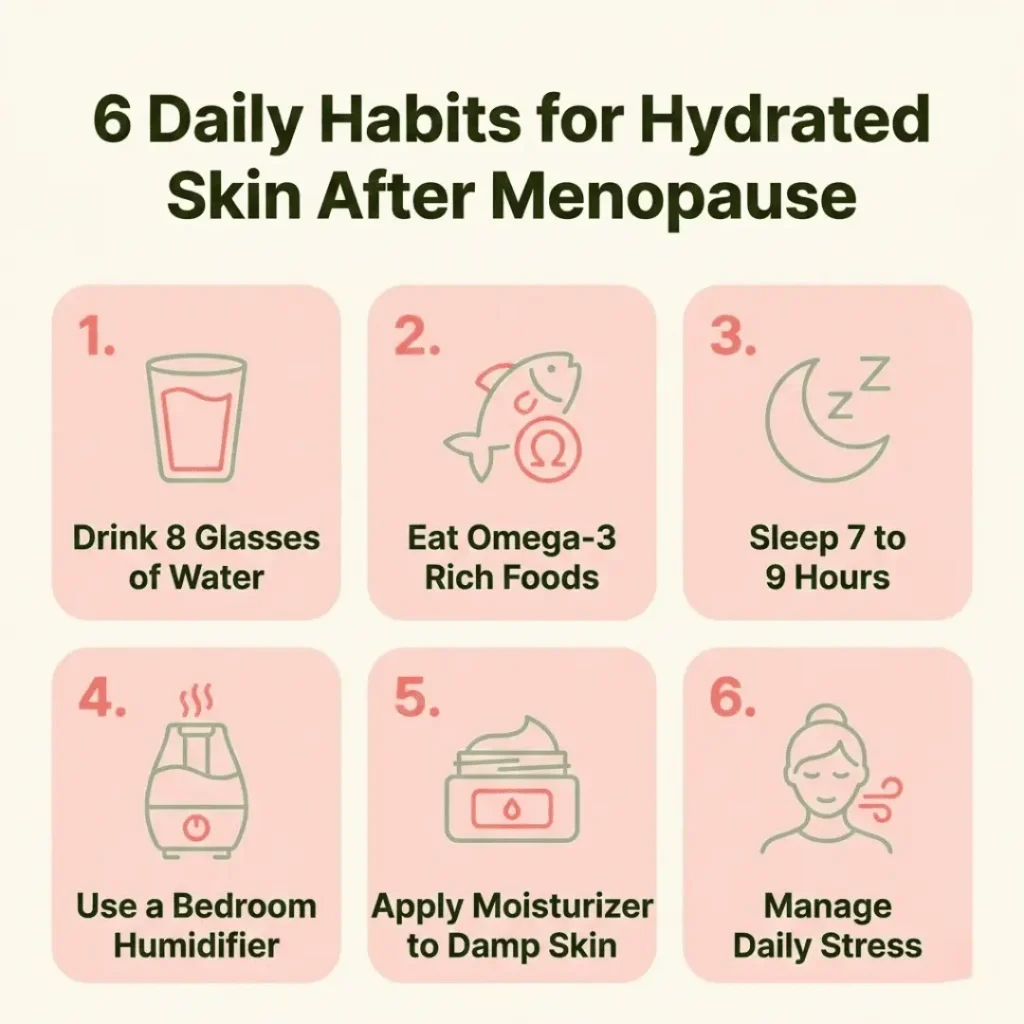
Stress is a major skin disruptor. Cortisol, your primary stress hormone, breaks down collagen and impairs the skin barrier. Many women notice their skin feels drier and more reactive during stressful periods. Practices like yoga, walking, meditation, and even ten minutes of quiet reading before bed have measurable effects on cortisol levels and, by extension, skin health.
Exercise improves circulation, delivering oxygen and nutrients to skin cells more efficiently. It also supports hormone regulation and sleep quality, both of which benefit your skin. Strength training in particular has been shown to support collagen production as you age.
Avoid long, hot showers. Hot water strips your skin’s natural oils faster than almost anything else. Turn the temperature down to warm, limit showers to ten minutes, and apply body moisturizer within two minutes of stepping out while skin is still slightly damp. This small change alone can transform how your body skin feels within a week.
Humidifiers in your bedroom and main living area add moisture back into the air, especially during the winter months when heating systems dry the air. Your skin absorbs environmental moisture, and a dry room means drier skin by morning.
The role of supplements in managing menopausal dry skin
Food comes first, always, but for many women over 50, certain nutritional gaps are hard to fill through diet alone, and targeted supplements can make a meaningful difference in skin hydration and texture.
Collagen peptide supplements have growing research support for improving skin hydration, elasticity, and the appearance of fine lines in post-menopausal women. A daily dose of 2.5 to 10 grams of hydrolyzed collagen peptides, taken consistently for at least eight weeks, has shown measurable results in multiple clinical studies.
Omega-3 fish oil or algae-based omega-3 supplements are worth considering if you don’t regularly eat fatty fish. Evening primrose oil, rich in gamma-linolenic acid (GLA), is particularly well-regarded among women over 50 for its ability to support skin barrier function and reduce dryness and irritation.
Vitamin D is another important consideration. Many women over 50 are deficient, which is associated with increased skin dryness and reduced barrier function. A simple blood test can tell you where your levels stand.
Biotin supports overall skin, hair, and nail health and is commonly low in women experiencing menopausal changes. Vitamin E taken internally, not just applied topically, provides antioxidant protection that helps preserve skin cell integrity over time.
Always introduce one supplement at a time, and wait at least six to eight weeks before evaluating results. And before starting any new supplement routine, a conversation with your healthcare provider is always the right first step.
Body skin: the part of dry skin we don’t talk about enough
Most skin conversations focus on the face, but menopausal dry skin affects the whole body, and often more severely. Arms, legs, shins, hands, and the décolleté are areas where dryness, itching, and crepey texture are especially common after menopause.
Skin is one of the most effective strategies for intense body dryness. Oils like jojoba, sweet almond, rosehip, and squalane are lightweight, absorb beautifully, and lock moisture into skin more effectively than many body lotions. Apply immediately after your shower while your skin is still warm and slightly damp.
For hands, which are often the first place to show significant dryness and texture changes, keep a rich hand cream at every sink in your home, and apply it every single time you wash your hands. The repetition matters more than the product.
The décolleté and neck deserve the same care as your face; these areas have thinner skin and fewer oil glands, making them particularly prone to dryness and visible texture changes after menopause. Extend whatever you use on your face down your neck and chest every morning and evening.
Don’t forget your lips. Estrogen loss affects lip moisture, too, and many women notice significantly drier, thinner lips after menopause. A hydrating lip balm with ceramides or shea butter, worn consistently throughout the day, makes a real difference. For a complete approach to caring for your skin at this life stage, a well-structured daily skincare routine for women over 50 brings all of these habits together in one practical framework.
Frequently asked questions:
Your skin deserves the same care you give everything else
Knowing what to do for dry skin after menopause is genuinely empowering. This is not about chasing a younger version of yourself. It’s about understanding your skin as it is right now and giving it exactly what it needs to stay healthy, resilient, and comfortable for decades to come.
Start with one change this week. Maybe it’s swapping your cleanser. It’s adding a glass of water in the morning. Maybe it’s applying body oil after your next shower. Small, consistent steps add up to real, lasting results. And if your dryness is severe, affecting your sleep or daily comfort, please consult your dermatologist or gynecologist. You deserve expert support, not just workarounds. For more practical guidance on thriving in this season of life, explore how everyday wellness habits support vitality after 50. What small step will you try this week?