
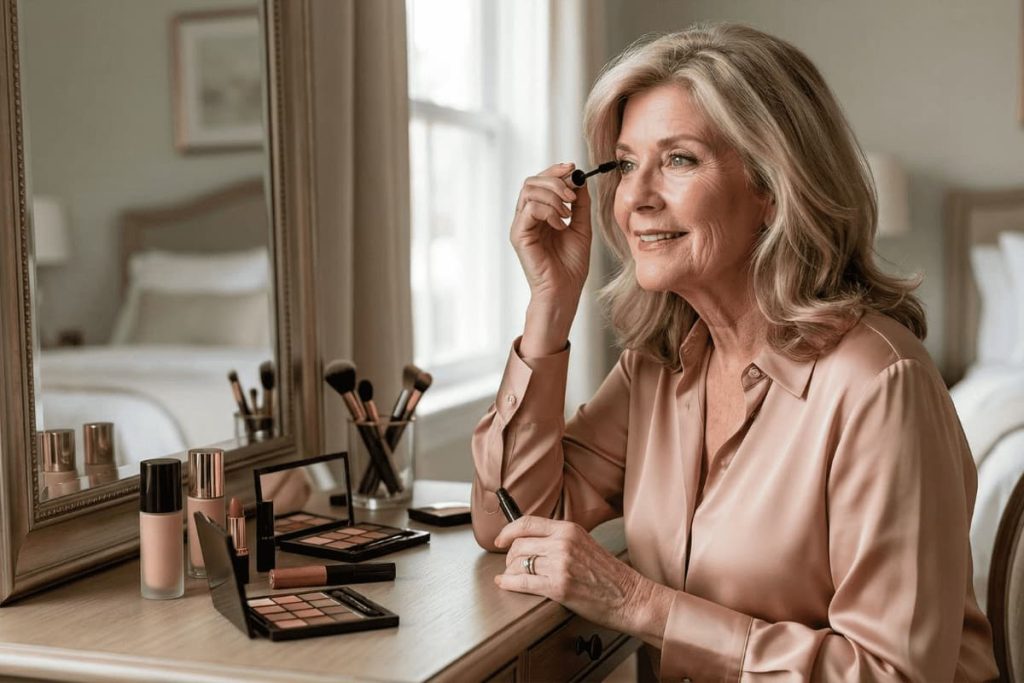
Eye makeup can behave differently after 50 because the eyelid surface, crease, lashes, brows, and tear film may all change. The goal is not to hide mature eyes. It is to place color and definition where they remain visible, comfortable, and balanced throughout the day.
This article stays focused on eyes. For foundation, blush, lips, and the full sequence, use the Makeup Tutorial for Women Over 50.
Prepare the eye area without making makeup slide
Use a small amount of moisturizer and allow it to settle before makeup. If sunscreen or eye cream remains greasy, blot gently rather than adding more powder. A thin eye primer can help when shadow creases, but it should feel comfortable and should not sting.
Avoid placing rich creams directly into the lash line. If your eyes are dry, watery, inflamed, or unusually sensitive, comfort and eye health come before wear time.
Choose products that suit mature eyes
| Product | What usually works well | Common problem to avoid |
|---|---|---|
| Eyeshadow | Finely milled satin or soft matte textures | Chunky glitter emphasizing texture or falling into the eye |
| Eyeliner | Creamy pencil or controlled gel | Hard tugging and thick lines that cover the visible lid |
| Mascara | Defining or tubing formula if tolerated | Old, flaking, or strongly fragranced products |
| Brows | Fine pencil, powder, or tinted gel | One heavy block of color |
| Concealer | Thin flexible layer | Dry, opaque buildup under the eye |
Eyeliner placement that keeps the eye open
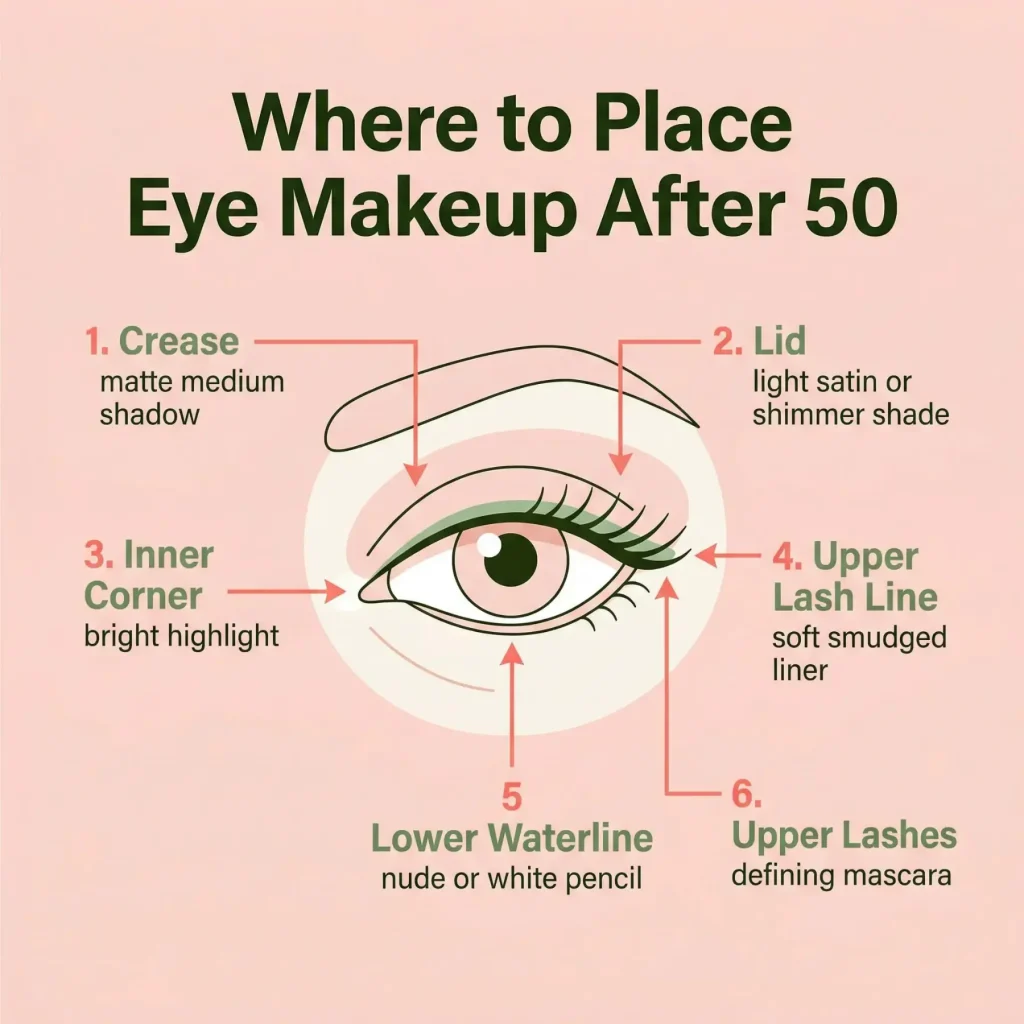
Keep the line thin near the inner corner and add definition mainly along the outer half of the upper lash line. On hooded eyes, apply liner while looking straight ahead so you can see what remains visible. A small outward lift can work, but avoid pulling the skin tight while drawing because the shape changes when you release it.
Brown, charcoal, plum, navy, and black can all work. Color choice matters less than placement, softness, and contrast with your lashes. Smudging the outer edge with a small brush can create definition without a severe border.
Eyeshadow placement for a brighter shape
- Place a light-to-medium shade across the mobile lid.
- Add a slightly deeper tone above the natural fold when the crease is hidden.
- Keep the deepest color on the outer third and blend upward rather than downward.
- Use shimmer selectively on the lid or inner corner if the formula does not migrate.
- Check the result with your eyes open and your face relaxed.
You do not need many shades. Two coordinated colors and a clean blending brush are often enough for an everyday look.
Mascara and lashes
Curling the lashes can make the eye look more open, but use a clean curler gently before mascara. Apply most mascara near the roots and comb through the tips. If mascara transfers to the lid, allow skincare to set, use less product, or try a tubing formula if your eyes tolerate it.
Replace mascara regularly, do not share it, and stop using a product that smells different, becomes unusually dry, or causes burning. False lashes and lash adhesives can irritate sensitive eyes; patch awareness does not replace caution near the eye.
Brows that frame without looking heavy
Map the brow with light strokes in the direction of growth. Concentrate on obvious gaps, then soften with a spoolie. A slightly lifted tail can balance the eye, but extending it sharply downward may pull the expression lower. Gray, taupe, neutral brown, and soft black should be chosen by hair and skin contrast, not by age rules.
Under eye concealer with less settling
Use a thin layer only where darkness is visible, often at the inner corner and along the deepest shadow. Let skincare absorb first, then tap concealer into place. Add the smallest amount of powder only where movement causes creasing. More coverage usually creates more texture.
Dry eye and meibomian gland dysfunction
Dry eye, blepharitis, allergies, and meibomian gland dysfunction can make makeup uncomfortable. Avoid lining the waterline when it worsens symptoms. Keep pencils sharpened, brushes clean, and products away from the inside of the eye. Remove makeup gently every night.
Stop and seek advice from an eye-care professional for persistent burning, pain, light sensitivity, discharge, swelling, vision change, or recurrent irritation. Do not continue testing products on an inflamed eye.
A five minute everyday sequence
- Apply a thin primer only if needed.
- Sweep one neutral shade over the lid.
- Blend a deeper shade at the outer corner and slightly above a hidden crease.
- Add a thin upper-lash line and mascara.
- Fill clear brow gaps and soften the result with a spoolie.
Frequently asked questions
Should women over 50 wear eyeliner?
Yes, if it feels comfortable. A thin upper-lash line or softly smudged outer line often defines the eye without covering the visible lid.
What eyeshadow finish is best for mature eyes?
Soft matte and finely milled satin textures are easy to control. Shimmer can still work when applied selectively and when fallout does not irritate the eye.
Can I wear eye makeup with dry eye or meibomian gland dysfunction?
Some people can, but symptoms and professional advice should guide the choice. Avoid the waterline if it worsens irritation, keep tools clean, replace old products, and stop if symptoms develop.
How do I stop concealer settling into lines?
Use less product, place it only where needed, allow skincare to absorb, and set only mobile areas with a very small amount of powder.
The bottom line
Eye makeup for women 50 works best when placement, contrast, and comfort guide the choices. Keep the routine simple, check it with your eyes open, and treat irritation as a reason to stop. For the broader beauty plan, return to the Skin Care Guide for Women Over 50.