
Stress and Skin Aging: Powerful Ways to Protect Your Skin After 50

Mature woman reducing stress and skin aging with a calm morning mindfulness routine

Have you ever looked in the mirror after a particularly brutal week and thought your skin seemed to age overnight? You’re not imagining it. Stress and skin aging are more deeply connected than most realize, and for women over 50, that connection becomes even more significant.

Here’s a statistic worth pausing on: chronic stress accelerates cellular aging by shortening telomeres, the protective caps on your DNA, at a rate that can add years to the part nobody talks about enough: you have more influence over this than you think.

This isn’t about adding another thing to your to-do list. It’s about understanding what’s happening beneath the surface, so you can make small, meaningful choices that protect your skin, your energy, and your sense of self.

In this guide, we’ll walk through exactly how stress affects your skin after 50, what you can do about it, and how to build a daily rhythm that supports your skin from the inside out.

The hidden link between stress and skin aging after 50

Most of us who stress feels bad. But fewer of us understand what it’s actually doing to our bodies at a cellular level. When it comes to stress and skin aging, the effects can be surprisingly visible.

When you’re stressed, your body releases cortisol, the primary hormone. In small bursts, cortisol is helpful. It sharpens your focus and gets you through a crisis. But when cortisol stays elevated day after day, it begins to break down collagen, the protein responsible for skin’s firmness and elasticity.

Collagen loss accelerates dramatically after menopause. Estrogen, which helps maintain collagen production, drops sharply during this transition. When you layer chronic stress on top of that natural shift, the combined effect on your skin can be significant: more lines, less plumpness, slower healing, and a dullness that no amount of moisturizer seems to fix.

Cortisol also disrupts your skin’s natural barrier function, making it more reactive, more prone to redness, and less able to hold onto moisture. Many women in their 50s notice their skin suddenly sensitive or reactive during high-stress periods. That’s not a coincidence.

Understanding this connection is the first step. When stress is managed, cortisol comes down, and your skin has a real chance to recover. For a deeper look at the inside-out factors that shape mature skin, our guide to how age, hormones, and diet affect your skin explains how hormones, nutrition, and daily habits all work together after 50.

The visible signs of stress on mature skin

Stress doesn’t always announce itself loudly. Sometimes it is quiet, in ways that are easy to chalk up to “just getting older.”

Here are the most common ways stress and skin aging show up together after 50:

  • Increased dryness and tightness, even if you’ve always had normal skin
  • More visible fine lines, particularly around the eyes and mouth
  • Uneven skin tone or new dark spots, triggered by inflammation
  • Puffiness, especially around the eyes, in the morning
  • Flare-ups of conditions like rosacea, eczema, or perioral dermatitis
  • A general dullness, that loss of glow that used to come naturally

The frustrating part is that many women respond by adding more products, when the real issue isn’t topical at all. Your skin is reflecting what’s happening inside your body. Addressing the root cause, the stress itself, is what creates lasting change.

If you’ve been navigating fatigue, mood shifts, and skin changes, it’s worth the full picture of what your body is going through. Our guide to thriving wellness during menopause explores a whole-body approach.

How stress and skin aging accelerate each other

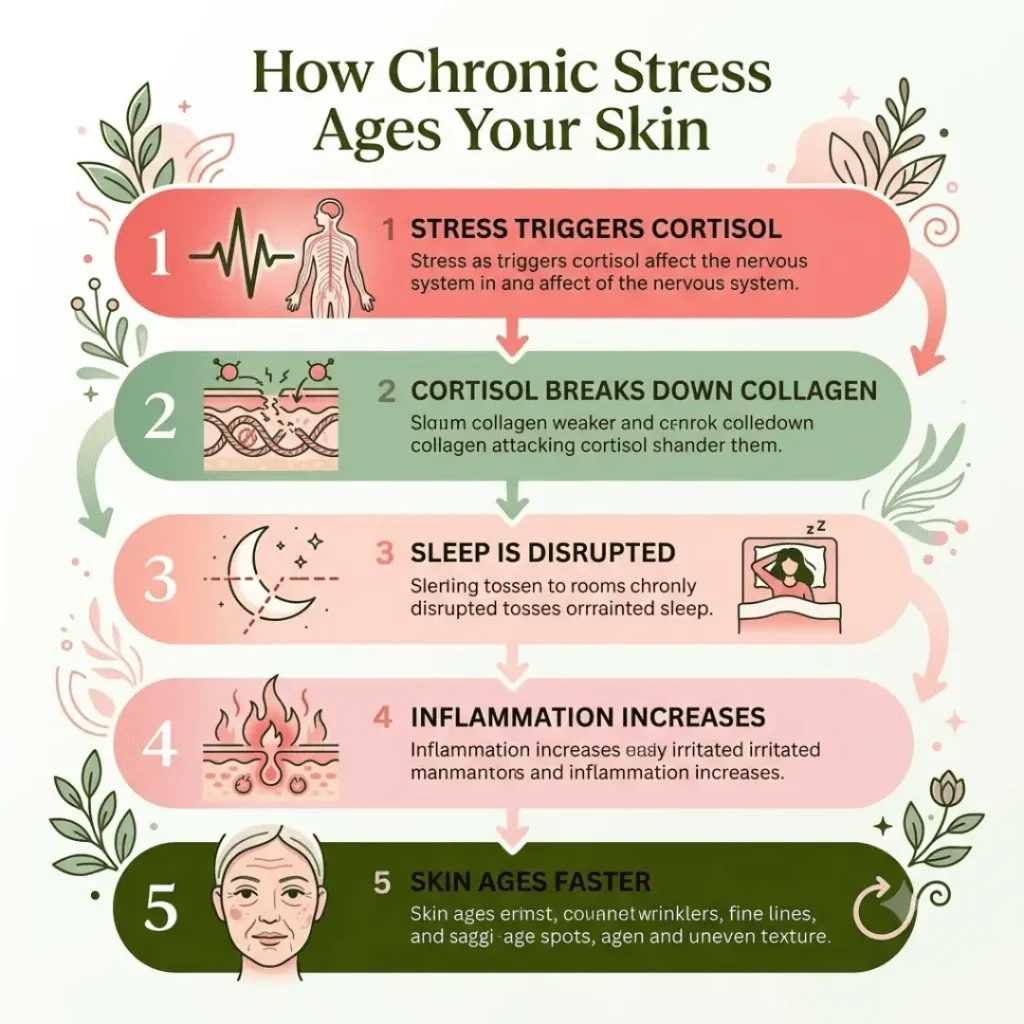
Infographic showing how stress and skin aging are connected through cortisol and inflammation
Understanding the stress-aging cycle is the first step to interrupting it.

There’s a loop that many women don’t realize they’ve entered: stress and skin aging often feed each other. Stress ages your skin, and then worrying about how your skin looks creates more stress.

Sound familiar?

This cycle is real, and it’s worth naming. Chronic stress depletes your body’s antioxidant reserves, which means your skin has less protection against free radical damage. Free radicals are unstable molecules that break down collagen and elastin, the two proteins most responsible for youthful, resilient skin.

At the same time, chronic stress disrupts sleep. This is when your body’s most important repair work, including skin cell regeneration, collagen synthesis, and inflammation reduction. Poor sleep and high stress together create the perfect storm for accelerated skin aging.

There’s also the inflammatory dimension. Stress triggers low-grade systemic inflammation, which is now understood to be one of the primary drivers of visible aging. Inflammation damages skin cells, impairs function, and contributes to the uneven tone and texture many women notice in their 50s and 60s.

The good news is that when you interrupt this cycle, even in small ways, your skin responds. The body is remarkably capable of recovery when it’s given the right conditions.

How Lowering Stress Helps Your Skin Heal

You don’t need a dramatic overhaul. What you need is a small collection of consistent habits that lower your cortisol levels, support your skin barrier, and protect your body’s ability to repair itself overnight.

Start with sleep. Seven to nine hours of quality sleep is the single most powerful skin-protective habit you have, especially when it comes to stress and skin aging. During deep sleep, your body releases growth hormone, which stimulates cell repair and collagen production. Even one or two nights of poor sleep is visible on the face the next morning. Prioritize a cool room, a consistent sleep time, and a wind-down routine that signals to your nervous system that it’s safe to rest.

Move your body gently and regularly. Exercise lowers cortisol, improves circulation, and supports lymphatic drainage, which reduces puffiness. You don’t need intense workouts. A 30-minute daily walk, yoga, or swimming is genuinely beneficial for both overall health and stress skin aging.

Protect your skin barrier topically. During high-stress periods, use simpler, more nourishing products. Reach for ceramides, hyaluronic acid, and gentle oils. Skip harsh actives when your skin is reactive. Think of your skincare routine as an act of self-care, not a chore.

Eat for your skin. Foods rich in antioxidants, healthy fats, and protein directly support skin resilience. Think leafy greens, berries, salmon, walnuts, and avocado. These aren’t just for your body overall; they’re actively protective against the oxidative stress that accelerates skin aging. For a practical starting point, our article on vital vitamins for women over 50 offers simple, nourishing ideas to incorporate.

Mind-Body practices that visibly reduce stress and skin aging

This is the section that often surprises women most, because the results are so visible. When you consistently practice stress-reduction techniques, your cortisol levels genuinely drop. And when cortisol drops, your skin’s repair mechanisms can function properly again. This isn’t soft wellness talk; it’s backed by solid research on stress and skin aging.

Breathwork is one of the most immediate tools available. Even five minutes of slow, diaphragmatic breathing activates the parasympathetic nervous system, shifting your body out of “fight or flight” and into a state where healing can. Many women notice their skin looks calmer and less inflamed on days when they’ve practiced intentional breathing.

Meditation and mindfulness have been shown in multiple studies to reduce cortisol and markers of inflammation. You don’t need an hour. Ten minutes in the morning, before you check your phone, can shift the tone of your entire day.

Journaling, particularly gratitude journaling, has also been linked to reduced stress hormones and improved sleep. There’s something powerful about ending the day by naming what went well, rather than replaying what didn’t.

Social connection matters more than we give it credit for. Isolation is one of the most chronically stressful states a human body can be in. Regular, meaningful connections with friends, family, or community actively lower stress hormones. A coffee date with a close friend is genuinely good for your skin.

Building a daily rhythm that supports your skin and your nervous system

The most effective approach to managing stress and skin aging isn’t a single intervention. It’s a daily rhythm that supports your nervous system consistently over time.

Think of it as a skin-protective lifestyle rather than a skincare routine. Here’s what that looks like in practice:

Morning:
Start with a glass of water before coffee. Spend five to ten minutes in gentle movement or breathwork. Apply your skincare with intention, SPF included. Eat a protein-rich breakfast with some colorful produce.

Midday:
Take a genuine break from screens. Step outside if you can. Eat a nourishing lunch rather than skipping it. Check in with how your body feels.

Evening:
Begin winding down an hour before bed. Keep lights low, screens off, and the room cool. Apply a nourishing night cream. Spend a few minutes writing down three things you’re grateful for.

These are small habits, but done consistently, they change your body’s baseline stress response over time. And that change shows up on your face.

For women navigating the significant transitions of this season, from retirement to changing relationships to shifting identities, these habits become even more deeply rooted in purpose. Our guide to four powerful habits for healthier aging combines the science and warmth behind building a life that supports you at every level.

Frequently asked questions:

Can stress and skin aging be reversed?

To a meaningful degree, yes. While some changes are permanent, many of the visible effects of stress on skin, like dullness, dryness, and reactive flare-ups, can improve significantly when stress is reduced consistently. Supporting your sleep, nutrition, and cortisol levels gives your skin the conditions it needs to repair itself. Many women notice real improvement within weeks of making consistent lifestyle changes.

What are the 5 warning signs that someone is chronically stressed?

Chronic stress often shows up as persistent fatigue that sleep doesn’t fix, difficulty concentrating or remembering things, increased skin sensitivity or breakouts, disrupted sleep despite feeling exhausted, and a general sense of overwhelm or emotional flatness. If several of these sound familiar, it’s worth speaking with your doctor. Chronic stress is a health issue, not a personal failing, and it’s very treatable.

How to reverse aging naturally?

Reverse is a strong word, but you can absolutely support your skin’s natural repair processes and slow down visible aging. The most evidence-backed approaches are: daily broad-spectrum sunscreen, consistent quality sleep, a diet rich in antioxidants and protein, regular gentle exercise, and stress management practices like breathwork or meditation. None of these is dramatic, but together, consistently, they make a real and visible difference.

What are the signs of aging well?

Aging well isn’t just about how your skin looks. It’s about energy levels, mental clarity, emotional resilience, strong relationships, and a sense of purpose. On the skin side, aging well tends to look like healthy hydration, even tone, and skin that recovers quickly from stress or weather changes. These are signs that your body’s repair systems are functioning well, which almost always reflects what’s happening with your overall health and lifestyle.

Here’s what I want you to take away from all of this: stress and skin aging are not separate conversations. They’re the same conversation. What your skin looks like on the outside is a reflection of what’s happening on the inside, and that means you have far more influence over it than any cream or serum alone can give you.

Small, consistent habits matter more than dramatic interventions. Sleep, nourishment, movement, connection, and a gentler relationship with your nervous system are the tools that support your skin and your whole self over the long term.

As always, if you’re experiencing sudden or significant skin changes, a visit to your dermatologist or doctor is the right first step. This article is a starting point, not a substitute for personalized medical care.

What’s one small step you’ll try this week? A five-minute breathing practice before bed, an extra glass of water, or simply choosing to rest without guilt? Share in the comments below. And when you’re ready to explore how your overall well-being supports everything else, our guide to healthy aging and adding life to your years is a beautiful next read.

Leave a Comment

Your email address will not be published. Required fields are marked *

Scroll to Top