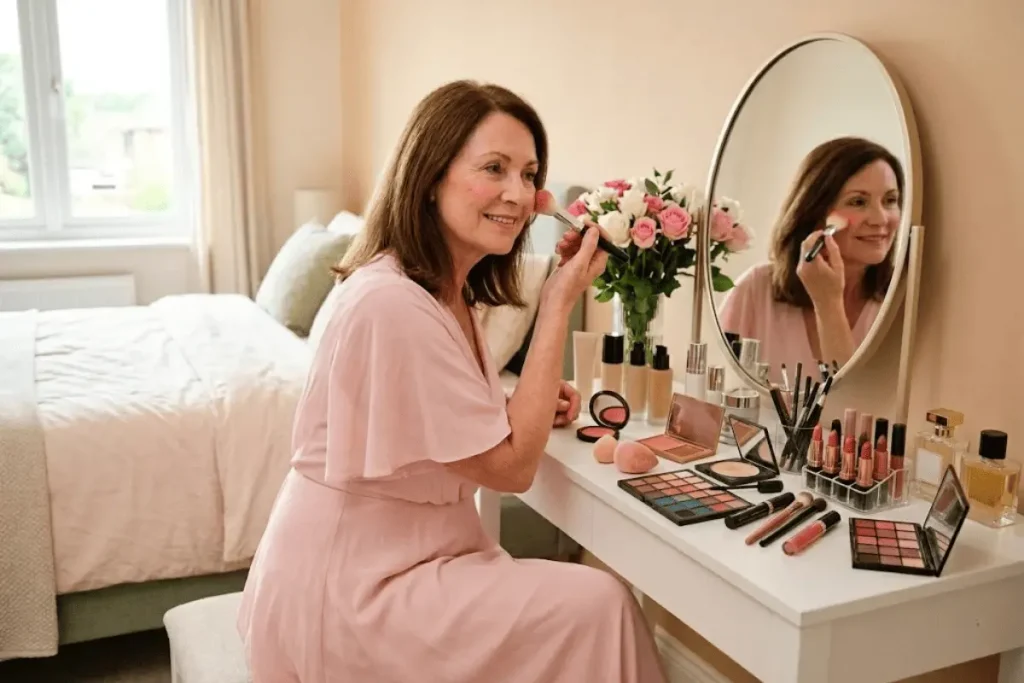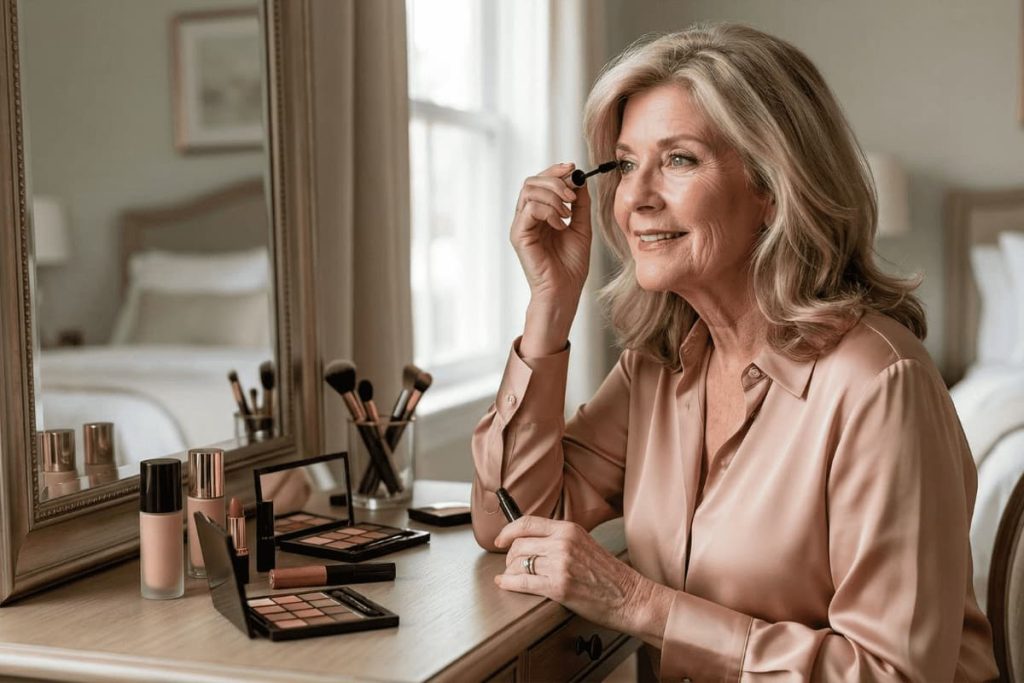
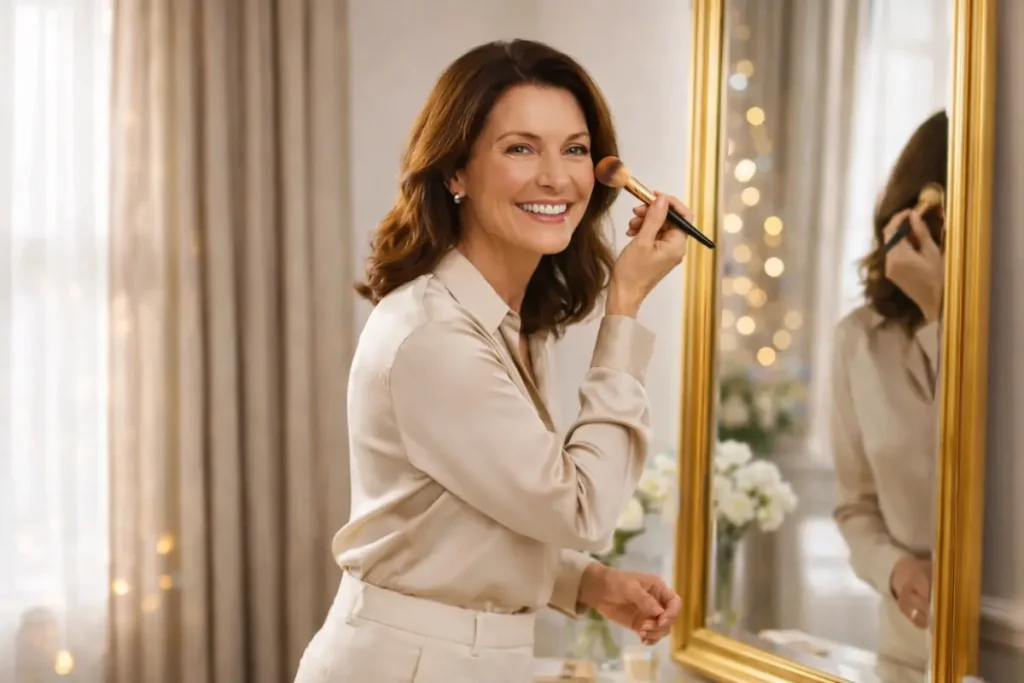
We’ve been applying makeup for decades, yet somehow our go-to routine from our 30s no longer delivers the same glow. I remember the morning I realized my foundation was settling into lines I didn’t even know I had, and my once-trusty powder left me looking flat rather than fresh. Sound familiar? The truth is, our skin changes beautifully as we age, and our makeup tutorial for women over 50 needs to change with it, not because we’re trying to look younger, but because we deserve techniques that celebrate the face we have today.
Why your old makeup routine isn’t working anymore
Our skin often becomes drier and its texture changes with age and menopause. This isn’t a flaw requiring correction; it’s simply biology asking for different support. When we continue using the same heavy foundations, matte powders, and application habits from our younger years, they may no longer sit on the skin the way we expect.
The shift isn’t about giving up makeup or settling for “age-appropriate” blandness. (That phrase makes me cringe, honestly.) It’s about learning techniques that work with your skin’s texture, not against it. Think of it as upgrading your approach, like trading uncomfortable heels for stylish flats that let you walk with confidence all day long.
If you want the bigger picture of how mature skin changes and what deserves your attention first, start with our skin care guide for women over 50. Here, we’re staying focused on the makeup itself.
Skin prep: the secret step nobody talks about
Before we even think about foundation, let’s talk about the real game-changer: skin preparation. This might be the single most important shift in your makeup tutorial for women over 50.
Start with hydration. A lightweight hydrating serum followed by a moisturizer that feels comfortable on your skin can create a smoother canvas. Give your skincare a few minutes to settle before applying makeup so foundation is less likely to cling to dry areas.
Consider a hydrating primer if you need one. You don’t have to use primer every day, but a moisturizing formula can be useful when your skin feels especially dry or when you want makeup to wear more evenly. The better your skin feels before makeup, the less product you may feel you need afterward.
If your skincare itself needs an update, keep that separate from your makeup steps and use our skin care routine for women over 50 for the morning-and-evening framework.
Foundation application: the thin-layer technique
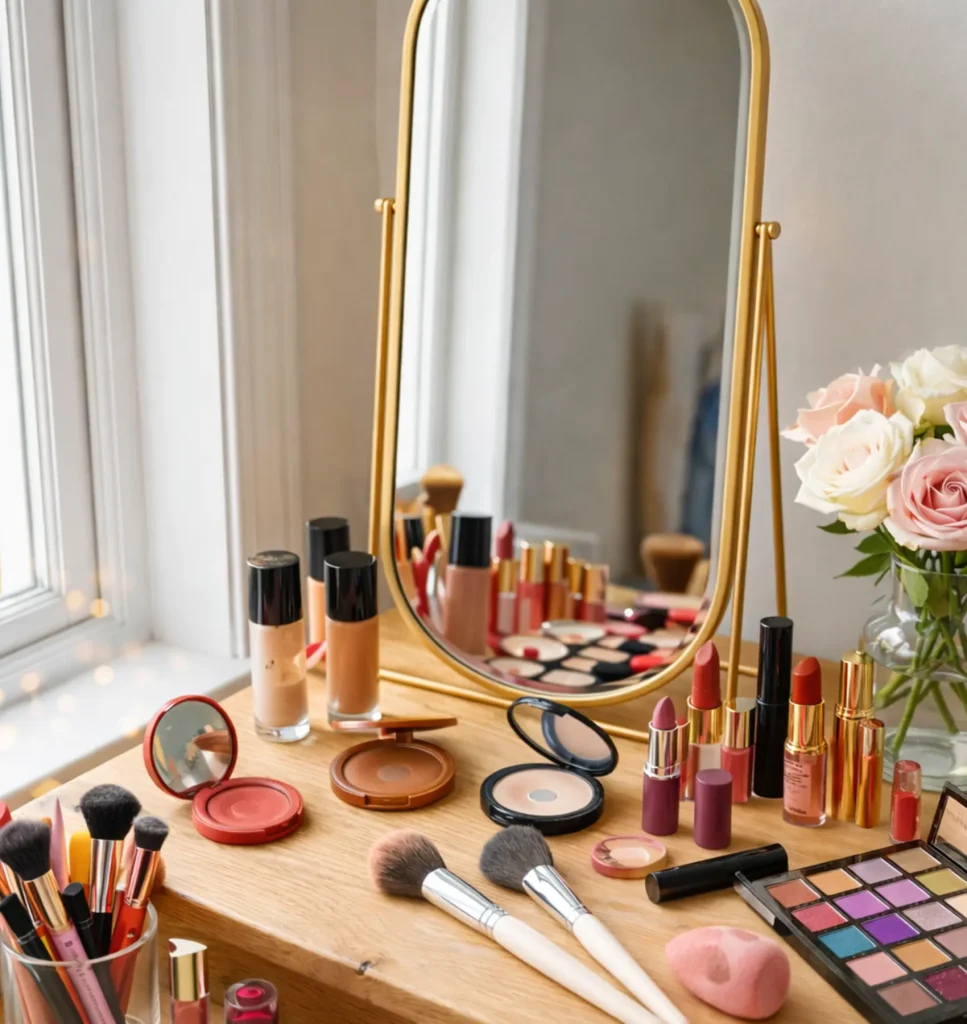
Let me be direct about something: more foundation isn’t automatically better on mature skin. The goal is not to erase every line or freckle. It’s to even out the areas you want to even out while still letting your skin look like skin.
Try liquid, serum-like, or cream formulas when they suit your skin. Many women find these easier to blend than a heavy powder base, especially when dryness or texture is noticeable. Look for the finish you actually enjoy, whether that’s natural, radiant, or softly luminous.
Apply less first, then build. A damp beauty sponge can be useful for pressing a thin layer onto the skin, but a brush or clean fingers can also work beautifully. Start where you want the most evening-out, blend outward, then add a little more only where you need it.
What about concealer? Use a small amount where it earns its place. Under the eyes, a creamy formula applied in thin layers is usually easier to control than a thick blanket of product. Blend gently and stop when the area looks refreshed rather than fully covered.
The powder question: when less really is more
I know many of us were trained to set everything with powder, but this is one old habit worth questioning. Powder can be helpful where you genuinely need shine control, but it doesn’t have to cover the entire face.
If powder tends to emphasize dryness or texture on you, use a small amount only where needed, often around the T-zone, and leave the drier areas alone. A setting spray is another option if you prefer a less powdery finish. There is no rule saying every woman over 50 needs the same finishing step.
Eyes that sparkle: mascara, shadow, liner, and brows
Our eyes tell our stories, and a few thoughtful adjustments can bring them forward without making the makeup feel heavy. If your lids are more textured or hooded than they used to be, softer placement can be easier to control than a very sharp, thick line.
Keep eyeshadow simple and strategic. A light neutral shade across the lid with a slightly deeper tone where you want definition can be enough for an everyday look. Satin, cream, and matte textures can all work; what matters most is how the formula behaves on your own lids.
For liner, think definition rather than a rule. A soft pencil close to the upper lash line can be easier to smudge and soften than a rigid liquid line. Mascara can add contrast, while lightly filling sparse brows with short, hair-like strokes can restore definition without making them look drawn on.
Eyes deserve more detail than we can responsibly squeeze into one full-face tutorial. For liner placement, shadow, lashes, brows, and mature-eye adjustments, continue with our eye makeup guide for women over 50.
Adding color: blush, bronze, and glow
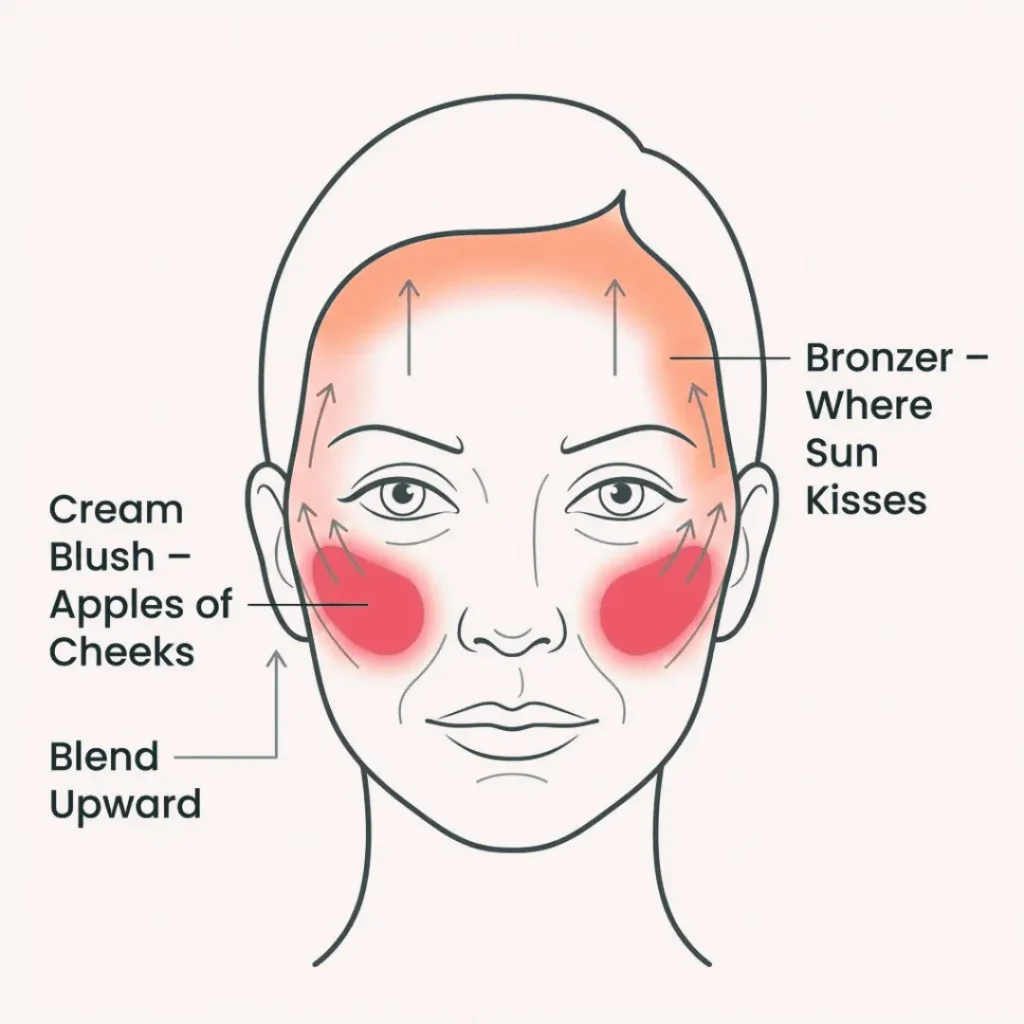
This is where makeup becomes genuinely fun. Cream blush can be a lovely option for mature skin because it blends easily and can leave a fresh finish. Rather than following a rigid placement rule, start with a small amount and blend it in the direction that flatters your own face.
Bronzer deserves a light hand. Use it for warmth rather than trying to redraw the structure of your face. And if you enjoy highlighter, choose a finish you like and apply it sparingly where you want the light to catch. The point is dimension, not sparkle everywhere.
Lips: color, moisture, and definition
Our lips can become drier and lose some definition with age, but that doesn’t mean color has to become timid. Start with comfortable hydration, then use liner if feathering is an issue or if you simply like a more defined shape.
Choose the finish that makes you want to wear it. Cream and satin lipsticks, tinted balms, and glosses can feel more forgiving when lips are dry. And yes, you can still wear a bold berry, coral, or classic red after 50. One useful trick carried over from our other makeup guide is balance: when the lip is the statement, you may prefer softer eye makeup, and when the eyes are stronger, a quieter lip can let them take center stage.
If you use liner, you can lightly fill the lips with it before lipstick to give the color a more stable base. Blot once with a tissue if you want to remove excess, then reapply a thin layer rather than piling on more product.
Frequently asked questions
How should women over 50 apply makeup for an everyday look?
Start with comfortable, hydrated skin and use thin layers rather than trying to cover everything at once. Add foundation or concealer only where you want it, bring back color with blush, define the eyes and brows softly, and finish with a lip color you enjoy. The best routine is the one that suits your skin, features, comfort, and personal style.
Is liquid or powder makeup better for mature skin?
There is no single formula that is best for everyone. Many women with drier or more textured skin prefer liquid or cream base products because they are easy to blend in thin layers. Powder can still be useful where you need shine control, but applying it lightly and selectively may help avoid emphasizing dry areas.
How do you keep foundation from settling into lines after 50?
Begin with moisturized skin, allow skincare to settle, and apply a small amount of foundation in thin layers. Blend well and add coverage only where needed. If powder makes lines look more noticeable, use less of it or keep it to areas where you need shine control. Formula choice matters, but application and skin preparation matter too.
Can women over 50 still wear bold lipstick or eye makeup?
Absolutely. Makeup does not come with an age limit. Bold lipstick, liner, shadow, and color can all work after 50. The useful question is not whether you are allowed to wear them, but how the placement, texture, and intensity work with your features and the look you want to create.
Your new makeup routine: a fresh start
The most liberating part of updating your makeup routine after 50? Realizing you may actually need less, not more. When you focus on comfortable skin, strategic coverage, thoughtful color, and placement that works for your features, the process becomes quicker and more enjoyable.
I encourage you to experiment with one new technique at a time. Maybe this week you try a thinner layer of foundation. Next week you swap a heavy powder habit for a lighter finish, or finally wear that lipstick you’ve been saving. Small, intentional changes are much easier to live with than a complete reinvention overnight.
Remember, makeup at 50+ isn’t about hiding or correcting. It’s self-expression. Your face tells a beautiful story; makeup is simply one of the ways you get to decide how you want to show up today.
If a cosmetic product causes persistent irritation, swelling, burning, or another concerning reaction, stop using it and seek advice from a qualified healthcare professional when appropriate.