
How Age, Hormones, and Diet Affect Your Skin

Elegant woman over 50 reading in a garden how age hormones and diet affect the skin naturally

You look in the mirror one morning, and something feels different; your skin seems thinner somehow, less bouncy. Maybe a little dull, even after a full night of sleep. You haven’t changed your routine, so what changed?

The answer is happening quietly inside your body. How age, hormones, and diet affect the skin is one of the most important things a woman over 50 can understand, because once you see the connection, you stop blaming yourself and start making choices that actually help.

Here’s the reality. Your skin is a living, hormone-responsive organ. It reacts to every shift in your estrogen levels, every inflammatory meal, every night of poor sleep, and every glass of water you drink or skip. It reflects your internal health more honestly than almost anything else.

Many women notice these shifts most dramatically in their 50s and 60s, especially after menopause. Dryness, thinning, sensitivity, loss of firmness, and uneven tone are all connected to this same set of internal changes.

This guide explains exactly what’s happening, why it matters, and what you can do today to support your skin from the inside out. Because thriving skin at 50 and beyond is absolutely possible. It just requires a different kind of attention.

There is another complete Ultimate Skin Care Guide for Women Over 50.

How Age, Hormones, and Diet Affect the Skin (Simple Breakdown)

Understanding how age, hormones, and diet affect the skin becomes much easier when you break it down into three key factors:

  1. Age slows down skin renewal
    As you get older, collagen production decreases, skin becomes thinner, and cell turnover slows. This leads to dryness, wrinkles, and a loss of firmness.
  2. Hormones control skin structure and hydration
    Estrogen plays a major role in keeping skin firm, hydrated, and elastic. After menopause, lower estrogen levels lead to thinner, drier, and more sensitive skin.
  3. Diet directly impacts skin health
    What you eat affects inflammation, hydration, and collagen health. Diets high in sugar and processed foods accelerate aging, while nutrient-rich foods support glowing, healthy skin.

When these three factors combine, they create the visible skin changes many women notice after 50. The key is not to fight these changes, but to support your skin with the right habits.

How age changes the structure of your skin

To understand fully how age, hormones, and diet affect the skin, let’s start with what aging itself does structurally, because these changes are real, measurable, and worth knowing clearly.

Starting in your 30s and accelerating through your 50s, your skin produces less collagen every year. Collagen is the scaffolding that keeps skin firm, plump, and resilient. By the time most women reach their 50s, collagen production has slowed significantly, and the breakdown of existing collagen has begun.

Elastin, the protein that allows skin to snap back after movement, also decreases. This is why skin around the cheeks, jaw, and neck begins to feel less taut over time. It’s not a failure. It’s a biological process that every human experiences.

The skin’s outermost layer, called the stratum corneum, becomes thinner with age. This means the barrier that protects you from environmental damage, locks in moisture, and keeps irritants out becomes more permeable. Dryness, sensitivity, and increased reactivity to products you’ve used for years are all signs of this shift.

Cell turnover also slows dramatically. In your 20s, skin cells renew roughly every 28 days. By your 50s, the cycle can stretch to 45 to 60 days. This is why mature skin can look dull or uneven: dead skin cells linger on the surface longer before shedding.

Understanding these changes helps you choose the right products and habits. For a practical guide to building a routine that works with these shifts, a comprehensive daily skincare routine for women over 50 provides a clear, step-by-step framework for supporting your skin at every level.

The hormone connection: what estrogen does for your skin

Of all the factors in how age, hormones, and diet affect the skin, hormonal change is arguably the most powerful and the most immediate after menopause. And at the center of that change is estrogen.

Estrogen does three things for your skin that nothing else fully replaces. It stimulates collagen production, keeping skin firm and structured. It supports hyaluronic acid synthesis, which is what keeps skin hydrated and plump from within, and regulates sebum production, maintaining the natural oil balance that keeps skin soft and protected.

When estrogen declines during perimenopause and menopause, all three of these functions slow down simultaneously. Research shows that skin loses approximately 30% of its collagen in the first five years after menopause. Hyaluronic acid content drops, and the skin barrier becomes thinner and more reactive.

Progesterone also plays a role. It supports skin elasticity and has a calming effect on inflammation. As progesterone declines alongside estrogen, many women notice increased skin sensitivity and occasional breakouts, sometimes for the first time since their teenage years.

Women experiencing hormonal breakouts after menopause will find a detailed breakdown in our guide to acne and menopause hormones

Cortisol, your primary stress hormone, is another hormonal player that affects skin directly. Chronically elevated cortisol breaks down collagen, disrupts the skin barrier, and triggers inflammation. This is one of the most direct ways that chronic stress shows up visibly on your face.

You can’t stop hormonal change, but you can support your skin through it. Targeted skincare ingredients, anti-inflammatory nutrition, and stress management all help compensate for declining hormone levels in meaningful, practical ways.

How diet affects skin aging: the foods that help and hurt

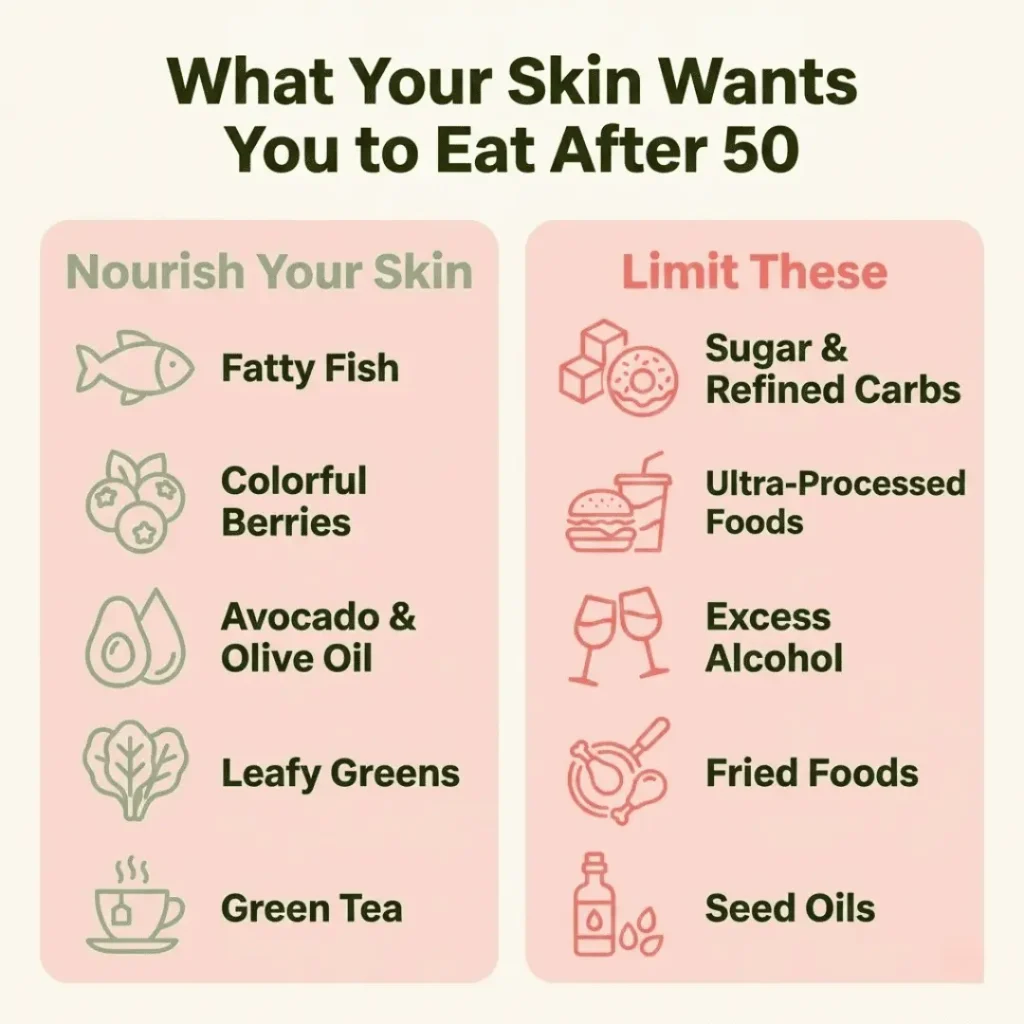
Chart of foods that affect skin aging for women over 50 diet hormones and skin health guide
Your plate is a daily choice for your skin. These are the foods that make the biggest difference after 50.

What you eat shows up on your skin. This isn’t a wellness cliche. It’s well-supported biology, and how age, hormones, and diet affect the skin becomes especially clear after 50, when your skin’s internal support systems need more nutritional input than they did before.

Sugar and refined carbohydrates are among the most damaging dietary choices for skin aging. Through a process called glycation, excess sugar molecules attach to collagen and elastin fibers, making them stiff and brittle. This leads directly to loss of firmness, deeper lines, and a dull complexion. You don’t have to eliminate sugar, but reducing it consistently makes a visible difference over time.

Highly processed foods and seed oils high in omega-6 fatty acids promote systemic inflammation, which accelerates skin aging, increases sensitivity, and worsens conditions like redness and uneven texture.

On the other side of the equation, certain foods actively support skin health at the cellular level:

  • Fatty fish (salmon, sardines, mackerel): Rich in omega-3s that reduce inflammation and strengthen the skin’s lipid barrier.
  • Colorful vegetables and berries: Packed with antioxidants that neutralize free radical damage, one of the primary drivers of visible skin aging.
  • Avocado and olive oil: Provide healthy monounsaturated fats that support skin softness and barrier integrity.
  • Bone broth and collagen-rich foods: Support your body’s own collagen production from the inside out.
  • Green tea: Contains EGCG, a powerful antioxidant with anti-inflammatory and UV-protective properties.
  • Dark leafy greens: High in vitamins C and K, both important for collagen synthesis and reducing under-eye discoloration.

Hydration is foundational. Skin cells require water to function properly. Even mild, chronic dehydration visibly affects texture, elasticity, and luminosity. Aim for at least eight glasses of water daily and more during exercise or in dry environments.

What You Can Do to Improve Your Skin After 50

While you can’t stop aging or hormonal changes, you can significantly improve your skin by focusing on a few key habits:

  • Eat anti-inflammatory foods rich in omega-3s and antioxidants
  • Stay hydrated to support skin elasticity
  • Use sunscreen daily to prevent collagen breakdown
  • Support your body with key nutrients like vitamin C, D, and collagen
  • Manage stress to reduce cortisol-related skin damage

These simple actions help your skin stay healthier, stronger, and more resilient over time. Choosing the right products matters as much as the habits themselves. See our reviewed list of skincare anti-aging products for women over 50

The gut-skin axis: why your digestion shows on your face

This is one of the most underappreciated connections in women’s health after 50, and it directly shapes how age, hormones, and diet affect the skin at the cellular level. Your gut and your skin are in constant communication through what scientists call the gut-skin axis.

Your gut microbiome, the trillions of bacteria that live in your digestive system, directly influences systemic inflammation, hormone metabolism, and nutrient absorption. When your gut microbiome is imbalanced (a condition called dysbiosis), the effects often show up on your skin as increased redness, breakouts, uneven texture, and accelerated aging.

After menopause, the gut microbiome itself changes. Declining estrogen affects the diversity and balance of gut bacteria, which is one reason why so many women notice skin and digestive changes happening at the same time during menopause.

Supporting your gut health actively supports your skin health. Practical steps include:

  • Eating a wide variety of plant foods to feed beneficial bacteria (aim for 30 different plant foods per week).
  • Including fermented foods like yogurt, kefir, kimchi, or sauerkraut for natural probiotic support.
  • Reducing ultra-processed foods that disrupt microbiome balance.
  • Consider a high-quality probiotic supplement, especially during and after menopause.

Fiber is your gut’s best friend. Most American women eat far less than the recommended 25 grams of fiber per day. Increasing fiber from vegetables, legumes, whole grains, and fruits improves digestion, supports estrogen metabolism, and reduces systemic inflammation, all of which benefit your skin directly.

Key nutrients your skin needs after 50

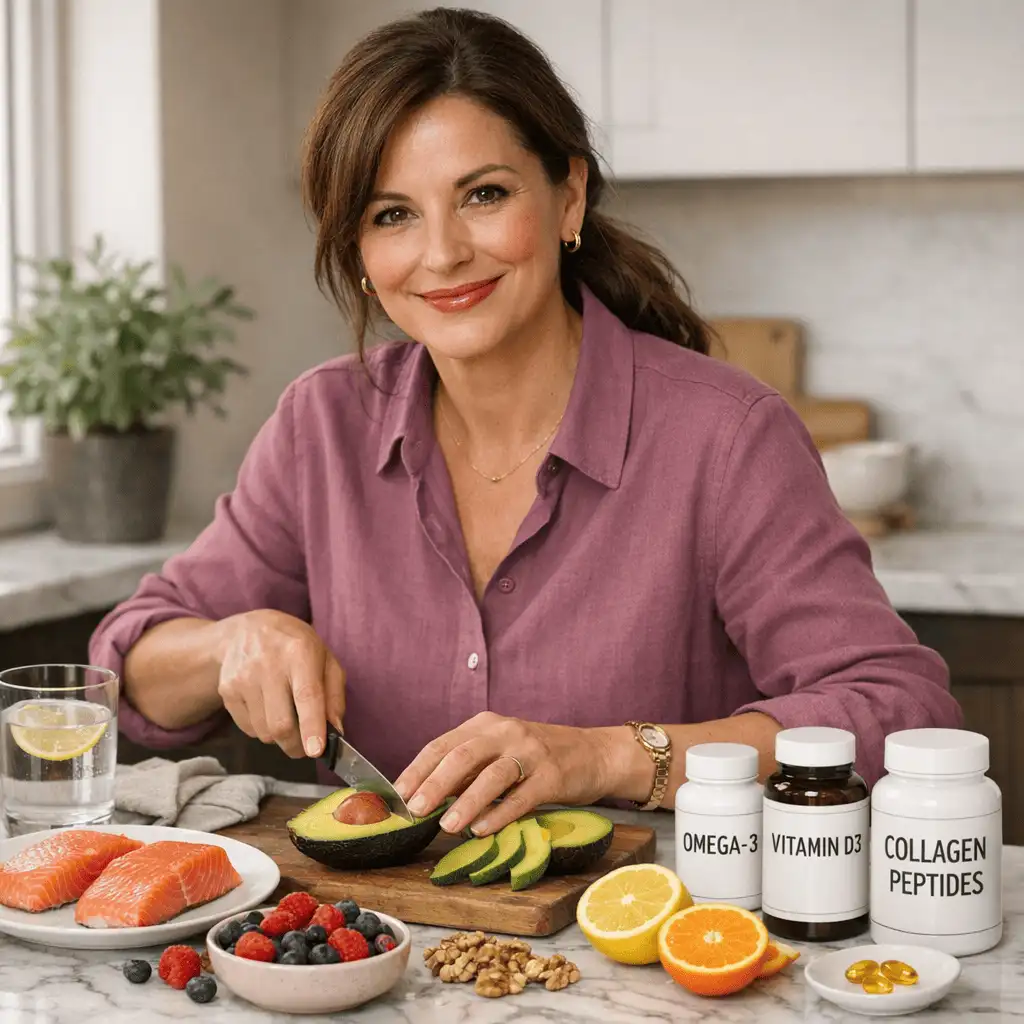
Woman over 50 preparing nutrient-rich foods for skin health key nutrients your skin needs after 50
The most powerful skincare routine starts in your kitchen. These six nutrients work from the inside out to keep mature skin healthy, hydrated, and resilient.

Once you understand how age, hormones, and diet affect the skin, targeted nutrition becomes one of your most powerful tools. These are the nutrients that matter most for mature skin after 50:

Vitamin C is essential for collagen synthesis. Your body cannot produce collagen without it. It also neutralizes free radicals and brightens uneven skin tone. Food sources include citrus fruits, bell peppers, strawberries, and broccoli. A topical vitamin C serum in the morning adds a second layer of protection and brightening directly on the skin.

Vitamin D supports skin barrier function and has anti-inflammatory properties. Many women over 50 are deficient, especially in northern climates or with limited sun exposure. A simple blood test can confirm your levels, and supplementation is often recommended.

Zinc supports wound healing, reduces inflammation, and regulates sebum production. Found in pumpkin seeds, legumes, oysters, and whole grains.

Vitamin E works synergistically with vitamin C to protect skin from oxidative damage. Found in nuts, seeds, avocado, and olive oil.

Collagen peptides, taken as a daily supplement, have strong clinical support for improving skin hydration, elasticity, and the reduction of fine lines in post-menopausal women. Consistent use for eight to twelve weeks is typically needed to see measurable results.

Omega-3 fatty acids reduce inflammatory skin conditions, strengthen the lipid barrier, and improve overall skin texture. If you don’t eat fatty fish at least twice a week, a quality fish oil or algae-based omega-3 supplement is worth considering. For a broader look at how nutrition supports your overall vitality and hormonal balance at this life stage, a complete nutrition guide for women over 50 covers all of these foundations in practical detail.

In addition to nutrition, regular anti-aging facial treatments can help improve skin texture, boost circulation, and support collagen production from the outside.

Lifestyle habits that protect your skin from the inside out

Beyond skincare products and nutrition, your daily habits play a powerful role in how age, hormones, and diet affect the skin over time. These are the lifestyle factors with the strongest evidence behind them.

Sleep is when your skin repairs itself. During deep sleep, your body releases growth hormone, which drives cellular regeneration, including skin repair. Poor or insufficient sleep raises cortisol, increases inflammation, and visibly affects skin texture, tone, and under-eye appearance within days. Prioritizing seven to nine hours of quality sleep is one of the highest-impact skin habits you can build.

Regular exercise improves circulation, delivering oxygen and nutrients to skin cells more efficiently. It reduces systemic inflammation, supports hormone regulation, and improves sleep quality, all of which benefit your skin. Strength training in particular has been shown to support collagen production and skin thickness as you age.

Chronic stress is a direct skin disruptor. Sustained high cortisol breaks down collagen, impairs barrier function, and triggers inflammatory skin reactions. Practices like daily walking, yoga, breathwork, or even ten minutes of quiet reading before bed measurably reduce cortisol over time.

Sun protection is non-negotiable. UV exposure is the single largest external accelerator of skin aging, responsible for collagen breakdown, hyperpigmentation, and barrier damage. A broad-spectrum SPF 30 or higher applied every morning, regardless of weather, is the most evidence-backed anti-aging habit that exists.

Smoking and excessive alcohol both dramatically accelerate visible skin aging. Smoking restricts blood flow to skin cells and destroys collagen directly. Alcohol dehydrates skin, disrupts sleep, and promotes inflammation. Even reducing these significantly produces visible improvements in skin quality over time.

For a complete approach that avoids harsh chemicals, explore our guide to natural anti-aging strategies for women over 50

Frequently asked questions

How does diet affect skin aging?

Diet affects skin aging in two primary ways: through nutrition and through inflammation. Foods rich in antioxidants, omega-3s, vitamins C and E, and collagen-supporting nutrients actively slow visible skin aging. Meanwhile, sugar, processed foods, and alcohol accelerate it through glycation and inflammation. After 50, the connection between what you eat and how your skin looks becomes more direct and more immediate than it was in earlier decades.

How do hormones affect skin aging?

Estrogen is the key hormone for skin health. It drives collagen production, hyaluronic acid synthesis, and sebum regulation. When estrogen declines during menopause, skin becomes thinner, drier, less firm, and more sensitive relatively quickly. Cortisol, the stress hormone, also directly degrades collagen and disrupts the skin barrier. Supporting hormonal balance through nutrition, sleep, stress management, and appropriate skincare ingredients is one of the most effective strategies for maintaining skin health after 50.

How can I look 10 years younger naturally?

Consistent sun protection is the single most evidence-backed strategy for maintaining youthful-looking skin. Beyond that, prioritizing sleep, reducing sugar and processed foods, staying well hydrated, managing stress, and building a targeted skincare routine with retinoids, vitamin C, and ceramides make a visible cumulative difference over time. There are no shortcuts, but these habits, practiced consistently, produce results that no single product can match.

How does age affect the skin?

With age, collagen and elastin production slow, skin cell turnover takes longer, the moisture barrier becomes thinner, and sebum production decreases. These changes result in dryness, loss of firmness, uneven texture, and increased sensitivity. Hormonal changes after menopause accelerate many of these shifts. The good news is that the skin remains highly responsive to good nutrition, targeted skincare, hydration, and protective lifestyle habits at every age.

How age, hormones, and diet affect the skin: small changes, real results, starting today.

Understanding how age, hormones, and diet affect the skin isn’t about chasing a younger face. It’s about knowing your body well enough to give it what it truly needs right now. Your skin at 55 or 65 can be healthy, luminous, comfortable, and resilient. It just needs a different kind of care than it did at 30.

Start with one change this week. Add a glass of water in the morning. Swap a processed snack for a handful of walnuts and berries. Apply your SPF before you leave the house. Small, consistent shifts compound into real, lasting results. And if you have concerns about hormonal changes or significant skin issues, your dermatologist or gynecologist is always the right person to guide you. For more inspiration on building a lifestyle that supports your vitality from the inside out, discover how everyday wellness habits help women thrive after 50. What small step will you try this week?

Leave a Comment

Your email address will not be published. Required fields are marked *

Scroll to Top