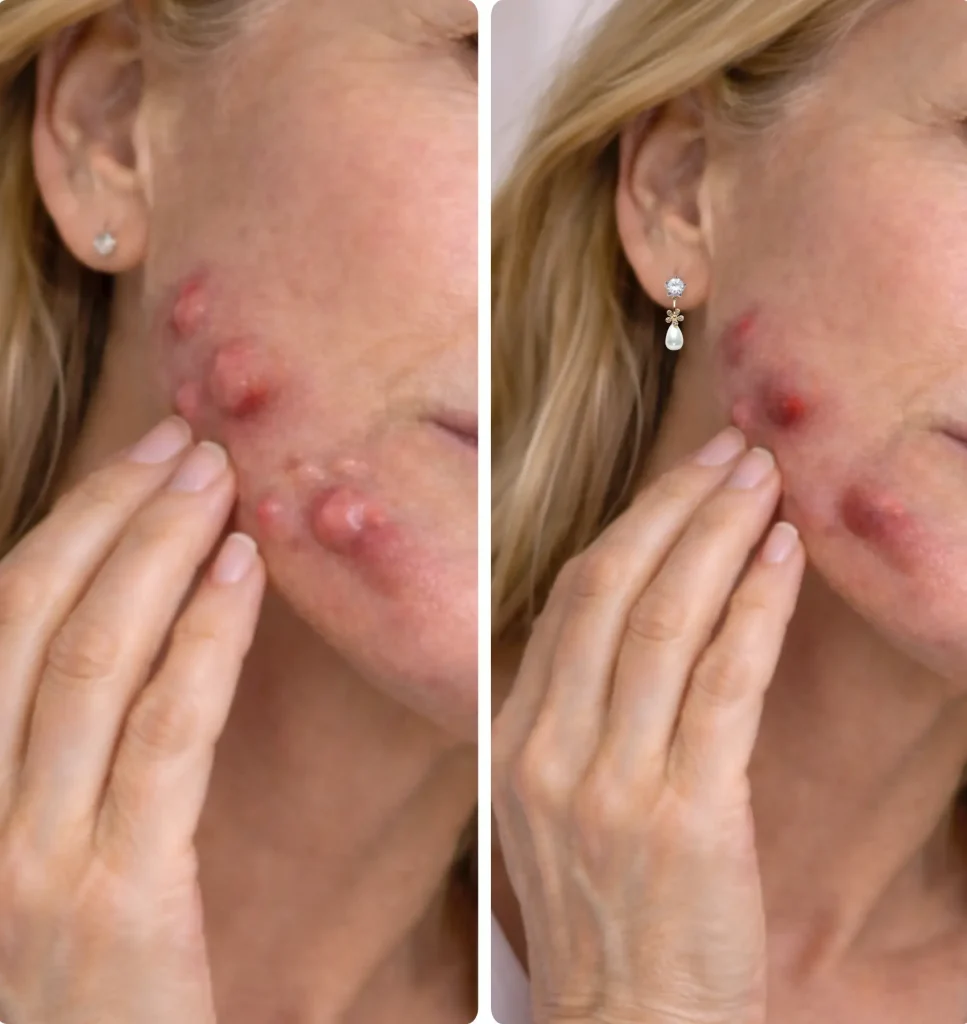
Acne and Menopause Hormones Close-up of woman's jawline showing realistic

Acne and Menopause Hormones: What Your Hormones Are Really Telling You

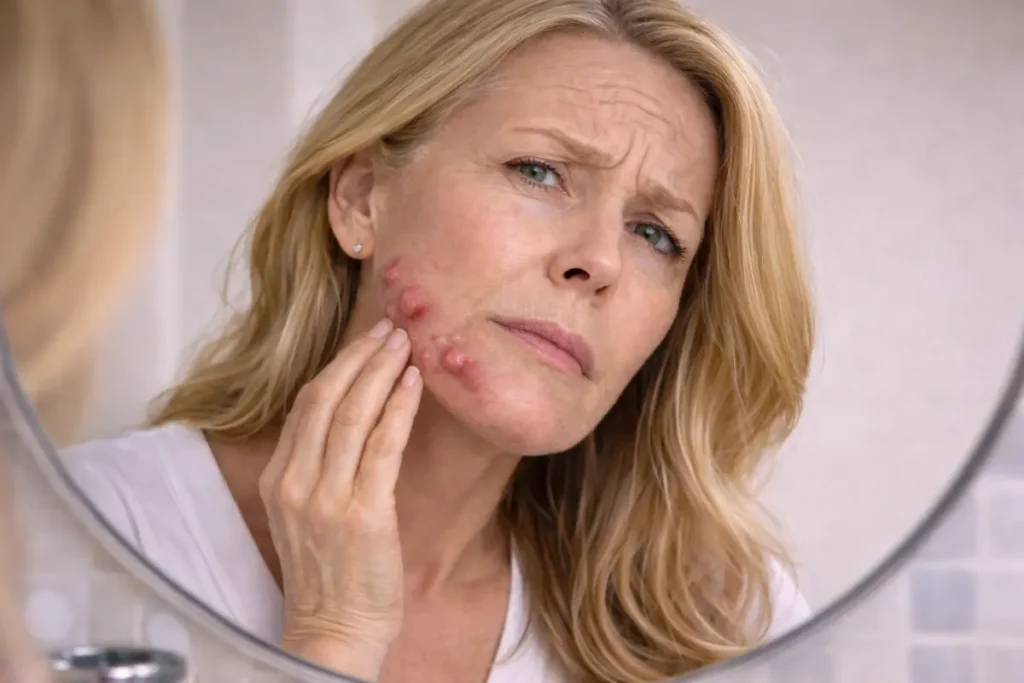
Acne and menopause hormones can feel like an unfair combination, especially when you thought breakouts were behind you. I certainly did. I thought I’d left acne behind in my twenties, filed away with bad perms and questionable fashion choices. So imagine my surprise when, at 53, I woke up to find my chin dotted with breakouts that would’ve made my teenage self cringe. If you’re experiencing acne and menopause hormone changes simultaneously, you’re definitely not imagining things. Your skin is responding to a very real hormonal shift, and it feels a bit unfair to deal with hot flashes and breakouts at the same time

Why Acne and Menopause Hormones Trigger Breakouts

Here’s what’s happening beneath the surface. During menopause, your estrogen levels drop significantly, while androgens remain relatively stable. This creates an androgen dominance situation that your skin hasn’t experienced since puberty.

Androgens stimulate your sebaceous glands to produce more oil. At the same time, cellular turnover slows down, allowing dead skin cells to mix with oil and clog pores. One of the key drivers of acne and menopause is hormonal imbalance and skin changes

The connection between acne and hormonal changes during menopause isn’t just about oil production, though. Your skin is also becoming thinner and losing collagen. What might have cleared up in days now takes weeks, and that’s completely normal for this stage of life. Understanding these changes is essential, which is why the Expert Tips from the Ultimate Skin Care Guide for Women Over 50 can help you adapt your routine to support your skin’s new needs

The Hormone Dance: Understanding Acne and Menopause Hormones

For decades, estrogen was your skin’s best friend, and you probably didn’t even know it. This hormone kept your skin thick, plump, and resilient. It regulated oil production, maintained moisture levels, and promoted collagen synthesis.

When estrogen declines, the balance shifts, androgens take over, increasing oil production and contributing to acne and menopause hormones flare-ups.

This explains why your skin may fluctuate, clear one month, break out the next, and menopause hormone changes, and that uncertainty can be frustrating.

Why Your Daily Habits Matter for Acne and Menopause Hormones

Here’s something that took me far too long to understand: you can’t cream your way out of a hormonal imbalance. Your lifestyle plays a major role in managing acne and menopause hormones. I spent months trying different face washes, serums, and spot treatments before I realized that the most powerful tools for managing acne and menopause hormone changes were sitting in my kitchen and woven into my daily routine.

Your body is going through a profound transformation. Every choice you make throughout the day either supports or works against it. The foods you eat directly influence your hormone production and inflammation levels. How you move your body affects insulin sensitivity. The quality of your sleep determines how effectively your cells repair themselves.

What I love about the lifestyle approach is that it addresses the root cause rather than just managing symptoms. When you support your body’s natural hormone balance through daily choices, you’re not just helping your skin; you’re improving your energy, mood, sleep, and overall sense of well-being. It’s a rising tide that lifts all boats.

This doesn’t mean lifestyle changes are easy or that results happen overnight. It took me about six weeks of consistent changes before I noticed real improvements in my skin. Those improvements have lasted because I’m working my body against it.

The Foods That Balance Acne and Menopause Hormones

Let’s talk about food, because this is one of the most powerful tools you have.

Foods that help:

  • Leafy greens, broccoli, carrots
  • Flaxseeds and soy (phytoestrogens)
  • Omega-3-rich foods
  • Berries and colorful vegetables

Foods that worsen acne:

  • Sugar and refined carbs
  • Processed foods
  • Dairy (for some women)

Balancing blood sugar is essential for improving acne and menopause hormones. Menopause diet guide

Movement and Stress: Key Factors in Acne and Menopause Hormones

Exercise might not be the first thing you think of when treating acne, but here’s why it matters. Regular movement improves insulin sensitivity, which means your body doesn’t need to produce as much insulin when you eat. Less insulin means fewer androgen surges and less oil production.

I’m not talking about intense workouts that leave you exhausted. In fact, excessively high-intensity exercise can actually increase cortisol imbalance. What works better during menopause is consistent, moderate movement that you genuinely enjoy. For me, that’s a 30-minute walk most mornings and yoga twice a week.

Walking has become my non-negotiable self-care practice. It gets me outside in natural light, which helps regulate my circadian rhythm and improves sleep. It reduces stress without spiking cortisol. And honestly, those 30 minutes of moving my body and clearing my mind have done more for my overall well-being than any skincare routine ever could.

Strength training deserves special mention because it helps maintain muscle mass and bone density during menopause, and also improves how your body processes glucose and hormones. You don’t need a gym membership. Bodyweight exercises, resistance bands at home, or even gardening that requires digging and lifting all count.

The stress piece is equally crucial. Cortisol, your primary stress hormone, directly stimulates sebum production and increases inflammation in your skin. When I’m going through a particularly stressful period, my skin shows it within days.

What helped me most is building small stress-reduction practices into my day rather than waiting until I’m overwhelmed. Ten minutes of deep breathing when I first wake up. A few minutes of stretching before bed. Saying no to commitments that drain me. These aren’t luxuries; they’re necessary support for your body during a major transition.

I’ve also found that connecting with other women going through similar experiences reduces stress significantly. Whether it’s a walking group, a book club, or just regular coffee dates with friends, that social support matters for your mental health and, surprisingly, your skin.

Sleep and Acne and Menopause Hormones

Those nights when you’re tossing and turning with night sweats aren’t just uncomfortable; improving sleep naturally after 50 they’re disrupting your skin’s healing process. During deep sleep, your body repairs damaged cells, produces new collagen, and regulates hormone production. Poor sleep increases cortisol, disrupts blood sugar balance, and triggers inflammation.

Creating an environment that supports better sleep has been challenging during menopause, but it’s worth the effort. I keep my bedroom cool (around 65 degrees), use breathable cotton sheets, and have a fan for air circulation. I’ve also started limiting screen time an hour before bed and reading instead, which helps me wind down.

Consistent sleep and wake times help regulate your body’s internal clock, even on weekends. I know it sounds boring, but my body responds better when I maintain that routine. On nights when sleep is particularly difficult, I remind myself that rest, even without deep sleep, still provides some benefit.

Flat-lay showing acne tracking journal and hormone-balancing foods for menopause management

A Gentler Approach to Skincare for Acne and Menopause Hormones

After talking about lifestyle factors, let’s address topical skincare because it does play a supporting role. The key is gentleness. Your menopausal skin is fundamentally different from teenage skin, thinner, drier, and more sensitive.

What works: Choose a creamy, non-foaming cleanser that doesn’t leave your skin feeling tight. Follow with hydrating products that support your skin barrier. Look for ingredients like hyaluronic acid, glycerin, and ceramides. A lightweight serum with niacinamide can help regulate oil while calming inflammation.

What doesn’t work: Harsh scrubs, astringent toners, clay masks that dry completely, and aggressive acne treatments designed for teenagers. These strip away the protective oils your skin desperately needs. I learned this the hard way after spending two months with prescription retinoids that left my skin flaky, irritated, and still breaking out.

The moisturizer question always surprises women. Won’t that make acne worse? Actually, when you’re dealing with acne and menopause hormone changes, keeping your skin hydrated is essential. Dehydrated skin produces more oil to compensate. Choose non-comedogenic formulas that won’t clog pores.

Sunscreen every single day is non-negotiable. Your skin is more vulnerable to sun damage now, and inflammation from sun exposure can worsen acne. Mineral sunscreens with zinc oxide work well for sensitive, acne-prone skin.

When Lifestyle Changes Need Extra Support

Sometimes, despite doing everything right with nutrition, movement, stress management, and gentle skincare, your acne persists or worsens. That’s when it’s worth exploring additional options with healthcare professionals who understand the unique needs of women in menopause

A dermatologist experienced with mature skin can assess whether you might benefit from specific treatments tailored to hormonal acne. Some women find relief through medications that address the androgen piece, though these require medical supervision and come with considerations to discuss with your provider.

If you’re already exploring hormone replacement therapy for other menopausal symptoms, it’s worth discussing how it might affect your skin. Some women experience skin improvements with HRT, while others find it makes no difference or occasionally worsens acne, depending on the specific formulation.

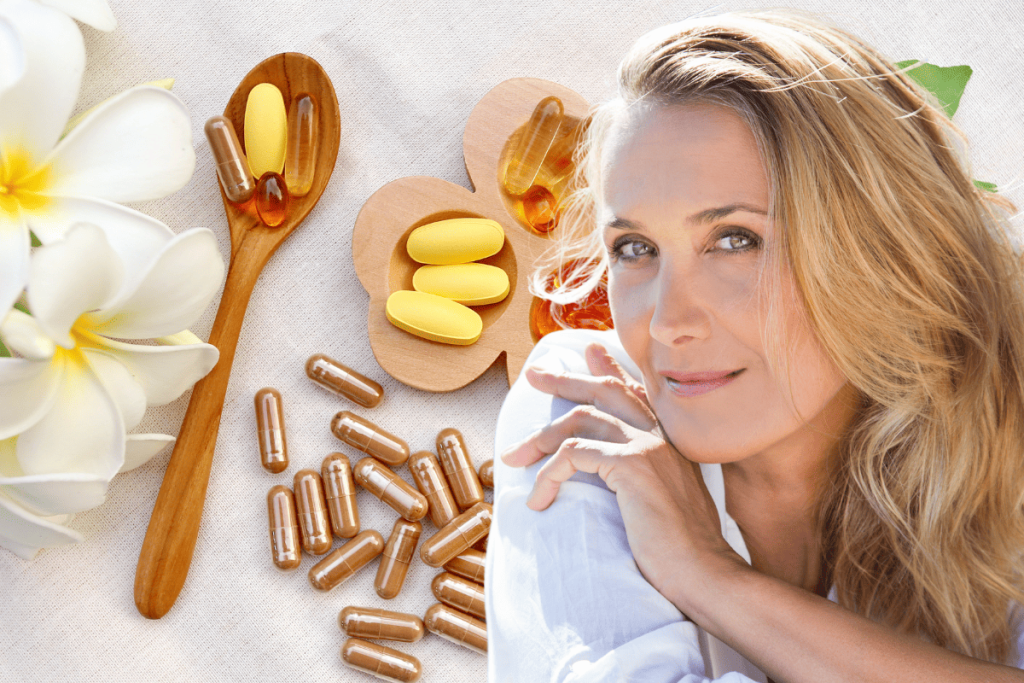
Natural approaches through functional medicine practitioners can also provide support. This might include herbs traditionally used for hormone balance, targeted supplementation based on your specific deficiencies, or other integrative strategies. Whatever route you explore, work with qualified professionals rather than self-prescribing.

Frequently asked questions

Can menopause cause acne even if I never had it before?

Absolutely. Many women experience their first significant acne during menopause despite having clear skin their entire lives. The hormonal shift creates conditions that didn’t exist previously, particularly androgen dominance that stimulates oil production. Your skin’s history doesn’t predict how it will respond to menopausal hormone change

How long does menopausal acne typically last?

Which lifestyle changes make the biggest difference for hormonal acne? In my experience and from research, stabilizing blood sugar through diet has the most immediate impact. Reducing refined carbohydrates and sugar while increasing fiber and protein helps balance insulin and androgens. Adding regular movement and improving stress management amplify those benefits. Most women notice improvements within four to six weeks of consistent lifestyle changes

Should I eliminate dairy to clear menopausal acne?

Not necessarily. Some women find dairy worsens their acne, while others notice no connection. Try eliminating it for three weeks and see how your skin responds. If you notice improvement, you can experiment with reintroducing small amounts to find your personal tolerance level. Some women can handle butter and hard cheeses but not milk or ice cream. Lore

Reframing Acne and Menopause Hormones

Here’s what shifted everything for me. Instead of viewing these breakouts as a betrayal or sign that something was wrong with me, I started seeing them as information. My skin was communicating that my body needed support through a major transition.

When I approached the situation with curiosity rather than frustration, I became more attuned to patterns. I noticed that my breakouts worsened during particularly stressful weeks or after eating certain foods. This awareness helped me make adjustments that actually addressed root causes instead of just treating surface symptoms.

We live in a culture that tells us women should become invisible as we age, and visible skin issues can feel like they’re working against that pressure to disappear gracefully. But your skin showing signs of hormonal changes isn’t a failure; it’s evidence that you’re alive and your body is doing exactly what it’s designed to do during this life stage.

The relationship between acne and menopause hormones is temporary; for most women, once hormone levels stabilize in post-menopause, the breakouts calm significantly. You’re not going to deal with this forever, even though it might feel that way when you’re in the thick of it.

What helps in the meantime is treating yourself with the same compassion you’d offer a friend going through this. Your worth isn’t determined by whether your skin is clear. You’re navigating a significant life transition, and giving yourself grace during that process matters more than perfect skin.

Moving Forward with Confidence

The connection between acne and menopause hormones is real, frustrating, and manageable through lifestyle choices that honor your body’s transition. What I want you to take away from this is that your skin’s behavior right now doesn’t define you, and it’s not something you caused through inadequate care or poor choices.

Your body is recalibrating, and your skin is part of that process. The lifestyle-first approach I’ve shared, combining nourishing foods, joyful movement, stress reduction, quality sleep, and gentle skincare, works because it addresses the underlying hormonal shifts while respecting your skin’s current needs.

Some mornings you’ll wake up to new breakouts and feel discouraged. Other days, your skin will look clearer, and you’ll feel hopeful. Both experiences are valid parts of this journey. What matters is that you’re giving yourself the support and care you deserve during a major life transition.

If you’re looking for more comprehensive guidance on supporting your body through menopause with nutrition, movement, and daily practices that enhance your vitality, our resources on thriving through hormonal transitions offer practical strategies that benefit your overall well-being and naturally support healthier skin.

What’s one small step you’ll try this week? Maybe it’s adding ground flaxseeds to your breakfast, taking an evening walk, or simply looking in the mirror with a bit more kindness. Share in the comments below, we’re all in this together.

Leave a Comment

Your email address will not be published. Required fields are marked *

Scroll to Top