

Flat brown marks on the backs of the hands are often called age spots or sun spots. Many are harmless solar lentigines caused by accumulated ultraviolet exposure, but appearance alone cannot confirm that every new spot is benign.
This guide explains common age spots on hands, realistic fading options, prevention, and the changes that should be examined before you use a brightening product. For broader mature-skin guidance, use the Skin Care Guide for Women Over 50.
What typical age spots may look like
A solar lentigo is often flat, tan to dark brown, clearly outlined, and located on sun-exposed skin. Several may appear over time. Hormonal changes can affect pigmentation, but long-term ultraviolet exposure is the main practical factor to address on the hands. For more context on how aging and hormonal changes can affect mature skin, see How Age Hormones and Diet Affect Your Skin.
Do not self-diagnose a new or changing lesion only because it resembles another spot. Seborrheic keratoses, actinic keratoses, moles, bruising, and skin cancers can look different from one person to another.
Does this look like a typical age spot?
This quick comparison is a guide to what may deserve closer attention, not a diagnostic tool. A dermatologist or other qualified clinician should examine any lesion that is new, changing, unusual for you, or difficult to identify.
Check the spot before trying to fade it
- A new spot that looks different from the others.
- Change in size, shape, color, or border.
- Several colors within one lesion.
- Bleeding, crusting, pain, persistent itch, or a sore that does not heal.
- Rapid growth or a raised rough area.
These signs do not prove cancer, but they justify professional examination. Do not apply strong acids, bleaching agents, or home freezing kits to an undiagnosed lesion.
Daily prevention for the hands
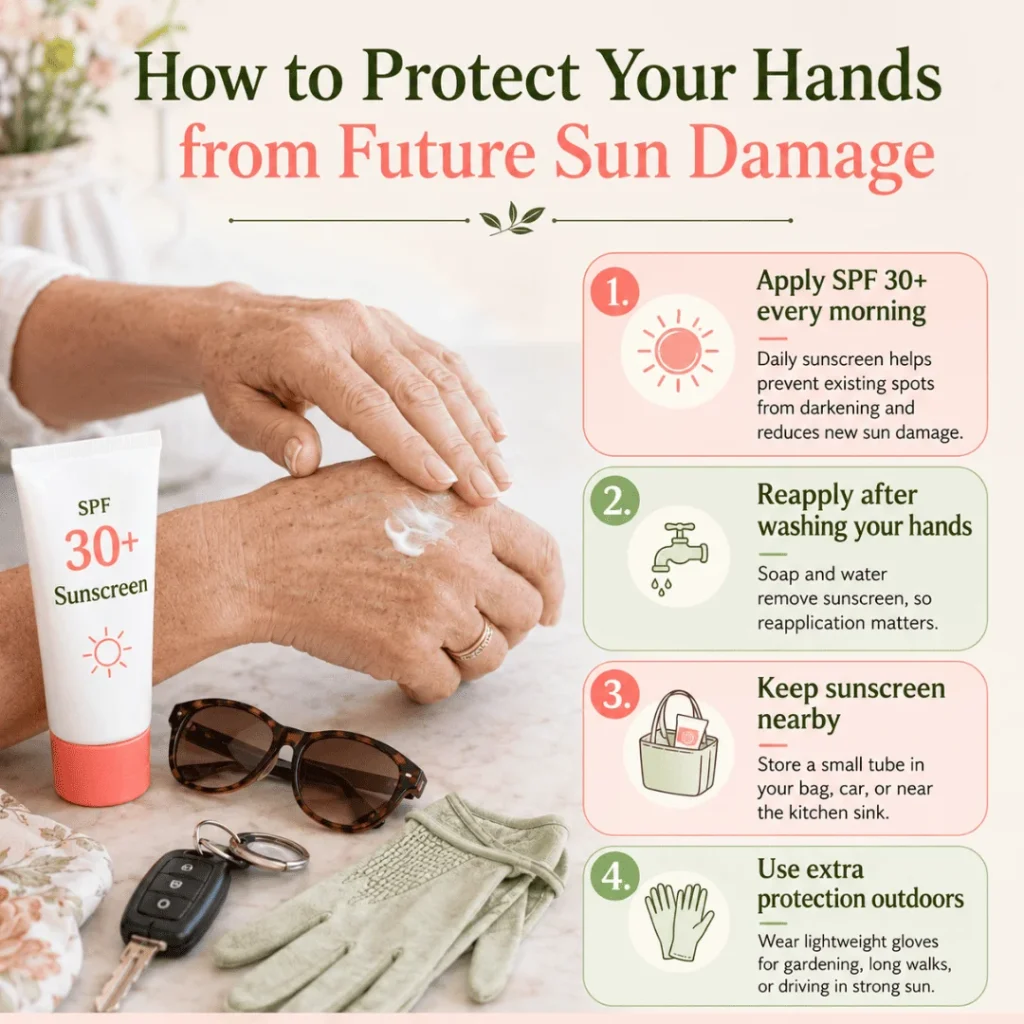
Apply broad-spectrum sunscreen to the backs of exposed hands and reapply after washing or prolonged exposure according to the product directions. Driving, gardening, walking, and sitting near strong sunlight can add cumulative exposure. Protective gloves and shade provide useful additional coverage.
Moisturizer supports comfort and makes consistent hand care easier, but it does not replace sun protection.
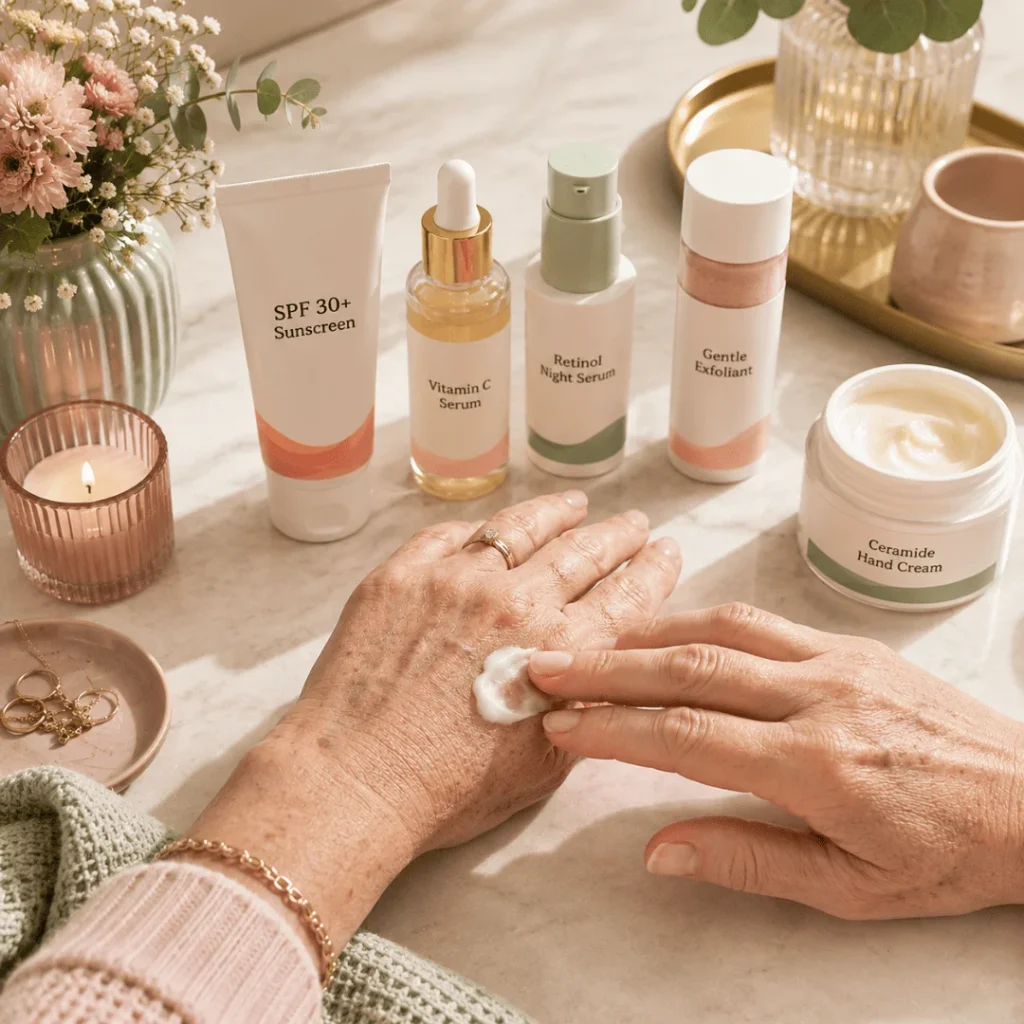
A simple hand-care routine you can actually follow
If you want to fit hand care into a broader morning and evening routine, the Skin Care Routine for Women Over 50 provides a practical sequence without turning your shelf into a chemistry lab.
Ingredients used for gradual fading
Introduce one product at a time and patch test when your skin is reactive. Improvement is gradual and varies by depth of pigment, formula, sun protection, and consistency. No honest product can promise overnight removal. If you are comparing formulas rather than procedures, Skincare Anti Aging Products explains how to evaluate ingredients, skin concerns, and irritation risk.
Professional options
A dermatologist may discuss prescription lightening treatment, cryotherapy, chemical peels, laser, or light-based procedures after confirming the diagnosis. The right option depends on skin tone, lesion type, medical history, risk of post-inflammatory pigmentation, cost, and downtime.
For a structured comparison of procedures and their risks, use Anti Aging Facial Treatments After 50.
Frequently asked questions
Can age spots on hands be removed completely?
Some spots fade substantially, while others recur or remain visible. Diagnosis, treatment type, sun protection, and individual response affect the result.
What do liver spots look like?
They are often flat tan or brown marks on sun-exposed skin, but a description cannot confirm a diagnosis. New or changing lesions should be examined.
How long do fading products take to work?
Results vary and usually require consistent use over weeks or months. Stop if irritation is persistent and reassess the product.
When should a hand spot be checked?
Arrange examination for change in size, shape, color, border, bleeding, crusting, pain, rapid growth, or failure to heal.
The bottom line
Care for age spots on hands begins with diagnosis and sun protection. Fade confirmed benign pigment gradually, keep the routine simple enough to follow consistently, and avoid aggressive home treatment on any spot that has not been properly identified.