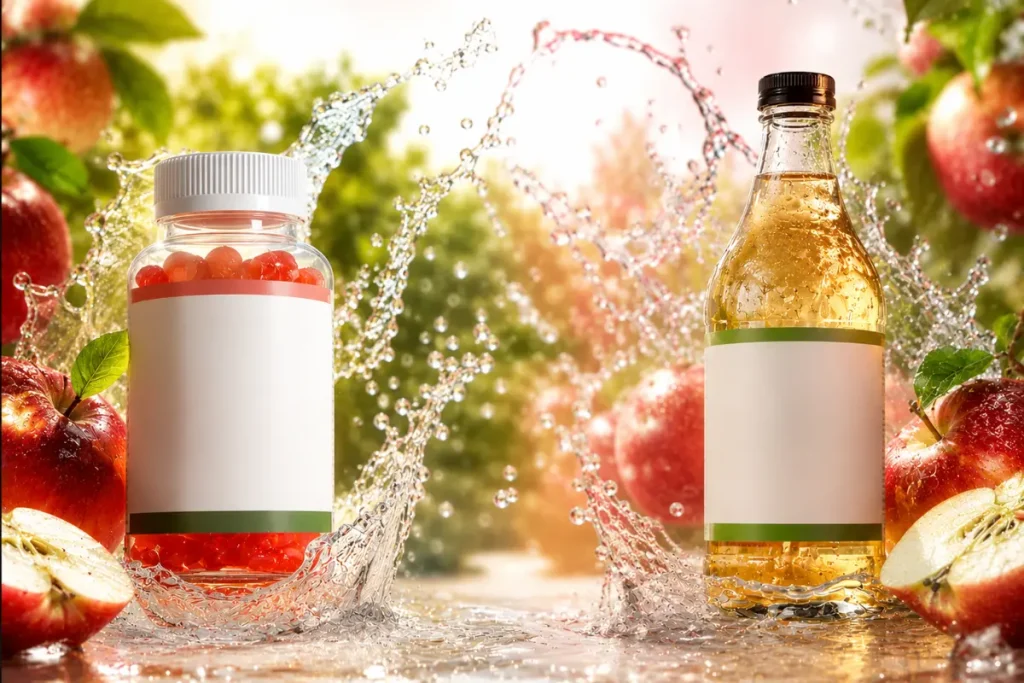
I tried liquid apple cider vinegar for three weeks straight. Every morning. One tablespoon in a glass of water before breakfast. For related Lonage guidance, see supplements, nutrient gaps & recovery.
The first week I was totally stoked. Week two I was tolerating it. By week three, I was standing at my kitchen counter making a face that my daughter described as “a cat eating a lemon.” So when ACV gummies showed up in my feed claiming to deliver the same benefits without the vinegar assault, I was genuinely curious. And honestly? A little suspicious.
The question of ACV gummies vs liquid is not just about taste preference. It’s a bioavailability and chemistry question that has a specific answer for women our age. And that answer is a little more nuanced than most comparison articles admit. Let me break it down honestly so you can make the choice that actually makes sense for your body and your routine.
What ACV actually does in your body after 50 (the part that matters)
Before we compare formats, let’s get clear on what we’re actually comparing. Because most people are taking ACV for the wrong reason, or at least an incomplete one.
The active compound in apple cider vinegar is acetic acid. Not the apple. Not the vinegar flavor. The acetic acid. It works through three documented mechanisms that are particularly relevant after menopause.
First, it inhibits alpha-amylase, the enzyme that breaks down starch into glucose. A slower starch breakdown means a slower, smaller blood sugar spike after meals, according to a 2005 study in the European Journal of Clinical Nutrition by Dr. Carol Johnston at Arizona State University.
Second, it improves insulin sensitivity at the cellular level. A 2018 study in Diabetes Care found participants who consumed 20ml of liquid ACV before meals showed a 34% improvement in post-meal blood sugar response and a 26% increase in GLP-1 (the gut fullness hormone that declines after menopause).
Third, unfiltered liquid ACV contains the “mother,” a colony of beneficial bacteria and enzymes similar to what’s found in fermented foods. This probiotic component feeds the gut bacteria strains most depleted after menopause, a connection we cover in detail in our article on gut health and belly fat after menopause.
Now here’s what matters for our comparison: all three mechanisms require acetic acid to reach your small intestine in sufficient concentration. That’s where the gummies vs liquid question gets genuinely interesting.
The bioavailability truth nobody puts in the headline
Here’s the thing that most ACV comparison articles completely skip. And it changed how I think about this entire debate.
After menopause, gastric acid production decreases significantly. A 2020 review in Clinical Gastroenterology and Hepatology found postmenopausal women produce on average 35 to 42% less hydrochloric acid than premenopausal women of comparable age. Lower stomach acid means slower and less complete breakdown of any ingested substance, including acetic acid.
This matters for both formats, but differently.
Liquid ACV at 5 to 6% acetic acid concentration has direct contact with your stomach lining and begins working immediately on alpha-amylase inhibition in the stomach itself. It doesn’t need gastric acid to activate it. The acid is the mechanism.
Gummies require your digestive system to break down a pectin or gelatin matrix first, then release the encapsulated ACV extract, then allow acetic acid to become bioavailable. With reduced stomach acid, that matrix breakdown is slower and less complete. A 2021 pharmacokinetic analysis published in Nutrients found that encapsulated organic acids in gummy form had 22 to 31% lower peak plasma concentration compared to equivalent liquid doses in adults over 55.
The practical translation: a standard gummy delivering 500mg of ACV extract is not equivalent to one tablespoon of liquid ACV. It’s closer to 15 to 25% of that dose’s active effect. That’s not nothing. But it’s not the same. And knowing this helps you set realistic expectations.
When liquid ACV genuinely outperforms gummies
Liquid ACV has one category of superiority that is not close: pre-meal blood sugar management.
Every clinical study showing meaningful glucose reduction from ACV used liquid form, 20ml (approximately 1.5 tablespoons) diluted in water, consumed 15 to 20 minutes before a carbohydrate-containing meal. The 2018 Diabetes Care study that showed 34% blood sugar improvement? Liquid. The 2005 European Journal of Clinical Nutrition research on alpha-amylase inhibition? Liquid.
No equivalent randomized controlled trial has replicated these results with gummies in postmenopausal women specifically. That doesn’t mean gummies don’t help. It means the evidence base for liquid is much stronger.
Liquid ACV also retains the mother when unfiltered. Brands like Bragg’s Organic Raw Apple Cider Vinegar preserve these probiotic strands, which gummies cannot replicate because the gummy manufacturing process requires heat that kills live bacteria. If gut microbiome support is your goal alongside blood sugar benefits, liquid with the mother wins this category clearly.
For women managing metabolism changes after 60, the pre-meal blood sugar effect of liquid ACV compounds with other metabolic support strategies more effectively than gummies alone.
The 2-minute ACV morning ritual that actually works
I want to give you the exact recipe I use. Simple ingredients, five seconds to prepare, and it protects your teeth and your esophagus at the same time.
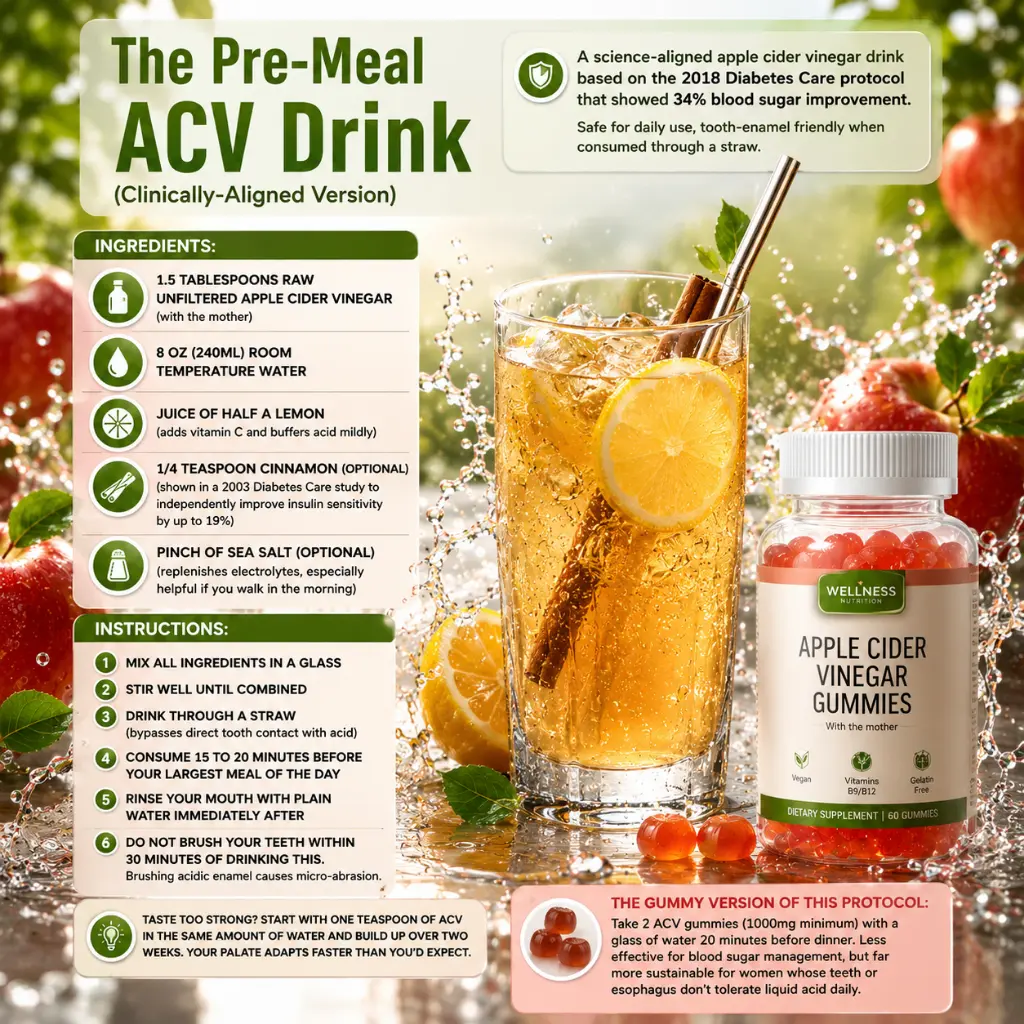
This matches the protocol used in the 2018 Diabetes Care study that showed 34% blood sugar improvement:
The Pre-Meal ACV Drink (Clinically-Aligned Version)
Ingredients:
A science-aligned apple cider vinegar drink based on the 2018 Diabetes Care protocol that showed 34% blood sugar improvement. Safe for daily use, tooth-enamel friendly when consumed through a straw.
1.5 tablespoons raw unfiltered apple cider vinegar (with the mother)
8 oz (240ml) room temperature water
Juice of half a lemon
(adds vitamin C and buffers acid mildly)
1/4 teaspoon cinnamon (optional)
(shown in a 2003 Diabetes Care study to independently improve insulin sensitivity by up to 19%)
Pinch of sea salt (optional)
(replenishes electrolytes, especially helpful if you walk in the morning)
Instructions:
- Mix all ingredients in a glass
- Stir well until combined
- Drink through a straw (bypasses direct tooth contact with acid)
- Consume 15 to 20 minutes before your largest meal of the day
- Rinse your mouth with plain water immediately after
Do not brush your teeth within 30 minutes of drinking this. Brushing acidic enamel causes micro-abrasion.
Taste too strong? Start with one teaspoon of ACV in the same amount of water and build up over two weeks. Your palate adapts faster than you’d expect.
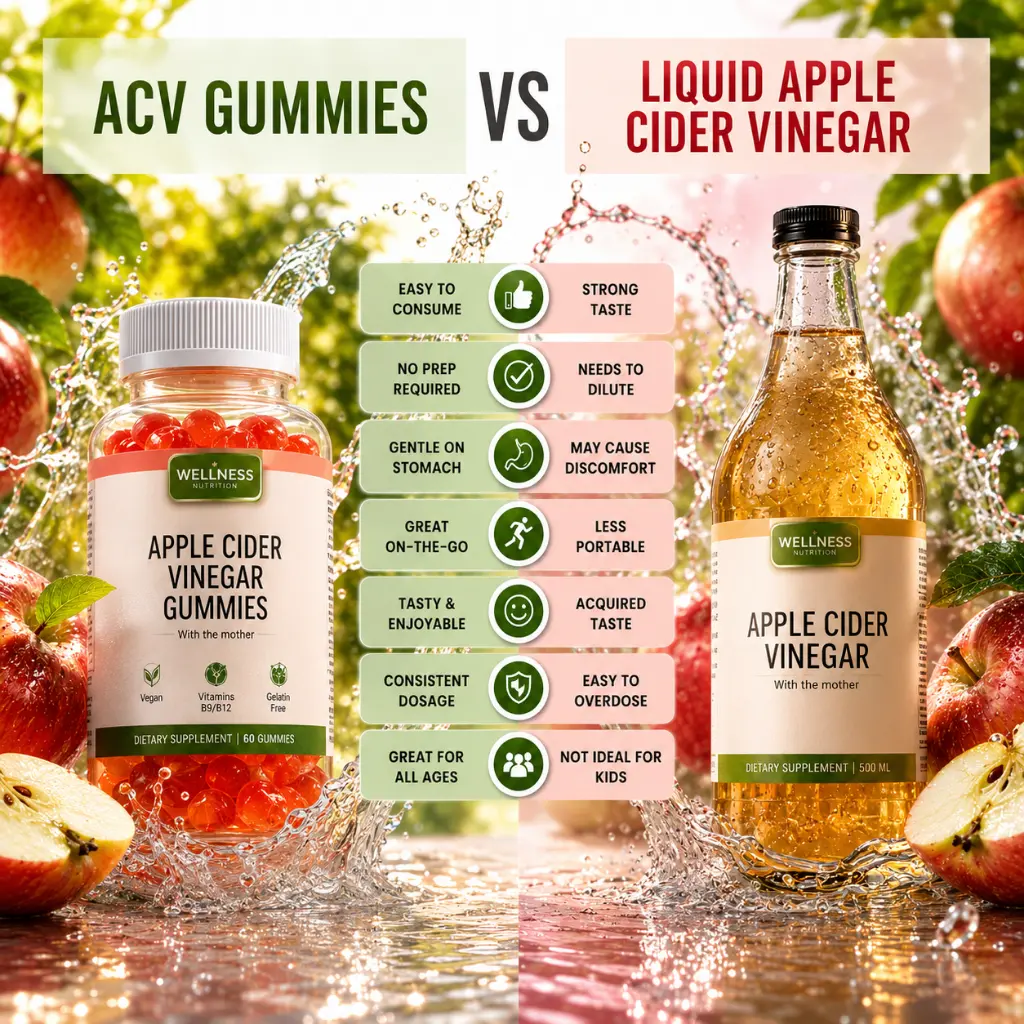
The gummy version of this protocol: Take 2 ACV gummies (1000mg minimum) with a glass of water 20 minutes before dinner. Less effective for blood sugar management, but far more sustainable for women whose teeth or esophagus don’t tolerate liquid acid daily.
When ACV gummies are the smarter choice for your 50+ body
Now let’s be honest about the very real downsides of liquid ACV, because I’m not here to shame anyone for choosing the gummy.
Tooth enamel damage is real and significant. Undiluted ACV has a pH of 2.5 to 3.0, making it more acidic than most carbonated beverages. A 2012 case study in the Journal of Clinical Dentistry documented significant enamel erosion in a 15-year-old who consumed ACV daily undiluted. Postmenopausal women already face increased enamel vulnerability due to reduced saliva production after estrogen decline. Even diluted liquid ACV consumed daily over months creates cumulative enamel risk that gummies completely eliminate.
Esophageal irritation is the second real concern. A 2020 case report in Clinical Nutrition ESPEN documented esophageal erosion from undiluted ACV consumption. Diluting to one part ACV in eight parts water and drinking through a straw minimizes but doesn’t eliminate this risk.
The practical consistency argument is legitimate. A benefit that you actually take daily outperforms a theoretically superior option that you abandon by week three. I was that person. Fersure.
For women who want the blood sugar and metabolic benefits of ACV without the daily acid exposure, a quality gummy with 500mg or more of standardized ACV extract plus added B vitamins (which improve acetic acid metabolism) is a genuinely reasonable choice.
The honest verdict: which one is right for you after 50
I want to give you the clear, no-fluff answer that this question deserves.
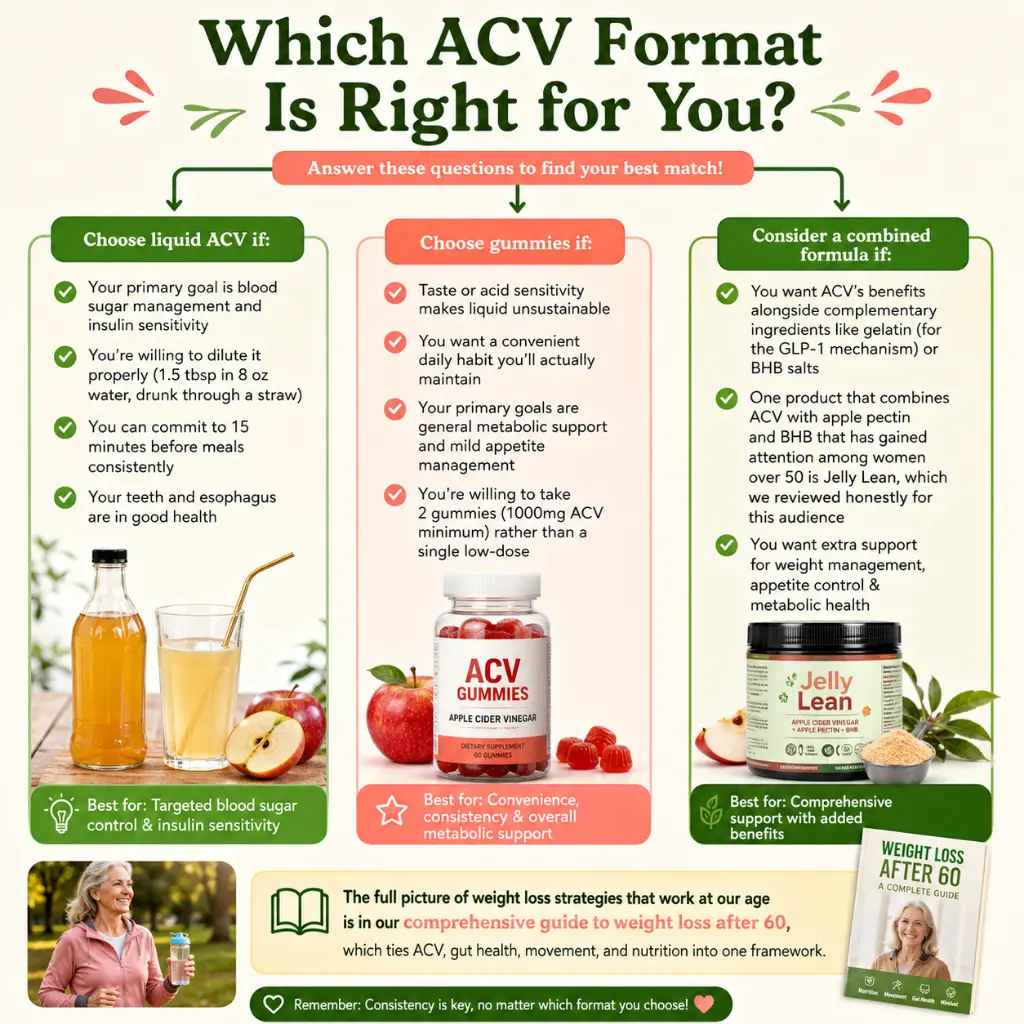
Choose liquid ACV if:
- Your primary goal is blood sugar management and insulin sensitivity
- You’re willing to dilute it properly (1.5 tbsp in 8 oz water, drunk through a straw)
- You can commit to 15 minutes before meals consistently
- Your teeth and esophagus are in good health
Choose gummies if:
- Taste or acid sensitivity makes liquid unsustainable
- You want a convenient daily habit you’ll actually maintain
- Your primary goals are general metabolic support and mild appetite management
- You’re willing to take 2 gummies (1000mg ACV minimum) rather than a single low-dose
Consider a combined formula if:
- You want ACV’s benefits alongside complementary ingredients like gelatin (for the GLP-1 mechanism we covered in our gelatin trick for weight loss article) or BHB salts
- One product that combines ACV with apple pectin and BHB that has gained attention among women over 50 is Jelly Lean, which we reviewed honestly for this audience
The full picture of weight loss strategies that work at our age is in our comprehensive guide to weight loss after 60, which ties ACV, gut health, movement, and nutrition into one framework.
Top questions women frequently ask:
Which is better, apple cider vinegar gummies or liquid?
For blood sugar management and insulin sensitivity, liquid ACV has stronger clinical evidence, specifically 20ml diluted in water before meals, per the 2018 Diabetes Care study showing 34% post-meal glucose improvement. For daily consistency and tooth safety, quality gummies at 500mg or more provide meaningful but smaller benefits. The best choice depends on your specific goal and what you’ll actually do every day.
Can apple cider vinegar help lower A1C?
Short-term studies show liquid ACV reduces post-meal blood sugar spikes by 25 to 34%, which over time can contribute to lower A1C levels. A 2021 review in the Journal of Evidence-Based Integrative Medicine found ACV consumption reduced fasting blood sugar by an average of 8.4 mg/dL over 8 to 12 weeks. This is a supportive effect, not a replacement for medical treatment. Always discuss blood sugar management with your healthcare provider.
Is it better to drink ACV or take gummies for weight loss?
Liquid ACV produces stronger documented effects on the two mechanisms most relevant to weight loss in postmenopausal women: blood sugar spike reduction and GLP-1 improvement. However, postmenopausal women face increased enamel and esophageal risk from daily acid exposure. Gummies offer 15 to 25% of liquid’s bioavailable acetic acid with zero acid risk. If you choose gummies, take the maximum recommended dose and pair them with prebiotic fiber for better metabolic results.
How much ACV should a woman over 50 take daily?
Research-supported doses for blood sugar benefits range from 15 to 30ml of liquid ACV (one to two tablespoons) daily, always diluted. For gummies, look for products delivering 500mg to 1000mg of ACV extract per serving, as lower doses are unlikely to produce measurable metabolic effects. Always start with a smaller amount and monitor how your digestive system responds, particularly if you have gastric reflux or take medications affected by acidity.
Does ACV affect tooth enamel in women over 50?
Yes, this is a real concern. Postmenopausal women already have reduced saliva production due to estrogen decline, which impairs the natural enamel-protective buffering that saliva provides. Undiluted liquid ACV at pH 2.5 is more erosive than most acidic beverages. If you choose liquid form, always dilute in at least 8 ounces of water, drink through a straw, and rinse your mouth with plain water afterward. Never brush teeth within 30 minutes of consuming ACV.
the bottom line
The ACV gummies vs liquid debate doesn’t have a universal winner. It has a right answer for each individual woman based on her goals, her digestive health, and her honest assessment of what she’ll actually sustain.
Liquid wins on bioavailability and clinical evidence. Gummies win on safety, convenience, and consistency. For women over 50 whose estrogen decline has already affected stomach acid, saliva, and enamel integrity, the safety calculation matters more than it does for younger women.
What I’d suggest: if you haven’t tried liquid ACV, start with a properly diluted small dose for two weeks and see how your body and your teeth feel. If you’ve already tried it and it doesn’t work for your lifestyle, a quality gummy at 500mg minimum is a legitimate alternative with real but more modest benefits.
Before adding ACV to your routine, especially if you take medications for blood sugar or blood pressure, check with your healthcare provider first.
What’s one small step you’ll try this week? Share your experience in the comments. Your real-world insight helps every woman reading this.
Exclusive Insights for Lonage readers
1. Acetic acid and the vagus nerve: an overlooked appetite mechanism. A 2022 study in Nature Metabolism found that acetic acid activates vagal nerve afferents in the stomach wall, sending a direct “fullness” signal to the hypothalamus independent of calorie intake. This mechanism requires acetic acid in the stomach itself, meaning liquid ACV activates it immediately while gummies produce delayed or reduced activation due to slower matrix breakdown. For women dealing with post-dinner hunger that’s driving weight gain, this vagal mechanism makes the timing and format of ACV consumption more consequential than previously understood.
2. The “mother” in raw ACV contains Acetobacter bacteria that specifically produce acetic acid in your gut. This is not the same as consuming acetic acid directly. Acetobacter acts as a living acid producer that continues to generate acetic acid for several hours after consumption. Heat-processed gummies contain no live Acetobacter. This means unfiltered liquid ACV with the mother provides both an immediate acetic acid dose AND a sustained bacterial acid production effect that gummies cannot replicate regardless of dose.
3. Postmenopausal bone density and ACV: a real but underreported concern. Three studies, including a 2010 case report in Osteoporosis International, documented reduced potassium and bone mineral density in women who consumed undiluted ACV daily for 6 or more years. The mechanism involves acid-mediated calcium leaching from bone. Diluted consumption at one tablespoon per day has not been associated with bone loss in clinical studies, but undiluted daily use represents a genuine risk for women already managing bone density after menopause.
4. Malic acid in apple cider vinegar provides a secondary benefit absent from most gummies. Raw ACV contains malic acid alongside acetic acid. Malic acid plays a role in the Krebs cycle (cellular energy production) and has been shown in a 2013 study in the Journal of Rheumatology to reduce muscle fatigue and tenderness. Most gummy formulas standardize only for acetic acid content and contain negligible malic acid, meaning liquid ACV provides this secondary energy metabolism benefit that gummies currently don’t match.
5. The optimal ACV consumption window is narrower than most recommendations suggest. Research by Dr. Carol Johnston (Arizona State, 2018) found that consuming ACV 5 minutes before a meal reduced blood sugar by 16%. Consuming it 15 to 20 minutes before the same meal reduced blood sugar by 34%. Consuming it with the meal produced only an 8% reduction. The difference between a 5-minute and 20-minute pre-meal window more than doubles the measurable benefit, yet this timing nuance is absent from virtually every popular ACV recommendation.
For broader guidance on this topic, explore our nutrition and supplements after 50 hub.
Related Lonage guides in this topic include Warning Signs of Vitamin Deficiency Every Woman Over 50.