

Supplements for menopause joint pain relief were the first thing I searched for when I woke up one Tuesday morning and couldn’t grip my coffee mug properly. My fingers felt stiff, almost swollen, and my knees ached as I walked down the stairs. At 54, I’d been navigating menopause for two years, and this pain felt like something new.
Sound familiar? Joint aches and stiffness can become more noticeable around menopause, but menopause is not the only possible explanation. Joint pain can have many causes, so new, persistent, or worsening symptoms deserve proper evaluation rather than being written off as “just hormones.”
If you are trying to decide whether supplements belong in your plan, the most useful question is not which product promises the fastest relief. It is which options have relevant evidence, which fit your individual needs, and which may interact with medications or health conditions.
This article is part of our broader guide to supplements for perimenopause and beyond.
Why Menopause and Joint Pain Can Overlap
Hormonal changes around menopause may be one part of the picture when joint discomfort appears or changes. At the same time, osteoarthritis, inflammatory conditions, injuries, changes in activity, sleep problems, and other health factors can also contribute to pain and stiffness.
That distinction matters because supplements cannot diagnose or correct every cause of joint pain. For a broader look at movement, sleep, nutrition, and other approaches, see other ways to manage menopause-related joint pain.
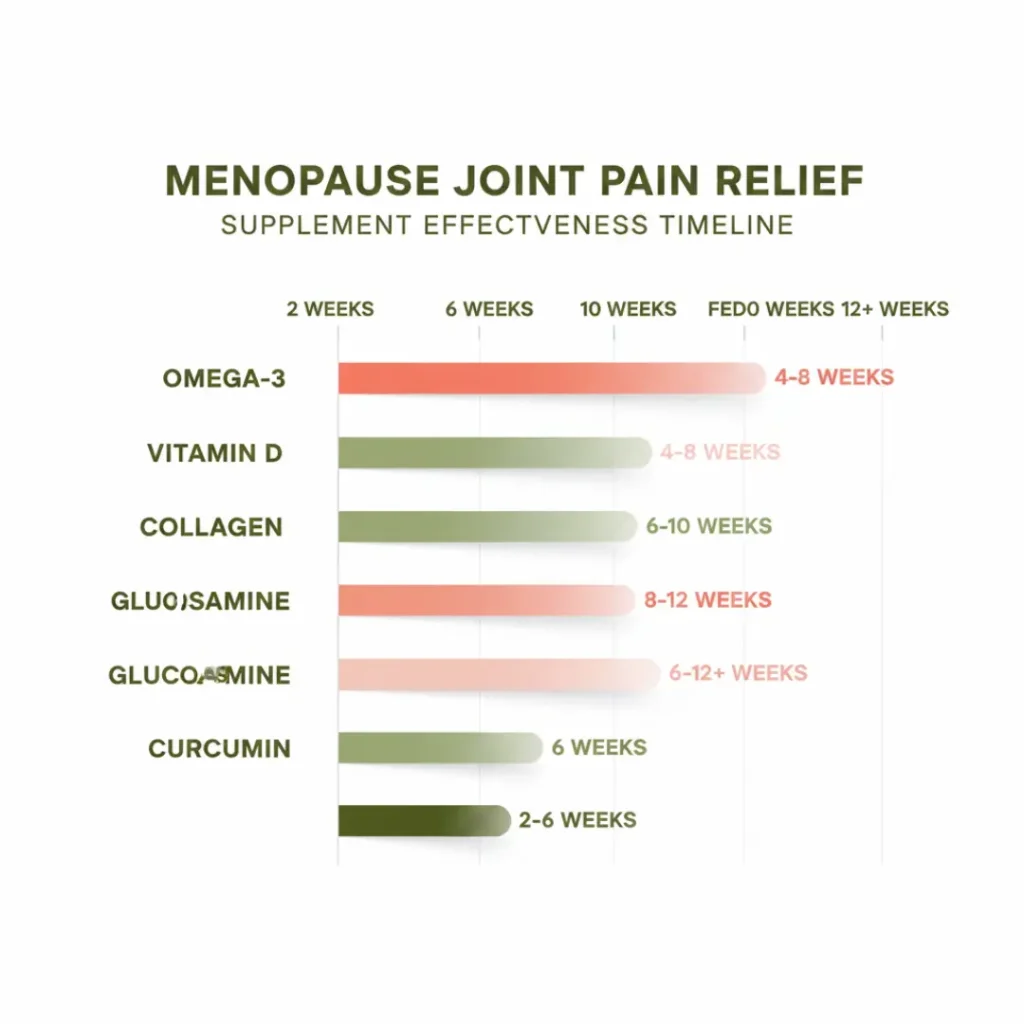
Best Supplements for Menopause Joint Pain Relief: What the Evidence Suggests
Omega-3 Fatty Acids
Omega-3 fatty acids are frequently considered when people are looking for nutritional support for joint health. Research on omega-3s and inflammatory joint conditions is more established than research specifically proving that they relieve menopause-related joint pain, so it is important not to treat them as a guaranteed menopause remedy.
Fatty fish such as salmon provides EPA and DHA through food, while fish-oil and algae-based supplements are other options. If you use blood-thinning medication or have a condition that affects bleeding, discuss omega-3 supplementation with a healthcare professional before adding it.
Vitamin D
Vitamin D is important for bone and muscle health, and correcting a deficiency is different from taking extra vitamin D specifically to treat joint pain. If deficiency is a concern, testing and individualized guidance can help determine whether supplementation is appropriate rather than guessing at a dose.
This distinction is especially useful after 50 because bone health and joint pain can overlap in conversation even though they are not the same problem.
Collagen
Collagen supplements are widely marketed for joint support. Some research has explored collagen peptides and specific collagen preparations for joint symptoms, but results vary by population, product, and condition. That makes collagen an option to evaluate rather than a supplement I would describe as proven to rebuild a painful joint.
If you choose a collagen product, check exactly what type and amount the label provides instead of relying on front-of-package claims.
Glucosamine and Chondroitin
Glucosamine and chondroitin have been studied mainly in osteoarthritis rather than menopause-specific joint pain, and study results have been mixed. If osteoarthritis is part of your diagnosis, these supplements may be worth discussing with your healthcare professional, but menopause alone does not establish that they will help.
Curcumin (Turmeric)
Curcumin, a compound found in turmeric, has been studied for joint symptoms, particularly in osteoarthritis. Some trials and reviews report improvements in pain or function, but that evidence should not be translated into a guarantee that curcumin treats joint pain caused by menopause.
Formulations differ substantially, and curcumin can interact with medications or be unsuitable for some people. Check the product formulation and discuss supplementation with a clinician or pharmacist if you take prescription medicines or have relevant medical conditions.
What About Magnesium and Calcium?
Magnesium and calcium have important roles in normal body function, and calcium is particularly relevant to bone health. That does not make either mineral a direct treatment for menopause joint pain. Whether supplementation is useful depends on diet, health history, medications, and individual nutritional needs.
It is also important not to confuse bone-health recommendations with treatment for painful joints. A supplement can be appropriate for one reason without being an evidence-based treatment for another.
How to Choose Supplements More Safely
When I compare supplements, I pay more attention to the label than to promises on the front of the bottle. Look for clearly stated ingredients and amounts, avoid proprietary blends that make the actual dose difficult to identify, and consider whether the manufacturer uses credible independent quality testing.
More is not automatically better. The appropriate amount depends on the nutrient or ingredient, your diet, medical history, medications, and sometimes laboratory results. Rather than starting several products at once or increasing doses on your own, review your plan with a healthcare professional when there is a meaningful risk of interaction or excess intake.
Supplements Work Best as Part of a Bigger Joint-Health Plan
A supplement cannot replace regular movement, adequate nutrition, sleep, or an evaluation of persistent pain. Gentle activity can help maintain mobility and function when it is appropriate for your condition, while a balanced diet can provide many of the nutrients involved in bone, muscle, and overall health.
If you want the non-supplement side of the plan, our guide to managing menopause joint pain beyond supplements covers the broader approach without duplicating this supplement guide.
Should You Consider HRT for Joint Pain?
Hormone therapy is prescribed for specific menopausal indications after an individualized discussion of benefits and risks. Joint pain alone should not be used to decide whether hormone therapy is appropriate. If you are considering HRT because you also have bothersome menopausal symptoms, discuss your overall symptom pattern, medical history, and treatment options with a qualified healthcare professional.
When to See a Doctor
Do not assume every new joint symptom is caused by menopause. Seek medical advice for severe or sudden pain, significant swelling or redness, a hot joint, pain after an injury, persistent symptoms that interfere with daily life, or symptoms that continue to worsen. Prompt evaluation is also important when joint symptoms occur with fever or other concerning systemic symptoms.
The Most Common Questions Women Ask
How long do I need to take supplements for menopause joint pain?
There is no single timeline that applies to every supplement or every cause of joint pain. How long a supplement is appropriate depends on why you are taking it, whether it is helping, your nutritional status, and its safety for long-term use. Review ongoing supplementation periodically with a healthcare professional rather than assuming it needs to continue indefinitely.
Can I take all these supplements together?
Not necessarily. Supplements can interact with one another, with prescription medicines, or with medical conditions. The safest combination depends on your individual situation, so check with a clinician or pharmacist before combining several products, especially if you take medication regularly.
Are there side effects?
Yes, supplements can cause side effects and interactions. The risks vary by ingredient, dose, formulation, medications, and health conditions. Read the label carefully and seek individualized advice when appropriate rather than assuming a product is risk-free because it is sold as natural.
Do these supplements help other menopause symptoms?
Some nutrients or supplements are studied for more than one health outcome, but evidence for one use does not prove that the same product will relieve hot flashes, fatigue, mood changes, or other menopause symptoms. For the broader supplement picture, see our guide to supplements for perimenopause and beyond.
Wrapping It Up
Supplements for menopause joint pain relief may have a role for some women, but the evidence is not equally strong for every product and not every painful joint is caused by menopause. Start by understanding the likely cause of your symptoms, then evaluate supplements based on evidence, safety, your nutritional needs, and possible interactions.