
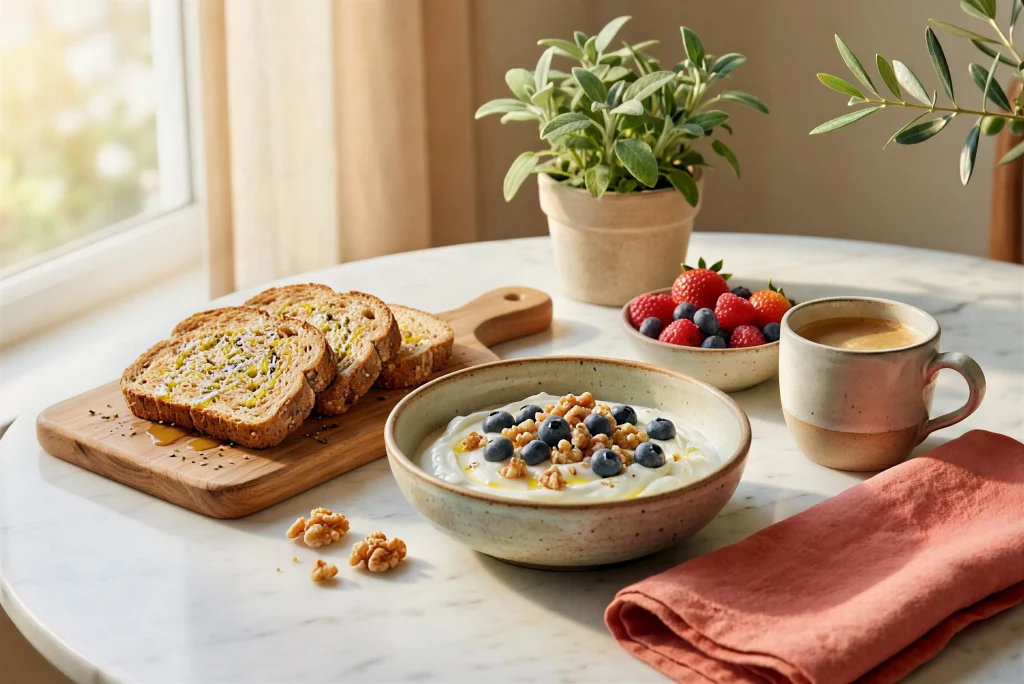
I hope everything is going well for you in California, especially with the recent weather challenges. These days, a healthy and nutritious breakfast can make all the difference. Picture this: It’s 7 AM, and instead of reaching for that same old cereal box, you’re drizzling golden olive oil over creamy Greek yogurt topped with fresh berries and crunchy walnuts. This isn’t just breakfast; it’s your daily investment in a sharper mind, stronger bones, and more vibrant energy. We’ve discovered that what we eat in those first morning hours sets the tone for how we feel all day, and a Mediterranean diet breakfast does something magical for women like us navigating this incredible chapter of life
What Makes a Mediterranean Diet Breakfast Different from What We Grew Up Eating
Remember when breakfast meant sugary cereal or a rushed bagel? We grew up in a different food culture. The Mediterranean approach flips that script entirely.
A true Mediterranean diet breakfast centers around foods that Mediterranean communities have thrived on for centuries: ripe tomatoes, crusty whole-grain bread dipped in olive oil, farm-fresh eggs, creamy yogurt, seasonal fruits, and handfuls of nuts. What I’ve noticed after embracing this style is how much longer I feel satisfied. No mid-morning energy crash, no desperately reaching for another coffee by 10 AM.
The beauty lies in its simplicity. You’re not counting calories or measuring portions obsessively. Instead, you’re choosing nutrient-dense whole foods that happen to taste incredible. Think of it as eating the way our bodies were designed to be nourished, long before processed foods took over our grocery stores.
The Brain-Boosting Power of Mediterranean Mornings
Here’s something that stopped me in my tracks: research shows that women over 65 who ate Mediterranean-style breakfasts experienced significantly less brain shrinkage compared to those eating typical Western breakfasts. Let me say that again—less brain shrinkage. For those of us worried about staying sharp as we age, this matters enormously.
The secret lies in what these breakfasts provide. The antioxidants from berries, omega-3 fatty acids from walnuts and flaxseeds, and B vitamins from whole grains all work together to protect our brain cells. We’re not just feeding our bodies; we’re actively supporting our cognitive health with every bite.
I’ve personally felt the difference in my mental clarity. That afternoon brain fog that used to settle in? It’s become so much less frequent since I switched to starting my day with foods like oatmeal topped with nuts and fruit, or eggs with sautéed vegetables. Your experience might differ, but the science backs up what many of us are feeling.
What You’ll Actually Eat for Breakfast on the Mediterranean Diet

Let’s get practical because that’s what we really want to know, right? Here’s what typically lands on a Mediterranean breakfast plate:
Whole grains: Steel-cut oatmeal, whole grain toast, or whole wheat English muffins form your foundation
Protein sources: Greek yogurt, eggs prepared various ways, or occasionally smoked salmon, give you staying power
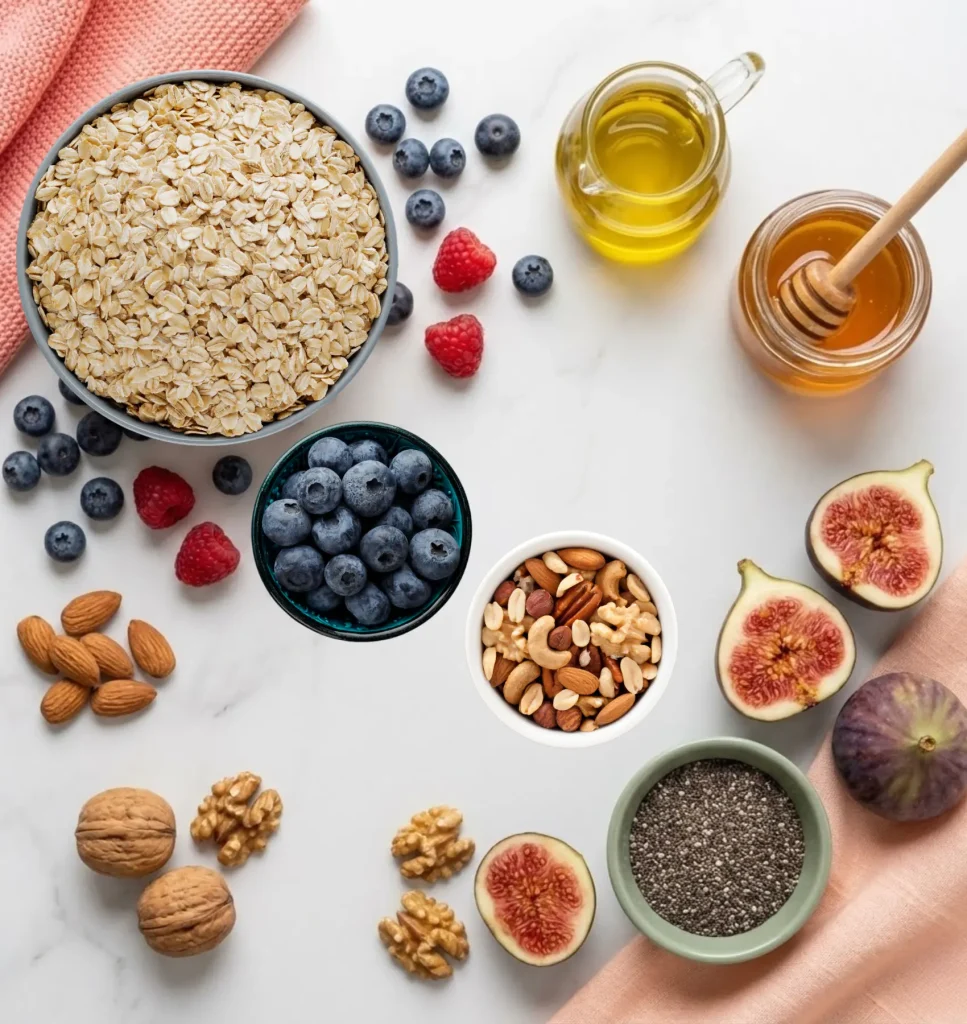
Healthy fats: Extra virgin olive oil drizzled on toast or stirred into oatmeal, along with nuts like almonds, walnuts, and pistachios
Fresh produce: Berries, sliced tomatoes, spinach, figs, or whatever fruits and vegetables are in season
Flavor enhancers: Honey for a touch of sweetness, feta cheese crumbled over eggs, fresh herbs, and cinnamon
One of my favorite go-to breakfasts takes maybe 10 minutes: I scramble two eggs in olive oil with cherry tomatoes and spinach, serve it alongside whole-grain toast, and add a small bowl of berries. Simple, satisfying, and it keeps me energized through my busiest morning hours. Sound doable?
Making the Mediterranean Breakfast Work for Your Real Life
I know what you’re thinking: “This sounds lovely, but I’m not spending an hour in the kitchen every morning.” Neither am I. The key is having a rotation of simple options that work with your schedule.
For busy mornings: Overnight oats become your best friend. Mix rolled oats with almond milk, chia seeds, a drizzle of olive oil (trust me on this), and your favorite nuts the night before. In the morning, top with fresh berries and you’re out the door in three minutes.
For leisurely weekends: This is when I enjoy making a proper vegetable frittata or the Greek-style eggs with tomatoes, olives, and feta that takes just 15 minutes. Pair it with whole-grain bread, and you’ve got a breakfast worth savoring.
The prep-ahead approach: Muffin-tin omelets with feta and peppers can be made on Sunday and reheated throughout the week. Many women in our community swear by this method for maintaining healthy habits when life gets hectic.
The Mediterranean way isn’t about perfection. It’s about consistently choosing foods that love you back. Some mornings will be simpler than others, and that’s completely okay.
Yes, Oatmeal and Eggs Are Absolutely Welcome Here
The Oatmeal Question
Oatmeal fits beautifully into a Mediterranean diet breakfast because it’s a whole grain packed with fiber and essential nutrients. The Mediterranean approach just puts a twist on how you prepare it. Instead of loading it with brown sugar, try:
- Cooking your oats in almond milk with a touch of cinnamon
- Stirring in a teaspoon of olive oil for healthy fats and creaminess
- Topped with fresh berries, chopped almonds or walnuts, and a drizzle of honey
- Getting adventurous with savory oatmeal cooked in vegetable broth with herbs
What I love about Mediterranean-style oatmeal is how it keeps my blood sugar stable all morning long. No spike and crash, just steady, reliable energy.
The Egg Situation
Eggs are a Mediterranean staple, but you might wonder how many are appropriate. Most nutrition experts align on up to seven eggs per week are safe for most people. The traditional Mediterranean diet pyramid suggests 0-4 eggs weekly, often as an alternative to meat or fish.
Here’s my take: if you’re generally healthy, an egg a day can absolutely be part of your breakfast rotation. The key is balancing them with plenty of vegetables, using olive oil for cooking instead of butter, and enjoying them alongside other Mediterranean foods. Always check with your doctor if you have specific cholesterol concerns, because your individual health needs matter most.
I personally enjoy eggs three to four times a week, prepared different ways—sometimes scrambled with vegetables, other times as part of a frittata, occasionally poached over sautéed greens. The variety keeps it interesting.
Frequently Asked Questions
Your Mediterranean Morning Starts Tomorrow
The most remarkable thing about adopting a Mediterranean diet breakfast isn’t just how it supports our health as we age; it’s how genuinely enjoyable it becomes. We’re not depriving ourselves or choking down foods we hate in the name of wellness. We’re rediscovering the pleasure of real food prepared simply.
Start with one small change this week. Maybe it’s swapping your usual breakfast for Greek yogurt with berries and walnuts tomorrow. Perhaps it’s trying overnight oats for the first time, or scrambling your eggs in olive oil instead of butter. Each small step builds on the last, and before you know it, these Mediterranean mornings become your new normal.
Remember, there’s no perfection required here. This is about progress, not perfection. Some mornings you’ll nail it with a beautiful, colorful Mediterranean spread. Other mornings might be simpler. Both count. Both nourish you. Your body will thank you for any move toward more whole foods, healthy fats, and fresh ingredients.
As always, discuss any significant dietary changes with your healthcare provider, especially if you have existing health conditions or take medications that might be affected by your food choices. Your doctor knows your individual health picture and can provide guidance tailored specifically to you.
What’s one Mediterranean breakfast idea that sounds appealing enough to try this week? I’d genuinely love to hear what speaks to you, share your thoughts in the comments below.