
I’ve had thousands of conversations at the pharmacy counter over the years. Women come in for joint prescriptions, skin creams, sleep aids, antacids, antidepressants, sometimes all in the same visit. And what strikes me every single time is how rarely anyone connects the dots between these complaints. They may have completely different causes, but digestion, diet, medications, sleep, stress, and hormonal change can overlap in ways worth paying attention to.
That’s why gut health and inflammation after 50 deserves a closer look. Not because the gut explains every ache, foggy afternoon, skin flare, or digestive change, but because the gut microbiome and intestinal barrier interact with immune and metabolic signaling throughout the body.
Gut health and inflammation after 50 can sound technical until you bring it back to everyday life: bloating that feels new, bowel habits that have shifted, foods that suddenly seem harder to tolerate, or questions about whether menopause itself changes digestion. These symptoms are not a diagnosis of “gut inflammation,” and persistent or significant symptoms deserve medical evaluation.
I want to talk about this connection plainly, the way I’d explain it across the pharmacy counter on a Tuesday afternoon. No fear. No promise that one food or supplement will fix everything. Just a clearer picture of what research supports, what is still uncertain, and what you can realistically do.
Why menopause can change what happens in your gut
One thing I notice repeatedly with women coming in around perimenopause and beyond is that digestive complaints can shift. Some women notice more bloating, irregularity, or uncomfortable fullness. Others notice very little change. That variation matters because menopause is only one part of the picture.
Estrogen signaling appears to influence intestinal barrier function, immune activity, and the gut microbiome. Human studies also report menopause-associated differences in microbial composition and estrogen-related microbial functions. But the science is more nuanced than a simple “estrogen drops, therefore the gut becomes leaky” pathway, and the findings do not mean every postmenopausal woman develops impaired gut barrier function.
Researchers are also studying how gut microbes metabolize compounds involved in estrogen pathways. This is an important area of research, but associations between menopause and microbiome changes do not prove that a particular gut intervention can rebalance hormones.
What this means practically is that gut health and inflammation after 50 can be influenced by hormonal change, but they are not determined by hormones alone. Diet, medications, physical activity, sleep, stress, medical conditions, and individual microbiome differences all matter too.
What we know about the gut-joint connection
One of the questions I hear often from women in their late fifties and sixties is some version of: I don’t understand why my joints hurt so much now. The important answer is that joint pain has many possible causes, including osteoarthritis, injury, inflammatory arthritis, autoimmune disease, changes in activity, and other medical conditions. You cannot tell the cause from diet or digestive symptoms alone.
There is real scientific interest in the gut-joint axis. Researchers are studying how gut microbes, microbial products, and immune signaling may interact with inflammatory and autoimmune joint disease. That is very different from saying that ordinary knee or hip pain is caused by a “leaky gut.”
A woman can have joint discomfort and a low-fiber diet at the same time without one proving the other caused it. What the overlap can do is open a useful conversation about the whole pattern: food quality, activity, weight changes, medications, digestive symptoms, and whether the joint pain needs its own evaluation.

A gentle reminder here: significant, persistent, swollen, hot, or suddenly painful joints deserve medical assessment. Supporting a nutritious diet can complement appropriate joint care; it does not replace diagnosis or treatment.
Brain fog, mood, and the gut-brain axis
This one surprises women the most. The gut and brain really do communicate through neural, immune, endocrine, and metabolic pathways. The vagus nerve is one part of that two-way system, and gut microbes can produce or influence metabolites that participate in signaling.
What we should not do is turn that fascinating biology into a diagnosis. Brain fog during the menopause transition can be influenced by sleep disruption, hot flashes, mood, medications, metabolic health, stress, and hormonal change, among other factors. Gut-brain research may eventually clarify additional pathways, but it does not show that gut dysfunction is the cause of brain fog in an individual woman.
You may have heard that most of the body’s serotonin is produced in the gastrointestinal tract. That’s true in a broad physiological sense, but peripheral serotonin does not simply cross the blood-brain barrier and become brain serotonin. The gut-brain relationship is much more complex than “more gut serotonin equals better mood.”
The practical takeaway is quieter: a varied diet with adequate fiber, protein, healthy fats, and micronutrients supports overall health, including the systems involved in gut and brain function. That’s a better reason to eat well than promising a food will clear brain fog.
Inflammation after menopause: what symptoms can and cannot tell you
Inflammation gets talked about so loosely online that almost any symptom can end up labeled “inflammation.” Fatigue, achiness, skin changes, poor sleep, and digestive discomfort can occur alongside inflammatory conditions, but they are nonspecific symptoms. They can also have many non-inflammatory causes.
Menopause is associated with changes in body composition, metabolic health, immune signaling, and the gut microbiome. Animal and human research is helping scientists understand how these systems interact, but an association in a study does not mean the gut is driving every symptom a woman notices after 50.

The same caution applies to the skin. Researchers are exploring a gut-skin axis and associations between microbial and immune signaling and some inflammatory skin conditions. That research is interesting, but dry or reactive skin, rosacea, or eczema should not automatically be attributed to intestinal permeability.
Practical ways to support your gut every day
This is the part women actually want. Keep it simple enough to do on an ordinary Tuesday.
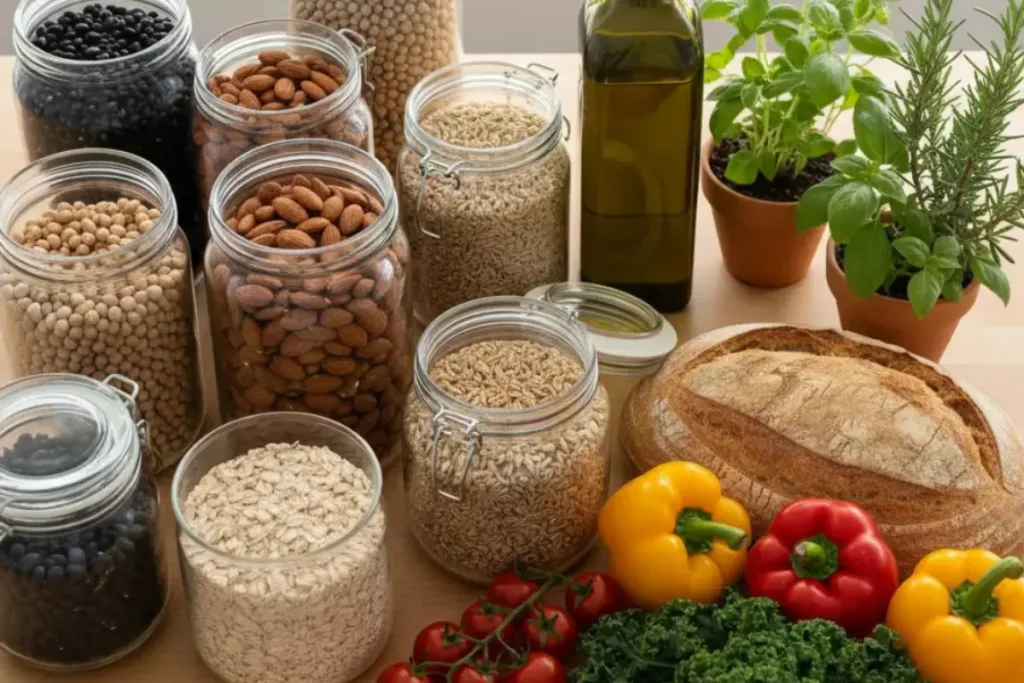
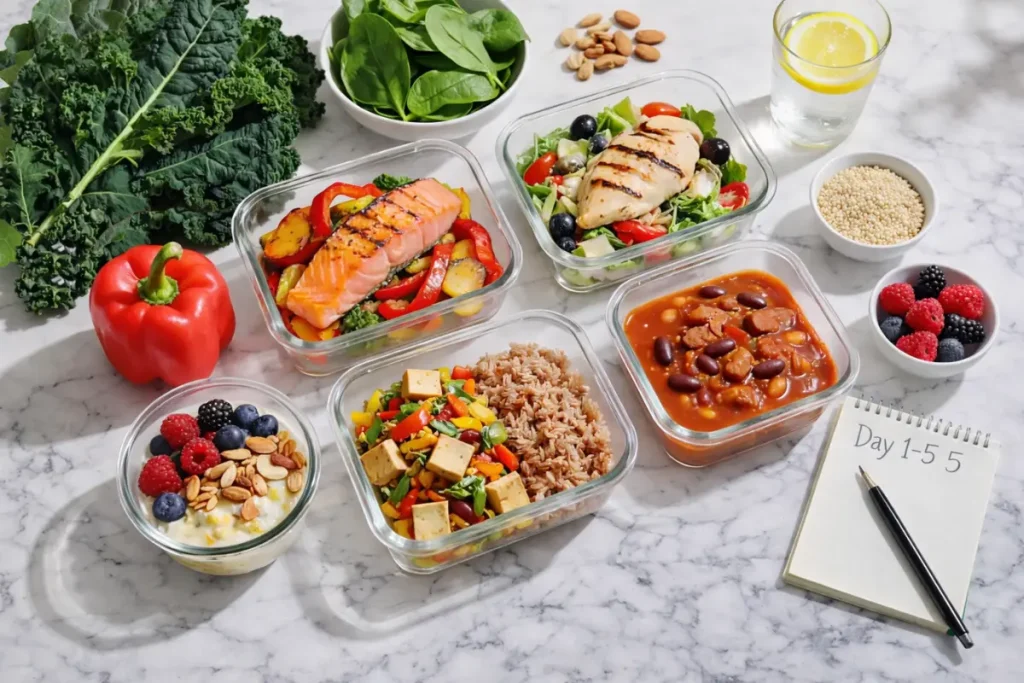
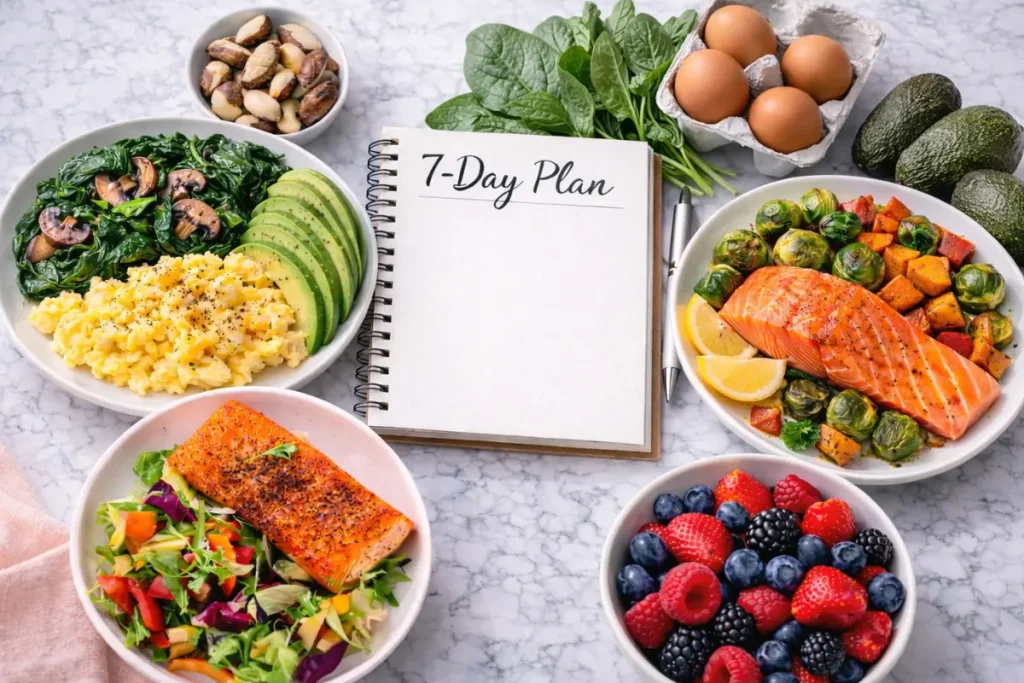
Build fiber gradually and aim for variety. Vegetables, fruit, legumes, nuts, seeds, and whole grains provide different fibers and plant compounds that interact with the gut microbiome. Increase fiber gradually if you’re not used to eating much of it, because a sudden jump can worsen bloating for some people. For the broader food pattern, what to eat after 50 is the Pillar guide I recommend starting with.
Include fermented foods if you tolerate them. Yogurt with live cultures, kefir, kimchi, and other fermented foods can add variety to the diet. Human trials suggest fermented-food-rich diets can affect microbiome diversity and immune markers, but responses vary and fermented foods are not a treatment for every digestive problem. If you’re considering supplements instead, our probiotics for menopause guide explains that narrower topic.
Hydration matters, especially for bowel regularity. Fluid needs vary with climate, activity, diet, medications, and health conditions. Rather than treating water as a cure for intestinal permeability, think of adequate hydration as one part of normal digestive function.
Sleep, movement, and stress deserve a place in the gut conversation. The gut-brain axis is bidirectional, and chronic stress and poor sleep can influence digestive symptoms. A walk, a consistent sleep schedule, or a few quiet minutes can be useful habits without pretending they “repair” the gut lining.
Be careful with restrictive protocols. If persistent digestive symptoms make you want to eliminate multiple food groups, first consider whether you need a diagnosis or dietitian support. Lonage’s GAPS diet protocol guide explains what that restrictive approach includes and, importantly, where its direct clinical evidence is limited.
Pharmacy micro insights
1. Probiotic timing depends on the product.
Some probiotic strains survive gastrointestinal conditions differently depending on whether they are taken with food, before food, or in a specific formulation. Follow the product instructions and, if you’re taking a probiotic alongside antibiotics, ask your pharmacist or clinician about timing because the answer can depend on the antibiotic and probiotic strain.
2. L-glutamine is not a universal gut-lining prescription.
Glutamine has been studied in specific clinical populations and in research on intestinal barrier function, but the findings do not establish one self-treatment dose or duration for every woman over 50. If you’re considering it for persistent gastrointestinal symptoms, discuss the reason, dose, and your medical history with a qualified clinician.
3. Regular NSAID use deserves attention.
Nonsteroidal anti-inflammatory drugs such as ibuprofen and naproxen can injure the gastrointestinal tract, including the small bowel, particularly with repeated use. That does not mean joint pain originates in the gut. If you rely on NSAIDs regularly, discuss the benefits, risks, dose, and alternatives with your doctor or pharmacist rather than stopping prescribed treatment on your own.
Questions women ask me at the pharmacy
Can I take a probiotic while I’m on antibiotics?
Some probiotics are used during antibiotic treatment, but the best timing depends on the antibiotic, probiotic strain, and product. Separating doses is often recommended for bacterial probiotics, but there is no single rule that fits every combination. Follow the product directions and ask your pharmacist or clinician if you are unsure.
Is there a supplement specifically for gut lining support after menopause?
There is no single supplement proven to repair the gut lining in all postmenopausal women. Ingredients such as glutamine, zinc compounds, and probiotics have been studied in particular populations, but benefits depend on the condition and product. Diet, medical history, medications, and the cause of symptoms should guide whether a supplement is appropriate.
My inflammation markers are normal, but I still have symptoms. What does that mean?
Normal CRP or ESR results do not explain every possible cause of fatigue, joint discomfort, digestive symptoms, or skin changes, but symptoms alone do not prove hidden inflammation either. Persistent or worsening symptoms deserve evaluation based on the full clinical picture rather than assuming the gut is the cause.
Can stress affect my gut after menopause?
Yes. Stress can influence gut-brain signaling, motility, sensitivity, and digestive symptoms. The effect varies from person to person, and stress is only one factor among diet, medications, sleep, medical conditions, and hormonal changes.
What’s a practical dietary change for gut health after 50?
Start with a sustainable change such as gradually increasing the variety of fiber-rich plant foods you tolerate. Fermented foods can also fit if you enjoy and tolerate them. There is no single food target that guarantees a more diverse microbiome or treats inflammation, so consistency and overall dietary quality matter more than chasing one number.
A quieter kind of change
Supporting your gut after 50 doesn’t require a dramatic reinvention of how you eat or live. It asks for consistency more than perfection. A little more fiber this week. Yogurt or another fermented food if you tolerate it. A walk that doubles as stress relief. Enough fluid to support normal digestion.
Gut health and inflammation after 50 are connected through a complicated network of microbial, immune, metabolic, and hormonal pathways. Understanding that connection can help you make sensible choices without turning the gut into an explanation for every symptom.
As always, these are general observations and educational information, not a replacement for your doctor’s guidance. If digestive symptoms, unexplained weight loss, blood in the stool, persistent pain, fever, anemia, or major changes in bowel habits are present, seek medical assessment rather than trying to treat the problem with diet alone.