
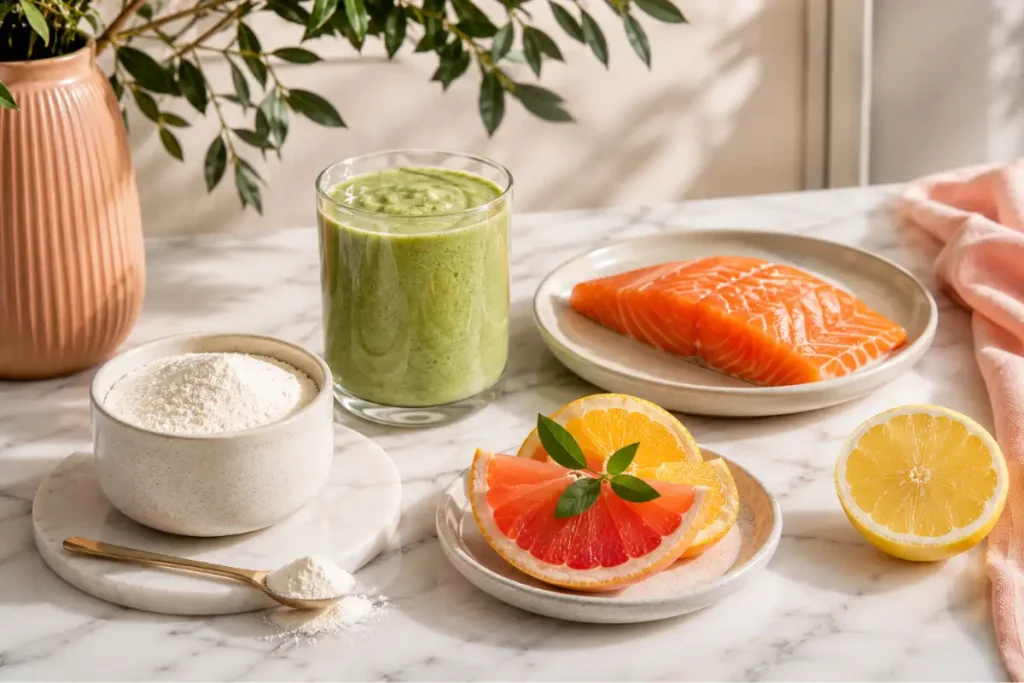
I remember standing in my kitchen one morning, coffee in hand, catching my reflection in the window, and thinking: When did my hands start looking like that? The slight crepe texture on my forearms, the softness around my jaw that had not been there a year before. None of it was alarming, but it made me curious about what was actually changing beneath the surface.
That is when I started paying closer attention to collagen for women over 50, not as a promise to turn back time, but as part of understanding skin, bones, joints, nutrition, and healthy aging after menopause. The more I learned, the clearer one thing became: collagen matters, but the story is more nuanced than the supplement aisle makes it sound.
For many of us, our 50s are the first time in decades when we begin putting our own health higher on the list. Understanding what our bodies need now feels less like vanity and more like long-overdue self-care.
Why collagen changes after menopause
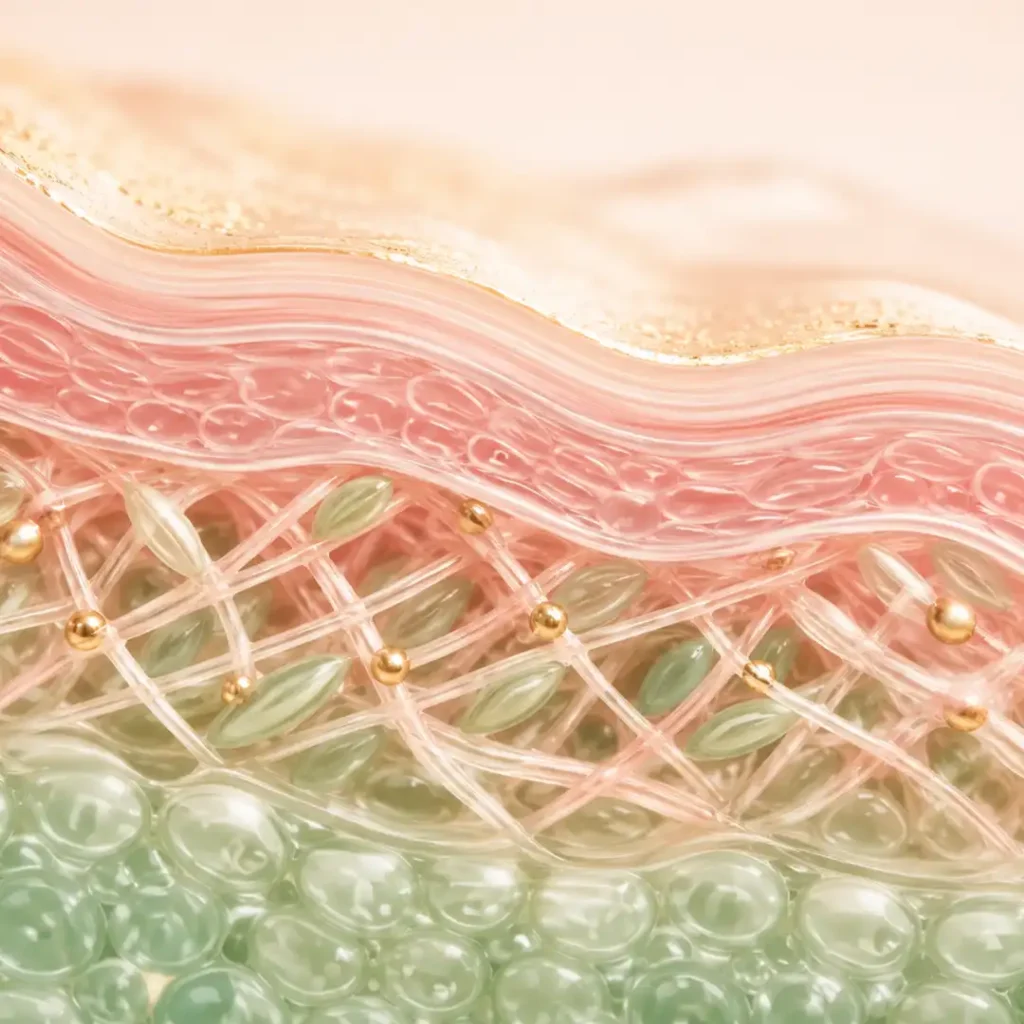
Collagen is one of the main structural proteins in skin and connective tissue. Estrogen also influences skin biology, including collagen content. As estrogen levels decline through menopause, skin can become thinner, drier, and less elastic, and collagen content can decline more quickly during the postmenopausal years.
I still like the mattress-spring analogy: collagen helps give tissues structure and resilience. But menopause is not a switch that suddenly turns collagen production off. Aging, sun exposure, smoking, nutrition, genetics, and other health factors all contribute to what we see and feel over time.
Research has described substantial skin-collagen loss across the years after menopause, but that does not mean every woman loses collagen at the same rate or experiences the same changes. If you want to explore the hormone-specific side of this story in more detail, I have separated it into our guide to collagen changes during menopause.
What collagen loss can look like after 50
Most conversations about collagen begin with wrinkles, but collagen is not only a beauty topic. It is part of skin, cartilage, bone, tendons, ligaments, and other connective tissues. That does not mean every stiff joint, thinning hair, or change in your skin is caused by “low collagen.” Symptoms can have many causes, and persistent or concerning changes deserve proper medical evaluation.
Skin, joints, and bones: three different collagen stories
Skin: With age and menopause, you may notice more dryness, fine lines, or less elasticity. UV exposure is particularly important because photoaging damages collagen and other structures in the skin.
Joints: Collagen is a component of cartilage, but morning stiffness or joint pain should not automatically be blamed on collagen loss. Osteoarthritis, injury, inflammation, activity changes, and other conditions can all contribute.
Bones: Collagen forms part of the organic framework of bone, while minerals provide much of its rigidity. Bone health after menopause is therefore much bigger than collagen alone and includes adequate nutrition, resistance and weight-bearing activity when appropriate, and assessment of osteoporosis risk when indicated.
Do collagen supplements for women over 50 actually work?
This is where I became much more cautious about simple yes-or-no answers. Some randomized trials and meta-analyses have reported improvements in measures such as skin hydration and elasticity with oral hydrolyzed collagen. Other analyses have raised important questions about study quality, industry funding, and how confidently those results can be generalized.
There is also research on collagen-derived supplements for osteoarthritis symptoms, and some trials have examined specific collagen peptides in postmenopausal women with reduced bone mineral density. Those findings are interesting, but they do not turn collagen into a treatment for every joint problem, osteoporosis, or skin aging.
So my practical view is simple: collagen supplements may be worth considering for some women, but expectations should stay realistic. Product type, dose, study population, outcome, and duration vary across trials. If supplement selection is what brought you here, use our dedicated collagen supplement guide for women over 50 rather than treating this overview as a product-shopping list.
If you have allergies, kidney disease, dietary restrictions, take medications, or are managing a medical condition, it is sensible to discuss supplements with a qualified healthcare professional before making them part of your routine.
Food still matters more than collagen marketing
Your body makes collagen from amino acids and requires nutrients such as vitamin C for normal collagen formation. That is one reason I prefer to start with the whole diet rather than a powder.
Protein-rich foods can provide amino acids your body uses to build and maintain tissues. Vitamin C comes from foods such as peppers, citrus, kiwi, strawberries, and broccoli. Zinc and copper also participate in normal connective-tissue biology and can be obtained from a varied diet.
Bone broth and gelatin can contain collagen-derived proteins, but I do not think of them as miracle foods. They can simply be part of an enjoyable eating pattern. If you would rather build your approach around food first, see our simple collagen-supportive foods guide.

What about marine, bovine, and vegan collagen?
Marine and bovine collagen come from different animal sources, and individual products can differ in collagen type, peptide profile, dose, added ingredients, allergen considerations, and quality testing. I would not choose one simply because a label claims it is “better absorbed” or uniquely targeted to skin, hair, or joints. Those marketing distinctions are often much cleaner than the evidence.
And a useful clarification for plant-based readers: plants do not naturally contain animal collagen. Products marketed as vegan collagen boosters usually provide nutrients or ingredients intended to support the body’s own collagen-related processes rather than supplying conventional animal-derived collagen itself. We explain those options separately in our guide to vegan collagen boosters.
Collagen and gut health: where the evidence gets overhyped
I have seen plenty of claims that collagen “heals the gut,” repairs a leaky gut, or is essential for absorbing collagen properly. Those statements go further than the evidence allows. Digestion normally breaks dietary proteins and peptides down so they can be absorbed, and gut health is influenced by a much wider set of factors than collagen intake.
That does not make the topic uninteresting. Researchers continue to study collagen peptides and gastrointestinal biology, but early or indirect findings should not be presented as established treatment. For the more focused discussion, read our evidence-focused guide to collagen and gut health.
Daily habits that help protect skin and connective tissue after 50
Protect your skin from UV exposure. Sun protection is one of the most practical ways to reduce photoaging. Broad-spectrum sunscreen, shade, protective clothing, and avoiding unnecessary intense sun exposure all matter.
Eat enough high-quality food, including protein. Collagen does not exist in isolation from the rest of your nutrition. Your overall dietary pattern matters for muscle, bone, skin, and general health.
Keep moving and include resistance exercise when appropriate. Strength training supports muscle, bone, physical function, and healthy aging. I would choose it for those proven benefits rather than promising that a particular workout will visibly rebuild your skin collagen.
Protect sleep and recovery. Sleep is part of overall health and recovery, but there is no need to chase a perfect number of hours specifically for collagen. Aim for a sleep routine that supports your health and discuss persistent sleep problems with a healthcare professional.
Avoid smoking. Smoking accelerates skin aging and harms health far beyond its effects on appearance. If you smoke, getting support to quit is a much higher-value health decision than adding another beauty supplement.
A practical way to decide what comes next
I find it easier to separate everyday care from optional extras. Before buying anything, decide what you want help with and whether a supplement is even the right next step.
| Your priority | Start with | Keep in mind |
|---|---|---|
Everyday skin care | Sun protection, gentle cleansing and a moisturizer that suits your skin | A collagen powder does not replace a workable skin-care routine |
Food-first support | A varied diet with protein-rich foods and sources of vitamin C | Broth or gelatin is optional; no single food is a complete solution |
Considering a supplement | A clear goal, ingredient and allergen checks, and a realistic budget | Benefits are uncertain; more expensive does not establish better results |
Persistent pain or concerning changes | Individual assessment by an appropriate healthcare professional | Do not assume the cause is low collagen or use a supplement to delay evaluation |
For the skin-care part of that foundation, our skin care guide for women over 50 puts collagen in the wider context of daily care.
How I think about collagen for women over 50 now
I no longer think of collagen as something we need to “restore” to our younger selves. I think of it as one part of a much larger healthy-aging picture. Menopause changes skin biology. Aging changes connective tissues. Nutrition, sun exposure, movement, smoking, sleep, medical conditions, and genetics all add their own layers.
A collagen supplement can be an optional piece of that picture, not the foundation. The foundation is still the less glamorous work: eating well, staying active, protecting your skin, caring for your bones, and getting appropriate medical help when symptoms need more than a wellness routine.
Your questions answered: collagen for women over 50
Does collagen for women over 50 help after menopause?
Collagen supplements may help some outcomes, such as skin hydration or elasticity, but the evidence is mixed and study quality varies. Menopause-related skin and connective-tissue changes are influenced by estrogen decline as well as aging and other health factors, so collagen should not be viewed as a complete solution.
How long does collagen for women over 50 take to work?
There is no single guaranteed timeline. Clinical trials use different collagen products, doses, durations, and outcomes. If you choose to try a supplement, evaluate it according to the product, your goal, and appropriate professional guidance rather than expecting a fixed result by a specific week.
What is the best type of collagen for women over 50?
There is no universally best collagen for every woman or every goal. Hydrolyzed collagen peptides are commonly used in clinical research, but source, dose, quality, allergens, added ingredients, and the outcome being studied all matter.
Should collagen for women over 50 be taken with vitamin C?
Vitamin C is required for normal collagen formation in the body. You do not necessarily need a special collagen-and-vitamin-C supplement, because vitamin C can also come from a varied diet that includes foods such as peppers, citrus, kiwi, strawberries, and broccoli.
Is collagen for women over 50 safe?
Collagen supplements are generally well tolerated in many studies, but individual products and personal health circumstances differ. Check the source for allergens and discuss supplementation with a healthcare professional if you have a medical condition, kidney concerns, dietary restrictions, or take medications.
Can collagen reverse skin aging after 50?
No supplement has been shown to reverse aging. Some studies report improvements in specific skin measures with oral collagen, while other analyses raise concerns about study quality and industry funding. Sun protection, overall nutrition, and other healthy habits remain important regardless of whether you use collagen.
Collagen for women over 50 is worth understanding, but it does not need to become another source of pressure. Start with the fundamentals, stay skeptical of dramatic promises, and use supplements only when they make sense for your goals and health. That approach may be less exciting than a miracle powder, but it is the one I trust most.