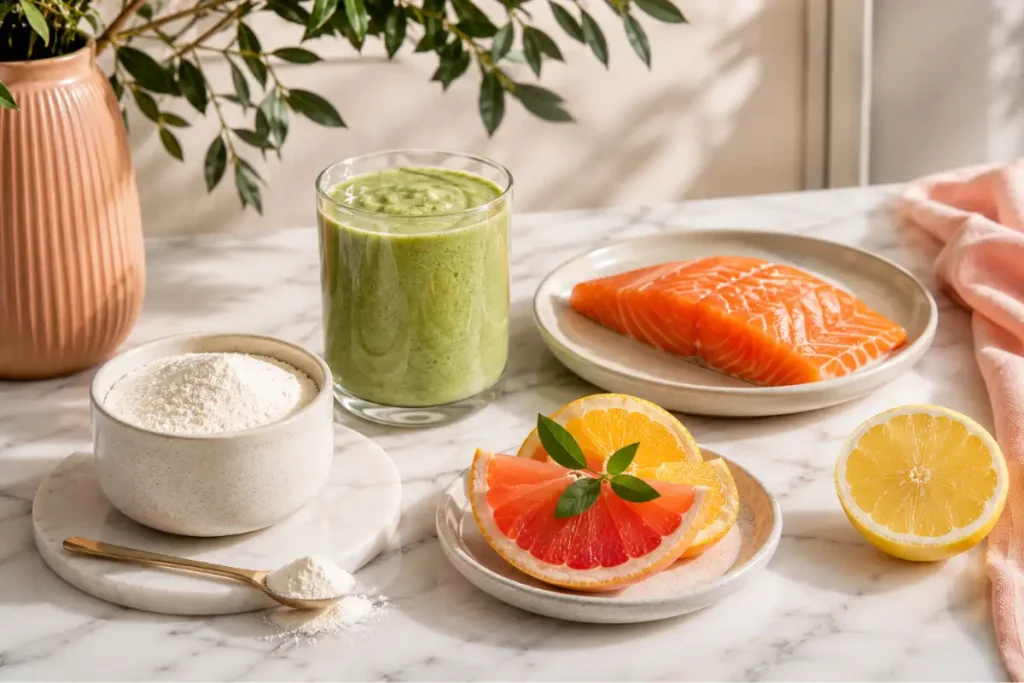

I used to think collagen was one of those wellness buzzwords that sounded glamorous and a little mysterious. Then I started paying closer attention to what actually helps the body make and maintain it. The truth is much less dramatic and much more useful. Simple foods collagen support starts with everyday meals that provide protein, vitamin C, and other nutrients involved in normal collagen formation. They are not magic, but they are practical, nourishing, and much easier to build into real life after 50.
Collagen is a structural protein found in skin and connective tissues, but food is only one part of the larger picture. Aging, menopause, sun exposure, activity, smoking, genetics, and overall health all matter too. If you want the broader overview before focusing on your plate, our collagen guide for women over 50 explains that bigger picture.
Why food matters for normal collagen formation after 50
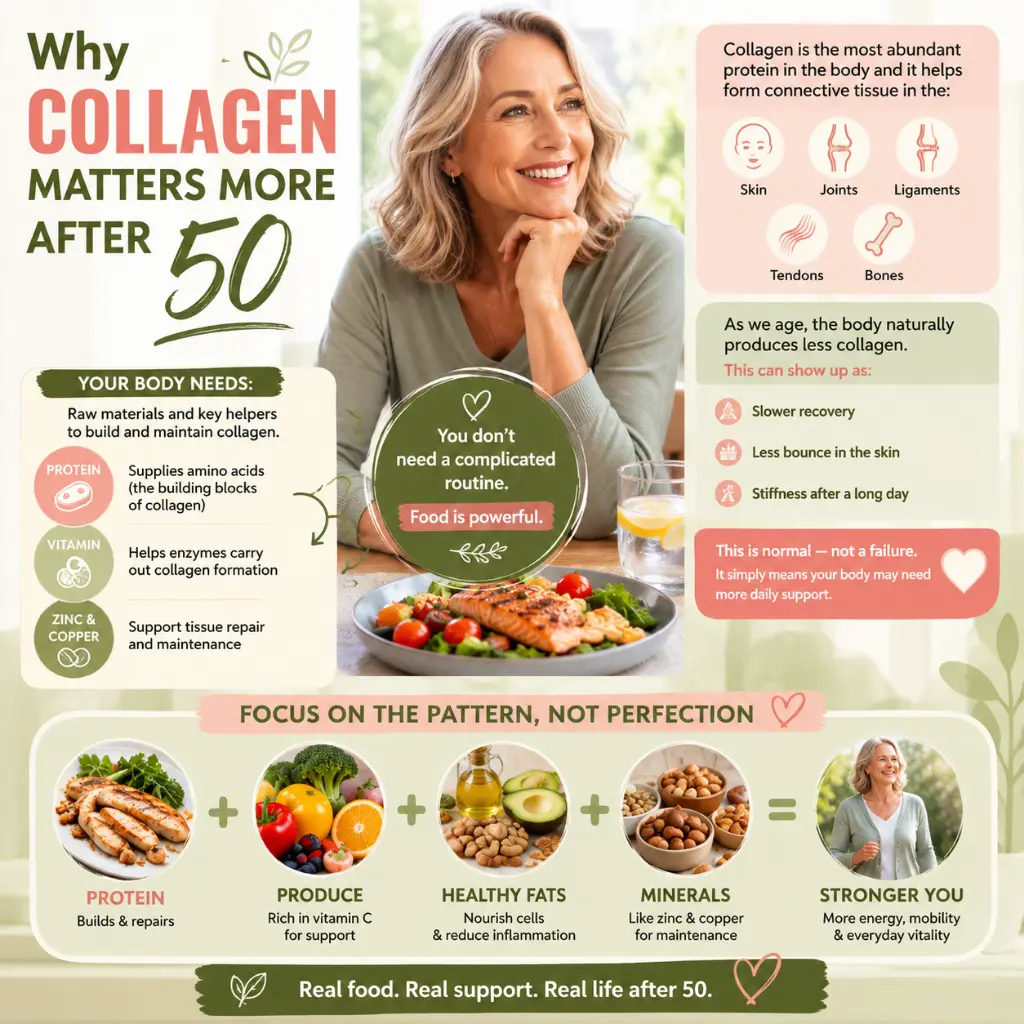
Your body makes collagen using amino acids from protein, and vitamin C is required for normal collagen formation. Zinc and copper also participate in normal tissue biology. That does not mean eating one particular food will rebuild collagen, erase skin changes, or fix joint stiffness. It means a varied diet can provide the raw materials your body uses to maintain tissues.
That is why I prefer to think in meal patterns rather than miracle ingredients. Protein-rich foods, vitamin-C-rich produce, and a varied mix of whole foods make a more sensible foundation than chasing a single trendy product. Healthy fats can absolutely belong on that plate too, but I think of them as part of a satisfying balanced diet rather than as a direct collagen-building ingredient.
Easy meals with nutrients involved in collagen formation
If you are looking for simple foods to support collagen, the easiest approach is to think in meals rather than isolated ingredients. Pair a useful protein source with colorful produce, especially foods rich in vitamin C, then round out the meal with foods you enjoy and can realistically keep eating.
Here are three easy recipes that fit real life and do not require a culinary degree.
1. Protein packed breakfast bowl
Start with Greek yogurt or cottage cheese, then add berries, chopped kiwi, pumpkin seeds, and a few walnuts. This is quick, practical, and gives you protein plus vitamin C and minerals. It also feels a lot more doable than a complicated smoothie when mornings are busy.
2. Chicken and pepper lunch plate
Roast or grill chicken, add sliced bell peppers, a handful of greens, and a side of quinoa or brown rice. This meal checks a lot of boxes at once. You get protein, vitamin C, fiber, and a satisfying mix of textures. It is simple enough for a weekday lunch and grounding enough for a slower weekend meal.
3. Salmon and broccoli dinner tray
Place salmon on a sheet pan with broccoli, cherry tomatoes, and a drizzle of olive oil. Roast until everything is tender and serve with a small portion of potatoes or brown rice. This is an easy dinner that feels a little special without being fussy, and it brings together protein, healthy fats, and produce that support overall nourishment.
Bone broth can also be a lovely addition to this routine, especially in soups or stews. It can contain collagen-derived proteins, although the amount varies with ingredients and preparation. I think of it as a comforting food rather than a treatment or a guaranteed way to change your skin or joints.
4. Simple bone broth at home
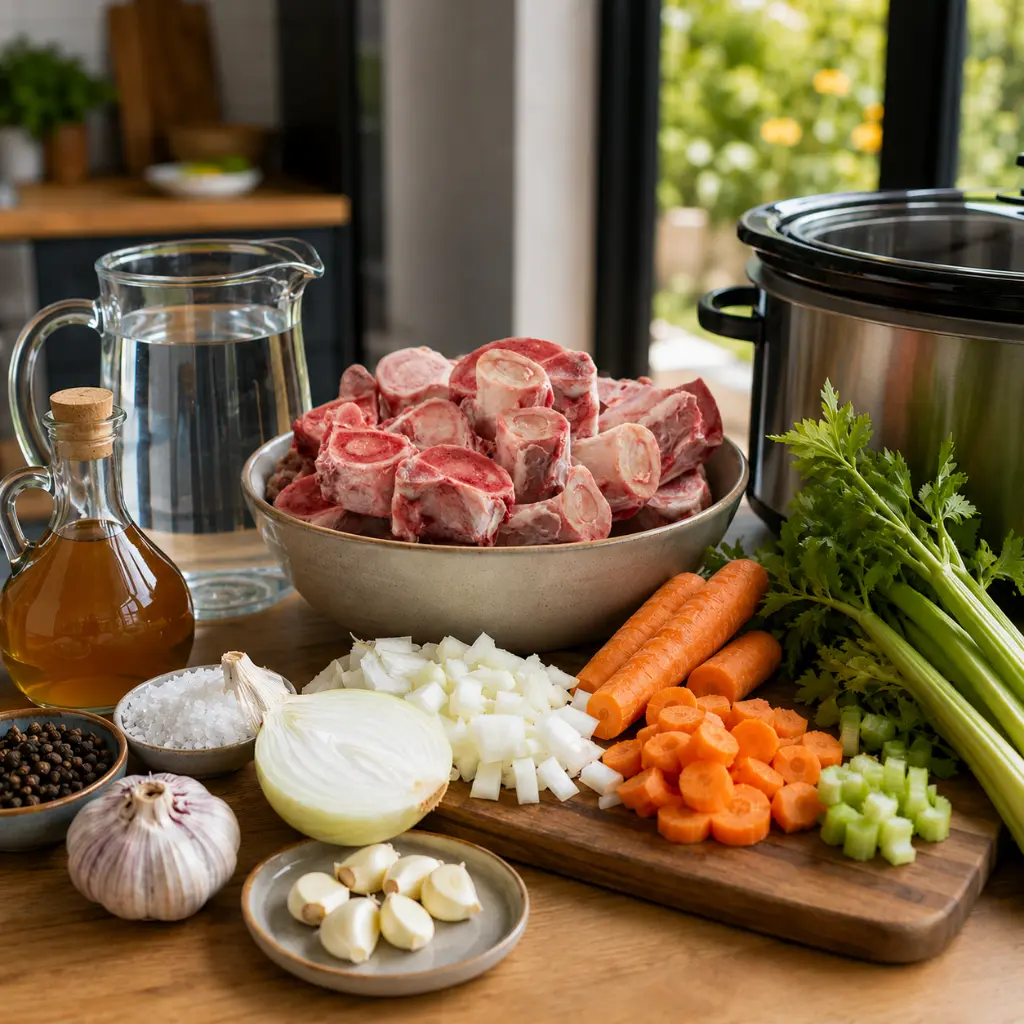
If you want to try making bone broth, it is easier than most people think. The slow cooker does most of the work for you.
Start with 2 to 3 pounds of bones. Chicken bones, beef bones, or a mix all work well. Add a chopped onion, a few carrots, a few celery stalks, and 3 or 4 smashed garlic cloves. Pour in a tablespoon of apple cider vinegar, a teaspoon of sea salt, and a few peppercorns. Cover everything with water and let it simmer on low for 8 to 12 hours. A slow cooker makes this nearly hands-off.
Skim off any foam that rises during the first hour, then strain the broth and let it cool. You can sip it warm on its own, use it as a soup base, or add it to grains and stews. It keeps in the fridge for about 4 days and freezes well for later use. On a chilly morning or after a long day, a warm mug of homemade bone broth can feel like a small act of kindness toward yourself.
How to build a collagen-friendly day without overthinking it
The easiest way to make this work is to think in simple meal patterns instead of strict rules. Start with a protein source such as eggs, yogurt, fish, chicken, tofu, or beans. Then add vitamin-C-rich produce such as strawberries, oranges, kiwi, broccoli, or peppers. Nuts, seeds, olive oil, grains, vegetables, and other foods can round out the meal according to your appetite, preferences, and health needs.
Protein needs are individual, especially after 50, and depend on factors such as body size, activity, overall diet, and health. Rather than turning this food guide into a dosing plan, I have kept the numbers in our dedicated protein intake guide after 50.
If you have ever looked at a plate and thought, “I should be doing more,” this is the reminder I come back to: a useful eating pattern does not have to be complicated. Simple meals you can repeat are often easier to sustain than a perfect plan that lasts three days.
Can plant-based foods support collagen formation?
Plants do not naturally contain animal collagen, but a well-planned plant-based diet can provide protein, vitamin C, zinc, copper, and other nutrients involved in normal tissue maintenance and collagen formation. Beans, tofu, tempeh, nuts, seeds, fruit, and vegetables can all contribute to that pattern.
If you eat fully vegan or want to understand products marketed as plant-based collagen alternatives, that is a more specific question than this general food guide. Our guide to vegan collagen boosters separates what plants can provide from what conventional animal-derived collagen products contain.
Do you need a collagen supplement?
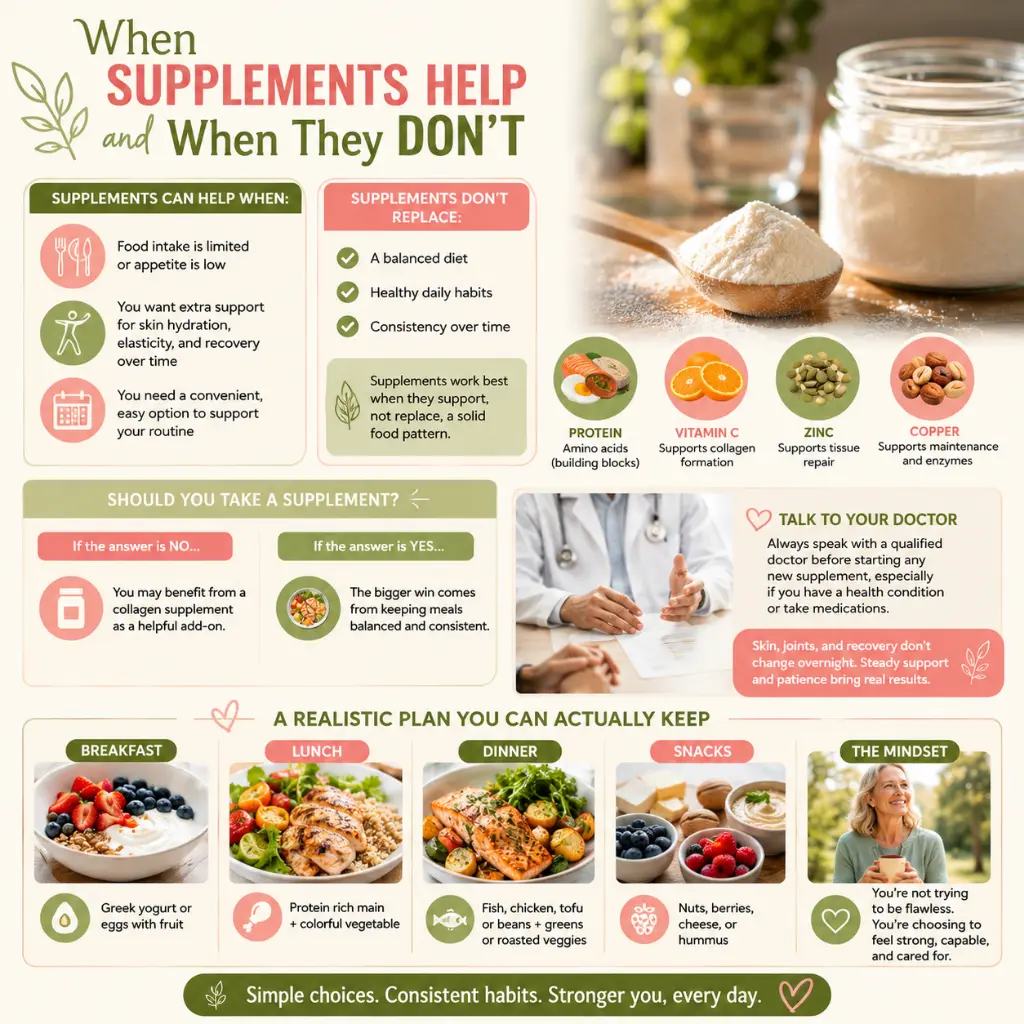
Not necessarily. Some trials and reviews of oral collagen peptides report improvements in specific skin measures, while study quality, product formulation, funding, dose, and outcomes vary. A collagen supplement is also not a nutritionally complete solution for inadequate food intake or a deficiency in a specific nutrient.
If you are considering one, the useful questions are about the product, your goal, allergens, added ingredients, and your own health circumstances. I keep those decisions out of this food-focused article and cover them in our collagen supplement guide for women over 50. If you have a medical condition, dietary restriction, kidney concerns, allergies, or take medications, discuss supplements with an appropriate healthcare professional.
A realistic food-first plan you can actually keep
You do not need a complicated spreadsheet to make this work. At breakfast, you might choose Greek yogurt or eggs with fruit. At lunch, add a protein-rich main and a colorful vegetable. At dinner, include fish, chicken, tofu, or beans with greens or roasted vegetables. Keep easy foods such as nuts, berries, cheese, hummus, fruit, or yogurt available when they fit your diet.
The point is not to eat for collagen at every bite. It is to build an overall pattern that provides enough nutrition and is realistic enough to repeat. That is the part I trust most: food that supports your health without turning every meal into another wellness project.
Top questions women frequently ask
What foods naturally contain collagen?
Collagen is an animal protein, so foods made from animal connective tissues, skin, bones, or gelatin can contain collagen or collagen-derived proteins. Many other foods do not contain collagen themselves but provide protein, vitamin C, and other nutrients involved in normal collagen formation.
What foods provide nutrients needed for collagen formation?
A varied diet can provide the building blocks involved in collagen formation. Protein-rich foods provide amino acids, while fruits and vegetables such as peppers, citrus, kiwi, berries, and broccoli provide vitamin C. Zinc and copper can also be obtained from a varied diet that includes foods such as meat, seafood, dairy, legumes, nuts, seeds, and whole grains according to your dietary pattern.
Can plant-based foods support normal collagen formation?
Yes. Plants do not naturally contain animal collagen, but a well-planned plant-based diet can provide protein, vitamin C, zinc, copper, and other nutrients involved in normal collagen formation. Fully vegan readers may need to pay particular attention to overall protein and nutrient adequacy.
Is bone broth a good source of collagen?
Bone broth can contain collagen-derived proteins, but the amount can vary considerably with the ingredients and preparation. It can be an enjoyable part of a balanced diet, but it should not be treated as a guaranteed way to improve skin, joints, or other health outcomes.
Do I need collagen supplements if I eat a balanced diet?
Not everyone needs a collagen supplement. Some studies have examined oral collagen peptides for specific outcomes, but results and study quality vary. A supplement should not replace adequate nutrition, and whether one makes sense depends on your goal, health circumstances, dietary pattern, and the product itself.
The best approach to simple foods collagen support after 50 is not dramatic. It is steady, practical, and rooted in food you can actually enjoy. Protein-rich foods, vitamin-C-rich produce, and a varied overall diet give your body nutrients involved in normal collagen formation without requiring a miracle ingredient.
If you want to make one small change this week, choose one meal you already enjoy and add a useful protein source plus a vitamin-C-rich fruit or vegetable. Keep it simple enough that you would be happy to make it again.