

I used to think collagen in coffee was either a wellness miracle or an expensive way to make coffee taste faintly like a sweater. Then I started hearing the more interesting question from women over 50: could collagen for gut health actually help when your stomach feels puffy, unpredictable, or oddly sensitive after meals?
The honest answer is more chill than dramatic. Collagen is a structural protein. Like other dietary proteins, it is digested into smaller peptides and amino acids that the body can use in different tissues. What we do not have is strong clinical evidence showing that a collagen supplement reliably repairs the gut lining, treats bloating, or fixes a digestive disorder.
There is some early human research, but it is limited. One small uncontrolled study reported changes in digestive symptoms among participants who completed a collagen-peptide intervention, while other research in specific settings has not shown a clear digestive benefit. That makes this an evidence-and-expectations conversation, not a magic gut reset. Lowkey, that kind of clarity is the real good vibe.
What happens to collagen after you swallow it?
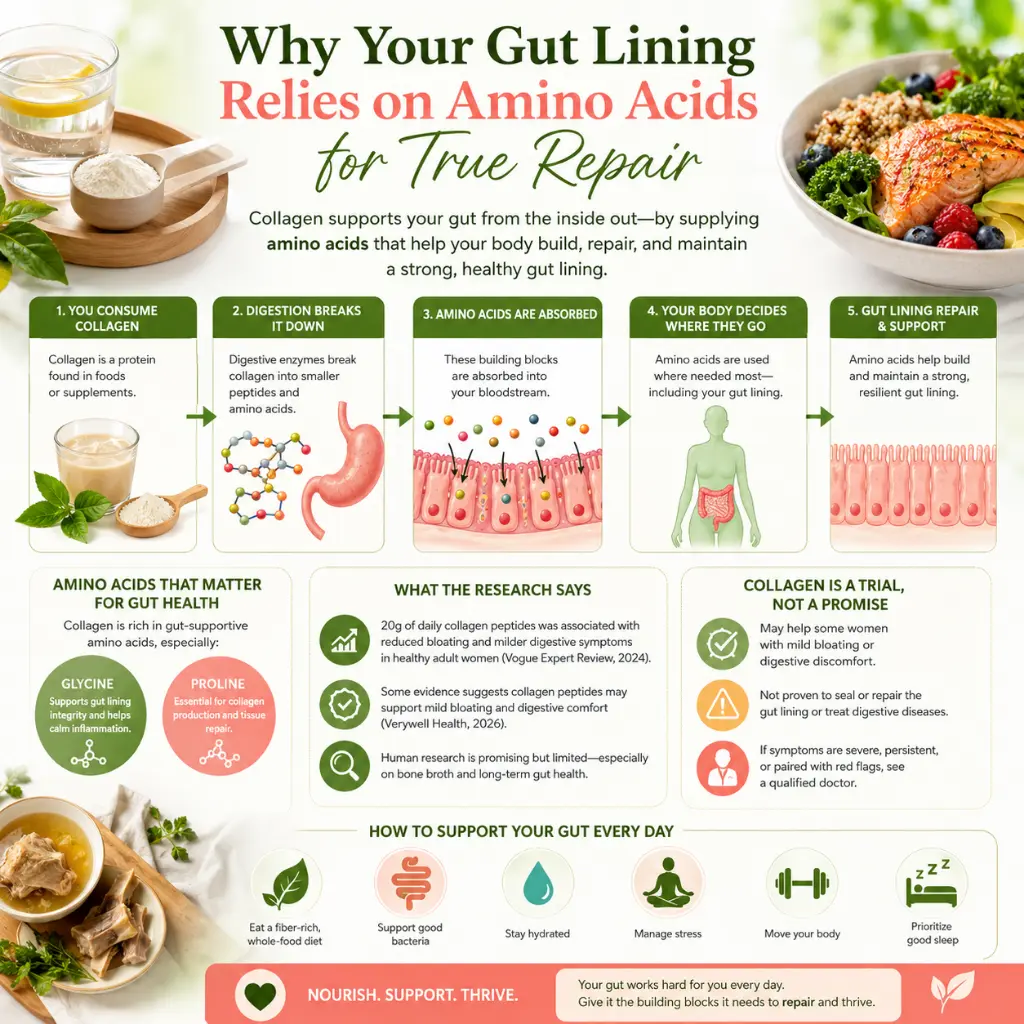
Your gut is not just a tube that complains after dinner. The digestive tract breaks food into smaller parts, absorbs nutrients, moves waste along, and works with nerves, hormones, blood flow, and gut bacteria every day. That is a lot of behind-the-scenes labor. Honestly, she deserves respect.
Once collagen is consumed, digestion breaks the protein into smaller components. Those components enter the body’s larger pool of amino acids and peptides. Your body decides how those materials are used. A scoop of collagen does not arrive at the intestine with a tiny clipboard and a repair crew.
This distinction matters because phrases such as “heals the gut” or “seals the gut lining” go beyond what current clinical research can establish. Laboratory and animal research can help scientists investigate possible mechanisms, but those findings are not the same as proving that oral collagen treats digestive symptoms in women over 50.
For the larger digestive-health context, Lonage’s gut health and inflammation after 50 covers the broader picture. This article stays focused on what we actually know about collagen.
What does the human evidence say about collagen and digestive symptoms?

This is where I want to keep expectations grounded. The direct human evidence for collagen and gut symptoms is still thin. A small 2022 study followed healthy women using collagen peptides and reported some changes in digestive symptoms among those who completed the intervention. But it was an open-label, single-arm study with substantial participant drop-out, so it cannot tell us whether collagen itself caused the changes or whether the same results would appear in a larger controlled trial.
Another controlled study looking at collagen peptides around exercise-related gastrointestinal stress did not find a clear improvement in gastrointestinal symptoms or markers of intestinal integrity. The populations and research questions were different, but together these studies are a useful reminder: interesting early findings are not the same thing as an established gut-health treatment.
So if you see a product promising to heal leaky gut, stop bloating, repair the intestinal barrier, or treat IBS because it contains collagen, the marketing is running ahead of the clinical evidence. Persistent digestive symptoms deserve a proper assessment rather than a supplement promise.
Can collagen help with bloating?
Bloating is a symptom, not one diagnosis. Food patterns, constipation, swallowed air, medications, gastrointestinal conditions, and other factors can all play a role. Because the collagen evidence is limited, there is no validated “collagen bloat test” and no percentage improvement that proves the supplement is working.
What I do like is paying attention to patterns without turning yourself into a bathroom scientist. If you already use collagen, noticing whether symptoms appear or change around it can be useful information. But a symptom diary is a record, not a diagnostic tool and not proof that collagen caused an improvement or a problem.
There is no established collagen dose for gut health
Different collagen studies use different formulations and amounts for different outcomes. That does not create an evidence-based dose for bloating, intestinal permeability, IBS, or general “gut healing.” At present, there is no established clinical collagen dose specifically for gut health.
If you are considering a collagen product for another reason and want help understanding sources, labels, quality testing, and allergens, use our separate guide to choosing collagen supplements after 50. Keeping product selection there prevents this gut-health article from becoming another supplement-buying guide.
For the broader role of collagen in healthy aging, skin, joints, food, and supplementation, the designated cluster pillar is our collagen guide for women over 50.
Can collagen cause digestive side effects?
Some people report digestive discomfort while using supplements, and sometimes the collagen itself is not the only variable. Flavors, sweeteners, gums, added vitamins, herbs, or other ingredients can complicate the picture. Allergens also matter because collagen can come from fish, cattle, pigs, chicken, or other animal sources.
If a new supplement seems to coincide with persistent or significant symptoms, stop treating the label as a diagnosis and discuss the situation with a qualified health professional. This matters even more if you have kidney disease, dietary protein restrictions, significant allergies, complex medication use, or another condition that changes what is appropriate for you.
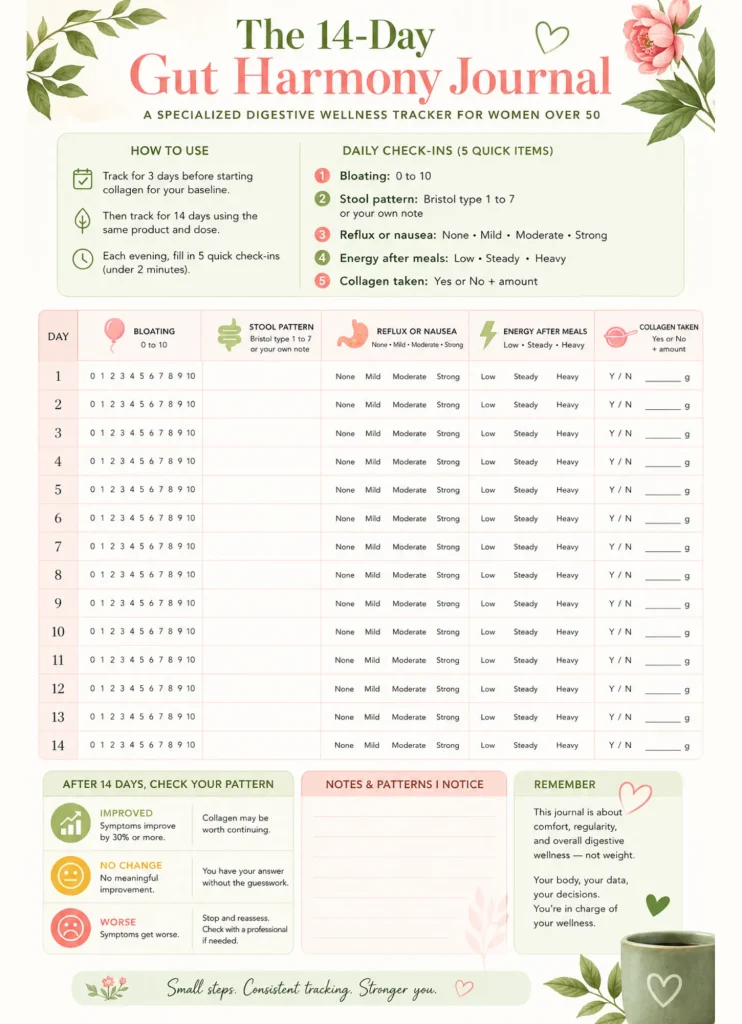
A symptom journal can be useful without becoming a collagen test
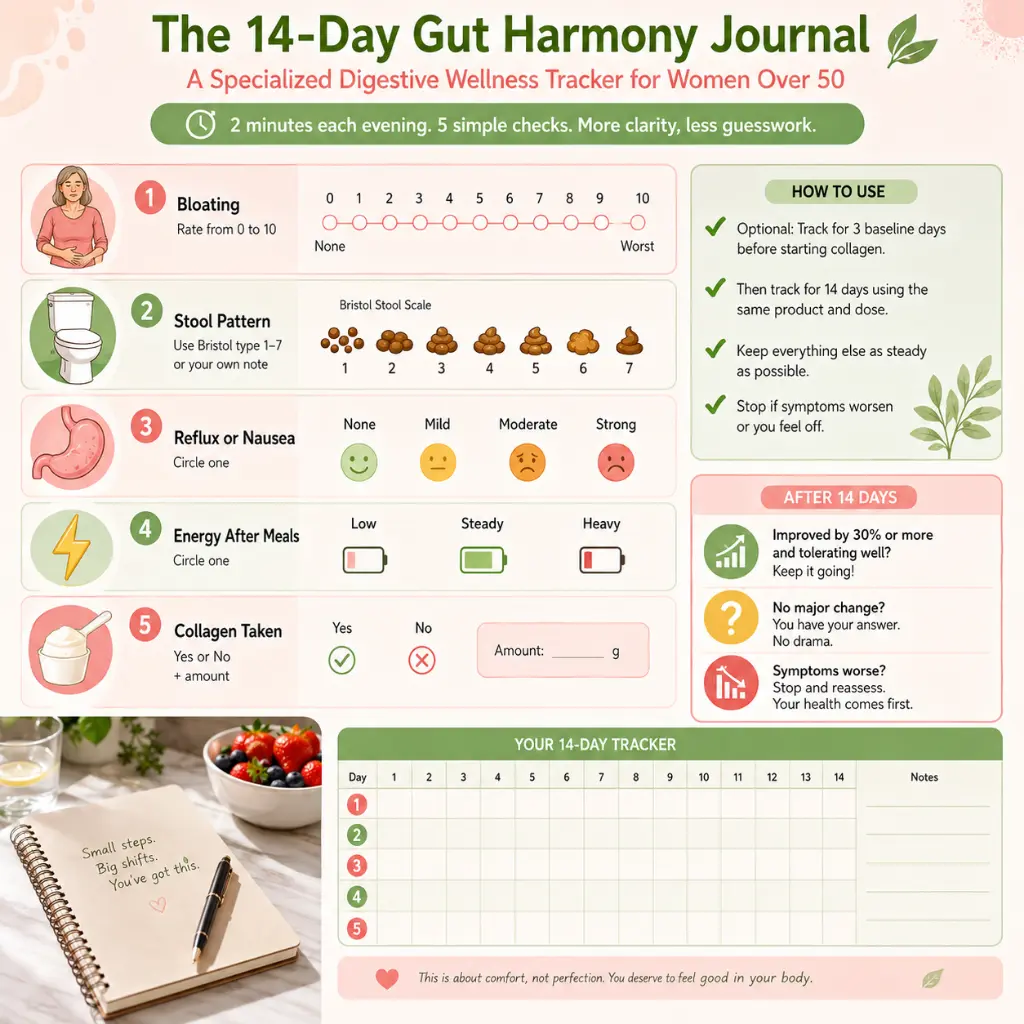
A tracker sounds unglamorous, I know. But it can save you from the classic confusion spiral where you are like, “I think I feel better? Or maybe I slept better? Or maybe Tuesday was just less weird?” Been there.
If digestive symptoms are bothering you, a simple journal can record what is happening without inventing a pass-or-fail threshold. Useful notes might include:
- Bloating or abdominal discomfort and when it occurs
- Stool pattern or a simple description of changes
- Reflux, nausea, constipation, or diarrhea
- Meals, supplements, or medications that changed around the same time
- Anything else unusual, including appetite or unintentional weight changes
The Bristol Stool Form Scale is one established way clinicians and researchers describe stool form, but you do not need to score every bathroom visit to use a journal well. The goal is to make patterns easier to explain, especially if you end up speaking with a clinician.
When digestive symptoms need medical attention
New, persistent, worsening, or severe digestive symptoms should not automatically be blamed on age, menopause, food, or a missing supplement. Blood in the stool, black or tarry stool, unexplained weight loss, repeated vomiting, severe or persistent abdominal pain, difficulty swallowing, fever with significant gastrointestinal symptoms, or other concerning changes warrant medical evaluation.
The same principle applies if you have a diagnosed gastrointestinal disease or another significant medical condition. Collagen should not replace evidence-based treatment for IBS, celiac disease, inflammatory bowel disease, reflux disease, ulcers, or other digestive disorders.
Frequently asked questions about collagen for gut health
Does collagen help gut health?
The direct human evidence is limited. A small uncontrolled study reported changes in digestive symptoms among participants who completed a collagen-peptide intervention, but that design cannot establish that collagen caused the improvement. Collagen is not an established treatment for digestive disorders.
Can collagen heal the gut lining?
Current clinical evidence does not establish that oral collagen heals or seals the intestinal lining in people. Laboratory and animal studies can explore possible mechanisms, but they do not prove a treatment effect in women over 50.
Can collagen help with bloating?
There is not enough high-quality evidence to say that collagen reliably treats bloating. Bloating has many possible causes, so persistent, worsening, painful, or otherwise concerning symptoms should be evaluated rather than self-treated with collagen.
Is there a recommended collagen dose for gut health?
No established clinical dose exists specifically for gut health. Studies use different collagen products and amounts for different research questions, and those amounts should not be converted into a universal dose for bloating, intestinal permeability, or digestive disorders.
Can collagen cause digestive side effects?
Some people may notice digestive discomfort while using a collagen supplement. The collagen source and added ingredients such as sweeteners, gums, flavors, herbs, or vitamins can all matter. Significant or persistent symptoms should be discussed with a qualified health professional.
When should digestive symptoms be checked by a doctor?
Seek medical evaluation for new, persistent, worsening, or severe symptoms, especially blood in the stool, black or tarry stool, unexplained weight loss, repeated vomiting, severe or persistent abdominal pain, difficulty swallowing, or other concerning changes. A supplement should not delay appropriate medical care.
The bottom line
Collagen for gut health is an interesting research question, but the clinical evidence is not strong enough to treat collagen as a gut-lining repair tool or a reliable answer for bloating. If you enjoy collagen for another reason and tolerate it, that is one thing. If you are using it to chase ongoing digestive symptoms, those symptoms deserve more attention than the marketing on a tub.
I would use a symptom journal for clarity, keep expectations realistic, and get medical guidance when symptoms are persistent or concerning. Your gut does not need another dramatic promise. It needs good information, and sometimes a proper evaluation.
Sources and evidence notes
- NIDDK, Your Digestive System and How It Works.
- NIH Office of Dietary Supplements, Vitamin C Fact Sheet for Health Professionals.
- Lewis SJ and Heaton KW, Stool Form Scale as a useful guide to intestinal transit time, Scandinavian Journal of Gastroenterology, 1997.
- 2022 pilot study of collagen peptides and digestive symptoms in healthy women, published in JMIR Formative Research.
- Controlled study of collagen peptides during exercise-related gastrointestinal stress and intestinal integrity.