Three a.m. Kitchen floor. Nightgown soaked through, again, I stood there sipping cold water when it hit me that what I drank during the day might affect how comfortable I felt at night. Drinks are not a treatment for menopause on their own, but hydration, caffeine and alcohol choices, and a few well-studied foods can be useful parts of a broader menopause routine.
If you are wondering what drinks are good for menopause symptoms, it helps to separate three things: drinks that keep you hydrated, drinks that may feel soothing or cooling, and ingredients that have actually been studied for menopause symptoms. None can restore hormone levels or guarantee relief. For the broader nutrition picture after 50, see what to eat after 50.
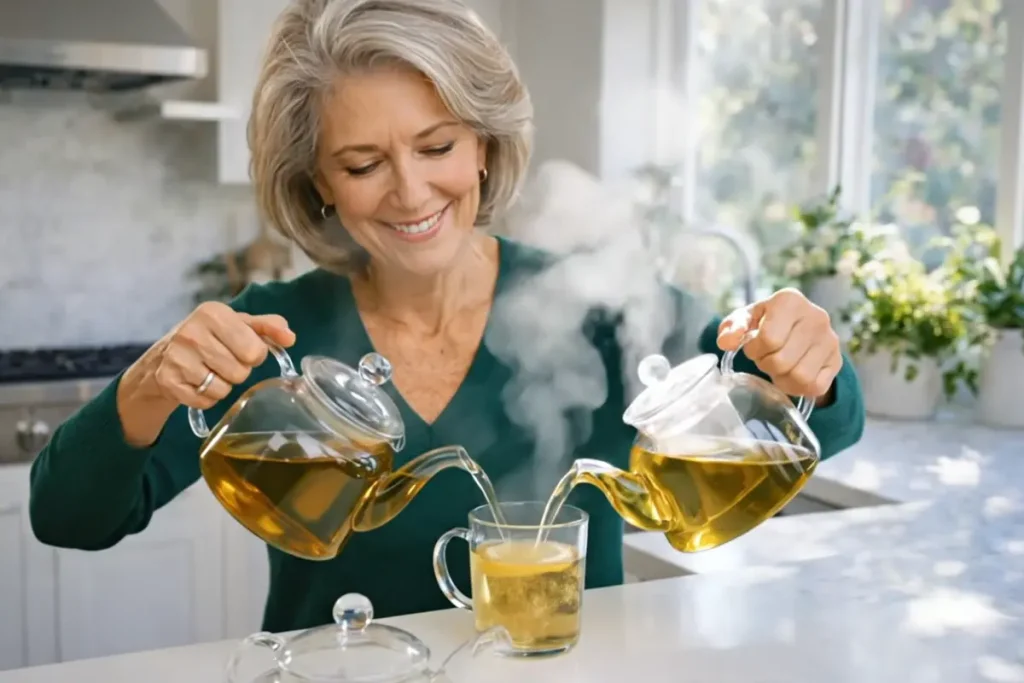
Herbal teas: soothing choices, but evidence varies
Herbal tea can be an easy way to add fluids without caffeine, but I no longer think of every “menopause tea” as a treatment. The evidence varies considerably from one herb to another, and how a drink feels is not the same as proving that it changes the biology behind a hot flash.
Peppermint tea is one I enjoy chilled because the minty sensation can feel refreshing. A cold drink may also be comforting during a hot flash, but that is different from saying peppermint has been shown to stop vasomotor symptoms.
Sage tea is more interesting from an evidence perspective. A few small studies suggest common sage might reduce the frequency of menopause-related hot flashes, but the research is still limited, so I would not call it a proven remedy. If hot flashes are a major concern, our guide to hot flashes during menopause looks at the symptom more directly.
Chamomile is another caffeine-free option I like in the evening. I treat it as part of a calming routine rather than a menopause treatment. Red clover needs even more caution: it contains isoflavones, but studies of red clover for hot flashes have produced inconsistent results. It should not be described as a drink that “balances hormones.” Herbal products can also interact with medicines or be unsuitable for some health conditions, so discuss regular medicinal use with a healthcare professional when relevant.
Soy milk and menopause symptoms: what the evidence really says
Soy-based beverages often come up when women ask what drinks are good for menopause symptoms. Soy foods contain isoflavones, plant compounds with estrogen-like activity. Research suggests soy protein or soy isoflavones may modestly reduce the frequency or severity of hot flashes for some women, but results are not completely consistent and the effect, when present, may be small.
That means I would not promise that one or two cups of soy milk will reduce hot flashes, and I would not describe soy milk as “balancing hormones.” Unsweetened soy milk can still be a practical food choice, especially when it is fortified with nutrients such as calcium and vitamin D. I use it in coffee or smoothies with berries or ground flaxseed because it fits easily into an everyday meal, not because it acts like hormone therapy.
If you use plant-based milk regularly, compare labels because protein, added sugar, calcium, vitamin D, and other nutrients vary between products.
Hydration during hot flashes and night sweats
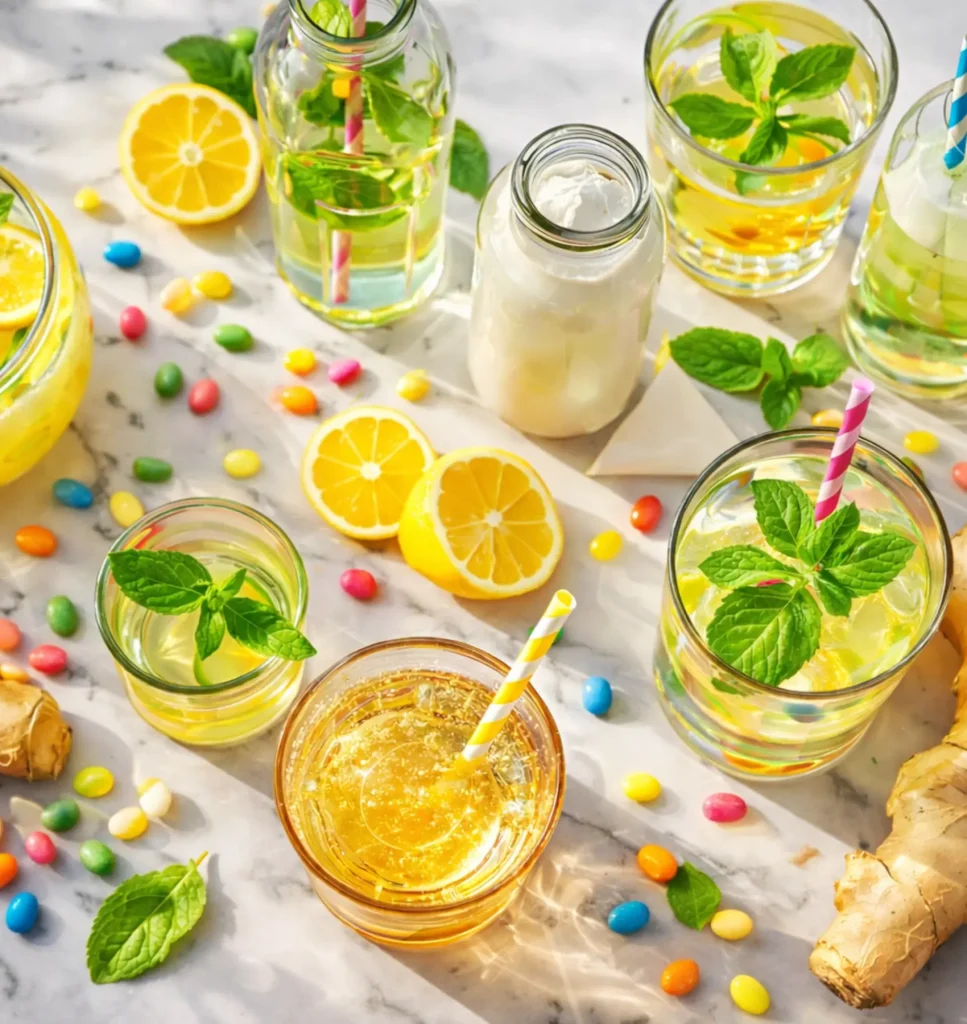
Hydration is one of the simplest parts of this discussion. Plain water is a reliable everyday choice, and a cold drink may feel especially welcome during a hot flash. If night sweats leave you thirsty, replacing the fluid you have lost is sensible, but there is no need to assume that every episode requires a special electrolyte drink.
Coconut water can be an enjoyable option if you like it, but it is not necessary for menopause and should not be treated as a recovery therapy for night sweats. Cucumber, mint, berries, citrus, or lemon can make water more appealing if that helps you drink regularly; their main value here is flavor and hydration, not “regulating body temperature.”
If night sweats are repeatedly disrupting sleep, beverages are only one part of the picture. Bedroom temperature, bedding, medications, and the severity of vasomotor symptoms can matter too. Our guide to sleep temperature regulation for women over 50 covers that side of the problem.
Ginger, green tea, and turmeric: useful drinks without miracle claims
I also rotate drinks such as ginger tea, green tea, and a turmeric-based latte because I enjoy them. They can contribute plant compounds to an overall varied diet, but I would not rely on them to treat menopause-related joint pain or inflammation.
Green tea contains caffeine, so timing depends on your sensitivity and sleep. There is no universal rule that every woman must stop caffeine at noon. If you notice that caffeine makes you feel warmer, more restless, or interferes with sleep, moving it earlier in the day or choosing decaffeinated drinks is a practical experiment.
With turmeric, black pepper can increase the absorption of curcumin, but a turmeric latte is still a food or beverage rather than a treatment for menopause symptoms. The same distinction applies to ginger: soothing and enjoyable does not automatically mean clinically proven symptom relief.
Drinks that may make menopause symptoms worse
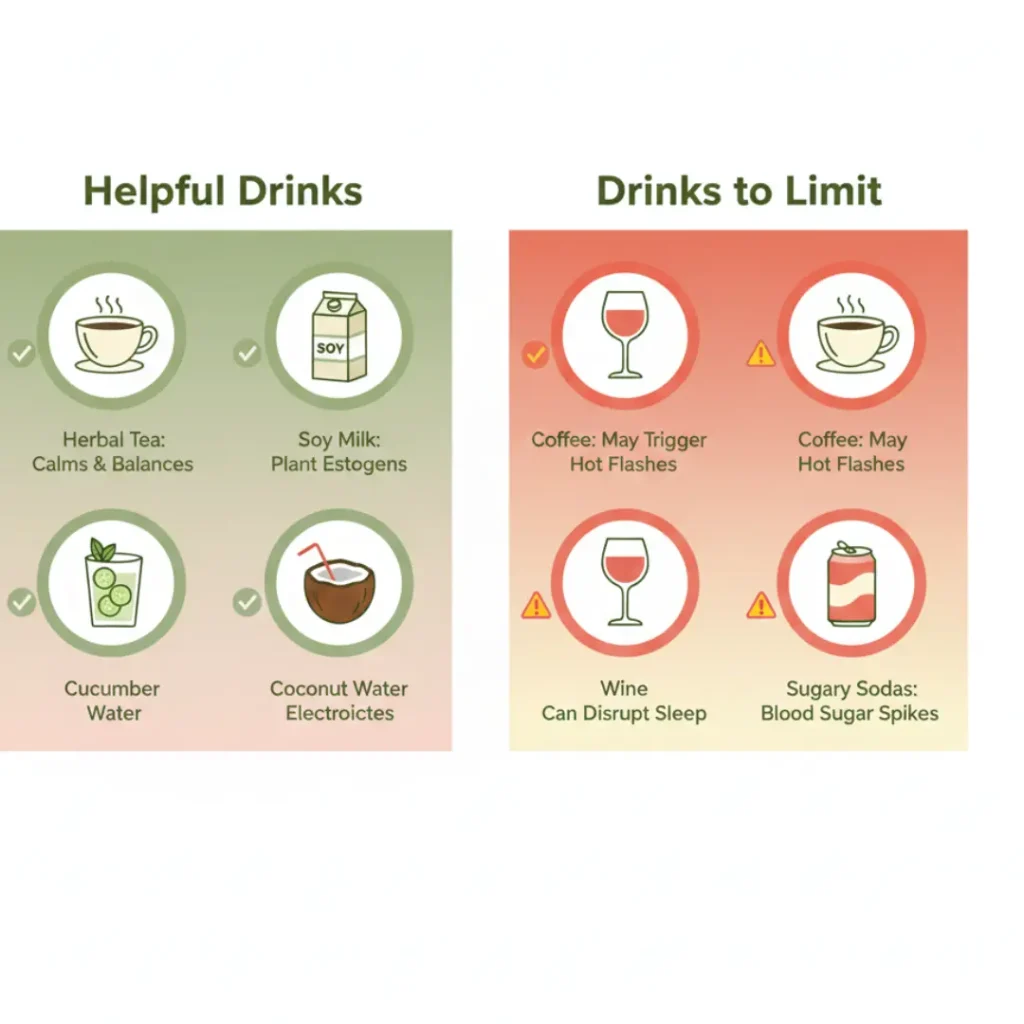
Not every woman has the same triggers. Caffeine, alcohol, and hot drinks are commonly discussed because reducing them may help some women with hot flashes, night sweats, or sleep. Rather than assuming you must eliminate everything, pay attention to whether a particular drink consistently affects your symptoms.
Alcohol can also reduce sleep quality, while caffeine later in the day can make falling asleep harder for people who are sensitive to it. Sugary drinks are worth limiting mainly as part of an overall nutritious eating pattern rather than because sugar has been proven to directly cause every menopause symptom.
Build a drink routine that fits your day
Every woman’s menopause experience is different, so your ideal drink routine may look different from mine. I find it more useful to notice patterns than to follow a rigid schedule. A simple journal can help you compare what you drink, when you drink it, and whether you notice changes in hot flashes, night sweats, sleep, or digestive comfort.
In the morning, that might mean water, ginger tea, coffee, or a soy milk smoothie. If caffeine affects you, experiment with the amount and timing rather than assuming there is one cutoff time that works for everyone.
During the afternoon, plain water, sparkling water, or unsweetened herbal iced tea can keep hydration simple. In the evening, I prefer caffeine-free choices and avoid drinking so much immediately before bed that bathroom trips become another source of sleep disruption.
This is also where food and drinks meet. A soy smoothie, for example, is part of the meal rather than a separate “hormone remedy.” For menopause-specific food priorities, see healthy foods to eat during menopause.
The bigger picture: drinks as part of your wellness toolkit
Drinks alone will not solve menopause symptoms, and that is an important distinction. Hydration and beverage choices can sit alongside nutritious food, movement, sleep habits, stress management, and medical care when symptoms need treatment.
A Mediterranean-style pattern fits naturally with this approach: water as the main drink, plant foods, adequate protein, unsaturated fats, and beverages chosen for enjoyment and nutritional fit rather than miracle claims. I still enjoy coffee occasionally and I do not treat missing a cup of herbal tea as a setback.
Quality matters more than hype. Read labels on plant-based milks, especially if you rely on them for protein, calcium, or vitamin D, and remember that “natural” does not automatically mean effective or risk-free. If you use herbal products regularly and take medicines or have a health condition, ask a healthcare professional about possible interactions.
Frequently Asked Questions
What drinks are good for menopause symptoms at night?
Water and caffeine-free drinks can be practical choices at night. A cool drink may feel comforting during a hot flash, while chamomile or another caffeine-free herbal tea can fit into a relaxing bedtime routine. If caffeine or alcohol disrupts your sleep or seems to trigger symptoms, reducing it later in the day may help. Avoid rigid fluid rules: drink enough to address thirst while adjusting late-evening intake if bathroom trips repeatedly interrupt sleep.
Can drinking soy milk really help with hot flashes?
Soy foods contain isoflavones, and research suggests soy protein or soy isoflavones may modestly reduce hot-flash frequency or severity for some women, although results are not completely consistent. Soy milk should not be described as balancing hormones, and there is no guaranteed number of cups that will relieve symptoms. Unsweetened fortified soy milk can still be a nutritious everyday choice.
How much water should I drink during menopause?
There is no single menopause-specific amount that is right for every woman. Fluid needs vary with body size, activity, climate, diet, health conditions, medications, and fluid losses. Drink regularly and respond to thirst, and speak with a healthcare professional if you have a condition that requires fluid restriction or if heavy sweating is persistent or concerning.
Are there drinks I should completely avoid during menopause?
Not necessarily. Caffeine, alcohol, and hot drinks can be symptom triggers for some women, particularly for hot flashes or sleep problems, but responses vary. Notice your own pattern and reduce or avoid a drink when it repeatedly causes problems. Your overall health and any medications you take also matter.
Can any drink treat menopause symptoms on its own?
No single beverage has been shown to treat the full range of menopause symptoms on its own. Some choices may support hydration or comfort, and soy foods have been studied for hot flashes, but effects vary and may be modest. Persistent or disruptive symptoms deserve a broader discussion with a qualified healthcare professional about evidence-based treatment options.
Moving Forward with Confidence
Understanding what drinks are good for menopause symptoms is less about finding a miracle beverage and more about making choices that support hydration, comfort, sleep, and an overall nutritious routine. A cold glass of water during a hot flash, a caffeine-free tea in the evening, or fortified soy milk with a meal can all have a place without promising more than the evidence supports.
Start simply. Choose one or two changes that fit your routine and notice how you feel. If coffee seems to worsen your sleep, move it earlier or reduce it. If a chilled herbal tea makes hydration easier, keep it. If soy milk works well as part of breakfast, use it as food rather than treating it as medicine.
Menopause symptoms can also change over time. If hot flashes, night sweats, sleep disruption, or other symptoms are persistent or affecting daily life, discuss them with a qualified healthcare professional rather than relying on beverages or supplements alone.