Standing in the grocery aisle at 3 PM last Tuesday, I watched a woman my age put down bottle after bottle of salad dressing, reading labels with visible frustration. Finally, she grabbed plain vinegar and walked away, shoulders slumped. I wanted to tell her what I’d learned the hard way: managing diabetes after 50 doesn’t mean your salads have to taste like punishment. The right dressings can actually support stable blood sugar while making every meal something you look forward to
Why tradtional dressings sabotage your blood sugar
Here’s something that shocked me when I started paying attention: that “light” ranch dressing many of us reach for? It often contains more sugar than the regular version.
When manufacturers remove fat, they compensate with sugar, corn syrup, and additives to maintain flavor. Your body doesn’t care about clever marketing. It just knows that a hidden sugar spike is coming.
The average store-bought creamy dressing can pack 3-4 grams of sugar per tablespoon. And honestly, who uses just one tablespoon?
We’re women in our 50s and beyond, managing not just diabetes but also shifting metabolism, bone health concerns, and the desire to maintain our energy and independence. Every food choice either supports or undermines those goals.
What I’ve noticed among friends managing diabetes is this: once you understand what to look for, choosing the right dressing becomes second nature. You’re not giving up flavor. You’re choosing ingredients that work with your body instead of against it.
The power of oil and vinegar: your secret weapon
Ready for some genuinely good news? Research shows that vinegar—yes, simple vinegar—can reduce blood glucose response to meals by over 30%.
When you pair vinegar with healthy fats like olive oil, you’re creating a dressing that’s not just safe for diabetes management but actually beneficial.
Studies on individuals with type 2 diabetes found that consuming vinegar before meals improved insulin sensitivity and helped stabilize blood sugar levels. Think about that. Your salad dressing could be working as hard as you are to manage your health.
The acetic acid in vinegar slows down how quickly carbohydrates convert to glucose in your bloodstream.
Olive oil brings its own benefits too. It’s rich in heart-healthy monounsaturated fats that support cardiovascular health, which is especially important for those of us managing diabetes.
A simple vinaigrette made with three parts olive oil to one part balsamic vinegar, plus Dijon mustard and herbs, transforms any salad into something restaurant-worthy.
Best store-bought options when you need convenience
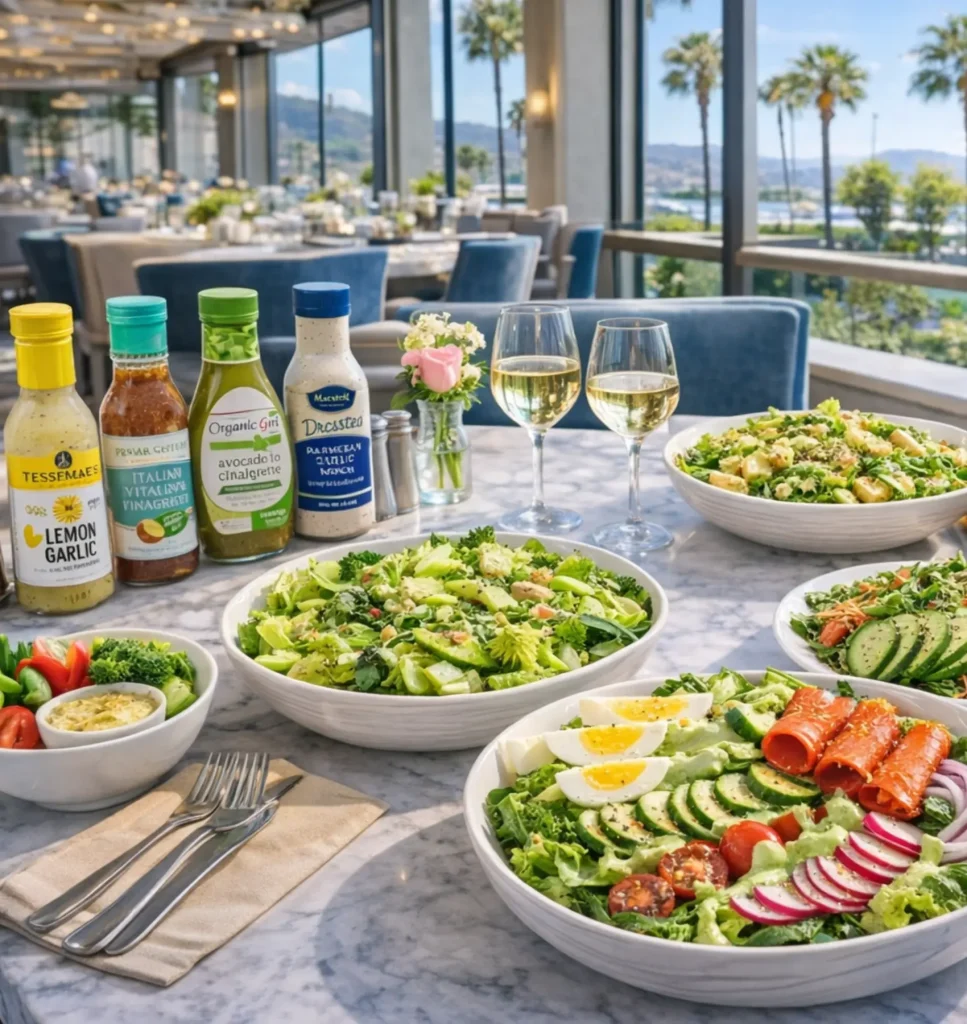
The key is knowing which brands respect your health and your taste buds. When shopping, grab the bottle and check three things: total carbohydrates (aim for 6g or less per serving), added sugars (the lower the better), and the type of oil used.
Look for dressings made with olive oil, avocado oil, or other plant-based oils, not soybean or inflammatory oils.
My top picks based on both nutrition and taste include Tessemae’s Lemon Garlic (zero sugar, just six whole-food ingredients), Primal Kitchen Italian Vinaigrette (clean ingredients, widely available), and Organic Girl Avocado Cilantro Vinaigrette (uses low-glycemic agave in tiny amounts).
If you prefer creamy dressings, the Marzetti Dressed line offers lower-carb options in flavors like ranch and Caesar without compromising on taste.
For Asian-inspired salads, Wafu Ginger Carrot Dressing delivers bold flavor with only 3 grams of carbohydrates per serving; I keep two or three varieties in my fridge so I never get bored.
Homemade dressings that take five minutes or less
Making your own dressing sounds fancy, but honestly, it’s faster than running to the store. You probably have everything you need right now.
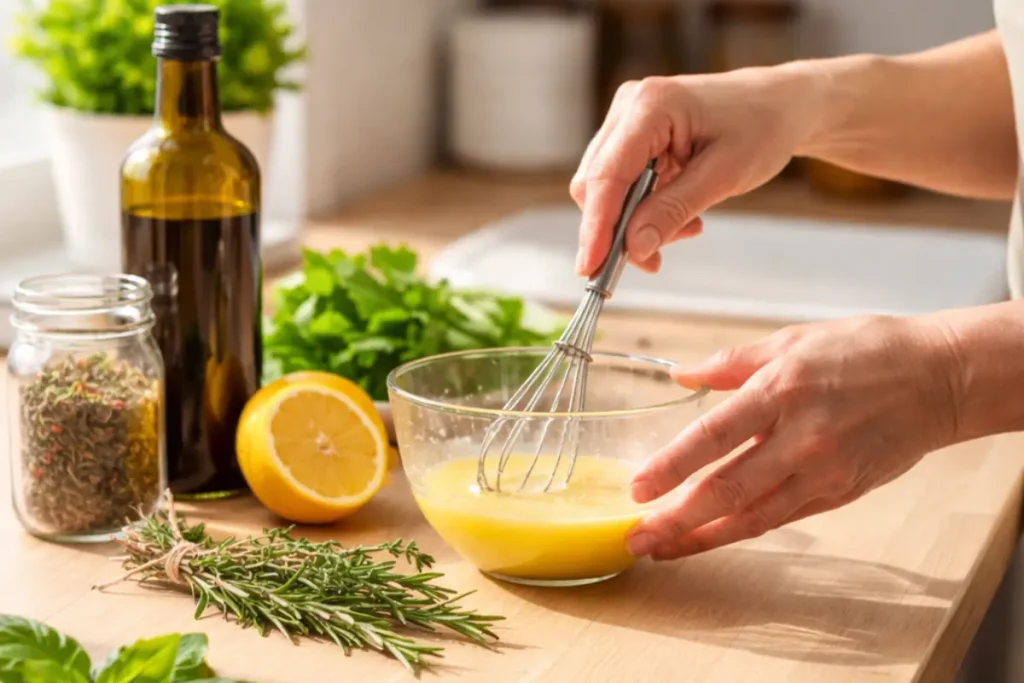
For a basic vinaigrette that goes with absolutely everything, whisk together 3 tablespoons olive oil, 1 tablespoon balsamic vinegar, 1 teaspoon Dijon mustard, minced garlic, salt, and pepper. Done. Store it in a jar in your fridge for up to a week.
For creamy dressing without the carb load, Greek yogurt is your best friend.
Mix half a cup of plain Greek yogurt with 2 tablespoons olive oil, 1 tablespoon lemon juice, fresh herbs like dill or parsley, garlic, salt, and pepper. This gives you that satisfying richness without the sugar rush.
Greek yogurt adds protein too, which further helps stabilize blood sugar.
My personal favorite for busy weeks is a lemon-herb dressing using avocado oil. Combine 3 tablespoons avocado oil, 1 tablespoon apple cider vinegar, juice from half a lemon, garlic powder, onion powder, and chopped fresh herbs.
The avocado oil provides healthy fats that keep you satisfied longer. The bright citrus flavor makes even plain lettuce exciting.
Sesame Soy Salad Dressing
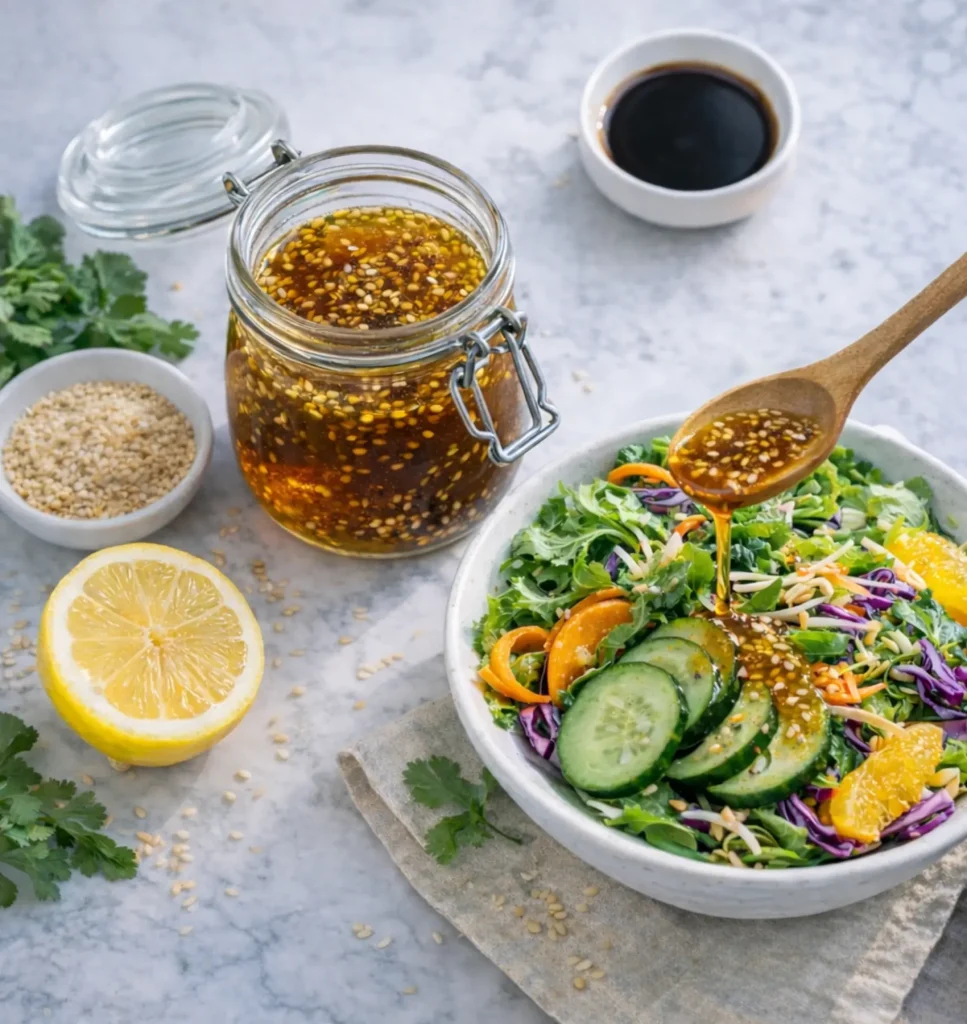
When you want to add an Asian inspired twist to your salads without the sugar overload from store bought bottles, this homemade sesame soy dressing delivers. It takes just five minutes to shake together, and you’ll have enough to last two weeks in your fridge.
The beauty of this recipe is how it balances savory depth from soy sauce with the nutty richness of sesame oil and the bright tang of rice vinegar. The avocado oil adds healthy fats that help you stay satisfied, while the erythritol (or your preferred sugar substitute) gives just a touch of sweetness without spiking your blood sugar.
What You’ll Need:
- 1/4 cup lower sodium soy sauce
- 1/4 cup rice vinegar
- 1/4 cup avocado oil
- 2 tablespoons sesame oil
- 1 tablespoon erythritol (or other sugar substitute)
How to Make It:
Add all ingredients to a jar with a tight-fitting lid. Shake vigorously until everything is well combined. That’s it. Store the dressing in your fridge for up to two weeks. If it separates (which is totally normal), just give it another shake before drizzling.
This dressing transforms simple greens into something special. Try it over shredded cabbage with edamame, or drizzle it on cucumber salad. The sesame notes make it feel restaurant worthy, but you’ll know exactly what went into it.
Nutrition Per Serving (1 tablespoon):
50 calories | 5g total fat | 0.6g saturated fat | 140mg sodium | 1g carbohydrates | 0g fiber | 0g sugar | 0g protein
What to absolutely avoid in the dressing aisle
About the landmines hiding in that grocery aisle. Fat-free and “lite” dressings are not your friends.
When fat is removed, sugar and artificial ingredients rush in to fill the flavor void. I’ve seen fat-free ranch with more carbs than regular ranch, how does that help anyone managing diabetes?
Watch out for dressings listing high fructose corn syrup, cane sugar, honey, or agave as one of the first three ingredients. These spike your blood sugar fast.
Also, skip anything with partially hydrogenated oils (trans fats), which increase inflammation and heart disease risk. Your body deserves better.
Even some “organic” or “natural” dressings can be sugar bombs. Organic evaporated cane juice is still sugar, just dressed up in prettier words.
Always flip that bottle around and read the nutrition facts, not just the front label marketing. Trust the numbers, not the promises.
Portion control: the part nobody wants to hear nut needs to
Even the healthiest dressing, pure olive oil and vinegar, packs about 90-120 calories per tablespoon. And let’s be real, we tend to pour generously.
Too much of even a good thing can lead to weight gain, which makes diabetes harder to manage. I learned to measure out 2 tablespoons and toss my salad thoroughly instead of drowning it.
Here’s a trick that’s helped me: use a spray bottle for your dressing. You get flavor on every leaf with half the amount.
Or try the “fork dipping” method, keep your dressing on the side and lightly dip your fork before each bite. You taste the dressing with every mouthful, but use much less overall.
Remember, your salad should be supporting your health goals, not sabotaging them. A salad drenched in dressing can end up with more calories and fat than a burger.
Balance is key. Choose quality ingredients, watch your portions, and enjoy every mindful bite.
frequently asked questions
Your salad, your way, your health
Six months after that grocery store moment, Carol now makes a big batch of lemon-herb vinaigrette every Sunday and keeps it in a mason jar. Her A1C has improved, she’s lost 12 pounds without feeling deprived, and she actually looks forward to her daily salads.
She told me recently, “I don’t feel punished anymore. I feel empowered.”
That’s what understanding what type of salad dressing can diabetics eat really gives you: freedom within structure, flavor without consequence, and the joy of eating without fear.
Managing diabetes after 50 isn’t about perfection. It’s about making informed choices that let you thrive, stay active, maintain your independence, and genuinely enjoy your meals.
Start simple this week. Make one batch of homemade vinaigrette or choose a better store-bought option.
Notice how your body responds, how your energy feels, how your blood sugar stays steadier. Small changes create lasting transformation.
For more practical guidance on managing diabetes and thriving through your 50s and beyond with evidence-based nutrition strategies, explore our comprehensive resources on healthy aging for women.
What’s your favorite salad dressing discovery? I’d love to hear what’s working for you in your diabetes management journey.