Standing in the grocery aisle at 3 PM last Tuesday, I watched a woman my age put down bottle after bottle of salad dressing, reading labels with visible frustration. Finally, she grabbed plain vinegar and walked away. It reminded me how confusing food labels can feel when you are trying to manage diabetes without turning every meal into a calculation.
The useful question is not whether one dressing is magically “diabetes-friendly.” It is whether the serving size, total carbohydrate, added sugars, sodium, saturated fat, ingredients, and portion fit your overall eating plan. For the bigger food framework around protein, fiber-rich plants, fats, and balanced meals after midlife, start with our what to eat after 50 guide.
What makes a salad dressing a better choice for diabetes?
A better choice is usually one that fits the carbohydrate and calorie needs of your meal without adding more sugar, sodium, or saturated fat than you intended. That does not mean every “light,” “fat-free,” or “sugar-free” product is automatically better. Formulas vary widely, so compare the Nutrition Facts panel rather than relying on front-label claims.
Some reduced-fat dressings contain more carbohydrate or added sugar than a regular version, while others do not. Some full-fat dressings are low in carbohydrate but high in calories or sodium. The label tells you more than the marketing language.
Does vinegar help with blood sugar?
Vinegar has been studied for its possible effect on post-meal glucose, and some research suggests it may modestly reduce the glucose response to certain meals in some people. That is interesting, but it does not make vinegar a diabetes treatment, and it does not mean a vinaigrette can guarantee stable blood sugar.
A simple oil-and-vinegar dressing can still be a practical choice because you can control the ingredients and portion. Olive oil provides mostly unsaturated fat, while vinegar adds acidity and flavor without requiring a large amount of sugar. If you want more context on glucose changes around midlife, our menopause and blood sugar guide covers that broader topic.
How to read a salad dressing label if you have diabetes

| What to check | Why it matters |
|---|---|
| Serving size | Every number on the label is based on this amount, so compare it with the amount you actually use. |
| Total carbohydrate | This is the most useful number when you are counting carbohydrate as part of a diabetes meal plan. |
| Added sugars | Helpful for comparing similar products, especially sweet vinaigrettes and flavored dressings. |
| Sodium | Worth comparing if you also have high blood pressure, kidney concerns, or have been advised to limit sodium. |
| Saturated fat | Compare products rather than assuming “low-fat” is automatically the better choice. |
| Calories | Useful when weight management is part of your health plan, especially because dressings are easy to pour generously. |
| Ingredients | Useful for identifying sweeteners, allergens, oils, and ingredients that matter to your preferences or medical needs. |
There is no universal rule that every dressing must stay under a specific carbohydrate number. Your meal, medications, glucose targets, and overall eating pattern matter. If you use insulin or another medication that can cause hypoglycemia, individualized carbohydrate guidance is especially important.
Store-bought dressing: choose the label, not the brand name
Brand formulas change, and the same brand may sell several dressings with very different nutrition profiles. That is why I would not build your decision around a permanent “best brands” list.
Instead, compare two or three options side by side. Check the serving size first, then total carbohydrate, added sugars, sodium, saturated fat, and calories. A vinaigrette may work well for one person, while a creamy dressing may fit just as well if the label and portion suit the rest of the meal.
Three simple homemade dressings
Can a Salad Dressing Prevent a Blood Sugar Spike?
It is not possible to guarantee that a particular salad dressing “won’t spike blood sugar.” Glucose responses depend on the dressing, portion size, the carbohydrates and other foods in the meal, medications, activity, and individual response. Homemade dressing is not glucose-neutral or a diabetes treatment, but preparing it yourself makes the ingredients and portion easier to see and adjust. With that in mind, here are three simple homemade options to consider.
1. Basic olive-oil vinaigrette
Whisk together 3 tablespoons olive oil, 1 tablespoon balsamic or red-wine vinegar, 1 teaspoon Dijon mustard, minced garlic, herbs, and pepper. Add salt only if it fits your sodium needs. This gives you a simple dressing with no need for a large amount of sweetener.
2. Greek-yogurt herb dressing
Mix 1/2 cup plain Greek yogurt with 1 to 2 tablespoons olive oil, lemon juice, dill or parsley, garlic, and pepper. Greek yogurt adds protein and gives the dressing a creamy texture. Check the yogurt label if you are comparing carbohydrate or sodium across brands.
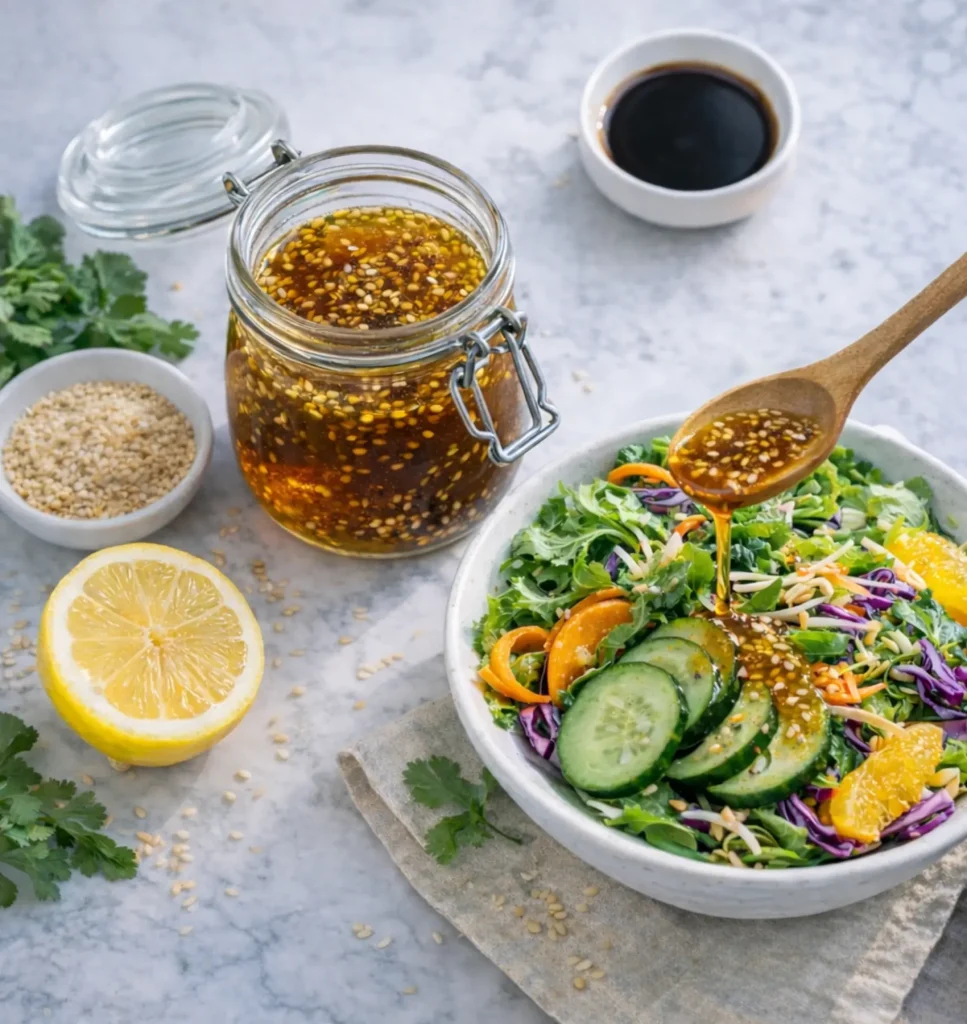
3. Sesame-soy dressing
- 1/4 cup lower-sodium soy sauce
- 1/4 cup rice vinegar
- 1/4 cup avocado or olive oil
- 2 tablespoons sesame oil
- Optional: a small amount of your preferred sweetener if you want a sweeter dressing
Shake the ingredients in a jar until combined. Because sodium can vary greatly between soy-sauce products, use the nutrition label on the exact product you buy if sodium matters to your eating plan. If you use a sugar substitute, remember that products differ; do not assume every sweetener has the same digestive or glucose effect for every person.
What should you limit in the dressing aisle?
I would not create a forbidden list. Instead, compare products and look for tradeoffs. A dressing with more added sugar may still fit a meal in a small portion, while a very low-carbohydrate dressing may be high in sodium or saturated fat. “Organic,” “natural,” “light,” and “sugar-free” do not tell you enough on their own.
Partially hydrogenated oils are no longer common in packaged foods in the United States, but if you see them on an older or imported label, that is a reason to choose another product. For other oils, focus on the overall fat profile rather than labeling common plant oils as automatically “inflammatory.”
Portion size still matters
Dressings made mostly from oil can be calorie-dense even when they contain little carbohydrate. That does not make them “bad,” but it does make portion size useful information. Measure the serving once or twice so you know what it looks like, then decide whether that amount works for your meal.
If you prefer more dressing volume, try thinning a vinaigrette with extra vinegar, lemon juice, water, herbs, or mustard rather than assuming you need to remove all the fat.
Frequently Asked Questions
What type of salad dressing can diabetics eat?
People with diabetes can eat many types of salad dressing. The most useful approach is to check the serving size, total carbohydrate, added sugars, sodium, saturated fat, calories, and ingredients, then fit the portion into the rest of the meal and your individual diabetes plan.
Can I eat ranch dressing if I have diabetes?
Yes, ranch can fit for many people with diabetes. Compare the Nutrition Facts label across products because carbohydrate, added sugar, sodium, calories, and saturated fat vary by brand and recipe. A homemade Greek-yogurt version is another option if you prefer to control the ingredients yourself.
Is balsamic vinegar okay for diabetes?
Balsamic vinegar can fit a diabetes eating plan, but some balsamic vinegars and glazes contain more sugar than plain vinegar. Check the serving size and total carbohydrate on the label, especially for sweetened reductions or glazes.
What should I look for on a salad dressing label?
Start with serving size and total carbohydrate, then compare added sugars, sodium, saturated fat, calories, and ingredients. There is no single carbohydrate cutoff that works for everyone, so the best choice depends on your meal plan, medications, and health needs.
Is homemade salad dressing better for diabetes?
Homemade dressing is not automatically better, but it can make the ingredients and portion easier to control. Store-bought dressing can also fit well when the label works for your needs. The overall meal matters more than whether the dressing came from a bottle or your kitchen.
The Bottom Line
What type of salad dressing can diabetics eat? Usually, more options than the front of the bottle makes it seem. Focus on the serving size, total carbohydrate, added sugars, sodium, saturated fat, calories, and ingredients, then judge the dressing in the context of the whole meal.
Oil-and-vinegar dressings, creamy dressings, ranch, and homemade recipes can all fit depending on the product and portion. If your glucose response is difficult to predict, or if you use medication that can cause low blood sugar, use personalized guidance from your healthcare team rather than relying on one ingredient or one “diabetes-friendly” label.