

Natural Remedies for Dizziness During Menopause became a very personal search for me the morning I stood up from my favorite reading chair and felt like I had stepped off a carousel. One minute I was reaching for my coffee; the next I was gripping the armrest, waiting for the room to stop tilting.
That wobbly feeling showed up during my perimenopause years, but here’s the distinction I wish I’d understood sooner: dizziness can happen around the menopause transition without automatically being caused by menopause. It has many possible causes, some minor and some important to investigate.
For the wider hormonal transition, see our Menopause after 50 guide. Here, we’re staying focused on dizziness: what the sensation may mean, what you can safely do in the moment, and when to get help.
First, What Kind of Dizziness Are You Feeling?
“Dizzy” can describe several different sensations. Vertigo feels like you or the room is spinning. Lightheadedness feels closer to fainting. Disequilibrium is an unsteady or off-balance feeling. Those differences matter because they can point clinicians toward very different explanations.
Hormonal changes may interact with systems involved in migraine, blood pressure, sleep, anxiety, and balance, but I would not say that falling estrogen directly disrupts circulation, the vestibular system, and blood pressure in every woman. Inner-ear disorders, dehydration, anemia, migraine, medication effects, blood-pressure changes, heart problems, and neurological conditions can also cause dizziness.
Hydration: Simple, Useful, but Not a Cure-All
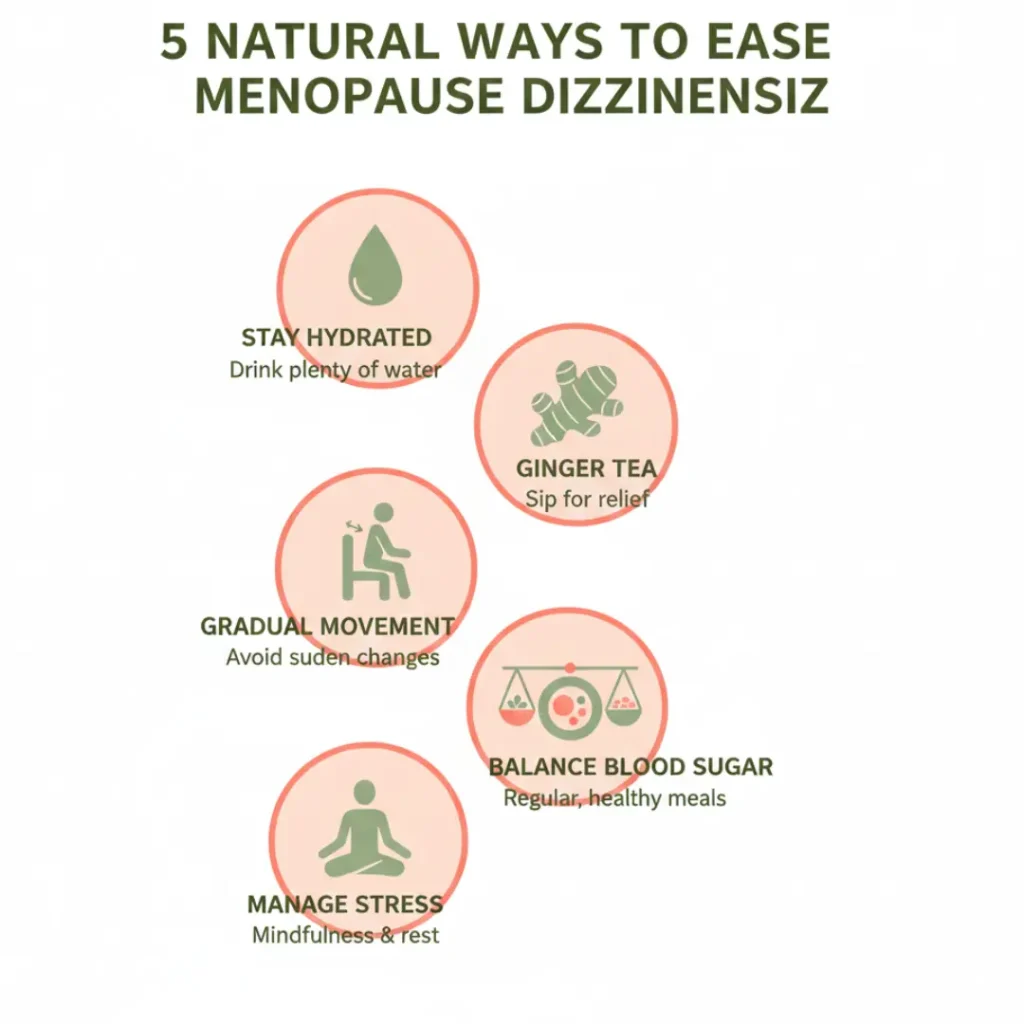
I started carrying a water bottle everywhere. That habit helped me notice that some of my lightheaded days followed long stretches of barely drinking anything. I no longer force myself toward a universal “eight glasses” target or claim women in menopause automatically need more water than they did in their thirties.
Dehydration can contribute to lightheadedness, so regular fluids make sense. Your needs vary with activity, climate, diet, medicines, kidney or heart conditions, and other factors. If you’re vomiting, unable to keep fluids down, or feeling faint, that is a different situation and may need medical care.
Move Slowly When Position Changes Trigger Symptoms
One of the hardest adjustments for me was learning not to pop out of a chair. If lightheadedness appears when you stand, pausing before rising can reduce the chance of losing your balance. Sit at the edge of the bed for a moment, stand near something stable, and avoid rushing.
A repeated drop in blood pressure on standing is not something to diagnose as “menopause dizziness” on your own. A clinician can check blood pressure lying and standing and review medicines or other possible causes.
What About Ginger?
I enjoy fresh ginger tea, especially when dizziness arrives with nausea. But ginger is better known for research in certain nausea settings than as a proven treatment for menopause-related vertigo or balance problems. I no longer tell women it improves circulation enough to restore balance.
If nausea is the dominant symptom, keep that discussion in our Can Menopause Cause Nausea? guide. Concentrated ginger supplements can also interact with medicines, so food and tea are not interchangeable with capsules.
Meals, Shakiness, and Blood Sugar
I noticed that skipping meals sometimes left me shaky and lightheaded. Eating regular meals with protein, fiber-rich carbohydrates, vegetables, and fats I tolerated made my days feel more predictable. That personal pattern does not mean every dizzy spell is a blood-sugar crash.

Stress Can Amplify the Experience
When I was anxious, dizziness felt louder. Five quiet minutes of slow breathing did not “fix” my balance system, but it helped me stop panicking about every sensation. Gentle yoga and short walks also helped me feel grounded on days when I was otherwise well enough to move safely.
If you’re actively dizzy, exercise is not automatically the answer. Sit or lie down if you may fall, avoid driving, ladders, or risky movement, and seek assessment when the symptom is new, severe, or recurring.
When Dizziness Needs Medical Help
Seek urgent medical care for sudden severe dizziness with weakness or numbness on one side, difficulty speaking, new severe headache, fainting, chest pain, severe shortness of breath, new vision loss, inability to walk safely, or a new concerning heartbeat.
Schedule a clinical assessment when dizziness persists, keeps returning, causes falls, affects hearing, begins after a new medicine, or significantly interferes with daily life. A clinician may consider inner-ear causes, migraine, blood-pressure changes, anemia, medication effects, cardiovascular issues, or other conditions. There’s no medal for toughing it out alone.
Frequently Asked Questions
Is dizziness during perimenopause always hormonal?
No. Dizziness can occur during perimenopause, but it has many possible causes. Inner-ear disorders, migraine, dehydration, anemia, blood-pressure changes, medicines, cardiovascular problems, anxiety, and other conditions may need consideration.
How long does menopause-related dizziness last?
There is no reliable fixed timeline because dizziness is not a single menopause-specific condition. Persistent, worsening, or recurrent symptoms should be assessed rather than waiting for hormones to stabilize.
Should I exercise when I feel dizzy?
Do not exercise through active dizziness if you feel unsafe or at risk of falling. Sit or lie down, avoid risky activities, and seek medical advice for new, severe, or recurrent symptoms. Once the cause is understood, appropriate movement may be part of a broader plan.
Does vitamin D treat menopause dizziness?
Vitamin D is important for bone and muscle health, but dizziness alone does not prove vitamin D deficiency and vitamin D should not be presented as a general treatment for menopause dizziness. Testing or supplementation decisions depend on individual context.
Finding Your Balance Again
Dizziness can feel disorienting and frustrating. The habits that helped me most were simple: drinking regularly, moving more deliberately, eating consistently, and giving myself a moment to settle when stress made everything feel worse.
But the biggest lesson was this: I stopped assuming every wobble was “just menopause.” Sometimes gentle self-care is enough for the moment. Sometimes your body is asking for a proper medical look. Knowing the difference is part of taking yourself seriously.