

One day, a woman shared a common concern with me: “I’m eating the same way I did five years ago, but now I’m gaining weight. What’s going on?” The truth is, nothing is wrong. As your body ages, especially after 60, it naturally functions differently than it did before. Healthpartners
Understanding how to lose weight at 60 without fighting your body starts with understanding metabolism. Your metabolic rate naturally declines after age 60, dropping by about 0.7% each year. This isn’t failure or laziness; it’s biology responding to hormonal shifts, muscle loss, and changing organ function. When you understand what’s actually happening inside your body, you can work with these changes, constantly battling against them.
What actually happens to your metabolism after 60
Let me explain what’s going on inside your body. Your metabolism is the process that converts food into energy, so everything can function properly. Your basal metabolic rate is how many calories your body burns just existing, breathing, circulating blood, and repairing cells.
After 60, several things change simultaneously. Your muscle mass naturally decreases if you’re not actively preserving it. Since muscle burns significantly more calories than fat tissue, losing muscle automatically slows your metabolism.
Your major organs liver, heart, brain, and kidneys, account for about 65% of your basal metabolic rate. Research suggests these organs become less metabolically active as we age, which contributes to the overall slowdown.
Hormonal shifts play a massive role, too. After menopause, declining estrogen levels change how your body stores fat. You tend to store more around your midsection than your hips and thighs. Your body also becomes more efficient at storing dietary fat and less efficient at burning it after meals.
The result of all these changes? You can genuinely eat the same amount you always have and still gain weight. This feels deeply unfair, and honestly, it is frustrating.
The menopause and metabolism connection
If you’ve gone through menopause, you already know everything changed. Let me validate what you’re experiencing: this is real, significant, and not in your head.
During perimenopause and after menopause, estrogen and testosterone levels decline substantially. These hormonal changes directly affect your metabolic rate. Many women find they need to consume about 200 fewer calories daily to maintain their current weight after menopause.
The way your body handles fat changes, too. Postmenopausal women show increased abdominal fat storage and decreased fat oxidation after eating compared to premenopausal women. Your body literally processes food differently now.
This explains why your pre-menopause eating habits don’t produce the same results; it’s not about willpower or discipline, your biology has fundamentally shifted, and your approach needs to shift with it.
Some women find hormone replacement therapy helpful for redistributing weight and supporting metabolic function. This isn’t right for everyone, but it’s worth discussing with your healthcare provider if menopause weight gain is significantly affecting your quality of life.
Building muscle: your most powerful metabolic strategy
Here’s the single most important thing I can tell you about metabolism after 60: building and maintaining muscle mass is your greatest tool.
Muscle tissue is metabolically active; it burns calories even when you’re sitting on the couch, fat tissue doesn’t. When you lose muscle, your metabolism slows. When you build muscle, your metabolism increases.
The challenge is that muscle loss accelerates after 60 without intervention, but the encouraging news is that you can absolutely build muscle at this age through consistent strength training. Discover The Truth About Weight Loss After 60 No One Tells Women, beginner-friendly strength training routines for women over 60 that build muscle safely and effectively.
You don’t need heavy weights or complicated gym equipment; bodyweight exercises, resistance bands, and light dumbbells work beautifully. What matters is consistency, two to three sessions weekly that challenge your muscles.
Many women notice that while the scale doesn’t move much initially, their clothes fit better and they have more energy, that’s muscle replacing fat, which is exactly what you want metabolically.

Eating patterns that support your metabolism after 60
What you eat and when you eat it both matter for metabolic health. Let me share what actually works for women our age. Learn more aboutThe Ultimate Guide to Natural B12 Sources for Women Over 50, which supports hormonal balance and metabolic health.
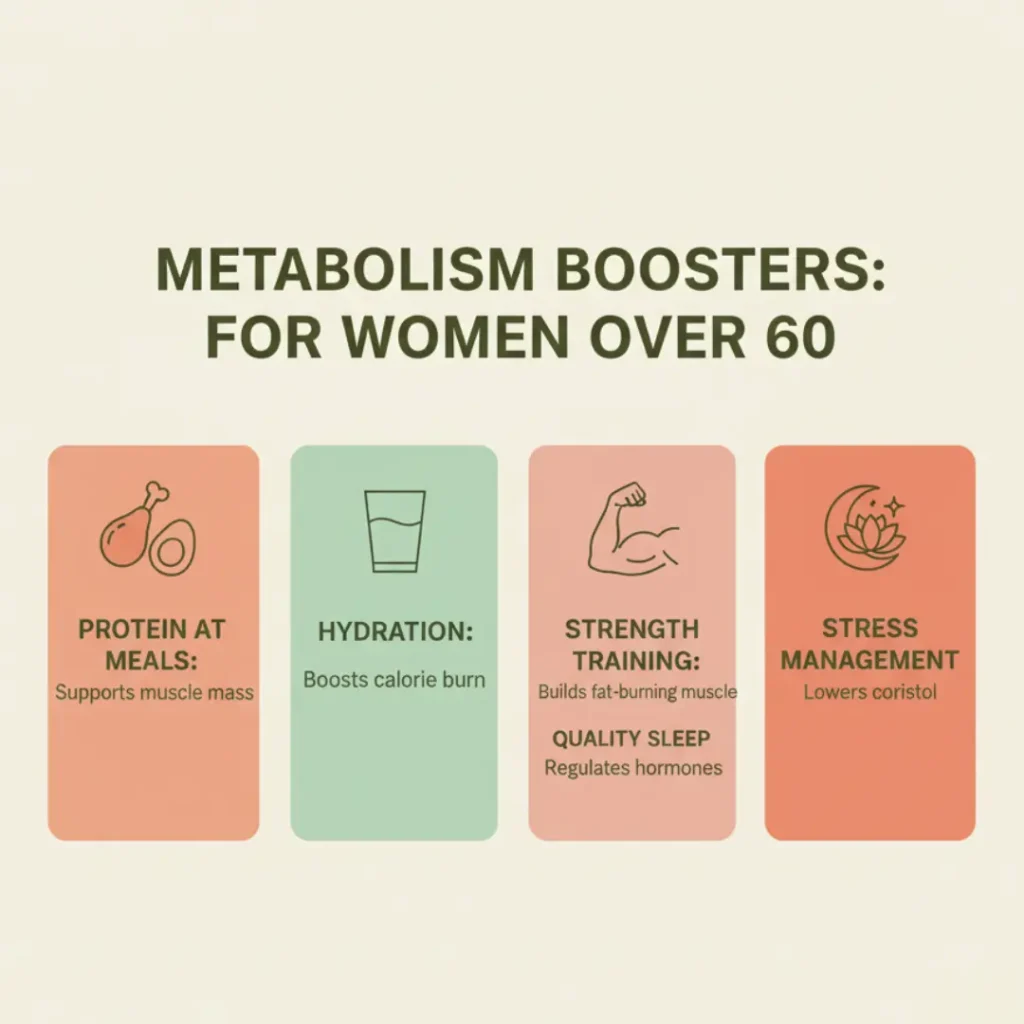
Prioritize protein at every meal
Your body needs more protein now than it did at 40 to maintain muscle mass. Aim for about one gram of protein per kilogram of body weight daily. For a 150-pound woman, that’s roughly 68 grams spread throughout the day.
Protein does more than build muscle. It keeps you satisfied longer and requires more energy to digest than carbohydrates or fats, slightly boosting your metabolic rate.
Good sources include eggs, Greek yogurt, fish, chicken, legumes, and lean beef. The key is spreading protein across all meals, not loading it all at dinner.
Choose nutrient-dense whole foods
Your calorie needs may have decreased, but your nutrient needs haven’t. Focus on foods that pack maximum nutrition into every bite: vegetables, fruits, whole grains, lean proteins, and healthy fats.
A Mediterranean-style eating pattern works beautifully for women over 60. It emphasizes plants, fish, olive oil, and whole grains while limiting processed foods and added sugars. This approach supports cardiovascular health, reduces inflammation, and helps with sustainable weight management.
Reduce added sugars and processed foods
You probably can’t eat the sweets and processed foods you enjoyed at 40 without metabolic consequences, but that doesn’t mean enjoying treats; it means being more intentional about when and how often.
Refined carbohydrates and added sugars cause blood sugar spikes that promote fat storage, especially around your midsection. Choosing whole grains instead provides steady energy and better blood sugar control.
Stay consistently hydrated
This seems almost too simple, but staying well hydrated can boost your metabolism by up to 30%, according to some studies. As we age, our sense of thirst diminishes, so you can’t rely on feeling thirsty.
Keep water accessible throughout the day; many women find setting reminders helpful. Aim for at least eight glasses daily, more if you’re active or live in a warm climate.
Movement Strategies That Boost Metabolism
Exercise matters differently at 60 than it did at 40. Let me explain what actually moves the needle metabolically.
Combine strength and aerobic activity
While strength training builds metabolism-boosting muscle, aerobic exercise burns calories and supports cardiovascular health. You need both.
Brisk walking, cycling, swimming, or dancing provides aerobic benefits. Aim for 150 minutes weekly of moderate activity; this doesn’t need to happen all at once; three 10-minute walks daily count.
Pair this with strength work two to three times weekly, even bodyweight exercises like squats, push-ups against a wall, and planks, and build significant strength when done consistently.
Increase daily movement
Beyond structured exercise, how much you move throughout the day significantly impacts your metabolism. Take stairs when possible. Stand while talking on the phone. Garden. Dance while cooking. These small movements accumulate.
Many women find that increasing daily movement feels more sustainable than intense workout sessions. Your body responds beautifully to consistent, moderate activity maintained over time.
The sleep and stress connection to metabolism
Two factors that women over 60 often overlook: sleep quality and stress management, both of which profoundly affect metabolic function.
Poor sleep disrupts hormones that regulate hunger and metabolism. When you’re sleep-deprived, your body produces more ghrelin (the hunger hormone) and less leptin (the fullness hormone), and you feel hungrier and have less metabolic efficiency.
Chronic stress elevates cortisol, which promotes fat storage, especially around your abdomen. Managing stress through gentle practices like walking, deep breathing, time with friends, or activities you enjoy supports both mental wellness and metabolic health.
Prioritize seven to eight hours of quality sleep nightly. Create calming evening routines. Keep your bedroom cool and dark. Limit screen time before bed. These simple habits support metabolic function in ways that no diet can replicate.
Frequently asked questions
Your slower metabolism after 60 isn’t a life sentence of weight gain and fatigue. When you understand How to Lose Weight During Menopause: Effective Strategies That Really Work, you realize it’s about working with these metabolic changes, not against them.
Focus on building and maintaining muscle through consistent strength training. Eat adequate protein at every meal. Stay active throughout your day. Prioritize sleep and stress management. These aren’t quick fixes; they’re sustainable practices that support metabolic health for years to come. For more guidance on thriving after 60, explore our comprehensive articles on nutrition strategies and sustainable weight loss approaches. Always consult your healthcare provider before making significant changes to your diet or exercise routine.
What’s one small metabolic boosting habit you’ll start this week? Share your thoughts in the comments below.