We’ve been applying makeup for decades, yet somehow our go-to routine from our 30s no longer delivers the same glow. I remember the morning I realized my foundation was settling into lines I didn’t even know I had, and my once-trusty powder left me looking flat rather than fresh. Sound familiar? The truth is, our skin changes beautifully as we age, and our makeup tutorial for women over 50 needs to change with it, not because we’re trying to look younger, but because we deserve techniques that celebrate the face we have today.
Why your old makeup routine isn’t working anymore
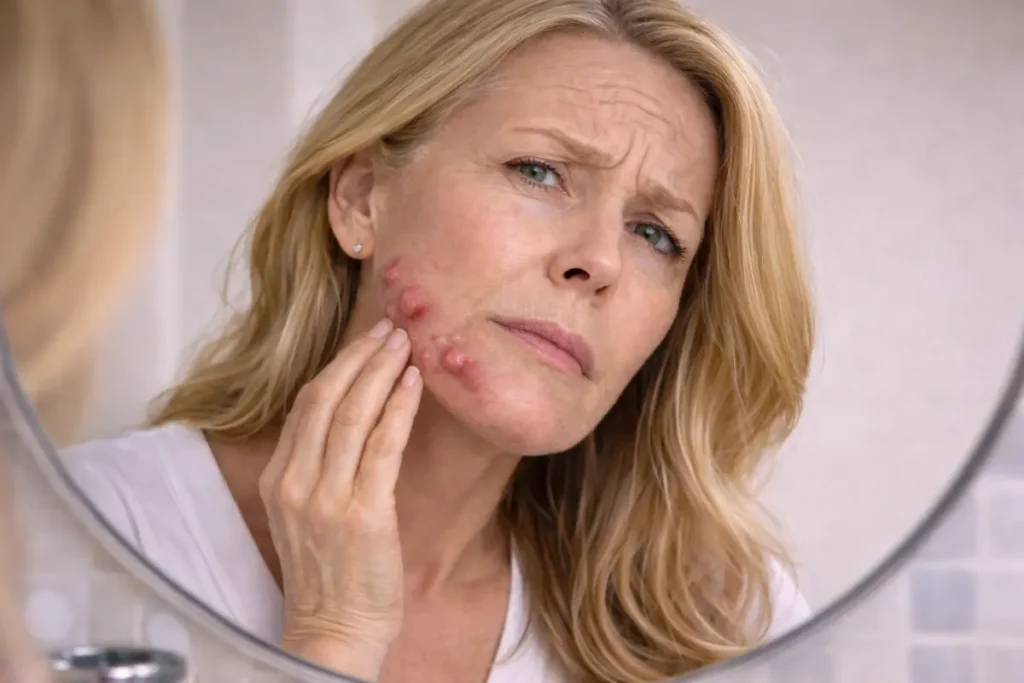
Our skin produces less natural oil and collagen. This isn’t a flaw requiring correction; it’s simply biology asking for different support. When we continue using the same heavy foundations, matte powders, and contouring techniques from our younger years, we’re essentially ignoring what our skin is telling us.
The shift isn’t about giving up makeup or settling for “age-appropriate” blandness. (That phrase makes me cringe, honestly.) It’s about learning techniques that work with your skin’s texture, not against it. Think of it as upgrading your approach, like trading uncomfortable heels for stylish flats that let you walk with confidence all day long.
And if you want your makeup to really shine, it starts with taking care of your skin first. That’s why I love a simple, consistent routine like the one I describe in our guide to a glowing skin care routine for women over 50, where gentle cleansing, hydrating serums, and daily SPF set the stage for everything you apply on top.
Skin prep: the secret step nobody talks about
Before we even think about foundation, let’s talk about the real game-changer: skin preparation. This might be the single most important shift in your makeup tutorial for women over 50.
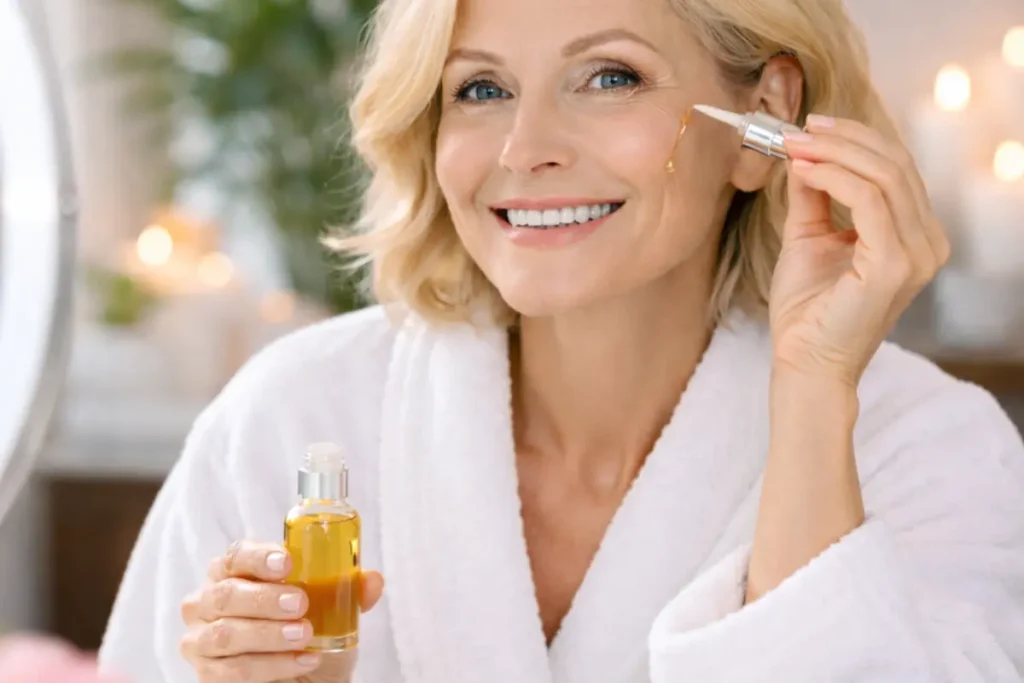
Start with serious hydration. I’m talking about a lightweight serum with hyaluronic acid, followed by a nourishing moisturizer with ceramides. Give these products a full five minutes to sink in while you’re brushing your teeth or making coffee. This creates a plump, smooth canvas that helps makeup glide on rather than cling to dry patches.
Consider a hydrating primer. Not the pore-filling, mattifying kind from our oilier days, but one that adds moisture and creates subtle radiance. This step alone can reduce the amount of foundation you need by half. And here’s a tip many makeup artists use: if you have particularly dry areas around your nose or forehead, tap a tiny bit of facial oil onto those spots before primer. Your makeup will thank you hours later.
The better your skin prep, the less makeup you actually need. When your skin feels comfortable and hydrated, foundation becomes an enhancer rather than a mask. If you feel your skin has changed a lot around menopause and beyond, you may also find it helpful to look at healthy aging strategies for women over 50 that support your skin from the inside out, as well as the ultimate skin care guide. Remeber, nutrition, sleep, and movement all play a role.
Foundation application: the Thin-Layer technique
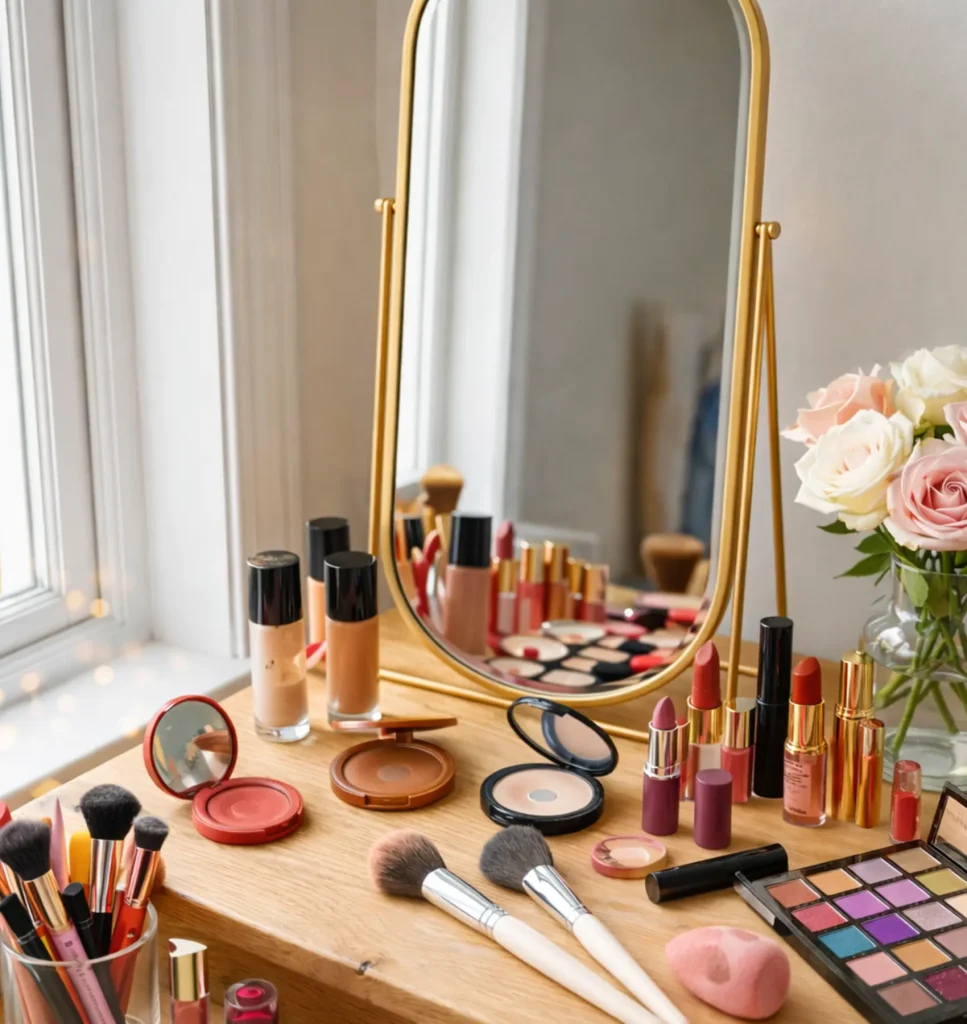
Let me be direct about something: a thick foundation on mature skin only emphasizes what we’re trying to minimize. The goal isn’t heavy coverage, it’s creating the illusion of healthy, even-toned skin.
Choose liquid or cream formulas over powder. These textures blend more easily into mature skin and offer flexible, buildable coverage with a skin-like finish. Look for foundations marketed as “luminous,” “radiant,” or “hydrating” words that signal they’ll give you a glow, not a flat, matte appearance.
Here’s the application technique that changed everything for me: Use a damp beauty sponge, not a brush. Dampen it under water, squeeze out excess, then bounce the foundation onto your skin, starting at the center of your face and working outward. This bouncing motion (rather than dragging) creates an airbrushed effect without disturbing the skin’s texture. Apply one thin layer, assess where you need more coverage, then build only in those areas.
Skip the full-face coverage. Instead, apply foundation where you have redness or unevenness, usually around the nose, chin, and any areas of hyperpigmentation. Let your natural skin show through on your forehead and cheeks, where the texture is smoother. This selective application looks infinitely more natural and prevents that “wearing a mask” appearance.
What about concealer? Apply it after foundation, not before. Use a creamy formula that won’t crease, and apply it in an inverted triangle under your eyes to brighten and lift. Blend gently with your ring finger (the weakest finger, which prevents tugging delicate skin) or a small, damp sponge.
If you’re also rethinking your overall routine right now, skin, sleep, movement, and mindset, you might enjoy our reflection on aging on your own terms after 50, where I talk about choosing what really matters in this season of life, including how we present ourselves to the world.
The powder question: when less really is more
I know we’ve been trained to set everything with powder, but this is where a makeup tutorial for women over 50 needs to break old rules.
Avoid heavy powder application. Powder can settle into fine lines and emphasize texture, making skin appear drier and older. If you absolutely need powder to control shine (and many of us don’t anymore), use it sparingly and strategically. A light dusting only on your T-zone with a fluffy brush is sufficient. Better yet, try a setting spray instead; it locks in your makeup while maintaining that coveted dewy finish.
Here’s what I do: I skip powder entirely on most days. If I need my makeup to last through an event, I lightly press translucent powder only where I used to get oily (my nose and chin), avoiding the entire eye area and cheeks. The contrast between matte and dewy creates a dimension that reads as youthful vitality.
And because healthy skin is also deeply connected to healthy lifestyle habits, I often remind myself of the basics we explore in our healthy aging guide for women over 50: nourishing food, movement, stress management, and sleep all quietly support that glow we’re trying to recreate with makeup.
Eyes that sparkle: mascara, shadow, and brows
Our eyes tell our stories, and the right techniques can make them the focal point of our face.
Black mascara is your friend. I spent years reaching for brown, thinking it looked more “natural” for mature women. But makeup artists consistently recommend black mascara for women over 50 because it provides contrast that brightens and opens the eyes. The key is application: one coat on curled lashes looks fresh and awake, not overdone. If your lashes have thinned, wiggle the wand at the base to deposit more product where you need volume.
Keep eyeshadow simple and strategic. Heavy, complicated eyelids can actually make eyes appear smaller. Instead, try this easy technique: sweep a light neutral shade across your entire lid, then use a slightly deeper taupe or soft brown in your crease for gentle definition. The goal is subtle depth, not dramatic contrast. Cream eyeshadows often work beautifully because they won’t settle into creases as readily as powder formulas.
Don’t neglect your brows. They frame everything. As we age, brows can thin or become sparse. Fill them in lightly with short, hair-like strokes using a pencil or powder one shade lighter than your natural color. Brush them upward with a tinted brow gel to create a lifted, polished appearance.
Adding color: blush, bronze, and glow
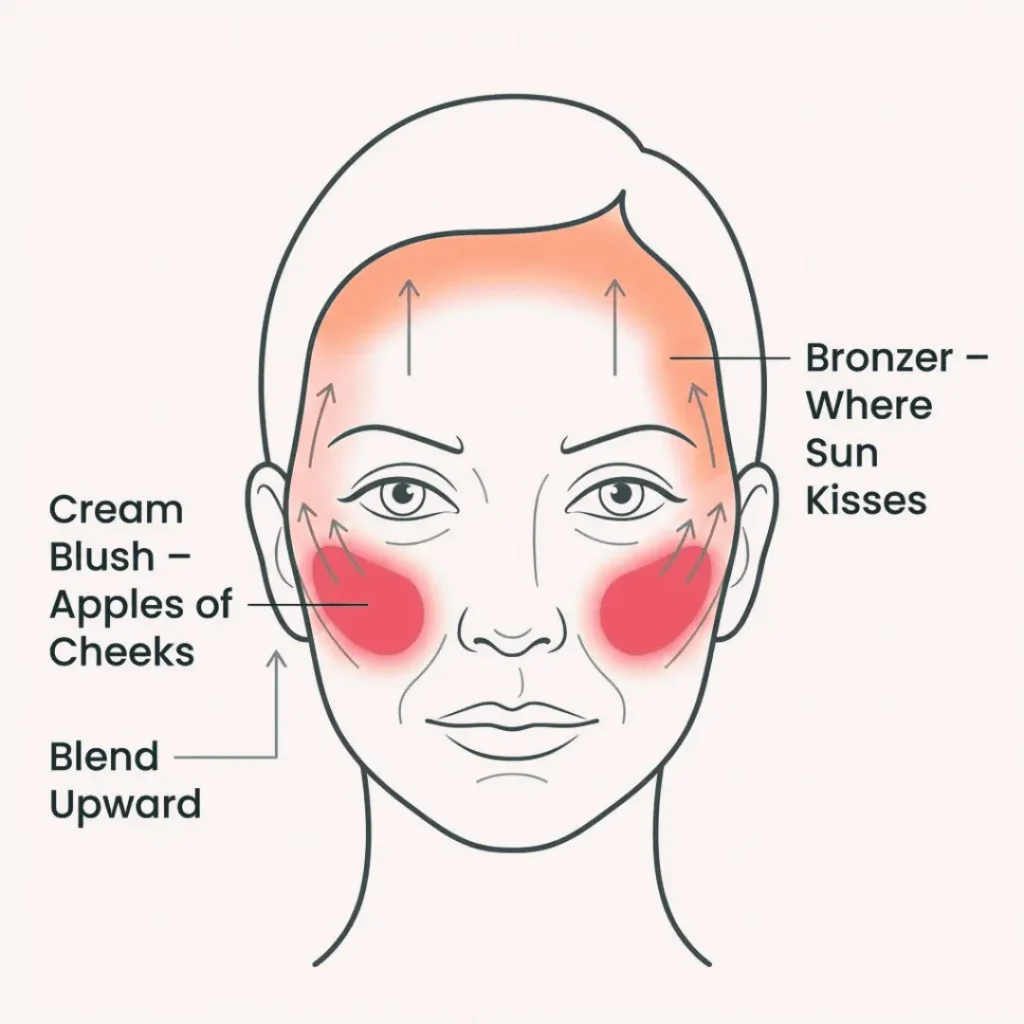
This is where makeup becomes genuinely fun and where strategic placement makes all the difference.
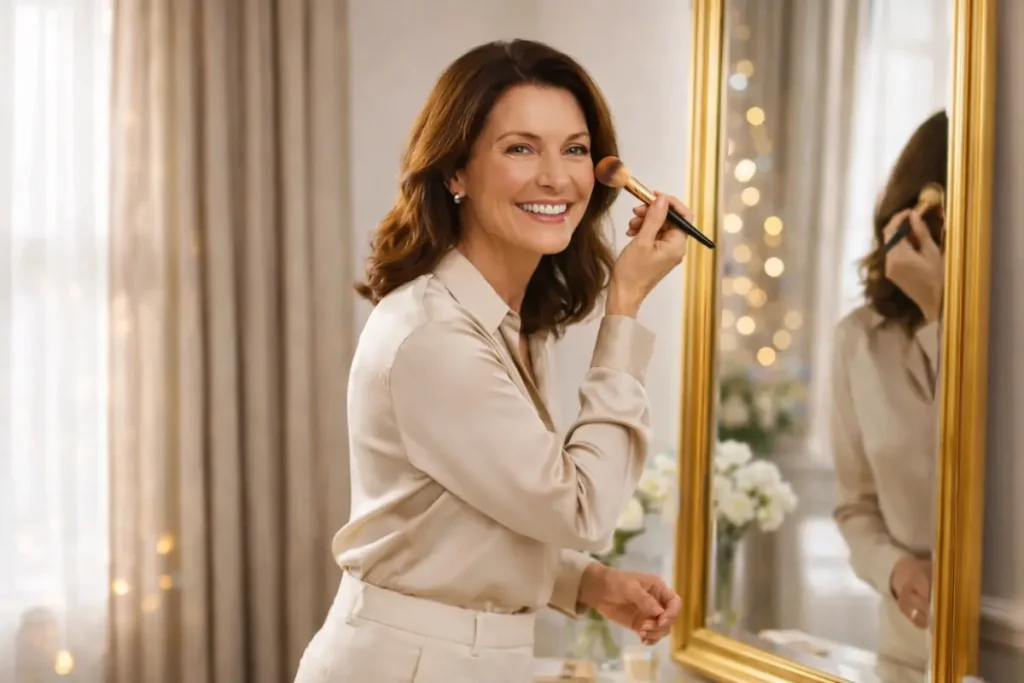
Cream blush is fabulous for mature skin because it adds hydrating color that looks like it’s coming from within. Apply it to the apples of your cheeks (smile to find them), then blend upward toward your temples with your fingertips or a damp sponge. This placement creates a fresh, youthful flush. Avoid placing blush on the sides of your face or using it as contour, as that harsh application instantly ages us.
Bronzer deserves a light hand. Apply it where the sun naturally kisses your skin: across your forehead, the high points of your cheeks, and lightly on your nose and jawline. This horizontal application creates warmth without the harsh lines that contouring can create on mature skin.
Embrace a little glow. There’s a huge difference between looking dewy and looking shiny. A cream highlighter on the high points of your cheekbones, your cupid’s bow, and the inner corners of your eyes creates dimension and reflects light in a way that reads as vitality. Skip the glittery formulas and choose products with a subtle, creamy sheen instead.
If you’re curious how your makeup routine fits into the bigger picture of adding life to your years after 50, energy, joy, and presence, our healthy aging reflections can be a beautiful companion to this more playful, colorful side of self-care.
Lips: color, moisture, and definition
Our lips thin slightly and lose some definition as we age, but the right techniques bring them back to life.
Start with a lip primer or balm. Hydrated lips hold color better and won’t develop those feathering lines. After moisturizing, gently exfoliate with a soft toothbrush if needed. Smooth lips are essential for clean application.
Consider using a lip liner. Choose one that matches your natural lip color (not your lipstick) and trace just outside your lip line to define and prevent feathering. Then fill in your entire lip with the liner before applying lipstick or gloss. This creates a base that makes color last longer.
Choose creamy, moisturizing formulas. Matte liquid lipsticks that look stunning on younger skin often emphasize dryness and lines on mature lips. Instead, reach for creamy lipsticks, tinted balms, or glosses in warm, flattering shades. Rose, coral, and berry tones tend to be universally flattering and add brightness to the complexion.
And if you’re focusing not only on how your lips look but also on your energy and strength, pairing this outer routine with an inner focus like our overview of vital vitamins for women over 50 that support skin, mood, and overall vitality can give you a more holistic sense of radiance.
Frequently asked questions
Your new makeup routine: a fresh start
The most liberating part of updating your makeup tutorial for women over 50? Realizing you actually need less, not more. When you focus on hydrated skin, strategic coverage, cream textures, and thoughtful placement, the entire process becomes quicker and more enjoyable.
I encourage you to experiment with one new technique at a time. Maybe this week, you can try a damp sponge for foundation application. Next week, you swap your powder blush for a cream version. Small, intentional changes create results you’ll actually stick with and enjoy.
Remember, makeup at 50+ isn’t about hiding or correcting. It’s about enhancement, radiance, and showing up as your most confident self. Your face tells a beautiful story; the right makeup simply makes sure the world sees that story in the best light.
If you’re ready to support your skin from the inside out and create a base that makes every makeup look better, dive into your ultimate skin care routine for women over 50 for practical, gentle steps you can start today. And if you’re craving a bigger-picture reset energy, mood, purpose, our complete healthy aging guide for women over 50 is a beautiful next step.
What’s one makeup habit you’re excited to update this week? Share your thoughts in the comments below. I’d love to hear what works for you.
Always consult a dermatologist or qualified healthcare professional if you experience skin sensitivity, irritation, or concerns about product ingredients or health conditions.