

Remember when you could fall asleep within minutes and wake up refreshed? If you’re lying awake at 3 a.m. wondering where those easy sleep days went, you’re definitely not alone. The truth is, sleep changes dramatically for women after 50, and it’s not just about counting sheep anymore.
Understanding Why Sleep Gets Harder After 50
Here’s what we don’t talk about enough: your body’s entire sleep architecture shifts as you move through perimenopause and beyond. It’s not just hot flashes keeping you awake (though those certainly don’t help).
Your estrogen and progesterone levels start fluctuating and eventually decline, and these hormones play a crucial role in how well you sleep. Progesterone actually has natural sedative effects, so when it drops, falling asleep becomes harder and your sleep becomes lighter. Meanwhile, declining estrogen makes your body’s temperature regulation less stable, triggering those night sweats that jolt you awake.
But there’s another culprit many of us don’t know about: melatonin, the hormone that tells your body it’s time to sleep, naturally decreases with age. During perimenopause, this decline accelerates, which means you might find yourself with increased sleep latency (fancy term for taking forever to fall asleep) and more middle of the night awakenings
What I’ve noticed among friends going through this is that stress hormones also spike during this time. Cortisol levels can become elevated during menopause, contributing to insomnia and nighttime waking. When you add emotional changes like anxiety and mood swings into the mix, winding down at night becomes even more challenging.
The Hidden Sleep Disorder Many Women Miss
This is important, and honestly, it surprised me when I first learned about it: postmenopausal women are two to three times more likely to have sleep apnea compared with premenopausal women. The frustrating part? It often goes completely undiagnosed.
Unlike men who typically snore loudly, women with sleep apnea might not have obvious symptoms. You might just feel exhausted during the day and assume it’s “just menopause” or “just getting older.” At least one study found that more than half the women complaining of sleep troubles during menopause actually had sleep apnea, restless legs syndrome, or both.
If you’re experiencing daytime fatigue that feels excessive, or if your partner mentions you stop breathing during sleep, talk to your doctor about a sleep study. This isn’t something to brush off as normal aging.
Natural Sleep Remedies That Actually Work

Let’s get practical. While I can’t give medical advice (and you should definitely consult your doctor before trying new supplements), research supports several natural approaches to improving sleep after 50.
Herbal Remedies with Science Behind Them:
Ashwagandha, an herb used in Ayurvedic medicine for thousands of years, has shown promise for sleep issues. Its Latin name actually includes “somnifera,” which means sleep-inducing. Chamomile, that gentle golden flower we’ve been drinking in tea forever, has concentrated extracts that research suggests may improve sleep, including in postmenopausal women.
Other herbs worth knowing about include lemon balm and tart cherry, which have increasing evidence for reducing sleep problems related to menopause. Valerian and passionflower might help too, though results are more mixed.
Supplements to Consider:
Magnesium is a mineral many of us become deficient in as we age, and it plays a significant role in sleep regulation. Foods rich in magnesium include leafy greens, pumpkin seeds, and even dark chocolate (finally, some good news). Melatonin supplements can help, but start with low doses since high amounts can cause grogginess or vivid dreams.
L-theanine, an amino acid found in tea, and 5-HTP have also shown benefits for sleep. If you’re curious about which supplements work best during perimenopause, understanding your body’s changing needs is key to finding what helps you most.
The 10-3-2-1-0 Rule for Better Sleep
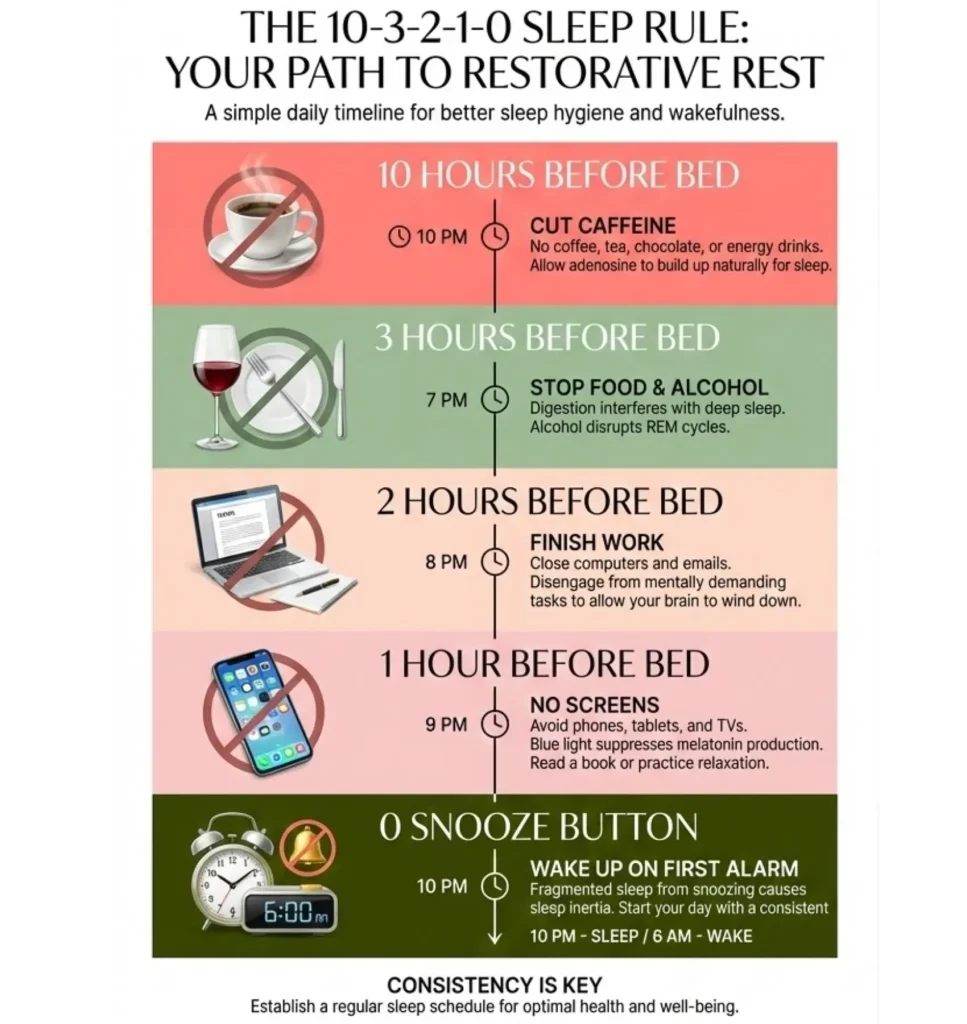
This simple framework has helped countless women create better sleep habits, and honestly, it’s easier to remember than complicated routines. Here’s how it works:
10 hours before bed: Stop consuming caffeine. Yes, that afternoon coffee might still be affecting your sleep. As we age, our bodies process caffeine more slowly.
3 hours before bed: No more food or alcohol. While that glass of wine might help you fall asleep faster, research shows it results in more interrupted, less restful sleep and even increases snoring. Heavy meals close to bedtime can also disrupt sleep quality.
2 hours before bed: Stop working. This gives your mind time to shift from productive mode to rest mode. Use this time for gentler activities that help you transition toward sleep.
1 hour before bed: Turn off all screens. The blue light from phones, tablets, and computers suppresses melatonin production, making it harder to fall asleep.
0 times: Hit the snooze button in the morning. Starting your day by fragmenting your sleep sets a poor pattern for the entire day.
Some sleep experts also recommend a simpler 3-2-1 version focusing just on alcohol (3 hours), food (2 hours), and fluids (1 hour) before bed.
Creating Your Sleep Sanctuary
Your bedroom environment matters more now than it did in your 30s. Think of it as creating a personal retreat designed specifically for rest.
Temperature and Comfort:
Keep your bedroom cool, quiet, and dark. If night sweats are an issue for you, invest in moisture-wicking, breathable sleepwear and bedding. Blackout curtains can help if streetlights or early morning sun disturb your sleep. Some women find white noise machines helpful for maintaining consistent sound throughout the night.
Your mattress deserves attention too. If it’s over eight years old or you wake up with aches, it might be time for a replacement that better supports your body now.
Light Exposure Matters:
Getting morning sunlight exposure helps regulate your circadian rhythm. Try to step outside within an hour of waking, even if it’s just for ten minutes. This natural light signal tells your body it’s daytime, which helps it recognize nighttime later.
Lifestyle Habits That Support Quality Sleep
Beyond supplements and sleep environment, your daily habits create the foundation for nightful rest. We discuss this final point in From Midnight Scrolling to Restful Nights
Movement and Exercise:
Regular physical activity earlier in the day helps regulate your sleep cycle. The key word here is “earlier”, vigorous exercise right before bed can actually make falling asleep harder. Aim for morning or afternoon workouts when possible. If you’re wondering about effective exercises after 50, choosing activities that energize you during the day can improve your sleep at night
Relaxation Techniques:
Diaphragmatic breathing, also called deep belly breathing, is a simple way to calm your nervous system before bed. Try this: breathe in slowly through your nose while letting your belly expand, then exhale slowly. This signals your body that it’s safe to relax.
Other effective relaxation practices include gentle yoga, progressive muscle relaxation, or guided meditation. What matters most is finding what helps you personally unwind.
Consistency Is Your Friend:
Going to bed and waking up at the same time every day (yes, even weekends) helps stabilize your circadian rhythm. Your body thrives on predictability, especially as hormones fluctuate.
Frequently Asked Questions
Finding Your Way Back to Restful Sleep
Sleep after 50 might require more attention than it used to, but that doesn’t mean restful nights are out of reach. The combination of understanding what’s happening in your body, implementing evidence based natural remedies, and creating supportive daily habits can make a profound difference.
Start with one small change this week. Maybe it’s moving your last cup of coffee earlier in the day, or perhaps it’s finally getting those blackout curtains you’ve been thinking about. Small, consistent steps create lasting change, and your body will thank you for the attention.
Remember, persistent sleep problems deserve medical attention. If you’ve tried these strategies for several weeks without improvement, or if you suspect you might have sleep apnea or another sleep disorder, please consult your doctor. Getting quality sleep isn’t a luxury it’s essential for your health, vitality, and ability to thrive in this remarkable season of life.
What’s the first step you’ll take toward better sleep tonight?