
Last Tuesday at 11:47 PM, I caught myself doing it again. There I was, propped up against three pillows, squinting at my phone screen while my husband snored peacefully beside me. I’d been scrolling through family photos for over an hour, my eyes burning, yet somehow I felt more alert than I had all day. That’s when I put down my phone, grabbed those amber-tinted glasses, and discovered the blue-light-blocking strategies that would transform my nights without giving up my beloved scrolling habit. What happened next surprised me more than any late-night social media post ever could.
The wake-up call I didn’t see coming
For months, I blamed everything else: hormones, stress, that extra cup of coffee at 3 PM. I even convinced myself that needing less sleep was just part of getting older, but one conversation with my sister changed everything.
She’d recently attended a wellness workshop where the speaker explained how our devices emit wavelengths that essentially trick our brains into thinking it’s noon when it’s actually midnight. The science was straightforward: blue light mimics natural daylight, signaling our bodies to stay alert and suppressing melatonin production.
What really got my attention was learning that this isn’t just inconvenient; poor sleep affects everything from how we process emotions to how our bodies regulate blood sugar and maintain bone density. For those of us navigating the hormonal shifts that come with this stage of life, quality rest isn’t a luxury; it’s foundational.
I started paying attention to my patterns. Every night, I’d settle into bed around 10 PM feeling legitimately tired, then I’d grab my phone to “just check a few things.” Suddenly, it would be midnight, and despite feeling exhausted, sleep felt impossible; my mind raced, my body felt simultaneously drained and wired.
The three-hour window that changed everything
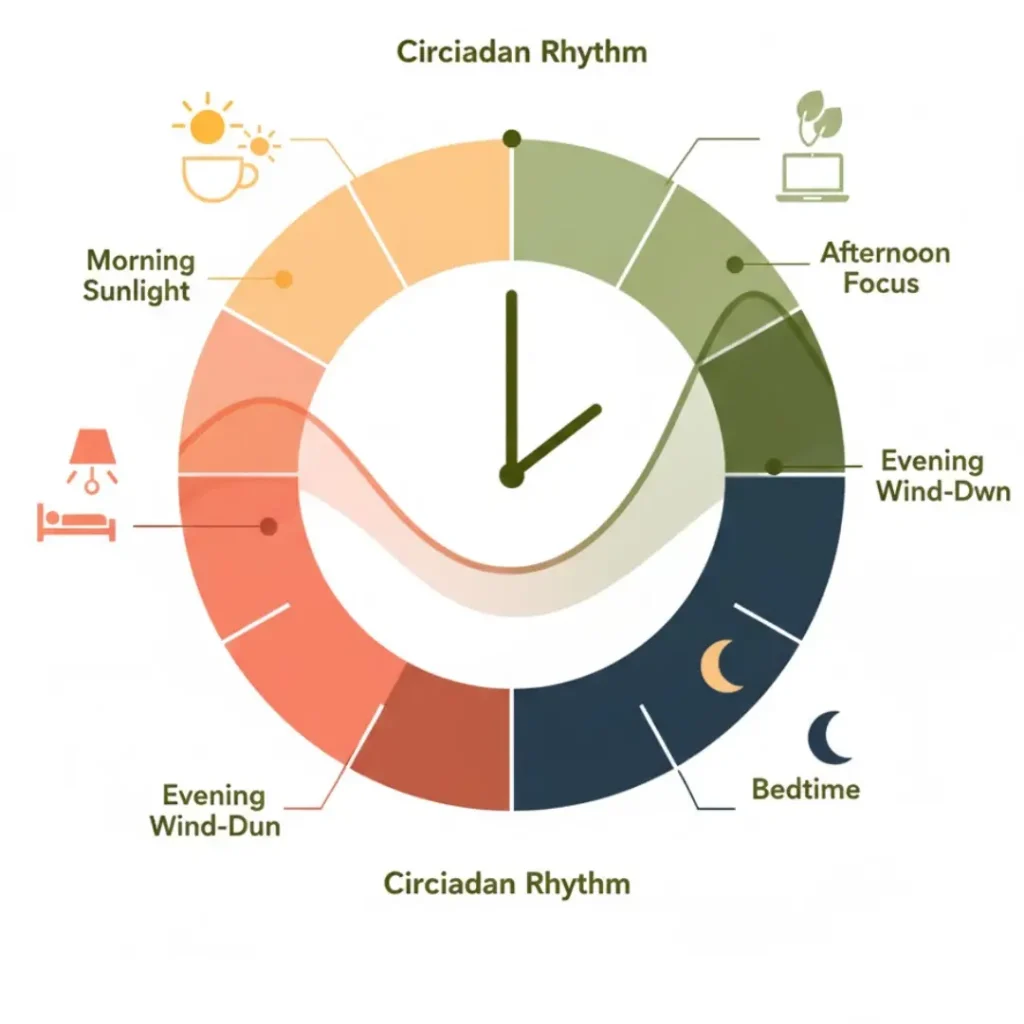
I didn’t want to become one of those people who ban all screens after dinner, which felt extreme and frankly, unrealistic. Instead, I focused on what researchers call the “circadian preparation window,” the three hours before your intended bedtime.
Here’s what I implemented, one step at a time around 7 PM, I started switching all my devices to their warmest display settings, my iPhone has Night Shift, my tablet has a blue light filter, and even my laptop now automatically adjusts its screen temperature as evening approaches, these built-in features shift the display from cool blue tones to warmer amber hues.
The transformation wasn’t instant, but within a week, I noticed myself yawning earlier and my eyes feeling less strained; that jittery, can’t-settle-down feeling started to fade.
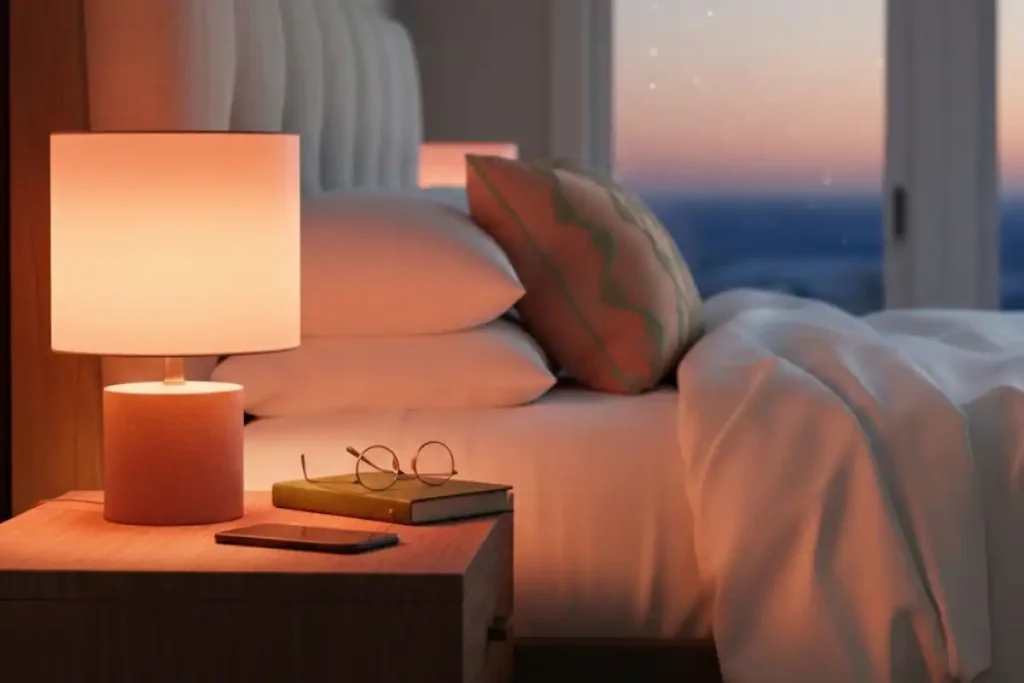
I also replaced the bright white bulbs in my bedroom and living room with warm-toned alternatives; the difference in atmosphere was immediately softer, more relaxing, less clinical. My evening space started feeling like an invitation to wind down rather than a place to power through.
When science met real life in my living room
About two weeks into my experiment, I finally tried those amber glasses my daughter had insisted I needed. I felt slightly ridiculous wearing them while watching television, but something remarkable happened.
For the first time in months, I felt genuinely sleepy at a reasonable hour, not that heavy, exhausted but wired feeling is actually natural drowsiness, the kind where your eyelids get heavy, and your body starts craving horizontal positions.
The glasses work by physically blocking the blue wavelengths before they reach your eyes. It’s like wearing sunglasses at night, except instead of blocking brightness, they filter out the specific light spectrum that interferes with melatonin production.
I started wearing them every evening after dinner within three weeks, my sleep pattern had shifted dramatically. I was falling asleep faster, staying asleep longer, and waking up feeling more refreshed than I had in years.
What surprised me most was how this simple change created a ripple effect. Better sleep meant clearer thinking during the day, I had more patience, more energy, and better focus. Even my mood swings after 50, those sudden waves of irritability that I’d attributed to hormones, became noticeably less frequent.
Creating Boundaries Without Feeling Deprived
The hardest part wasn’t the technical adjustments; it was retraining my habits and managing the fear of missing out on what if someone texted with important news? What if I missed a beautiful photo my son posted?
I had to be honest with myself. In twenty years of late-night phone checking, how many truly urgent messages had I received after 10 PM? Maybe three, the rest could absolutely wait until morning.
I established what I call my “technology sunset” one hour before bed; all screens go face down, not hidden away in another room. I’m not that disciplined, but face down on my nightstand. This simple physical barrier creates just enough friction to break the automatic reaching habit.
Instead, I fill that hour with activities that don’t involve backlit screens, some nights I read physical books, mysteries mostly, the kind that engage my mind without overstimulating it, other nights, I do gentle stretches, write in a journal, or sit with a cup of chamomile tea and let my mind wander, the key was finding replacement activities that felt genuinely enjoyable, not like punishment.
For women who work evening shifts or have legitimate reasons to use devices late, I discovered that even thirty minutes of screen-free wind-down time makes a measurable difference. The goal isn’t perfection, it’s progress.
The unexpected benefits nobody mentioned
Better sleep was the obvious win, but other improvements caught me off guard. My eyes stopped feeling dry and irritated all the time. Those tension headaches that had become my late-afternoon companion mostly disappeared.
My skin started looking better, too. Quality sleep supports cellular repair and collagen production in ways that no cream or serum can replicate. I’m not claiming I look twenty years younger, but the tired, drawn look I’d grown accustomed to seeing in the mirror has softened considerably.
Perhaps most surprisingly, my relationship with technology shifted by creating boundaries. I started appreciating my devices more during appropriate hours and resenting them less overall. The constant low-grade anxiety about missing something faded; I stopped reflexively checking my phone every few minutes.
I also noticed improvements in how I process information and make decisions when I’m well-rested; everything from meal planning to having difficult conversations becomes easier, and that perimenopause brain fog memory helps my thoughts seem lighter, lifted significantly. I felt sharper, with more mental clarity after 50 throughout the day.
Making it work for your real life
Every woman’s situation is different. Some of us live alone and can control our environment completely. Others share space with partners who have different schedules and habits. I’m fortunate that my husband adapted easily to our dimmer evening lighting, but I know that’s not universal.
If you’re dealing with resistance from family members, start with your personal space. Use a bedside lamp with a warm bulb and blue-light -blocking strategies like amber glasses for your own screen time, and create your own wind-down ritual, even if the rest of the household operates differently.
For those juggling caregiving responsibilities, whether for aging parents or grandchildren, the timing might need adjustment, but the principle remains the same, though: protect the hours before sleep from intense blue light exposure whenever possible.
I’ve learned to be flexible without abandoning the practice entirely. Some nights, life happens. Someone needs help, there’s a family emergency, or I want to finish watching something compelling. On those nights, I don’t stress about perfect adherence; I just returned to my routine the next evening.
The sustainable approach isn’t rigid rules; it’s understanding the why behind the practice and adapting it to fit your circumstances.
When to seek professional guidance
While blue-light-blocking strategies transformed my sleep, I want to be clear about something important: if you’re experiencing persistent insomnia, severe daytime fatigue, or symptoms that concern you, please consult your healthcare provider.
Sleep problems can sometimes indicate underlying health conditions that need professional attention. Issues like menopause fatigue, sleep apnea, thyroid dysfunction, or other medical concerns won’t be resolved by changing your lighting alone.
These strategies work beautifully for sleep disruption caused by modern lifestyle factors, but they’re not a substitute for medical care when something more serious is happening. A good doctor can help you determine whether your sleep issues are primarily behavioral or if there’s an underlying condition requiring treatment.
I’m sharing what worked for me, a regular woman who struggled with sleep and found relief through simple environmental and behavioral changes. I’m not a medical professional, and your situation might require different interventions.
Frequently asked questions
Moving forward with intention
Six months into this journey, I can honestly say these changes feel effortless now. What started as a deliberate experiment has become my natural routine. I don’t feel deprived or restricted; I feel liberated from the exhausting cycle of poor sleep and daytime fatigue.
The best part is how achievable this is; you don’t need expensive equipment or dramatic lifestyle overhauls, warm light bulbs cost a few dollars, blue light filters are built into most devices, amber glasses are widely available and affordable, and the biggest investment is simply deciding that your sleep matters enough to prioritize.
Start wherever feels manageable, maybe that’s just enabling night mode on your phone, maybe it’s replacing one light bulb, maybe it’s committing to putting devices down thirty minutes earlier than usual. Small changes compound into significant results when maintained consistently.
Your body wants to sleep well; it’s designed for restorative rest. We need to stop accidentally interfering with its natural wisdom by respecting your circadian rhythm and protecting it from disruptive light exposure. You’re working with your biology instead of against it.
If you’re lying awake tonight wondering why sleep feels so elusive, consider whether your evening environment might be part of the answer. The solution might be simpler than you think.
For more guidance on creating sleep-supporting habits, explore our comprehensive resource on improving sleep naturally after 50