

I remember the exact morning it hit me. I woke up, pressed my hand against my cheek the way I always do, and felt something different. Not worse exactly, just different. My skin didn’t spring back the way it used to. That was the moment I started paying attention to collagen for menopause, not as a beauty buzzword, but as part of a much bigger hormonal transition.
If you’re in a similar stage, you may have noticed changes in dryness, firmness, or the way your skin feels before you ever connected them with menopause. This isn’t about chasing your twenty-five-year-old self. It’s about understanding what declining estrogen can mean for collagen-rich skin, what the evidence actually supports, and where realistic expectations matter.
Why collagen and menopause are connected
Collagen changes with age in everyone, but menopause adds another layer. Estrogen receptors are present in skin, and the decline in estrogen around menopause is associated with changes in dermal collagen, skin thickness, elasticity, hydration, and barrier function. That helps explain why skin can seem to change more noticeably around this stage of life.
Menopause isn’t a switch that flips overnight, though. During perimenopause, hormone levels can fluctuate before settling into the lower-estrogen environment of postmenopause. If you’re still trying to understand where you are in that transition, our guide to perimenopause, menopause, and postmenopause explains those stages more clearly.
That distinction matters because menopause-related skin changes don’t look identical in every woman or arrive on the same schedule. Age, sun exposure, smoking history, genetics, nutrition, medications, health conditions, and skin-care habits can all influence what you notice. Estrogen is an important part of the picture, but it isn’t the whole picture.
What you may notice in your skin
For me, the most useful shift was stopping myself from treating every new change as proof that my body was suddenly “losing collagen.” Skin biology is more complicated than that. Research on menopausal skin does support changes in collagen and elasticity as estrogen declines, but a mirror or a pinch test can’t tell you exactly how much collagen you have.
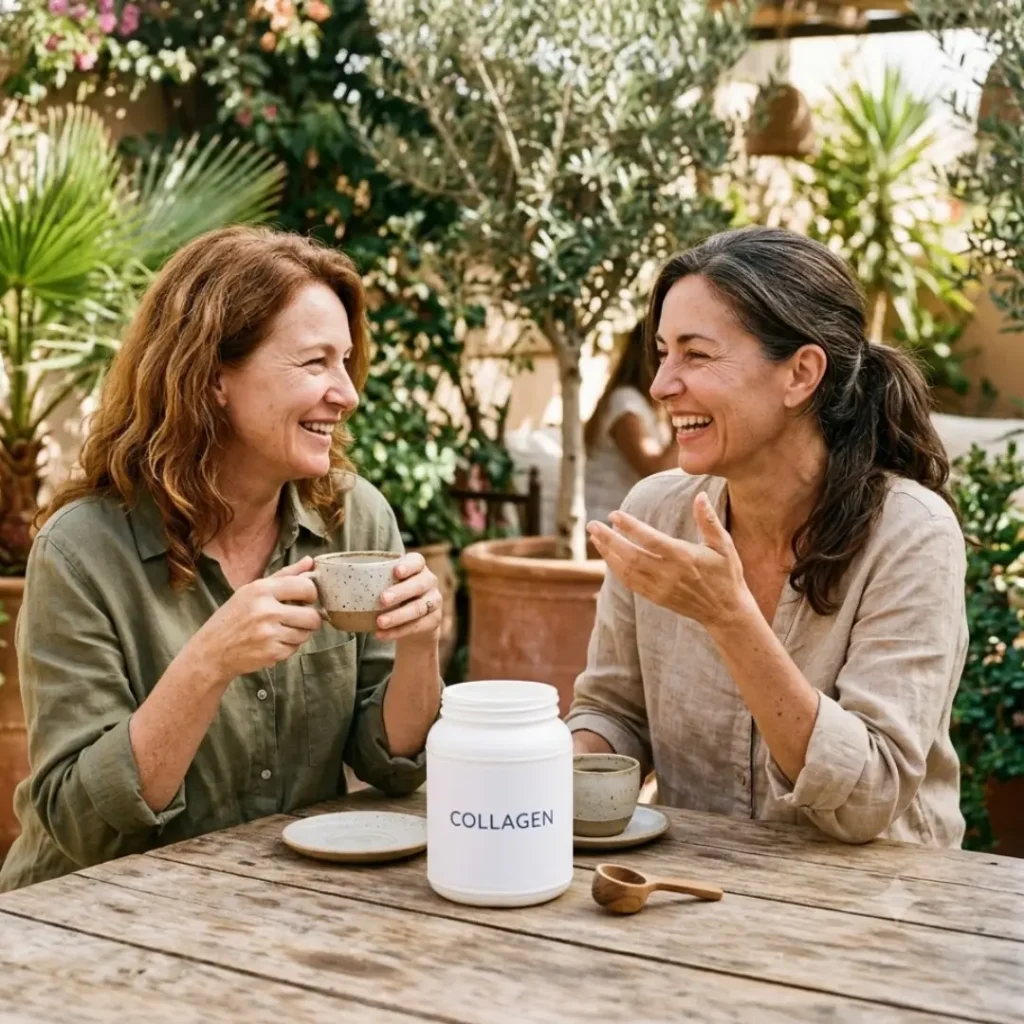
Changes commonly discussed in menopausal skin research include greater dryness, reduced elasticity, thinning, and changes in firmness or texture. Wound healing and skin-barrier function may also change with estrogen deficiency and aging. These are broad patterns, not a checklist that can diagnose collagen loss at home.
Hair thinning, brittle nails, joint pain, and eye dryness can also occur around midlife, but they have many possible causes. I wouldn’t automatically label them “collagen loss.” New, persistent, painful, or rapidly worsening symptoms deserve a proper medical assessment rather than a supplement guess.
What the research says about estrogen and skin collagen
The connection between estrogen and skin is biologically plausible and supported by decades of research. More recent reviews continue to describe lower estrogen during menopause as one contributor to reduced collagen production, elasticity, moisture, and other structural changes in skin. At the same time, the exact pace and degree of change vary widely between women.
This is where I think it’s especially important not to turn a real biological relationship into an exaggerated promise. Menopause can influence collagen-rich skin, but that doesn’t mean every visible sign of aging is hormonal or that one food, powder, cream, or treatment can simply “replace” what changed.
For the broader picture beyond menopause-specific hormone changes, including collagen, food, supplements, skin, joints, and healthy-aging considerations, see our complete collagen guide for women over 50. This article stays focused on the menopause and estrogen side of that story.
Does hormone therapy restore collagen?
This is one of the questions I would be most careful with. Studies and reviews have reported improvements in some skin measures, including collagen content, thickness, or elasticity, among women using menopausal hormone therapy. But the evidence isn’t perfectly consistent, and current research doesn’t justify starting hormone therapy solely to prevent skin aging or increase collagen.
Hormone therapy is a medical decision based on menopausal symptoms, health history, age, timing, risks, benefits, and the specific treatment being considered. If you’re already using it and notice skin changes, or you’re considering it for other menopausal symptoms, that’s a conversation to have with your clinician. I wouldn’t change, start, or stop hormone treatment based on a collagen goal alone.
The part of this transition nobody talks about enough
Nobody warns you about the quiet moments. The ones where you catch yourself grieving a version of your skin that used to feel effortless. That feeling can be real without meaning you need to fight your face or turn every change into a problem to solve.
Here’s what I’ve come to believe. Thriving during this stage isn’t about pretending physical changes don’t matter. It’s about holding two truths at once: yes, your body is changing, and yes, this can still be one of the richest chapters of your life. Understanding the biology helped me replace some of the panic with perspective.
Everyday habits that support healthy skin during menopause
You don’t need a complicated “collagen for menopause” routine. The basics still matter: enough protein and overall nutrition, vitamin C from food, regular movement, and consistent sun protection. These habits support general health and give your body nutrients involved in normal collagen synthesis, but they shouldn’t be sold as a way to reverse menopause.
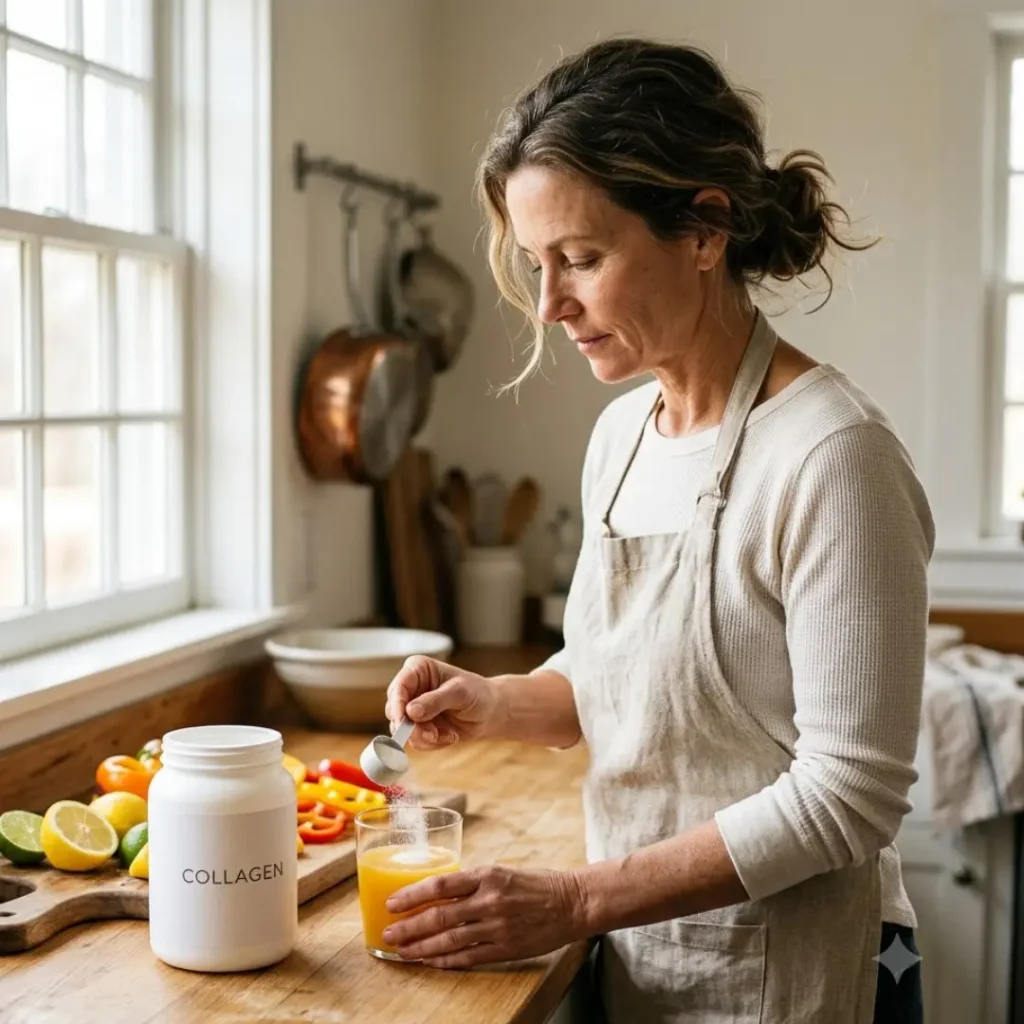
If you’d rather start with your plate than a powder, our guide to simple foods that support collagen production keeps the nutrition side practical without turning this article into another food guide.
And don’t underestimate sun protection. Menopause-related hormonal changes happen alongside ordinary chronological aging and years of cumulative sun exposure. Supporting your skin after 50 means paying attention to both, rather than blaming every line or texture change on estrogen.
What about collagen supplements?
Collagen supplements are a separate question from the hormonal changes happening during menopause. Some research suggests oral collagen peptides may improve certain skin measures, but studies vary in formulation, dose, duration, funding, and quality. A supplement also doesn’t correct estrogen deficiency or guarantee a visible result.
If you’re considering one, our guide to choosing a collagen supplement after 50 covers product type, labels, quality, and practical selection questions in more detail.
When to talk with your doctor
Skin changes alone are often part of aging and menopause, but not every symptom should be written off as hormonal. Talk with a qualified clinician if a change is sudden, severe, painful, persistent, or accompanied by other symptoms that concern you. The same applies before starting hormone therapy or if you’re considering supplements alongside medications or health conditions.
The goal isn’t to medicalize every change. It’s to know when a normal midlife transition deserves reassurance and when something deserves a closer look.
Frequently asked questions
Does menopause cause collagen loss?
Declining estrogen during menopause is associated with changes in skin collagen, thickness, elasticity, hydration, and other aspects of skin structure. Aging, sun exposure, genetics, lifestyle, and health factors also contribute, so menopause is important but not the only influence.
Is collagen loss different during perimenopause and postmenopause?
Perimenopause involves fluctuating hormone levels, while postmenopause is generally a lower-estrogen state. Skin changes vary widely between women, so there is no single timeline that predicts exactly when collagen-related changes will become noticeable.
Can I tell if my skin is losing collagen by looking at it?
Not precisely. Dryness, thinning, reduced firmness, and changes in elasticity can occur with menopause and aging, but appearance alone cannot measure collagen content or prove that collagen loss is the cause of a specific symptom.
Does hormone therapy increase skin collagen?
Some studies report improvements in skin collagen, thickness, or elasticity with menopausal hormone therapy, but findings are not completely consistent. Hormone therapy should not be started solely for skin aging or collagen and should be considered with a clinician based on overall symptoms, risks, benefits, and health history.
Do I need a collagen supplement during menopause?
Not necessarily. A collagen supplement is not a universal requirement during menopause. Some studies suggest oral collagen peptides may improve certain skin measures, but results vary and supplements do not replace the broader roles of nutrition, sun protection, healthy habits, or appropriate medical care.
A gentle closing thought on collagen for menopause
Collagen for menopause isn’t about reversing time. It’s about understanding that estrogen-related changes can be one real part of what happens to skin during this transition without turning every sign of aging into a deficiency that needs fixing.
Give yourself room to notice what’s changing, protect the health of the skin you have, and ask for medical guidance when something doesn’t feel right. That’s a much steadier foundation than chasing a promise that one product can make menopause disappear.
What’s one small habit you’ll try this week? I’d love to hear it in the comments below.