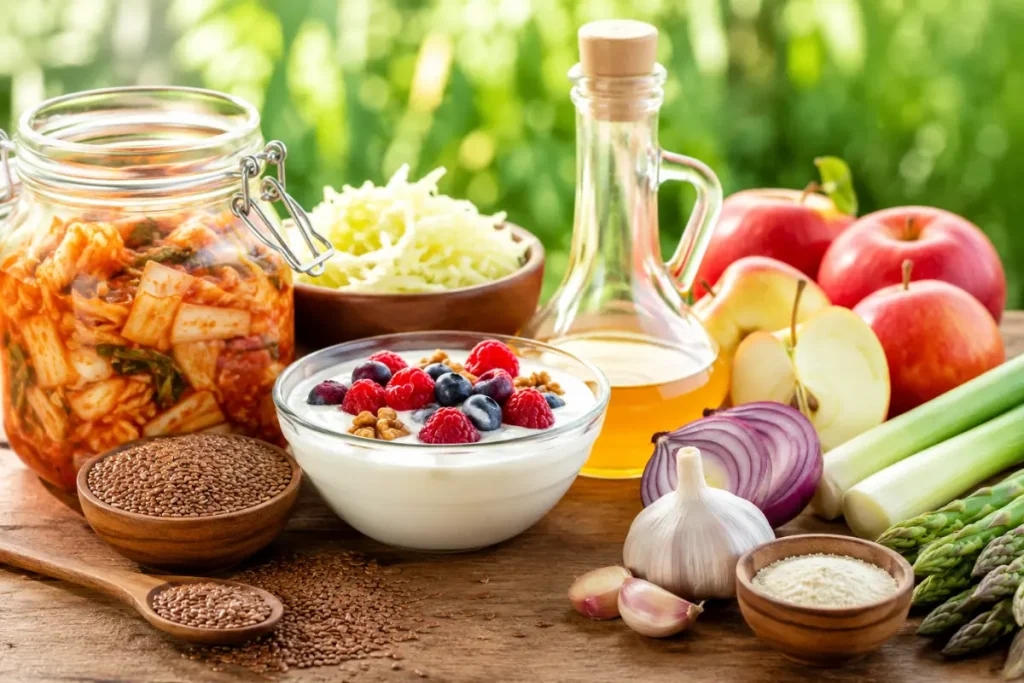
I spent a full year eating well, walking most mornings, and trying to be consistent, yet the change around my middle felt stubborn. I was proud of the habits I had built. I was also frustrated that my body no longer seemed to respond in the way I expected.
That frustration sent me down a rabbit hole about gut health and belly fat after menopause. What I found was more nuanced than the dramatic promises online. The gut microbiome does change with age and menopause, and researchers are studying how those changes relate to metabolism, inflammation, and body composition. But the gut is not a hidden switch that makes belly fat appear or disappear.
That distinction changed the way I approached the subject. Instead of trying to “fix” my microbiome so my belly would shrink, I started looking at gut-supportive habits as one part of a much bigger picture: food quality, movement, muscle, sleep, health conditions, medications, and the hormonal changes that accompany menopause.
If you want the broader gut-health picture first, our guide to gut health and inflammation after 50 explores that topic separately.
What really happens to gut health after menopause?
Your digestive tract is home to a large community of microorganisms collectively known as the gut microbiome. Its composition can be influenced by diet, age, medications, illness, physical activity, environment, and hormonal status.
Researchers have observed differences in the gut microbiome between premenopausal and postmenopausal women. Scientists are also interested in the estrobolome, a term used for microbial genes involved in estrogen metabolism. It is an interesting area of research, but it should not be translated into the claim that a particular microbiome profile “balances estrogen” or directly controls abdominal fat.
Menopause itself is associated with changes in body composition and fat distribution, including a greater tendency for fat to accumulate around the abdomen. The microbiome may be one piece of that complex biological picture, but it is not the only explanation.
Do specific gut bacteria protect against menopause belly fat?
This was one of the most tempting ideas I came across because it makes the problem sound wonderfully simple: restore the “right” bacteria and the belly fat follows. The science is not there yet.
Lactobacillus and Bifidobacterium species are widely studied in digestive and metabolic health. Akkermansia muciniphila has also attracted research interest because of its relationship with the intestinal mucus layer and metabolic markers. But associations between these microorganisms and metabolic health do not prove that adding a particular strain will selectively reduce visceral fat in postmenopausal women.
That matters when you see probiotic products marketed specifically for “menopause belly.” A strain name on a bottle is not the same thing as clinical evidence that the finished product will change your waistline. Probiotic effects can be strain-specific, product-specific, and dependent on the population being studied.
1. Build fiber variety gradually
If there is one gut-health habit I would put ahead of chasing exotic supplements, it is eating a wider variety of fiber-containing foods when they are appropriate for you. Vegetables, fruit, beans, lentils, whole grains, nuts, and seeds provide different types of fiber and other compounds that gut microbes can use.
Some fibers are described as prebiotics because they are used by microorganisms in ways that may benefit health. Inulin, resistant starch, and pectin are examples you may encounter. But there is no need to crown apple pectin, inulin, or any other single fiber as the special menopause solution.
I also would not jump from a low-fiber diet to an aggressive fiber target overnight. A sudden increase can leave some people feeling more bloated and uncomfortable. Increasing fiber gradually, drinking enough fluid, and paying attention to your own digestive tolerance is a much more realistic approach.
2. Make room for fermented foods if you enjoy them
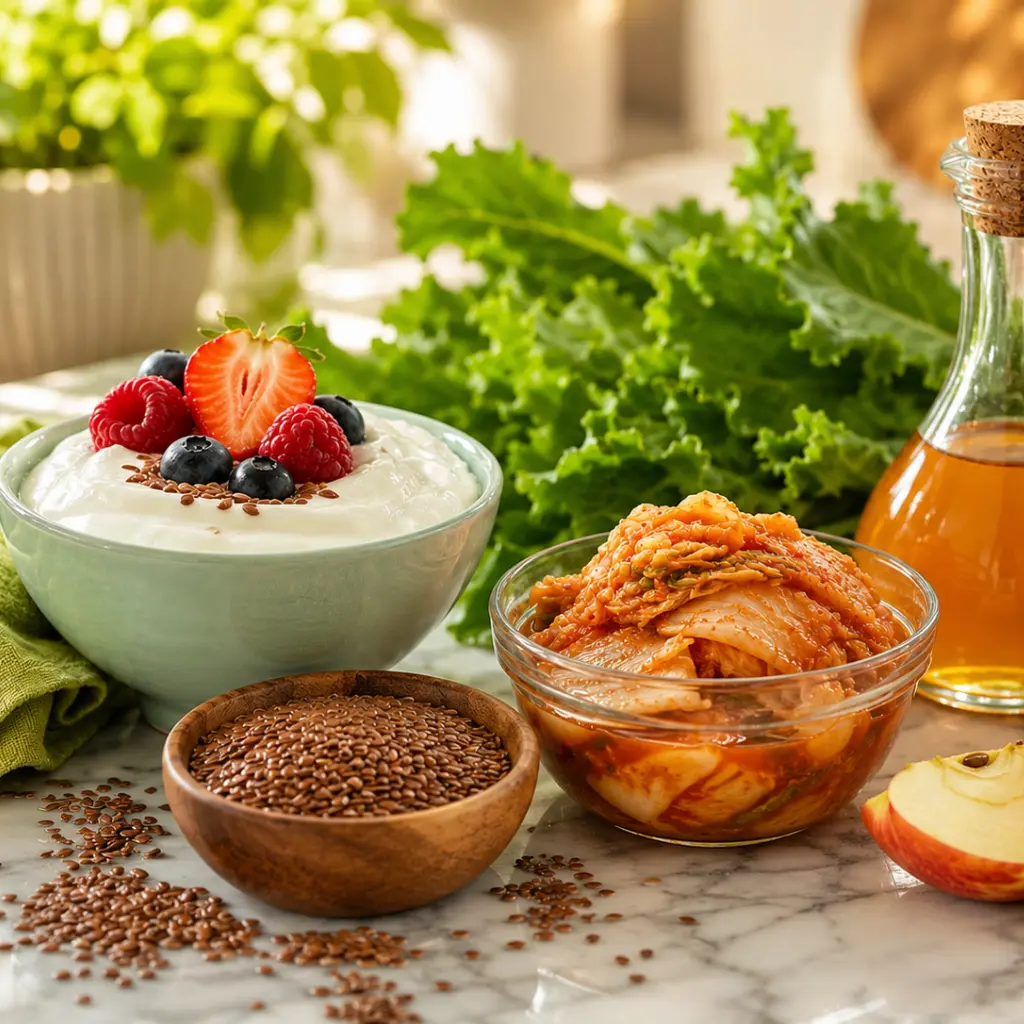
Plain yogurt with live cultures, kefir, kimchi, sauerkraut, and other fermented foods can add variety to an eating pattern. Research into fermented foods and the microbiome is interesting, but they are not a prescribed “gut reset,” and there is no reliable timeline in which eating them will make abdominal fat disappear.
This was a useful mindset shift for me. I stopped treating yogurt or kefir like medicine and started treating them like foods I could choose when they suited my diet and digestion. That feels less dramatic, but it is much easier to sustain.
3. Be careful with “leaky gut repair” protocols
The intestinal barrier is real, and increased intestinal permeability is studied in several medical and metabolic conditions. What deserves caution is the leap from that science to a self-diagnosed “leaky gut” that supposedly explains stubborn belly fat.
I would be especially wary of four-week protocols that prescribe fixed doses of L-glutamine, zinc carnosine, probiotics, or other supplements to “repair” the gut and release stored abdominal fat. Those products may be studied for particular purposes, but that does not establish a universal menopause gut-repair protocol or a predictable fat-loss result.
If you have persistent abdominal pain, major changes in bowel habits, unexplained weight loss, blood in the stool, ongoing diarrhea or constipation, or other concerning digestive symptoms, that is a reason for medical evaluation rather than a supplement stack.
4. Focus on an overall eating pattern, not “estrobolome foods”
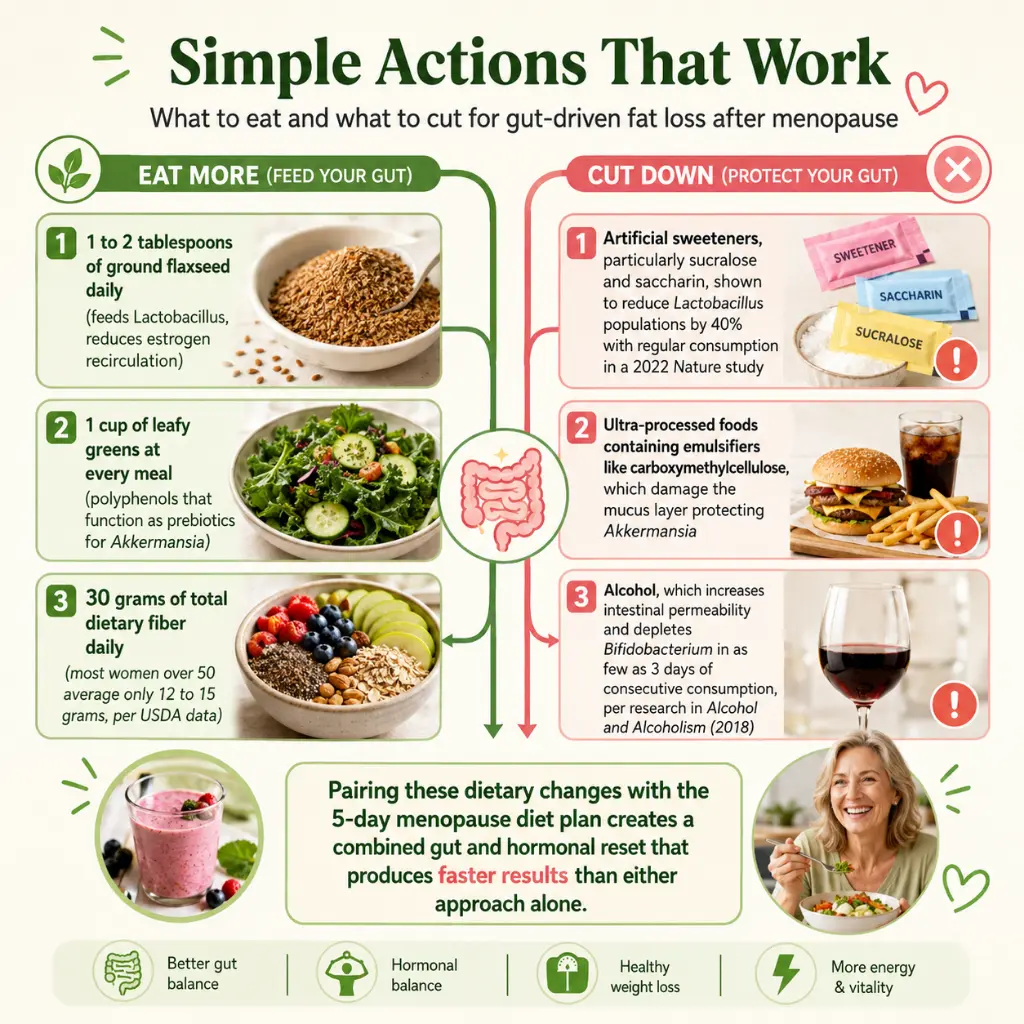
Flaxseed, leafy greens, legumes, berries, whole grains, nuts, seeds, and other minimally processed foods can all contribute useful nutrients and fiber. But I would not tell you that a tablespoon of flaxseed reduces estrogen recirculation enough to shrink your waist, or that leafy greens selectively feed one bacterium that then switches off abdominal fat storage.
The same caution applies to foods you are told to eliminate. Ultra-processed foods and alcohol can certainly matter in an overall diet, but microbiome research does not justify turning every artificial sweetener, emulsifier, or occasional drink into a direct cause of menopause belly fat.
A practical menopause meal plan can help if you want structure without treating food as a hormonal cure. Our 5-day menopause diet plan is designed as a flexible template rather than a “gut reset.”
5. Keep moving, but don’t turn exercise into a microbiome prescription
Regular physical activity supports health in many ways, and research is exploring how exercise and the gut microbiome may influence one another. But there is not enough reason to prescribe one exact walking zone, duration, or weekly schedule as the microbiome formula for menopause belly fat.
Walking, resistance training, and other forms of movement you can perform safely and consistently can support weight management, cardiovascular fitness, muscle, mobility, and overall health. Those established benefits are already good reasons to move without promising that a certain number of weeks will “restore” gut diversity.
6. Look at the whole weight-management picture
This is where my thinking changed the most. Gut health can matter without being the root cause of every pound around the middle.
After menopause, body composition can be influenced by age-related muscle loss, activity, dietary intake, sleep, genetics, medications, health conditions, and hormonal changes. For some women, digestive symptoms and diet quality are part of that picture. For others, they may be relatively minor factors.
For the broader strategy, see our weight loss guidance after 50. Keeping that larger framework separate allows this article to stay focused on what gut health may, and may not, contribute.
Frequently Asked Questions
How does gut health affect belly fat after menopause?
Researchers are studying relationships between the gut microbiome, inflammation, metabolism, and body composition. Menopause is also associated with changes in both the microbiome and fat distribution. However, current evidence does not show that poor gut health is a single direct cause of menopause belly fat or that changing the microbiome will selectively reduce abdominal fat.
Can improving gut health help me lose belly fat after menopause?
Gut-supportive habits such as eating a varied, fiber-rich diet can be part of an overall healthy lifestyle and weight-management plan. They should not be expected to target belly fat on their own. Body weight and fat distribution are influenced by multiple factors.
What probiotics are best for menopause belly fat?
No probiotic strain or combination has been established as the best treatment for menopause belly fat. Probiotic effects are often strain-specific and depend on the product and population studied. Choose probiotics for a defined reason rather than because a product promises targeted abdominal fat loss.
Do I need prebiotic supplements for gut health after menopause?
Not necessarily. Many people can obtain a range of fermentable fibers from foods such as vegetables, fruit, legumes, whole grains, nuts, and seeds. A supplement may be useful in some circumstances, but digestive tolerance and individual health needs matter.
Is “leaky gut” the reason for belly fat after menopause?
Increased intestinal permeability is a legitimate research and medical concept, but it should not be assumed to be the cause of stubborn abdominal fat. Persistent digestive symptoms deserve appropriate evaluation rather than self-diagnosis based on weight or waist changes alone.
How long does it take to improve gut health after menopause?
There is no universal timeline. The microbiome can respond to changes in diet and other exposures, but meaningful health outcomes vary by person. Fixed promises such as four, eight, or twelve weeks are not appropriate for predicting belly-fat loss.
The bottom line
When I first started reading about the microbiome, I wanted it to be the missing answer. It would have been comforting to believe that one bacterial imbalance explained why my body felt different after menopause.
The more useful answer is less dramatic. Gut health and belly fat after menopause can be related within a much larger network of factors, but they are not the same problem and they do not have one shared cure. Supporting your digestive health can still be worthwhile. It just deserves to be done without promising that a probiotic, prebiotic, fermented food, or “gut repair” protocol will reshape your abdomen.
So I would start small. Add a fiber-rich food you genuinely enjoy. Try a fermented food if it agrees with you. Keep moving in ways your body tolerates. Pay attention to persistent digestive symptoms rather than trying to out-supplement them. Those habits may not make for a dramatic before-and-after story, but they are a much more grounded place to begin.
And if your main goal is weight management rather than digestive health, our guide to losing weight during menopause keeps the focus on the broader factors that matter.