
I’ll be honest with you. When I first heard about the gelatin trick for weight loss after 50, I was skeptical.
A spoonful of gelatin before meals to lose weight? It sounds exactly like the kind of viral shortcut that promises far more than it can deliver. But once I looked past the dramatic claims, I found something more interesting: gelatin is a protein, researchers have studied its effects on fullness, and the results are more nuanced than either the hype or the dismissals suggest.
This isn’t a magic-weight-loss story. It’s a closer look at what the gelatin trick actually is, what the research can and cannot tell us, why the “after 50” angle needs some perspective, and what to know before you try it. For the bigger picture, our weight loss guidance for women after 50 covers the habits that matter beyond any single food or supplement.
What the gelatin trick actually is (the real version, not the viral one)
You may have seen a video where someone dissolves unflavored gelatin in warm water, sometimes adds lemon, drinks it before a meal, and credits the routine for rapid weight loss. That’s the viral version. The research is much less dramatic.
Gelatin is a protein derived from collagen in animal connective tissue. Its amino acid profile is unusual compared with many complete dietary proteins, and researchers have studied gelatin-containing meals in relation to satiety, hunger, energy intake, and weight maintenance.
One small controlled study often cited in discussions of gelatin compared different protein sources and found differences in short-term hunger and subsequent energy intake. That is interesting, but it does not prove that a spoonful of gelatin before dinner causes meaningful long-term weight loss, nor does it establish a special fat-burning effect.
That’s the first thing nobody tells you: a short-term satiety effect and long-term weight loss are not the same outcome.
Does the gelatin trick work differently in women over 50?
This is where a lot of online explanations move too quickly from plausible biology to certainty.
Menopause and aging can influence body composition, fat distribution, muscle mass, sleep, activity, appetite, and metabolic health. Estrogen also interacts with systems involved in appetite and glucose regulation. But that does not mean every woman after menopause has the same GLP-1 response or insulin sensitivity, and it does not prove that gelatin corrects an age-specific appetite problem.
Glycine, one of the amino acids found in gelatin, has been studied in metabolic research. However, evidence about glycine itself should not automatically be translated into a claim that a pre-meal gelatin drink improves insulin sensitivity or produces weight loss specifically in women over 50.
So the “after 50” part matters because weight management can change with age and menopause, not because gelatin has been established as a menopause-specific treatment. If those broader changes are what you’re dealing with, our guide to weight management during menopause looks at the larger picture.
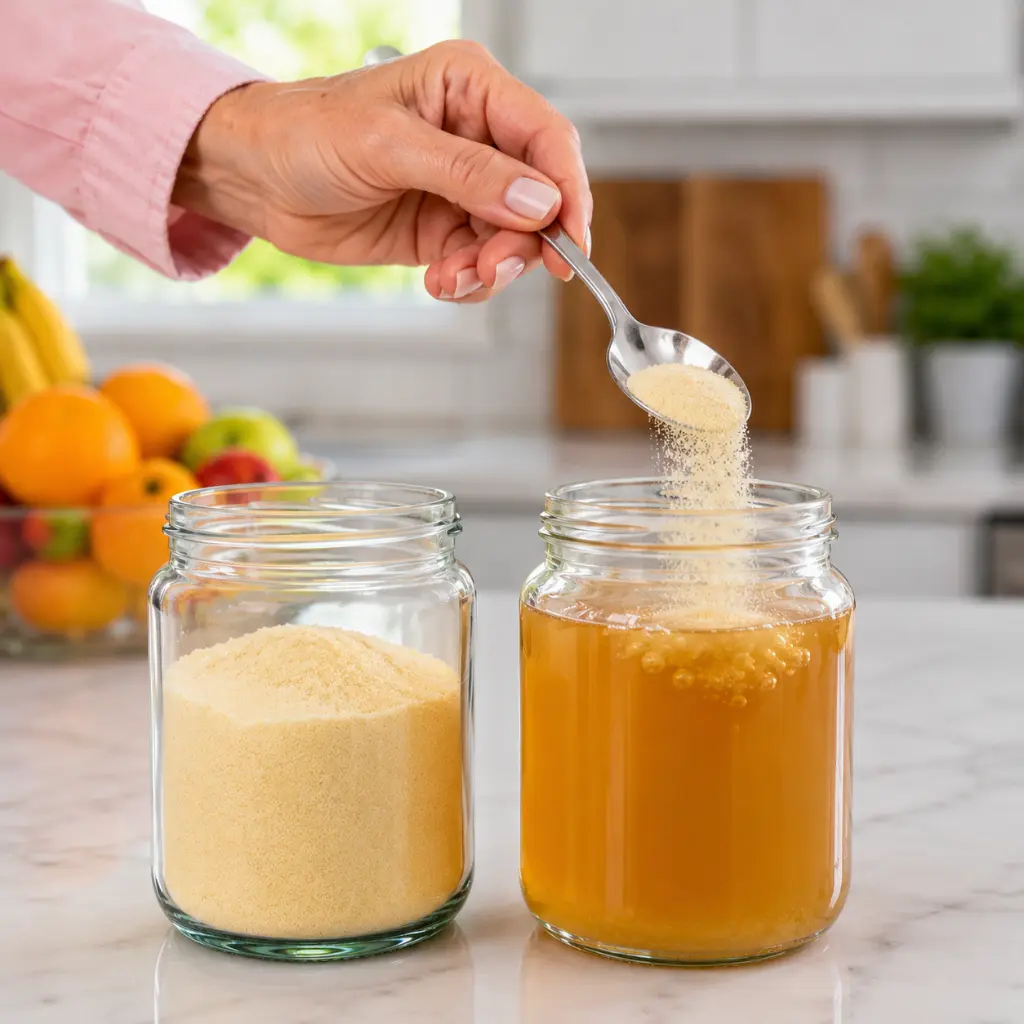
The simple gelatin drink people are talking about
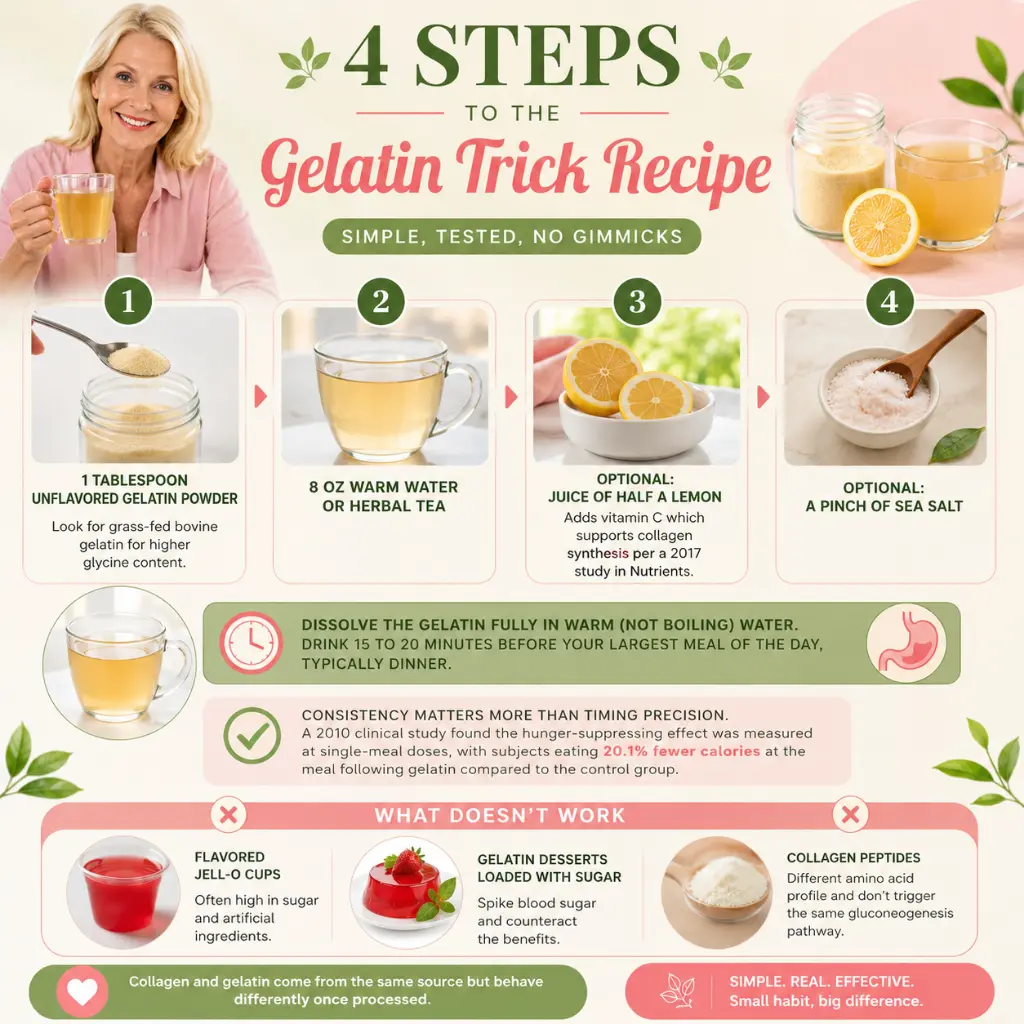
The version circulating online is usually very simple:
- Unflavored gelatin powder
- Warm water or unsweetened herbal tea
- Optional lemon for flavor
Gelatin needs liquid to dissolve, and warm liquid makes preparation easier. But claims that warm gelatin suppresses appetite substantially more than cold gelatin, that grass-fed bovine gelatin has a uniquely superior appetite effect, or that an exact 15-to-20-minute pre-meal window produces better fat loss are not established well enough to present as rules.
There’s another distinction worth making. Gelatin and collagen peptides come from collagen, but processing changes their physical properties and how they’re used in food. That does not mean one automatically “activates” weight loss while the other cannot.
Who might find it useful, and who should keep expectations realistic?
This is the part I wish more viral trends included.
If adding a small amount of protein before or with a meal helps you feel more satisfied, gelatin may fit into your routine. But that is an individual response, not evidence that gelatin is the best appetite strategy for every woman over 50. A meal that contains adequate protein and fiber may be more practical and nutritionally complete for many people.
It is also unlikely to solve weight changes driven by the much larger picture: dietary intake, loss of muscle, activity, sleep, medications, health conditions, or the body-composition changes that can accompany menopause and aging. Our weight loss after 60 guide covers those factors in more depth.
Gelatin is animal-derived, so it does not fit vegan diets and may be unsuitable for people with allergies to its source. Anyone with a medical condition, significant dietary restriction, difficulty swallowing, or questions about using gelatin regularly should get individualized advice rather than relying on a viral protocol.
What the research actually says (the full picture)
Here’s where the distinction between an interesting finding and a proven weight-loss method really matters.
Short term: small controlled studies have found that gelatin-containing protein conditions can influence hunger, satiety, or energy intake compared with some other proteins. Those studies help researchers understand how different proteins affect appetite, but they are not the same as testing today’s viral gelatin drink in women over 50.
Long term: research comparing gelatin-containing high-protein diets with other high-protein approaches has not established gelatin as uniquely effective for maintaining weight loss. That limitation matters more than any impressive single-meal percentage.
The practical conclusion: gelatin may contribute protein and may affect fullness for some people, but evidence does not support treating it as a stand-alone weight-loss solution. If you enjoy it, it can be one small part of an eating pattern that works for you. It should not replace the fundamentals.

Five things worth remembering before you try the gelatin trick
1. Feeling fuller is not the same as burning more body fat. A food can affect satiety without having a special fat-burning effect.
2. The research is not specific to the viral recipe. Findings from controlled protein studies should not be presented as proof that gelatin water before dinner causes weight loss.
3. There is no established menopause-specific gelatin mechanism. Menopause can influence weight and body composition, but gelatin has not been proven to correct those changes.
4. More ingredients do not automatically make the drink more effective. Lemon or apple cider vinegar may change the taste, but combining trending ingredients does not create a proven weight-loss formula.
5. Long-term habits still do the heavy lifting. Protein-rich meals, adequate fiber, resistance exercise, regular movement, sleep, and an eating pattern you can maintain matter far more than one pre-meal drink.
Top questions women frequently ask
What is the gelatin trick everyone is using to lose weight?
The gelatin trick usually means mixing unflavored gelatin into water or another unsweetened drink and consuming it around mealtime. Gelatin is a protein, and some research has examined its effects on satiety, but the viral drink itself has not been established as a proven long-term weight-loss method.
What is the 3-ingredient weight loss drink with gelatin?
Online versions commonly combine unflavored gelatin, warm water, and lemon. Some add apple cider vinegar. These ingredients can be consumed as part of a normal diet, but the combination has not been proven to produce a special weight-loss effect.
What is the secret to losing weight after 50?
There is no single secret. Weight management after 50 can be influenced by food intake, muscle mass, activity, sleep, menopause-related body-composition changes, medications, and health conditions. A sustainable plan usually matters more than any one food, drink, or supplement.
Did Dr. Jennifer Ashton create the gelatin trick for weight loss?
This phrase appears in online searches and social-media discussions, but claims that Dr. Jennifer Ashton created or endorsed a specific gelatin weight-loss protocol should not be treated as established without a direct, verifiable primary source. The broader gelatin trick generally refers to consuming unflavored gelatin around mealtime.
Does the gelatin trick work for belly fat specifically?
No evidence shows that gelatin selectively targets belly fat. Changes in abdominal fat occur as part of changes in overall body composition and are influenced by many factors.
Is gelatin the same as collagen for weight loss?
Gelatin and collagen peptides both come from collagen, but processing changes their physical properties and how they are used. Neither has been proven to be a stand-alone weight-loss treatment, and neither should be expected to selectively reduce body fat.
The bottom line
The gelatin trick for weight loss after 50 is a perfect example of a viral idea built around a small piece of real science and then stretched much further than the evidence allows.
Gelatin is protein. Research suggests different proteins can influence satiety in different ways, and gelatin may help some people feel fuller. What we do not have is convincing evidence that the viral gelatin drink uniquely boosts GLP-1, fixes postmenopausal insulin sensitivity, targets belly fat, or produces meaningful long-term weight loss in women over 50.
If you like gelatin and it fits your diet, you don’t need to fear it or turn it into a miracle. Use it as food, keep expectations realistic, and judge your progress by the whole pattern of your habits rather than one trending trick.
That’s the approach I trust most at this stage of life: less hype, more context, and habits you can actually live with.