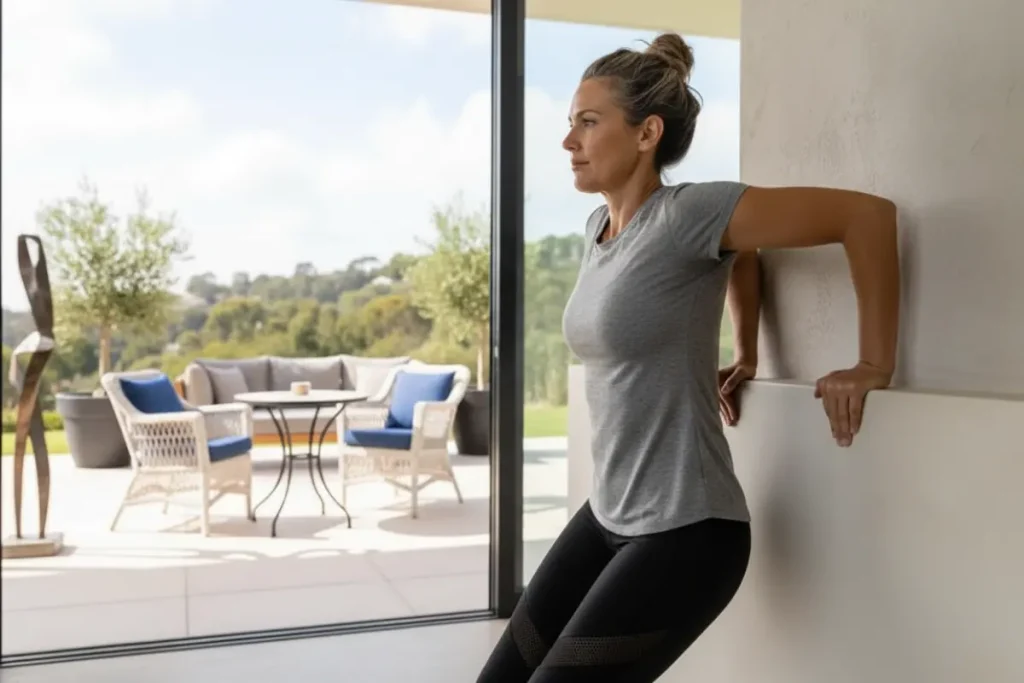

I still remember the first time I picked up a set of dumbbells at 52. I was nervous, unsure if my joints could handle it, and frankly, I worried people would stare. What surprised me most was not a dramatic transformation. It was how satisfying it felt to practice getting stronger and to notice everyday movements becoming more manageable.
Strength training for women 50 and beyond is not about turning back time or training like a bodybuilder. It is about giving your muscles a reason to keep working, supporting everyday function, and building a routine that can be adapted as your health, confidence, and experience change.
This is Lonage’s broad guide to strength training after 50. We will cover why it matters, what it can realistically support, how to approach it safely, how progression works, and where nutrition and recovery fit. If you are completely new and want a step-by-step starting plan, our guide to starting strength training after 50 takes that beginner question further.
Why strength training matters after 50
Muscle mass and strength tend to become harder to maintain as we get older, and menopause, activity level, nutrition, illness, injuries, and long periods of inactivity can all influence what that looks like for an individual woman. Resistance exercise gives muscles a training stimulus and can be an important part of maintaining physical capacity as we age.
Strength training is also relevant to bone health and physical function. Appropriately designed resistance exercise can support muscle strength, balance-related abilities, and bone health, but it should not be presented as a guarantee against osteoporosis, fractures, or falls. Those outcomes depend on multiple factors, including medical history, medications, vision, balance, previous fractures, nutrition, and the type of exercise being performed.
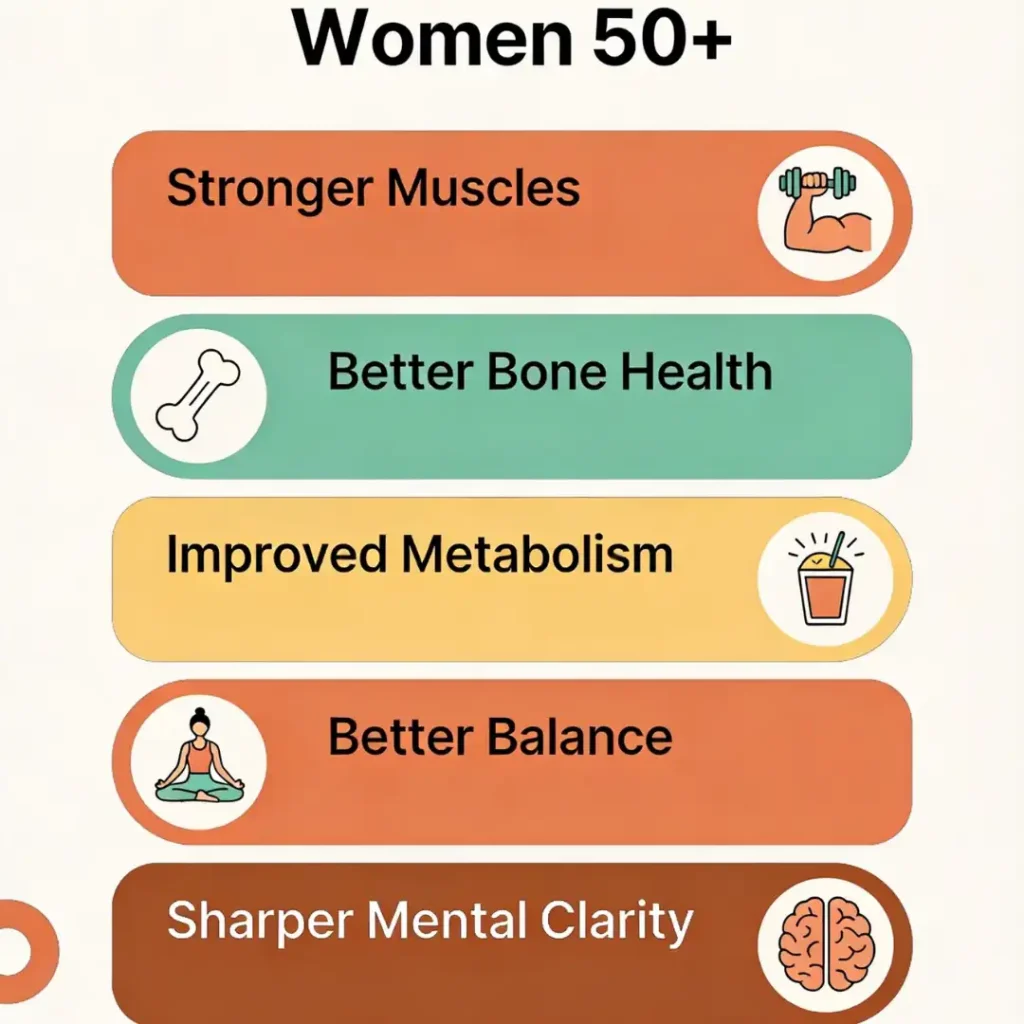
- Muscle and strength: resistance exercise can help maintain or improve strength when the program is appropriate and progressive.
- Everyday function: stronger muscles can support tasks such as standing from a chair, carrying groceries, climbing stairs, and lifting household items.
- Bone health: resistance and weight-bearing exercise can form part of a broader bone-health strategy.
- Balance and confidence: strength is one component of physical function, although people at risk of falling may also need dedicated balance work and professional assessment.
What counts as strength training?
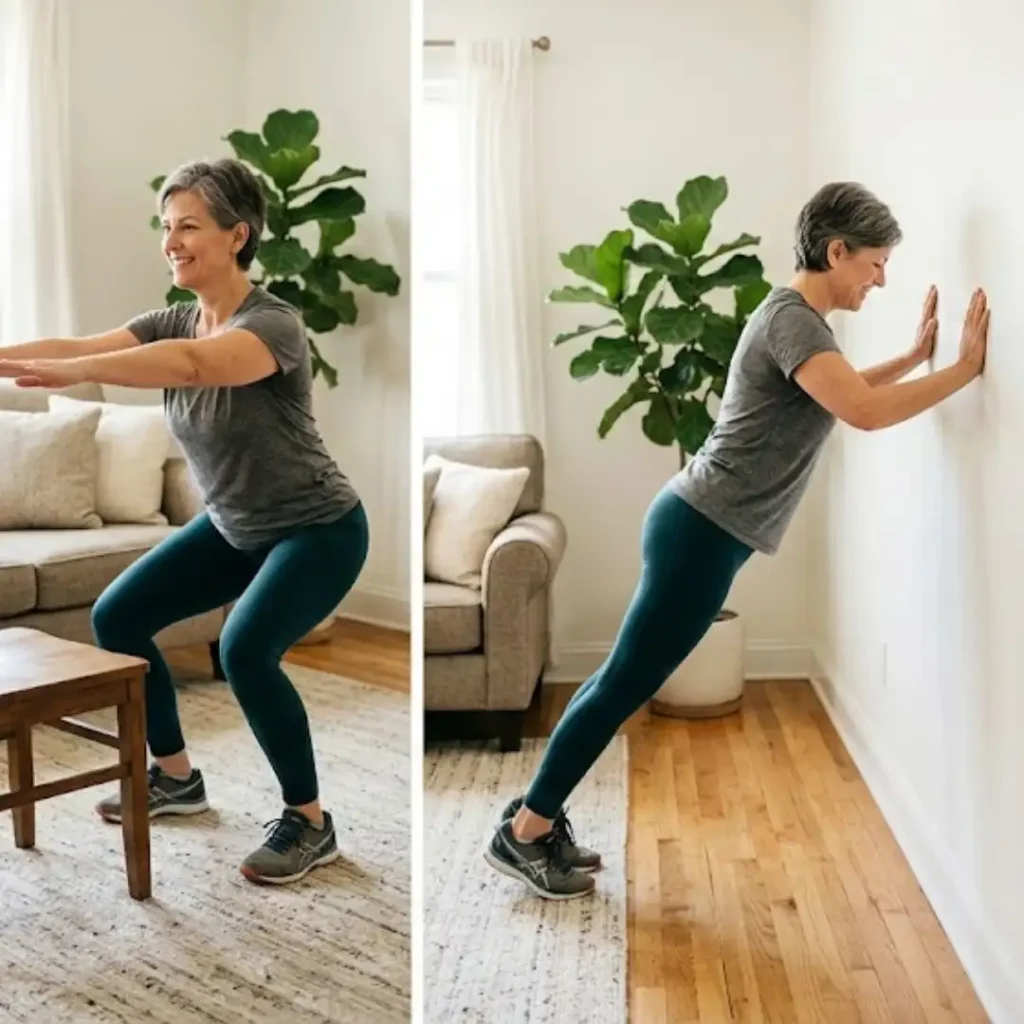
Strength training simply means asking your muscles to work against resistance. That resistance might come from your body weight, resistance bands, dumbbells, weight machines, or everyday objects that can be handled safely. You do not need to begin with heavy weights, and you do not need a gym for strength work to count.
Movements such as a sit-to-stand, supported squat, wall push-up, row, hip hinge, or modified press train different parts of the body. The right version depends on mobility, balance, joint comfort, and experience. When you want to put movements together rather than learn the broad principles, follow an adjustable full-body session.
How often should women over 50 strength train?
Public-health guidance commonly includes muscle-strengthening activity on at least two days each week for adults, but that is a population-level target, not a personal prescription. Someone who is new, returning after illness or surgery, managing pain, or living with balance limitations may need a more gradual starting point and individualized advice.
The more useful question is whether your schedule gives you enough practice to progress while still allowing you to recover. Training frequency, exercise selection, resistance, repetitions, and rest all work together. More sessions are not automatically better if technique deteriorates or symptoms are worsening.
Progression matters more than chasing intensity
Your body needs an appropriate challenge to adapt, but progression does not mean adding weight every week on a fixed schedule. It can mean improving technique, completing a movement through a comfortable range, adding a repetition, using slightly more resistance, adding a set, or moving to a more challenging variation when you are ready.
I like to think of progression as earning the next step rather than rushing toward it. If the current version is controlled, repeatable, and you recover well, a small increase may make sense. If pain, unusual fatigue, dizziness, or loss of balance is showing up, that is a reason to reassess rather than push through.
Strength training safely after 50
Safety is not as simple as following one universal checklist. Your starting point matters. A woman who has been active for years has different considerations from someone returning after a fracture, joint replacement, long period of inactivity, or a new medical diagnosis.
- Use controlled movement: choose resistance and range of motion that allow you to maintain technique.
- Build gradually: change one training variable at a time rather than increasing everything at once.
- Respect symptoms: muscle effort is expected, but sharp or worsening pain, chest pain, fainting, severe shortness of breath, or sudden neurological symptoms are not training goals.
- Adapt when needed: a chair, wall, lighter resistance, reduced range of motion, or professional guidance can make an exercise more appropriate for your situation.
If you have a recent surgery or fracture, repeated falls, significant balance problems, severe or unexplained pain, osteoporosis with fracture concerns, cardiovascular symptoms, uncontrolled medical conditions, or uncertainty about safe exercise, speak with a healthcare professional or physical therapist before progressing independently.
What about joint pain or arthritis?
Joint pain does not automatically rule out resistance exercise, but it can change which movements, loads, positions, and ranges of motion are appropriate. The cause and severity of pain matter. A modification that works well for one woman may be wrong for another.
If pain is persistent, worsening, associated with swelling or instability, follows an injury, or makes normal daily movement difficult, get appropriate assessment rather than assuming that you simply need to strengthen through it.
Strength training after 60 may need a different starting point
Age alone does not determine what you can do, but health history and function often become increasingly important when choosing a program. If your questions are specifically about starting later, home-based modifications, balance concerns, previous falls, or building confidence with supported movements, our strength training guide for women over 60 covers that narrower situation.
Recovery is part of getting stronger
Training creates the challenge; recovery gives you the chance to adapt to it. Sleep, adequate food, hydration, rest between demanding sessions, and a manageable progression all matter. Mild short-lived muscle soreness can occur when you introduce unfamiliar exercise, but soreness is not proof that a workout was effective and it is not something you need to chase.
If fatigue becomes severe, persistent, or unusual for you, or if recovery seems to be getting worse rather than better, consider the broader picture instead of automatically adding more exercise.
Nutrition and muscle after 50
Strength training does not happen in isolation from nutrition. Adequate energy and protein are relevant to maintaining muscle, while an overall balanced eating pattern supports health and recovery. Individual protein needs vary with body size, activity, total diet, health conditions, and other factors.
Keep the nutrition principle simple: include protein-rich foods within an adequate, balanced eating pattern. Seek individualized advice when a health condition changes your protein or energy needs. A special supplement is not a prerequisite for strength training.
Common concerns women have about strength training after 50
“Do I have to lift heavy?” No single weight is right for everyone. The resistance needs to be challenging enough for the intended exercise while still allowing controlled technique. What feels light or heavy changes with the person and the movement.
“Am I too old to start?” Being over 50 does not automatically make strength training inappropriate. Your health, function, symptoms, and training history are more useful starting points than the number on your birthday.
“Will I get bulky?” Strength training can increase muscle size as well as strength, but the amount varies widely with training, nutrition, genetics, hormones, and time. The goal does not have to be appearance; many women train primarily for strength and function.
How to choose your next step
Choose the next step that answers your immediate question: prepare a first session if you are new, use the full-body routine when you want an exercise sequence, or explore the over-60 guide when you need more support-specific adaptations. For one adjustable trunk-control exercise, compare wall, counter, and knees-down shoulder taps. You do not need to follow every guide at once.
Frequently asked questions
How many days a week should women over 50 do strength training?
Public-health guidance generally recommends muscle-strengthening activity on at least two days per week for adults, but an appropriate personal schedule depends on training experience, health, recovery, symptoms, and the rest of your activity. Beginners or people returning after illness, injury, or a long break may need a more gradual start.
Do I need a gym to strength train after 50?
No. Strength training can use body weight, resistance bands, dumbbells, machines, or other forms of resistance. The important factors are appropriate exercise selection, controlled technique, progressive challenge, and a setup that is safe for your ability.
What if I have joint pain or arthritis?
Joint pain or arthritis may require changes in exercise selection, range of motion, resistance, or position, but it does not automatically rule out all strength training. Persistent, worsening, severe, or unexplained pain should be assessed so that exercise can be adapted appropriately.
How long does it take to get stronger after 50?
There is no reliable universal timeline. Changes depend on your starting point, program, consistency, recovery, nutrition, health, and how strength is measured. Focus on gradual progress in technique, resistance, repetitions, or everyday function rather than expecting a fixed number of weeks.
Is strength training safe if I have osteoporosis?
Resistance exercise can be part of an osteoporosis management plan, but fracture history, bone health, balance, technique, and exercise selection matter. If you have osteoporosis or a previous fragility fracture, ask a qualified healthcare professional or physical therapist about movements and loads that are appropriate for you.
The bottom line
Strength training after 50 is not about proving that you can train like someone younger. It is about building and maintaining the strength that supports the life you want to live now. Start from your actual ability, use controlled movements, progress when you are ready, and give recovery the same respect as the workout itself.
I still love the confidence that comes from realizing a weight or movement that once felt intimidating now feels familiar. That progress does not need to be dramatic to matter. Stronger can simply mean more capable, more comfortable, and more confident in your own body.