After 50, core exercises can feel very different from the routines that once seemed straightforward. Floor crunches may be uncomfortable for the neck, while a full plank can place more demand on the wrists and shoulders than you want when you are returning to exercise. Shoulder taps offer another option because the movement can be scaled from a wall to a counter and, when appropriate, to the floor.
Shoulder taps for women over 50 are best understood as an anti-rotation core exercise. As one hand leaves its support, your trunk has to resist excessive twisting while your shoulders and hips help keep you stable. They are not a treatment for back pain, a fall-prevention exercise on their own, or a shortcut to weight loss. Their value is much simpler: they can help you practice controlled core stability in a form that can be adjusted to your current ability.
What Shoulder Taps Actually Train
During a shoulder tap, you support your body with both hands, then briefly remove one hand to touch the opposite shoulder. That change in support creates a tendency for the torso and hips to rotate. Your job is not to move faster; it is to keep that rotation controlled.
The exercise involves the trunk, shoulders, arms, and hips working together. A stable-looking repetition does not require you to hold your body rigid or force your abdomen inward. Breathe normally and use a version in which you can maintain control without pain.
If you want to place this exercise within a broader resistance-training plan, Lonage’s strength training guide for women over 50 explains how individual exercises fit into a more complete program.
Start With the Version That Matches Your Ability
You do not need to begin on the floor. Changing the height of your hands changes how demanding the exercise feels. Start with the easiest version that allows you to move smoothly, keep your breathing comfortable, and control your trunk.
1. Wall Shoulder Taps
Place your hands on a sturdy wall around shoulder height and step your feet back enough to create a slight forward lean. Keep your body comfortably aligned. Lift one hand, touch the opposite shoulder, return the hand to the wall, and alternate sides.
The wall version reduces the amount of body weight supported through the arms. It can be a practical starting point if you are new to the movement or if a floor plank is currently too demanding.
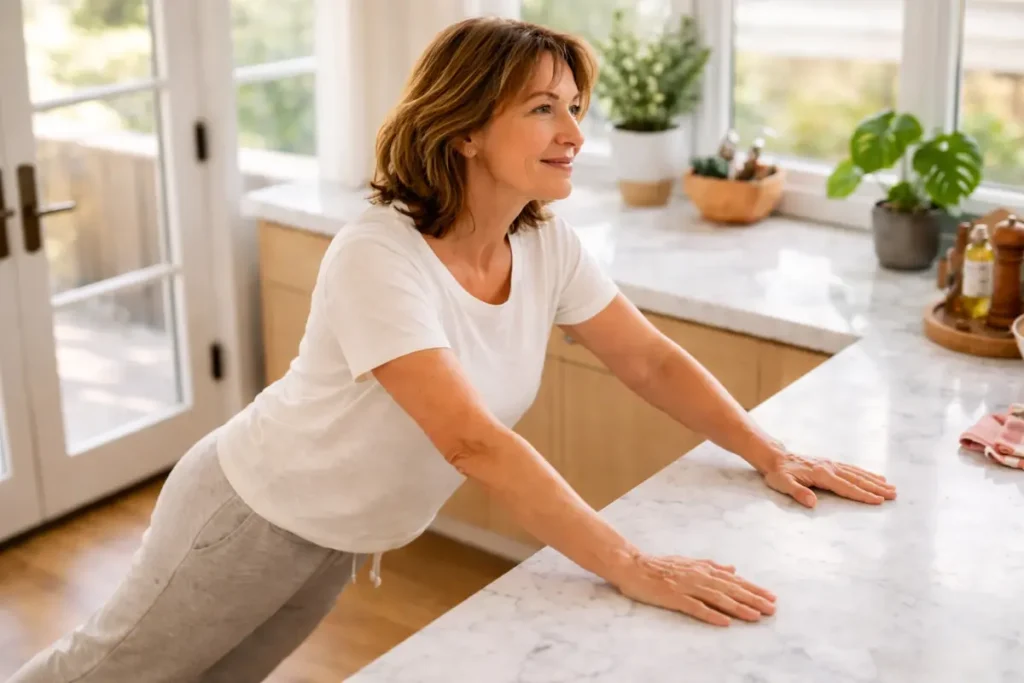
2. Counter Shoulder Taps
When wall taps feel controlled, you can use a stable kitchen counter or another secure elevated surface. Place your hands on the surface, step back, and alternate shoulder taps while trying to limit unnecessary hip rotation.
A lower hand position generally increases the challenge. Progress only when you can keep the movement controlled rather than rushing to a harder variation.
3. Knees-Down Shoulder Taps
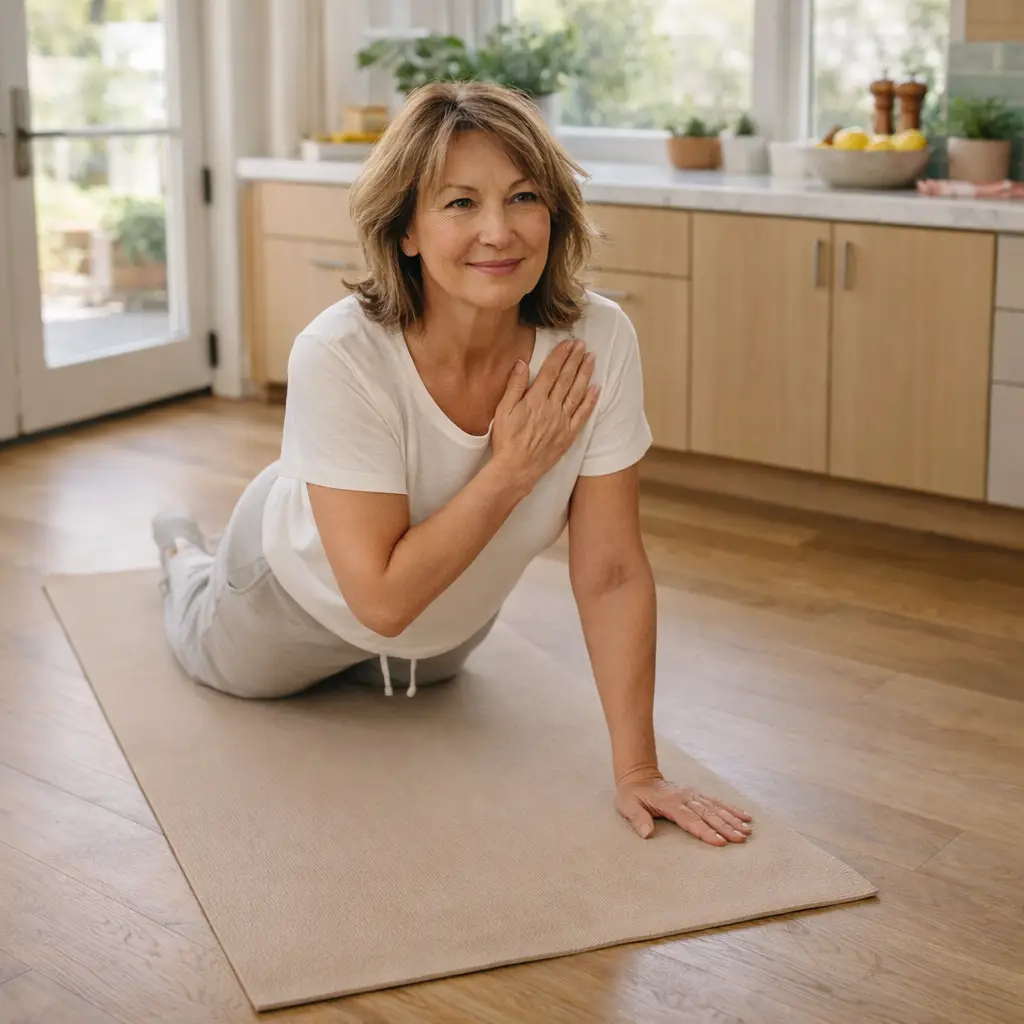
For a floor variation, begin on your knees with your hands under or slightly wider than your shoulders. Find a position that feels stable, then lift one hand to the opposite shoulder and return it before switching sides. Keep the range small enough that you can avoid excessive twisting or sagging through the middle.
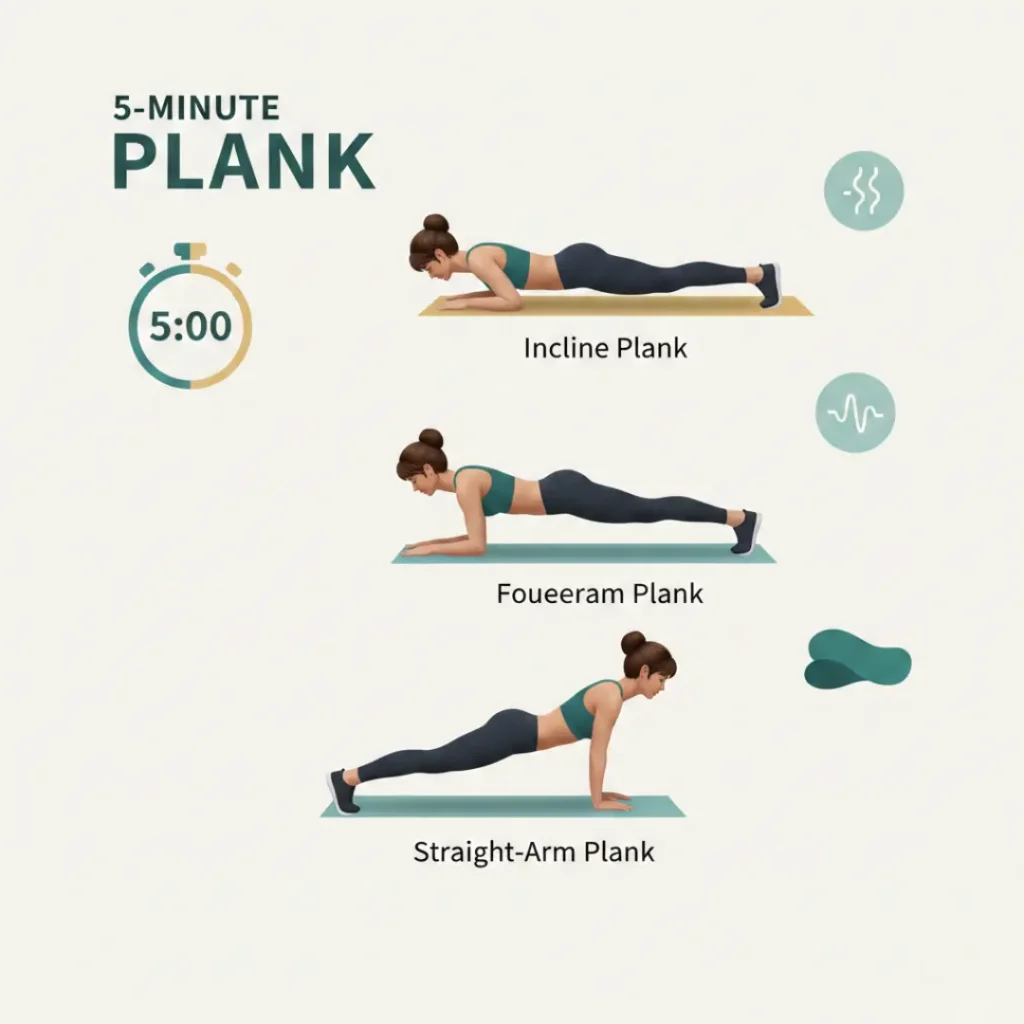
A full high-plank shoulder tap is more demanding and is not necessary for everyone. The best variation is the one that provides an appropriate challenge without sacrificing control or comfort.
What Good Form Looks Like
Set your hands securely before each repetition. Keep your neck in a comfortable position rather than lifting your chin or forcing your head downward. As you tap, allow only as much trunk movement as you can control. Return the hand fully before changing sides.
Think quality before quantity. If your hips begin swinging sharply from side to side, your shoulders collapse, you hold your breath, or you have to rush to finish the tap, move to an easier variation or stop the set. There is no universal number of repetitions or seconds that every woman over 50 needs to reach.
What If Your Wrists, Shoulders, or Back Are Sensitive?
Shoulder taps load the upper body, so they are not automatically wrist- or shoulder-friendly simply because they are described as low impact. Raising your hands to a wall or counter may reduce the demand, but pain is not a signal to push through.
If you have persistent wrist, shoulder, neck, or back pain, recent surgery, a recent fracture, significant osteoporosis, or another condition that affects exercise safety, individualized advice from a qualified clinician or physical therapist may be appropriate. Stop the exercise for sharp or worsening pain, new weakness or numbness, dizziness, chest pain, fainting, or severe or unusual shortness of breath.
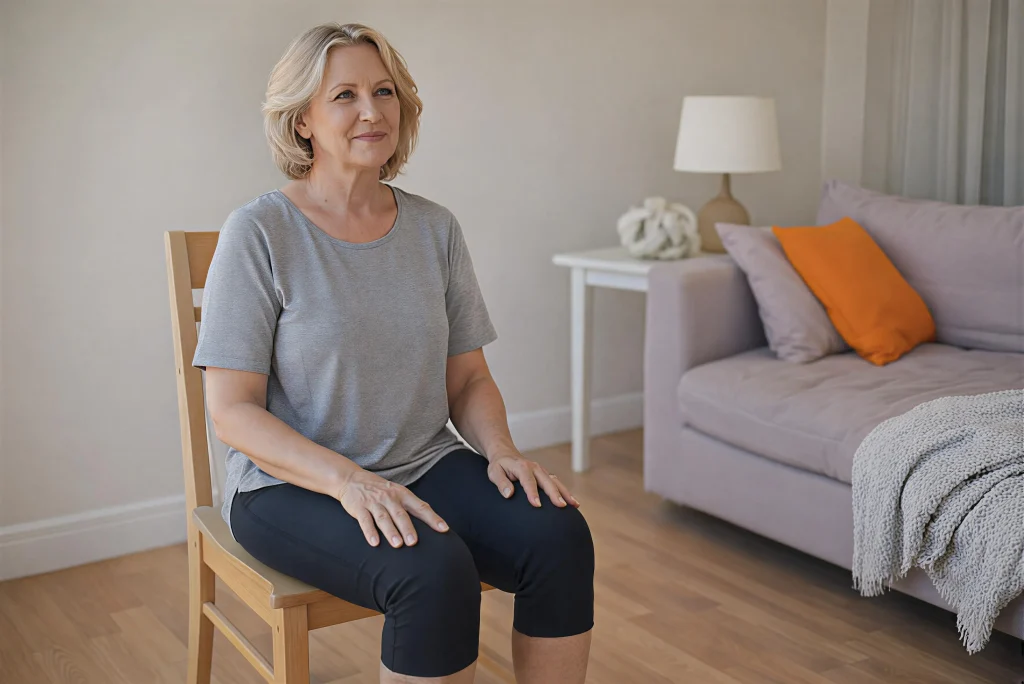
If supporting your body through your hands is not comfortable, you do not need to force shoulder taps into your routine. Low-impact chair exercises provide another way to work on controlled movement without using a plank position.
A quick form check before you change levels
Ask yourself: Is the support secure? Can I return one hand fully before lifting the other? Does my neck stay comfortable? Can I breathe normally without rushing? If one answer is no, stay with an easier version or stop to reassess. Improving control at the wall is useful progress; moving to the floor is not a requirement.
How to Progress Without Chasing a Fixed Schedule
Progress can mean making the movement more controlled before making it harder. You might first reduce hip rotation, improve your hand placement, or perform another comfortable repetition with the same technique. Later, if appropriate, you can move from the wall to a lower surface or from an elevated position to a knees-down variation.
How often you practice depends on the rest of your exercise program, your starting level, and how you recover. Shoulder taps do not need to be performed every day, and there is no evidence-based reason for every woman over 50 to follow the same number of sets, seconds, or weekly sessions.
Where Shoulder Taps Fit in a Full-Body Routine
Shoulder taps train one movement pattern. They do not replace lower-body strength work, pulling and pushing exercises, aerobic activity, balance practice when needed, or mobility work. A complete routine should reflect your goals and abilities rather than revolve around one core exercise.
When you are ready to combine core work with exercises for the rest of the body, this full-body workout for women over 50 provides a broader framework.
Shoulder taps also should not be sold as a belly-fat exercise. They can train your trunk, but they cannot determine where your body loses fat. Keeping that distinction clear makes it easier to judge the exercise by what it actually does: challenge coordinated trunk and upper-body control.
Frequently Asked Questions
Are shoulder taps suitable for women over 50?
They can be, provided the variation matches your current strength, mobility, and comfort. Starting against a wall or stable counter can make the movement more accessible than beginning in a floor plank.
What should I do if shoulder taps hurt my wrists?
Stop if the movement causes pain. Raising your hands to a wall or counter may reduce the load through the wrists, but persistent or significant wrist pain deserves individualized guidance rather than simply pushing through it.
Are wall shoulder taps easier than floor shoulder taps?
Generally, yes. An upright wall position supports less of your body weight through the arms and trunk. A counter creates an intermediate option, while knees-down and full-plank variations are progressively more demanding for many people.
Can I do shoulder taps if I have lower back pain?
It depends on the cause and severity of the pain. Shoulder taps are not a treatment for back pain. Use a version that feels comfortable, stop for sharp or worsening pain, and seek individualized advice if symptoms are persistent, severe, or accompanied by weakness or numbness.
How do I know when a shoulder tap variation is too difficult?
The variation may be too difficult if you cannot control your trunk, your hips swing markedly, your shoulders collapse, you hold your breath, or the movement causes pain. Moving to a higher support surface is a practical way to reduce the challenge.
Are shoulder taps enough for a complete core or fitness routine?
No single exercise is a complete program. Shoulder taps can train anti-rotation core control, but a broader routine may include other strength, aerobic, balance, and mobility work based on your needs and abilities.
Controlled Movement Matters More Than a Harder Variation
Shoulder taps for women over 50 do not need to be fast, performed from the floor, or completed for a predetermined amount of time to be worthwhile. Start at a height where you feel secure, keep the movement controlled, and make the exercise harder only when your current version feels manageable.
The goal is not to prove that you can hold the hardest plank. It is to use an appropriate variation to practice trunk stability while respecting your wrists, shoulders, back, and current fitness level.