The department store clerk looked right through me. She rushed past to help a woman half my age, leaving me standing there holding the dress I wanted to try on. That’s when it hit me: society expects me to quietly fade away now that I’ve crossed 50.
But here’s what I decided in that moment; I’m done playing by rules written by people who fear aging. And if you’re reading this, chances are you’re done too. We’re not disappearing, we’re not downgrading our dreams, and we’re definitely not asking permission to take up space anymore.
The Invisibility Problem Nobody Talks About Enough
Let’s name what’s happening. Women over 50 report feeling systematically overlooked in workplaces, ignored in retail spaces, and underrepresented in media. Some women even take their birthdays off to avoid revealing their age at work. Others resort to Botox and fillers out of genuine fear their careers will end if colleagues discover they’re over 50.
This isn’t paranoia. It’s gendered ageism, the toxic combination of age and gender discrimination that hits women far harder than men. Research shows older men are perceived as more valuable and competent as they age, while women’s credibility actually decreases with each visible wrinkle. But we can rewrite this narrative by learning to healthy aging on our own terms, refusing to accept society’s diminishing expectations.
The double standard is infuriating. But what’s even more frustrating is how we’ve internalized these messages and started policing ourselves. We apologize for taking up time in meetings. We downplay our accomplishments. We make ourselves smaller to make others comfortable.
That stops now.
Reclaiming Visibility on Your Terms
One 59 year old woman who experienced workplace invisibility decided she “wasn’t going to allow people to treat me this way” and started deliberately putting herself forward in work situations to ensure her voice was heard. That’s the energy we need.
Visibility isn’t about demanding attention; it’s about refusing to self erase. Speak up in meetings without apologizing first. Apply for the promotion even when you don’t check every box. Wear what makes you feel powerful, not what helps you blend in.
When the world tries to look through you, plant your feet and make eye contact.
Career Reinvention: Your Experience Is Your Superpower
Women over 50 aren’t just surviving career transitions; we’re becoming the new face of career reinvention. Maureen Stapleton ran for public office in her 50s and won a seat in the Michigan House of Representatives before stepping into nonprofit leadership at Midtown Detroit. Dr. Geneva J. Williams launched her own business, published her first book, and started a podcast in her late 60s.
These aren’t exceptions. They’re examples of what becomes possible when you stop seeing your age as a liability and start leveraging it as power. Your decades of experience give you advantages younger professionals simply don’t have. This is the foundation of thriving with energy, confidence, and vitality at 50, using your accumulated wisdom as your competitive edge.
Your decades of experience give you advantages younger professionals simply don’t have. You’ve watched trends cycle through. You’ve built networks that open doors. You’ve developed judgment that only comes from navigating real crises and complex transitions. That’s not baggage, that’s your competitive edge.
The Three-Phase Reinvention Model
Research on women over 50 who successfully reinvented their careers identified a consistent three-step pattern: encountering a crisis or challenge, taking a reflective pause for introspection, and ultimately experiencing a transformative moment of reinvention.
This model matters because it normalizes the discomfort. Career reinvention at 50 isn’t supposed to feel smooth and easy. The crisis phase; whether it’s being passed over for promotion, facing layoffs, or simply realizing you’re unfulfilled; is part of the process, not proof you’re failing.
The women thriving after career changes at 50 share one thing: they accepted the call for change even when it was scary, and they turned their legacy of experience into leverage.
Your Body Image and Sexuality Can Actually Improve
Here’s the research that surprised me: studies show that as women age, both body image perception and sexual satisfaction tend to increase. Older women in these studies demonstrated higher levels of body acceptance and sexual fulfillment than their younger counterparts.
Read that again, because it contradicts everything we’ve been told.
The research found a significant positive relationship between age and sexual satisfaction. As age increased, so did satisfaction, frequency, and overall sexual contentment. Meanwhile, self esteem plays a crucial role, higher self-esteem correlates with more positive attitudes toward sexuality in older adults.
What’s happening here? We’re finally releasing the impossible body standards we tortured ourselves with for decades. We’re more comfortable communicating what we want. We care less about performing for others and more about experiencing genuine pleasure. Understanding the hardest stages of menopause helps us appreciate why this shift in perspective becomes so liberating; we’ve survived the challenging transitions and emerged more authentically ourselves
Rebuilding Body Confidence From the Inside Out
The connection between body image and sexuality runs both ways. When you improve how you feel about your body, sexual satisfaction increases. And when you prioritize sexual fulfillment and intimacy, body confidence strengthens.
This doesn’t mean you have to love every physical change. It means you stop letting dissatisfaction with your appearance steal your joy, your intimacy, and your sense of worth. Your body at 50 deserves appreciation for everything it’s survived and continues to do not criticism for failing to look 30.
Build Muscle and Strength at Any Menopause Stage
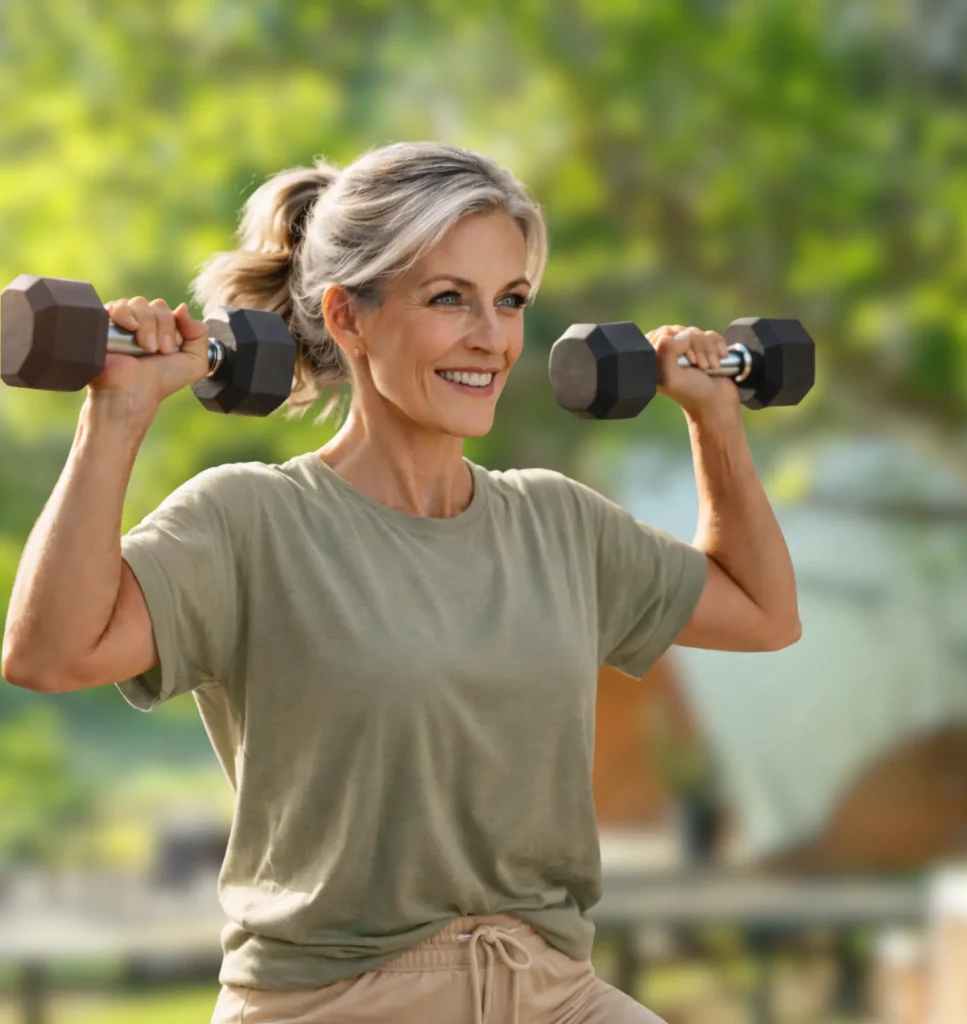
The newest research from 2025 demolishes the myth that menopause prevents muscle building. A University of Exeter study examining women at different menopause stages pre-menopause, peri menopause, and post menopause, found that menopause does not hinder a woman’s capacity to develop muscle through exercise.
All 72 women in the trial successfully enhanced muscle mass, strength, and mobility regardless of their menopausal stage. The researcher stated clearly: “if individuals are capable of exercising, they can enhance their muscle mass, strength, and mobility, irrespective of their menopausal stage”.
Perimenopause may actually be an optimal time to build bone and muscle mass during the menopausal transition, while hormonal changes make maintaining muscle more challenging, they don’t make it impossible.
What Actually Works for Building Strength
Strength training 3-4 times per week using progressive resistance is the foundation. Focus on compound exercises like squats, deadlifts, and rows that work multiple muscle groups simultaneously. Train with 8 – 12 repetitions per set, which research shows is ideal for muscle growth in postmenopausal women.
The benefits extend far beyond aesthetics. Women who strength train after menopause experience increased energy for daily activities, lower risk of osteoporosis and fractures, better metabolic health, reduction of abdominal fat, and improved mood and self-esteem. Pairing exercise with targeted bone health supplements creates a comprehensive approach to maintaining skeletal strength and preventing fractures as we age.
Your body’s ability to get stronger doesn’t have an expiration date.
Style That Expresses Who You Are Now
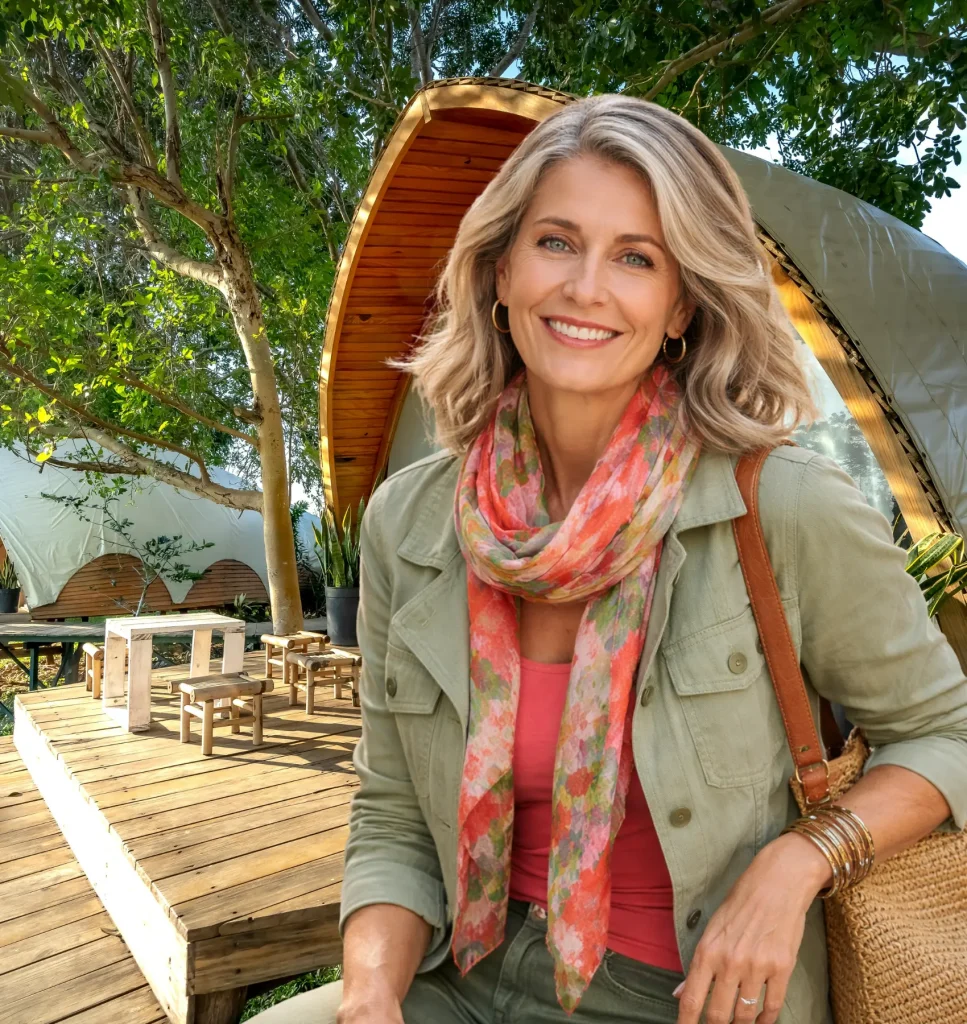
Fashion after 50 isn’t about dressing “age-appropriately”, it’s about dressing authentically. Forget the arbitrary rules about what you supposedly can’t wear. If it makes you feel alive, confident, and comfortable, wear it.
Style after 50 is about following what makes you feel good, not following trends designed for different bodies and different lives. One woman described coordinating colorful tennis shoes to match her outfits because comfort really is the best accessory. Another found that a brightly colored scarf or vibrant outfit brings her joy and confidence.
The goal isn’t looking younger. It’s looking like yourself, the version who’s learned what she likes, what flatters her, and what makes her feel powerful.
Building a Wardrobe That Works for You
Choose fabrics with stretch jersey knits, ponte, and stretch cotton provide comfort and mobility without sacrificing style. Stick to a signature color palette that makes getting dressed effortless, then add pops of color where they bring you joy.
Modern silhouettes and updated classics make more impact than chasing trends. Try structured midi dresses, sharp trousers, trench coats in new fabrics, or shirt dresses with interesting cuts. Mix textures and accessories for an effortless, current feel rather than overly matched looks.
Fashion empowers when it reflects who you are, not when it restricts you to someone else’s narrow vision of age appropriate.
Frequently Asked Questions
You’re Not Fading—You’re Just Getting Started
Being a strong, confident 50 year old woman means rejecting every message that tells you to shrink, stay quiet, or gracefully disappear. It means building physical strength that proves you’re capable of more than anyone expected. It means reinventing your career using decades of experience as fuel rather than treating them as obstacles.
It means refusing to become invisible just because a youth-obsessed culture would prefer you did.
The research backs what many of us already feel: this can be our most powerful decade yet. We can build muscle regardless of menopause stage. We can experience better body image and sexual satisfaction than we did when younger. We can reinvent careers and discover new purpose.
But none of this happens if we keep playing small. None of this happens if we internalize the ageism and sexism aimed at us. And none of this happens if we wait for permission.
Of course, consult with your healthcare provider before starting new exercise programs or making significant health changes, your doctor can help you create plans that work for your specific needs and conditions.
What’s one way you’ll refuse to stay invisible this week? Where will you take up space, speak up, or step forward instead of back?
For related guidance in this topic, see Finding Your Tribe After 50 and Reinventing Yourself After 50.
For broader guidance on this topic, explore our healthy aging after 50 hub.
Related Lonage guides in this topic include What is a Grandmother’s Typical Personality.