

I remember standing in my closet last year, staring at jeans that fit perfectly six months earlier. Nothing had changed in my routine, yet somehow everything had changed in my body. If you’re like me and wondering how to lose weight during menopause when your body seems to have different rules now, stick with me until the end. The truth is, weight loss during this phase isn’t impossible, but it does require a different approach than what worked in our thirties and forties.
Why your body stores weight differently now
Here’s what nobody tells you at your annual checkup: dropping estrogen doesn’t just give you hot flashes. It fundamentally changes where and how your body stores fat. We tend to accumulate weight around our midsection now because estrogen previously directed fat to our hips and thighs. When those estrogen levels plummet, fat accumulates around our belly.
Your metabolism has shifted gears. Women experience a metabolic slowdown of about 200-300 calories per day during the menopausal transition. That’s like your body suddenly deciding it no longer needs that mid-morning snack, except nobody informed you about this new calorie budget.
What I’ve noticed in conversations with women navigating this phase is the frustration that comes from doing everything “right” and seeing minimal results. You’re not losing your mind. Your body is genuinely responding differently to the same strategies that worked before.
Understanding this shift is the first step in learning how to lose weight during menopause without fighting your own biology.
Strategy #1: Prioritize protein at every meal
If there’s one change that makes the biggest difference for weight loss during menopause, it’s prioritizing protein at every meal. We’re losing muscle mass at an accelerated rate now, about 3-8% per decade after our fifties. Less muscle means slower metabolism.
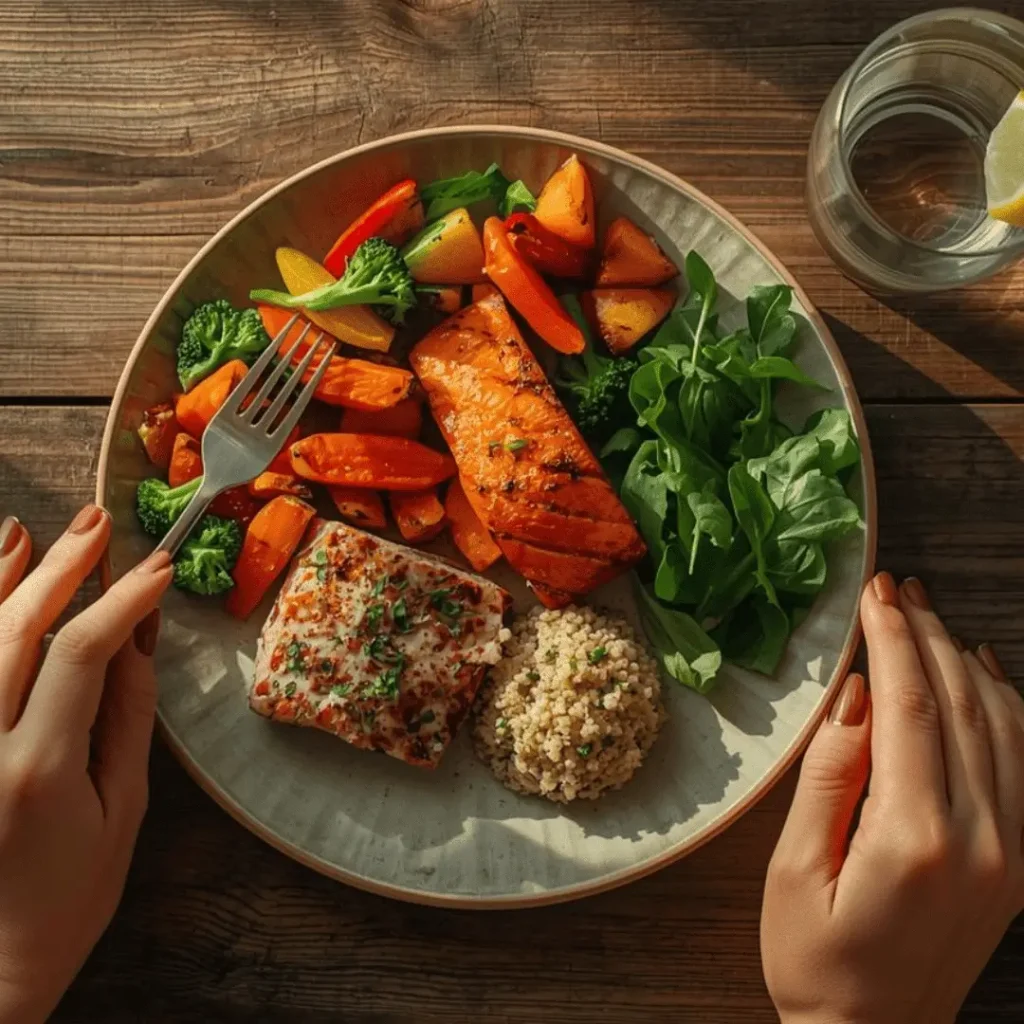
Aim for 25-30 grams of protein at each meal; that’s roughly a palm-sized portion of chicken, fish, or tofu, two eggs with Greek yogurt, or a protein-rich smoothie. Many women discover they were eating 15 grams at breakfast, and why they felt ravenous by ten o’clock.
Here’s the beautiful part about protein: it keeps you fuller longer, requires more energy to digest, and helps preserve that precious muscle tissue. Start your day with a protein-forward breakfast instead of that muffin or toast, and notice how your hunger patterns shift throughout the day.
If you’re curious about simple protein-based approaches, explore the gelatin trick for weight loss after 50 to learn what it may realistically offer, what the evidence says, and why it should complement, not replace, a balanced menopause weight-loss plan.
Protein is one of the simplest levers when you’re figuring out how to lose weight during menopause.
Strategy #2: Add strength training 2-3 times a week
I get it. You’ve been a cardio person your whole life. If you want to know how to lose weight during menopause, the answer increasingly points to lifting weights. Muscle tissue burns more calories at rest than fat tissue does.
You don’t need to become a bodybuilder or spend hours at the gym. Two to three strength training sessions weekly, focusing on major muscle groups, can make a significant difference. We’re talking about squats, lunges, pushups (modified is perfectly fine), and rows. Resistance bands, dumbbells, or even your body weight all count. If you’re ready for simple, guided moves that actually fit a midlife body, you’ll love these 3 Best Exercises to Lose Belly Fat After 50 and Chair Sitting Exercise for Belly Fat.
Many women notice that the scale might not drop dramatically at first, but their clothes fit better. That’s because you’re building metabolically active tissue while losing fat. How you feel in your body, your energy levels, and how your clothes fit matter just as much as the scale number. Exploring sustainable exercise routines designed specifically for women over 50 can help you find what fits your lifestyle

Strategy #3: Fix your sleep hygiene first
Let’s talk about the unsexy: sleep. When you’re not sleeping well (hello, night sweats and insomnia), your body produces more cortisol. High cortisol specifically promotes belly fat storage. It’s like your body thinks you’re under threat and needs emergency fat reserves right around your middle.
Poor sleep also disrupts hunger hormones. You’ve probably noticed this yourself after a rough night: you’re hungrier the next day, particularly for carbs and sugar. That’s leptin and ghrelin making weight management exponentially harder.
Prioritizing sleep hygiene becomes as important as your food choices. A cool bedroom (around 65-68 degrees), blackout curtains, and limiting screens an hour before bed can all help. You can’t out-exercise or out-diet chronic sleep deprivation.
Strategy #4: Keep cortisol and stress in check
Stress management deserves equal attention. Chronic stress keeps cortisol elevated. Finding what helps you genuinely relax, whether that’s yoga, walking in nature, meditation, or time with friends, isn’t self-indulgent. It’s a weight management strategy that supports your overall wellness journey.
Ignoring sleep and stress is one of the biggest blind spots when it comes to weight during menopause.
Strategy #5: Set honest, realistic expectations
This might be the most important section. Weight loss during menopause is slower than at other life stages. We’re talking about one to two pounds per month, not per week. I know that feels glacially slow when diet culture has convinced us that anything less than dramatic is failure.
Reclaim Your Health: The Ultimate 5-Day Menopause Weight Loss Guide
But here’s what that pace actually represents: sustainable change. Fat loss that stays off. Habits you can maintain for years, not just weeks. The women who succeed long-term are the ones who adjust their expectations and focus on consistency over perfection.
Focus on non-scale victories too. More energy throughout the day. Better sleep quality. Clothes fit more comfortably. Feeling stronger when you carry groceries or play with grandchildren. These markers of health often improve before the scale budges significantly.
Slow, steady progress is simply part of how to lose weight during menopause sustainably.
Strategy #6: Start Small and Track Your Patterns
So how do you actually lose weight during menopause without making yourself miserable? Start with one or two changes, not a complete life overhaul. Adding protein to breakfast and committing to two strength training sessions weekly. Master those before adding more.
Interested in losing weight after 60? Visit the truth about Weight loss after 60 to learn more, or explore hormones and weight loss for women over 60.
Track your patterns without obsessing. Notice how different foods make you feel when you’re genuinely hungry versus eating from habit, and which strategies actually fit into your real life. The best approach is the one you’ll still be doing six months from now.
Strategy #7: Build in flexibility for real life
Build in flexibility. You’ll have weeks when everything goes perfectly and weeks when life. Birthday celebrations, vacations, and stressful periods at work are all part of living. A sustainable approach bounces back from these moments without derailing completely.
Balanced protein-rich meal for women managing weight during menopause
Recap: How to Lose Weight During Menopause
Here’s how to lose weight during menopause in a nutshell: protein, strength training, sleep, stress management, realistic expectations, small, consistent steps, and flexibility.
Frequently asked questions
Is it harder to lose weight during menopause?
Yes, it typically is harder due to hormonal changes that slow metabolism and increase belly fat storage. However, it’s absolutely not impossible. The strategies from those in earlier decades, with emphasis on strength training, adequate protein, and managing stress and sleep.
How much weight should I expect to lose per month during menopause?
Most women can expect one to two pounds per month with a sustainable approach, not per week.
Does intermittent fasting work for menopausal weight loss?
It can work for some women, particularly a gentle 12-14-hour overnight fast. However, it’s not suitable for everyone. Some women find that it increases stress or triggers overeating. Listen to your body and choose an eating pattern that doesn’t leave you feeling deprived.
Why am I gaining belly fat specifically during menopause?
Declining estrogen levels change your body’s fat distribution pattern. Estrogen previously directed fat storage to the hips and thighs, but with lower levels, fat increasingly accumulates around the abdomen. This visceral belly fat is also influenced by cortisol levels, which is why stress and sleep management matter so much now.
Should I cut carbs completely to lose weight during menopause?
No, you don’t need to eliminate carbs. However, your body now handles carbohydrates differently. Focus on complex carbohydrates, whole grains, vegetables, and legumes rather than refined options, and consider eating larger portions of carbs earlier in the day.
Moving forward with confidence
Learning how to lose weight during menopause isn’t about fighting your body or forcing it into submission with extreme measures. It’s about understanding this new phase and adjusting your approach accordingly. Your body isn’t broken. It’s changing, and those changes require different strategies than what worked before.
The women who thrive during this transition are those who approach it with curiosity and frustration, who celebrate small wins, and who recognize that health encompasses so much more than a number on the scale.
Start where you are. Pick one strategy from this article that resonates most with you. It’s adding more protein to breakfast tomorrow morning or scheduling that first strength training session this week. Small, consistent actions compound over time into remarkable results.
What’s one small change you’re ready to implement this week? Your future self will thank you for today.
For related guidance on this topic, see Sleep Your Way to Weight Loss.
For broader guidance on this topic, explore our menopause after 50 hub.
For a related Lonage guide, see BHB salts and fat burning.