

Somewhere around my early fifties, I remember standing in my California kitchen, staring at my coffee and thinking, “Why am I this tired when I haven’t even done anything yet?” My bones felt a little creaky, my brain misplaced words it never used to lose, and by 3 p.m., my energy had already said goodnight. That’s when I started paying attention to the vital vitamins for women over 50: stay healthy, strong and energized, and things finally started to make sense.
What I’ve noticed both in my own life and talking with other women is that so many of us blame “getting older” for things that are actually our bodies asking for different support. Your 50+ body isn’t broken. It’s just operating with new rules. The good news? With some simple, lifestyle‑friendly changes (and a few carefully chosen supplements), you can feel steadier, clearer, and a lot more like yourself again.
In this guide, we’ll walk through the vitamins that matter most after 50, why they matter, and how to fold them into your real life; without turning your day into a full‑time wellness project.
Why your vitamin needs change after 50
Let’s be honest. Most of us hit our fifties expecting a few wrinkles, maybe a hot flash or two. What we don’t expect is how different our bodies suddenly feel. The same breakfast, the same schedule, the same life… and yet the energy is just not there.
After 50, especially post‑menopause, several things shift. Estrogen drops, which affects bone turnover and how well we hold onto calcium. Digestion can slow a bit, which changes how we absorb vitamins like B12 and minerals like magnesium. Sleep can become lighter. Mood can wobble more easily. It’s not you “falling apart.” It’s biology changing the playbook.
Here’s the thing: once we accept that our nutritional needs really are different now, we stop trying to live like we’re 35 and judging ourselves when that doesn’t work. Instead, we can gently ask, “What does my 50+ body need to feel strong, clear and capable?” That’s where vitamin D, calcium, B12, omega‑3, magnesium and zinc step out of the background and into center stage. If you want to go deeper on the bone side of this, the Lonage piece on Vitamin D and Calcium After 50: Protecting Bones and Strength Naturally is a great next read.
How vitamin D and calcium support strong bones and quiet fear
I don’t know about you, but at some point, stairs started to feel more “real.” Maybe it was watching a friend deal with a surprise fracture. Maybe it was hearing the word “osteopenia” for the first time in a doctor’s office. Suddenly, bones aren’t theoretical; they’re personal.
Two of your biggest allies here are vitamin D and calcium. Calcium is literally what your bones are built from. Vitamin D is what helps you absorb and use that calcium properly. Without enough vitamin D, your body can’t make the most of the calcium you eat or take. And after 50, your needs go up right as your natural production and absorption often go down.
In everyday terms, that means:
- Making space for calcium‑rich foods like yogurt, cheese or fortified plant milks, leafy greens like kale and broccoli, tofu, almonds, and canned salmon with bones.
- Getting safe, regular sunlight when you can, and considering a vitamin D supplement if you stay mostly indoors, cover up, or your doctor has mentioned low levels.
You don’t need to obsess over exact numbers to support your bones. You can think in rhythms: a calcium‑friendly food at most meals, a doctor‑approved vitamin D supplement if your levels need help, and weight‑bearing movement like walking. If bone health worries you (and that’s very normal), the Lonage guide on Vitamin D and Calcium After 50 offers a more detailed but friendly walkthrough.
B12 and B complex: when your brain and energy feel a step behind
Have you ever walked into a room and thought, “Why did I come in here?” Or sat down at 2 p.m. and felt like someone unplugged your energy? Many women chalk that up to “getting older,” but often, vitamin B12 and the B‑complex family are part of the story.
As we age, our stomach acid often decreases. That means even if you’re eating B12‑rich foods like meat, fish and eggs, your body might not be absorbing them as well. Low B12 can feel like stubborn fatigue, brain fog, irritability, numbness or tingling in your hands and feet, and just a general sense of not being “fully online.”
What I’ve noticed is that many women feel genuine improvement when they:
- Add B‑rich foods: eggs, fish, leafy greens, beans, whole grains.
- Consider a B‑complex supplement, especially one with B12 in a form that’s easier for the body to use.
- Ask their doctor about testing B12 if they’re constantly exhausted or mostly plant‑based.
No, a B‑vitamin won’t solve every problem in your life. But for a 50+ body that’s quietly running low, it can be like turning the dimmer switch back up. If energy, mood and nerve health are hot topics for you, the Lonage article on Vitamin B12 and B‑Complex for Women 50+: Energy, Nerves and Brain Health is worth reading alongside this one.
Omega 3, magnesium and zinc: the quiet helpers for calm, sleep and resilience
Some nutrients are noisy. Others are subtle but powerful. Omega 3, magnesium and zinc fall into that second group. You may not think about them daily, but your body does.
Omega‑3 fats found in salmon, sardines, mackerel, walnuts, chia and flax are like nourishing oil for your brain, heart and joints. Many women notice less joint stiffness and clearer thinking when they get omega‑3s regularly, either from food or a doctor‑recommended supplement. If brain fog and creaky knees are your daily companions, omega‑3 is worth some attention.
Magnesium is one of the minerals I hear women rave about in real life. It supports muscle relaxation, nerve function and sleep quality. When magnesium is low, you might feel more anxiety, more muscle tension, or lie awake with your brain spinning at 2 a.m. Simple shifts like adding nuts, seeds, beans, greens and even a little dark chocolate, plus a gentle magnesium supplement if needed often help your nervous system exhale.
Zinc quietly supports your immunity and your body’s ability to repair and heal. After 50, making sure you get zinc from foods like pumpkin seeds, seafood, beans and whole grains can be an easy way to keep your inner defenses strong.
If you’d like a focused, friendly breakdown of this trio, Lonage’s Omega 3, Magnesium and Zinc: The Underrated Allies After 50 zooms in on their benefits and everyday food ideas.
A simple vitamin rich day on your plate after 50
Lists are nice, but what does all this look like in real life? Let’s walk through a simple, California‑style day that’s rich in the vitamins your 50+ body loves without feeling like a diet.
Morning:
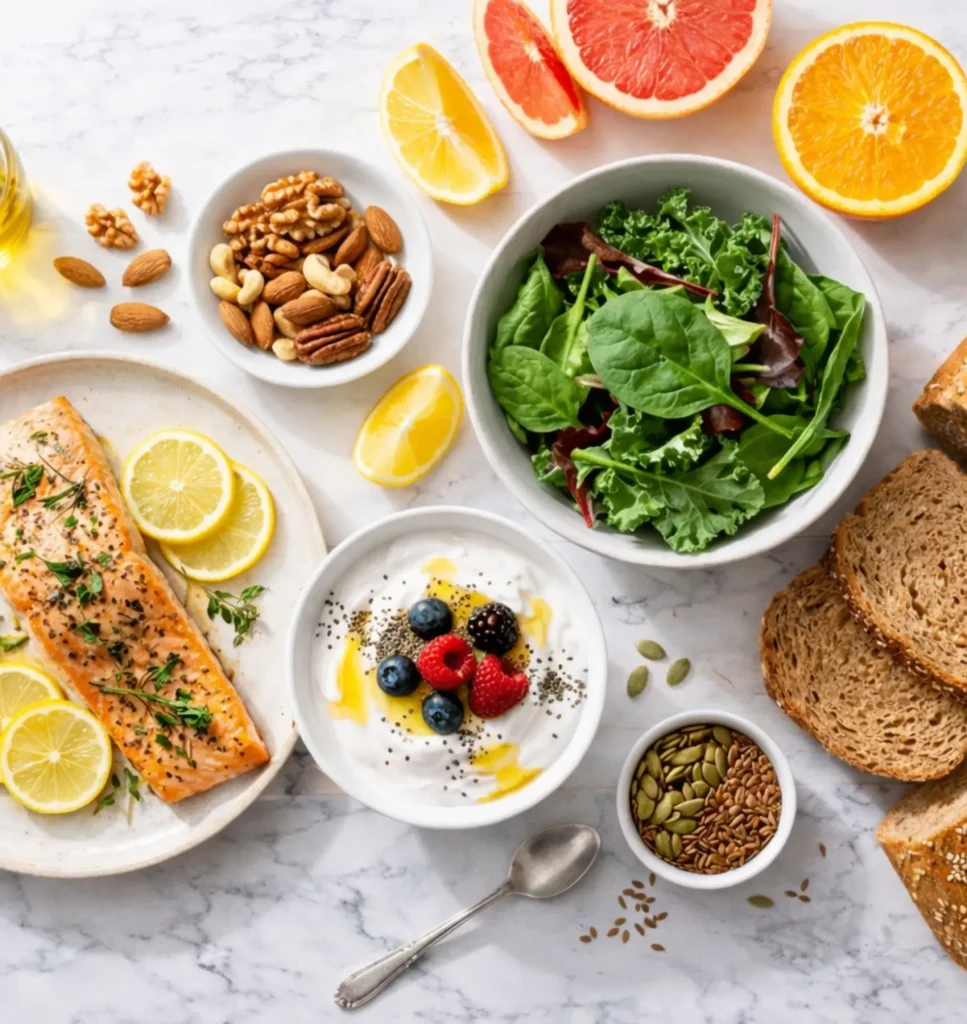
You start your day with a bowl of Greek yogurt or fortified plant yogurt topped with fresh berries, chopped walnuts, and a sprinkle of chia seeds. That one bowl gives you calcium, protein, B vitamins, magnesium, healthy fats, and maybe a bit of vitamin D if your yogurt is fortified. You sip tea or coffee by the window, letting the morning light touch your face for a few minutes.
Lunch:
You build a big salad with mixed leafy greens, half an avocado, grilled salmon or chickpeas, a spoon of pumpkin seeds, and a slice of whole‑grain bread. Now you’ve added omega 3, more B vitamins, zinc, magnesium and fiber. If you’re meeting a friend, you eat it outdoors and soak up a little sun while catching up.
Afternoon snack:
You grab an apple with almond butter or a handful of trail mix with nuts and dark chocolate. Simple. Quick. And still feeding your body magnesium, healthy fats and a little joy.
Dinner:
You roast chicken or tofu with a pan of broccoli, kale and sweet potatoes tossed in olive oil and herbs. Maybe there’s a spoon of lentils or beans on the side. This adds more protein, iron, folate, calcium and magnesium. You go to bed feeling satisfied, not stuffed.
Days like this are why the Lonage guide A Simple Vitamin Rich Day on Your Plate After 50 exists to show you how everyday meals can quietly take care of your vitamin needs without complicated rules.
Supplements vs food: how to build a realistic 50+ routine
Now for the practical question many women whisper: “Do I really need supplements, or can I just eat better?”
If you love the idea of a “food first” approach, you’re in good company. Food brings pleasure, culture and connection, not just nutrients. In a perfect world, we’d get everything from our plates. But in the real world where days are busy, appetites fluctuate, and absorption isn’t what it used to be supplements can be kind helpers.
A balanced approach many 50+ women find sustainable looks like this:
- Focus on colorful, vitamin‑rich meals most days.
- Use a basic multivitamin made for women 50+ as a safety net.
- Add vitamin D if your doctor says your levels are low (which is very common).
- Add B12 or a B‑complex if you’re constantly tired, mostly plant based, or your labs are low.
- Consider omega‑3 and magnesium if joints, mood or sleep are regular challenges.
Supplements aren’t a replacement for good food. They’re more like supportive friends who step in when food can’t quite do it all. One important note: if you’re on medications for blood pressure, thyroid, blood thinning or menopause, it’s wise to show your doctor or pharmacist what you’re taking and ask, “Does anything here interfere with my meds?” That five minute chat is an act of self‑protection.
As you explore specific nutrients, the Lonage satellite articles about nutrition especially those on vitamin D and calcium, B12 and B complex, and omega 3, magnesium and zinc can help you fine tune your own routine.
What are the most important vitamins for a woman over 50 to take?
This is the big question, so let’s answer it clearly.
If we boil it down, the nutrients that usually matter most for women over 50 are:
- Vitamin D for bone strength, immunity and mood.
- Calcium for bones and nerve function.
- Vitamin B12 and B complex for energy, brain clarity and nerve health.
- Omega 3 fats for heart, brain and joints.
- Magnesium for muscles, sleep and stress support.
- Zinc – for immunity and healing.
You don’t have to take six separate supplements. You might get some from food, some from a multivitamin, and top up a couple individually if lab tests show you’re low. The goal isn’t to collect bottles it’s to support your body so you can live the way you want to live.
FAQ: honest answers for women 50+

The vital vitamins for women over 50: stay strong, energized and healthy aren’t about fighting age or pretending we’re still 25. They’re about supporting the woman you are now wiser, seasoned, and ready to enjoy this chapter with as much strength, clarity and joy as possible.
When your bones feel supported, you move with more confidence. When your brain feels clearer, you show up fully in conversations, work, and relationships. When your energy is steadier, everyday tasks feel less like uphill climbs. Vitamins and minerals are simply part of the team that makes that possible, alongside movement, sleep, stress care and meaningful connection.
You don’t have to overhaul everything overnight. Maybe you start by reading more deeply about Vitamin D and Calcium After 50 or Vitamin B12 and B‑Complex for Women 50+, or you plan one vitamin‑rich day on your plate this week. What matters most is that you treat yourself like someone worth caring for because you are.
So, what’s one small step you’ll try this week? A new breakfast, a conversation with your doctor about vitamin D, a simple magnesium supplement before bed, or a colorful dinner plate? What’s one small step you’ll try this week? Share in the comments below.