One morning, I stood in my kitchen, staring at my perfectly organized vitamin cabinet, and realized I’d been overlooking something fundamental. Despite eating what I thought was a healthy diet, I was exhausted, foggy-brained, and couldn’t quite shake that persistent feeling of running on empty. My doctor’s words still echo: “Your B12 is low, and at our age, that’s more common than you’d think.” That conversation changed everything I knew about nourishing my body in this vibrant season of life.
If you’re a woman over 50 experiencing unexplained fatigue, brain fog, or that frustrating lack of energy that seems to arrive uninvited, you’re not imagining things. Your body’s relationship with vitamin B12 has shifted, and understanding this change is one of the most empowering steps you can take toward reclaiming your vitality. The good news? There are delicious, accessible natural sources of B12 for women over 50 that can help you thrive, not just survive.
Why B12 Becomes Your Best Friend After 50
Here’s something we don’t talk about enough: our bodies are brilliant at adapting, but sometimes those adaptations create new challenges. As we move through our 50s and beyond, our stomachs naturally produce less acid. While this might sound like a minor detail, it’s actually a game changer for B12 absorption.
Vitamin B12 needs stomach acid to break free from the proteins in food so your body can absorb it. Think of stomach acid as the key that unlocks B12 from your meal. Less acid means that key doesn’t work as well anymore, even when you’re eating all the right foods. This is why the recommendation for adults over 50 emphasizes getting B12 from easily absorbable sources.
Beyond absorption challenges, menopause adds another layer of complexity, kow more about it here . Many of us experience digestive changes during perimenopause and menopause that can further impact how well we process B12. The gut flora shifts, stomach acid production decreases, and suddenly that salmon dinner isn’t delivering the nutritional punch it used to. Understanding this isn’t about accepting limitations; it’s about working smarter with the body we have now.
The Power Players: Best Natural Sources of B12 for Women Over 50

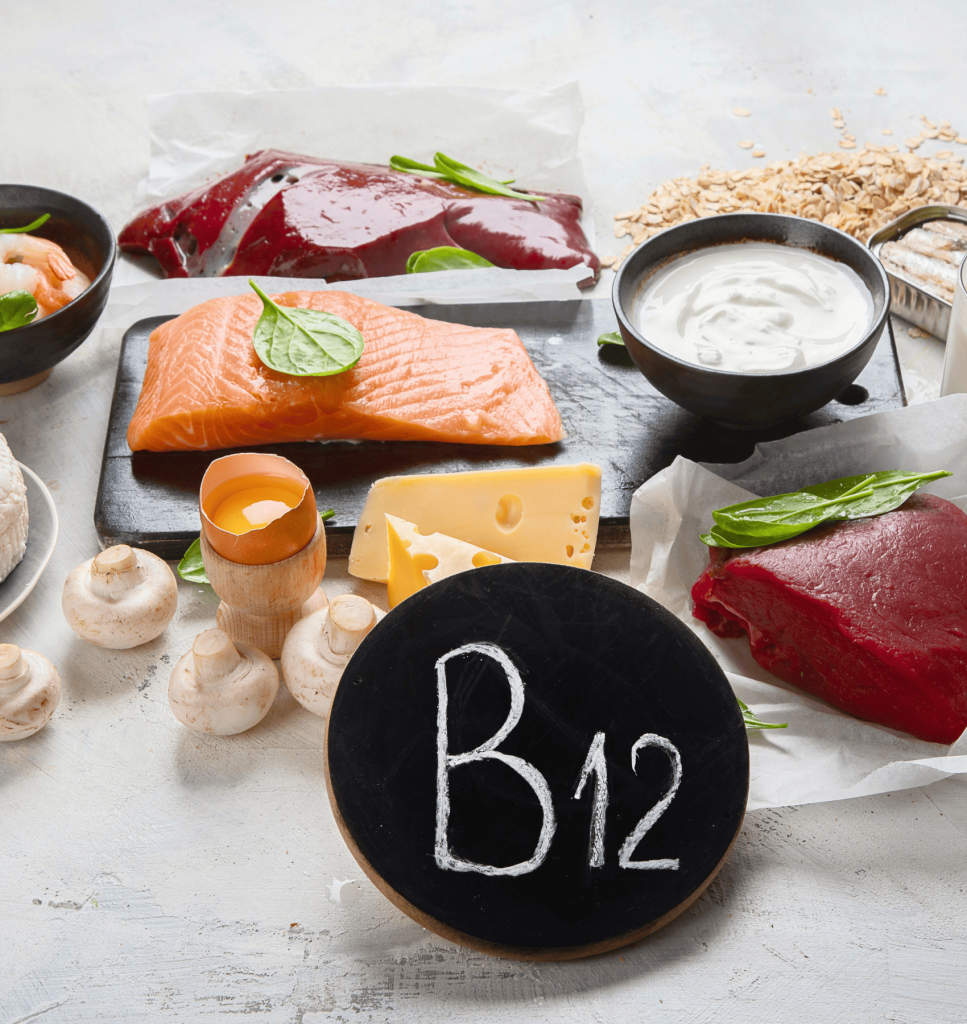
Let me share what transformed my energy levels and helped me feel like myself again. These natural sources of B12 pack the most powerful nutritional punch for our age group.
Fish: Your Brain and Energy Ally
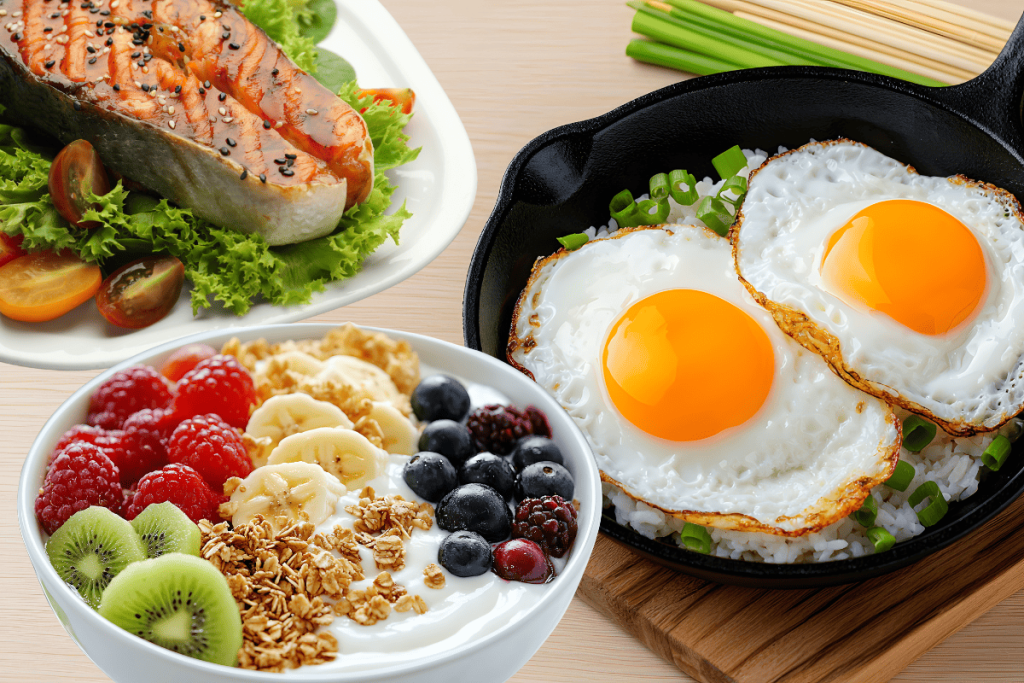
Salmon isn’t just trendy; it’s genuinely transformative. A half fillet of cooked salmon provides more than 200% of your daily B12 needs. I’ve made it a point to enjoy salmon twice weekly, and the difference in my mental clarity has been remarkable. Tuna is another excellent choice, whether you prefer it fresh or canned in water. The dark muscles just below the skin contain concentrated B12, so don’t shy away from those deeper-colored portions.
Eggs: The Perfect Morning Reset
Two large eggs provide approximately 1.1 to 2.7 mcg of B12, which is nearly half to all of your daily requirement. What I love most about this fact is how practical it is. Those scrambled eggs you’re already making for breakfast? They’re working harder for you than you realized. Here’s the key though: eat the whole egg. The yolk contains higher levels of B12 and in a more absorbable form than the whites. This was a revelation for me after years of egg-white only omelets.
Dairy: Gentle and Effective
If you enjoy dairy, you’re in luck. Milk, cheese, and yogurt all contain B12 that passes naturally from cows into their milk. A cup of milk or a serving of yogurt with breakfast can contribute meaningfully to your daily needs. For those of us who are lactose sensitive, many lactose free dairy products retain their B12 content, giving you options that work with your digestion.
Beef: The Concentrated Source
A modest serving of beef, about 3 ounces, can provide more than 100% of your daily B12 requirement. While I don’t eat beef daily, including it once or twice a week has helped me maintain steady energy levels. Quality matters here; grass-fed beef often provides additional nutrients that support overall wellness.
Fortified Foods: The Plant-Based Bridge
For women following plant-based diets or simply wanting to diversify their B12 sources, fortified foods offer real value. Fortified breakfast cereals can provide 0.6 to 2.1 mcg per serving, and nutritional yeast packs an impressive 4.8 mcg per tablespoon. These fortified sources are designed for easy absorption, making them particularly helpful for those of us with compromised stomach acid production.
Understanding Your Daily B12 Needs After 50
The official recommendation is straightforward: women over 50 need 2.4 mcg of vitamin B12 daily. That same number applies whether you’re 51 or 71. However, and this is where it gets interesting, experts recommend that we meet most of this requirement through supplements and fortified foods rather than relying solely on food sources.
This recommendation exists because even when we eat B12-rich foods, our bodies may not absorb all of it. Your actual absorption rate depends on several factors: your stomach acid levels, your gut health, any medications you’re taking, and your individual digestive capacity. Some of us might need to consume more than 2.4 mcg from food to actually absorb that full amount.
I’ve found that tracking my B12 intake for a week or two gives me a realistic picture of whether I’m meeting my needs through diet alone. Most days, when I include eggs at breakfast and either fish or dairy at another meal, I hit that target. On busier days when eating well takes a backseat, that’s when fortified cereals or nutritional yeast become my backup plan.
For more guidance on essential nutrients for bone health and vitality after 50, explore our guide to vitamin D and calcium.
The Acid Reflux Connection You Need to Know
Sound familiar? You’ve been managing heartburn or acid reflux with medication, but lately you’re feeling more tired than usual. There’s a critical connection here that many doctors don’t emphasize enough: medications that reduce stomach acid can significantly interfere with B12 absorption.
Proton pump inhibitors like Nexium and Prilosec, along with H2 receptor antagonists, work by limiting stomach acid production. While these medications genuinely improve quality of life and prevent serious complications, they also block the very acid your body needs to extract B12 from food. Research shows a 65% increase in B12 deficiency risk for people taking these medications long-term.
This doesn’t mean you should stop your acid reflux medication. Instead, it means having an honest conversation with your healthcare provider about monitoring your B12 levels regularly. Many women in this situation find that adding a B12 supplement or increasing fortified foods helps maintain healthy levels despite the medication’s impact on absorption.
Signs Your Body Needs More B12
We’ve become so good at pushing through fatigue that we sometimes miss our body’s clear signals. B12 deficiency doesn’t announce itself dramatically; it creeps in gradually with symptoms that are easy to dismiss as “just getting older.”
The fatigue that comes with low B12 feels different from regular tiredness. It’s a bone-deep exhaustion that doesn’t improve with rest. Brain fog is another major red flag; if you’re forgetting words mid-sentence or leaving your phone in the refrigerator, your B12 levels deserve attention. Other signs include weakness, tingling in hands or feet, and mood changes that feel disproportionate to life circumstances. If you’re also experiencing joint discomfort, learn about supplements that can help manage menopause-related joint pain here.
During menopause, these symptoms overlap so completely with hormonal changes that many women, myself included, initially attribute everything to fluctuating estrogen. Getting your B12 levels checked provides clarity and potentially a simple solution to symptoms you thought you’d have to endure indefinitely.
Practical Strategies to Boost Your B12 Naturally
Knowing which foods contain B12 is one thing; actually incorporating them into daily life is another. I’ve learned that consistency matters more than perfection, and simple strategies beat complex meal plans every time.
Start your day with two whole eggs prepared any way you enjoy them. This single habit covers nearly half your daily B12 needs before you’ve even checked your email. On days when cooking feels like too much, a yogurt parfait with fortified cereal provides both B12 and satisfaction.
Plan for fish twice weekly. Tuesday and Friday have become my salmon nights, and having that structure removes decision fatigue. Canned tuna works beautifully for quick lunches; mixed with avocado on whole grain toast, it’s both delicious and B12-rich.
Keep nutritional yeast in your pantry. This game changing ingredient adds a savory, slightly cheesy flavor to everything from popcorn to pasta, and just one tablespoon delivers 4.8 mcg of B12. I sprinkle it on roasted vegetables, stir it into soups, and use it to make creamy sauces without dairy.
Consider the overall picture of your meals rather than obsessing over individual foods. When I stopped trying to calculate exact micrograms at every meal and instead focused on including one good B12 source daily, my stress decreased while my energy increased. Some days I nail it with multiple sources; other days I rely on that morning egg and my fortified cereal. Both approaches work.
Frequently Asked Questions
How can I increase B12 naturally?
Focus on incorporating B12-rich animal foods daily: two whole eggs at breakfast, fatty fish like salmon or tuna twice weekly, and dairy products like yogurt or cheese. If you follow a plant-based diet, prioritize fortified cereals and nutritional yeast, which provide easily absorbable B12. Since absorption decreases after 50, eating these foods consistently matters more than occasional high doses.
How much B12 does a 50-year-old woman need daily?
Women over 50 need 2.4 mcg of vitamin B12 daily, the same amount as younger adults. However, the recommendation emphasizes meeting most of this through supplements and fortified foods rather than food sources alone, because stomach acid production naturally decreases with age, reducing how much B12 your body can extract from meals.
Can B12 cause acid reflux?
B12 itself doesn’t cause acid reflux. However, there’s an important inverse relationship: medications used to treat acid reflux and GERD, particularly proton pump inhibitors and H2 receptor antagonists, can interfere with B12 absorption by reducing stomach acid. If you take these medications long-term, you have a 65% higher risk of B12 deficiency and should have your levels monitored regularly.
How much B12 is in 2 eggs?
Two large eggs contain approximately 1.1 to 2.7 mcg of vitamin B12, providing roughly 46% to over 100% of your daily requirement. The yolk contains significantly more B12 than the white and in a more easily absorbed form, so eating whole eggs rather than just whites maximizes your B12 intake. This makes eggs one of the most efficient and affordable B12 sources for women over 50.
Embracing This Chapter with Energy and Clarity
Discovering that my persistent fatigue had a nutritional solution felt like being handed a roadmap when I’d been wandering lost. Understanding natural sources of B12 for women over 50 isn’t about adding one more thing to worry about; it’s about empowering yourself with knowledge that translates directly into how you feel every single day.
We’re at a stage of life where we’ve earned the right to feel vibrant, clear-headed, and energized for all the experiences still ahead. Nourishing our bodies with B12-rich foods is one of the most loving acts of self-care we can practice. Whether that’s savoring a perfectly cooked piece of salmon, starting your morning with eggs prepared just how you like them, or discovering the magic of nutritional yeast on your popcorn, you’re giving your body exactly what it needs to thrive.
What’s one small step you’ll take this week to boost your B12 naturally? Maybe it’s adding an extra egg to breakfast, picking up wild-caught salmon at the market, or trying fortified nutritional yeast for the first time. Whatever you choose, know that you’re investing in your energy, mental clarity, and overall vitality. And that investment pays dividends in how fully you can show up for this beautiful chapter of life.
For more guidance on nourishing your body through this transformative season, explore our comprehensive resources on nutrition and wellness for women embracing their 50s and beyond.